I’ve written about the Pasqua wines previously and have always been impressed with them. This most recent tasting was no exception.
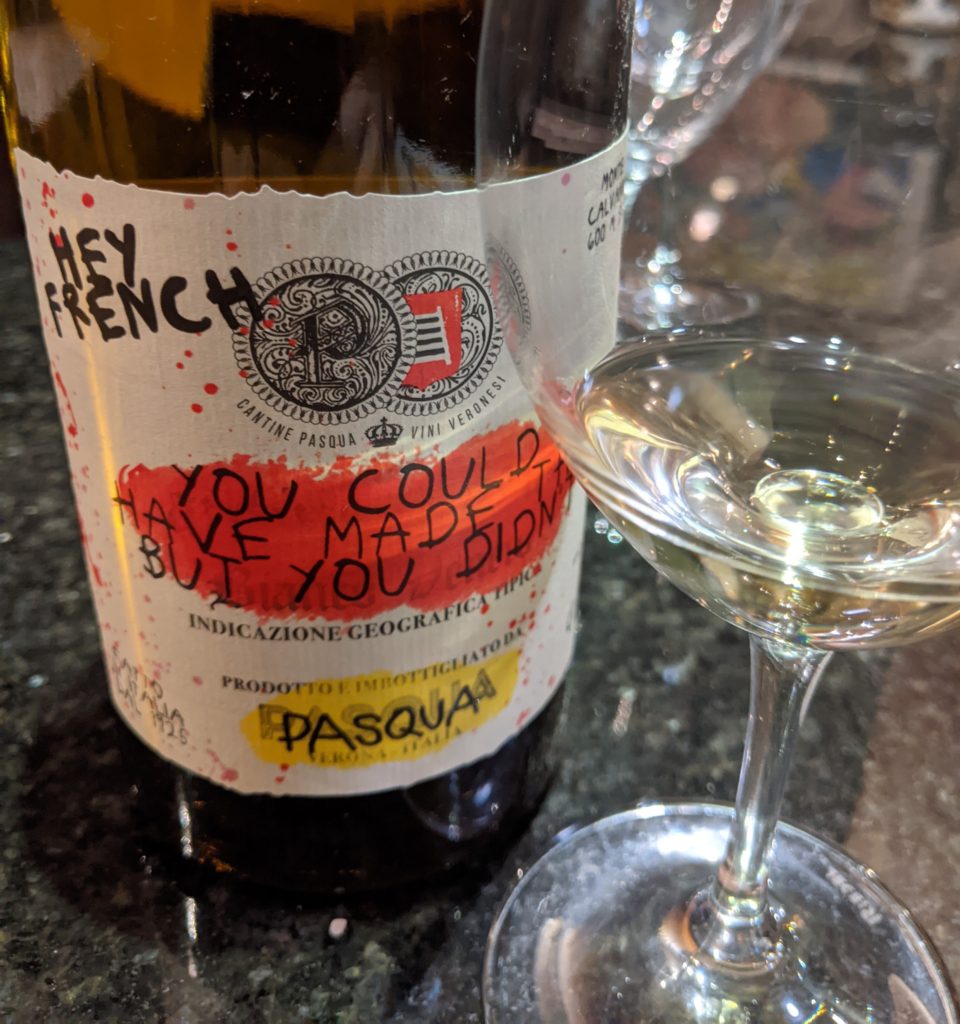
Their latest wine comes with the lengthy, yet catchy, name of Hey French: you could have done this but you didn’t and, more specifically this is “Hey French, 1st Edition.” The mouthful of a name is simply a joke, while also paying homage to French winemakers and their regions who inspire the current generation of the Pasqua family.
The wine is billed as a “super-Bianco” and is a blend of 60% Garganega grapes, with the balance comprised of Pinot Bianco and Sauvignon, all of which were grown in the Veneto. In addition to having been macerated on the skins for about 10 hours prior to fermentation, the other interesting aspect of the wine’s production is that it brings together wines from four different vintages – 2013, 2015, 2016 and 2017 – with future editions to contain a different set of vintages.
And, while the grapes come from an area within the Soave DOC denomination, the fact that this wine breaks the rules precludes it from having that designation on its label. But, as they are trying to create a completely different, non-Soave wine, it really doesn’t matter. Instead, the wine is designated Bianco Veneto IGT and sports a flamboyant label designed by French-Cuban artist, CB Hoyo, in keeping with the light-hearted nature of the wine.
TASTING NOTE “Hey French, 1st Edition”, Bianco Veneto IGT, Italy, $40.00 Dry on the palate with medium+ acidity, the wine presented aromas and flavors of citrus, minerality and tidal pool. It displayed depth and richness, along with a fuller body, making it a good white wine option for the colder, winter months ahead or to pair with heartier food. The wine definitely has aging potential and will likely become more complex and interesting with time.
I used to love trick-or-treating as a kid – between costumes and candy, what more could any child want? Those days are somewhat over – you can still dress up, but folks might look askance if you showed up at their door begging for treats (or maybe not, perhaps your neighbors are more open minded).
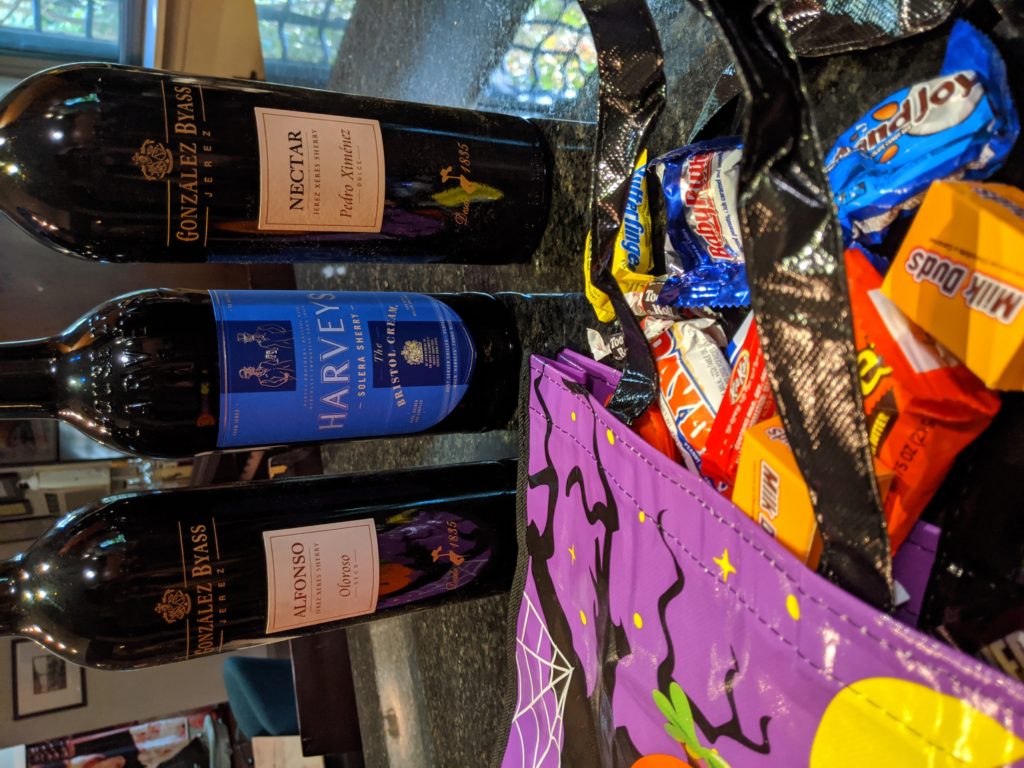
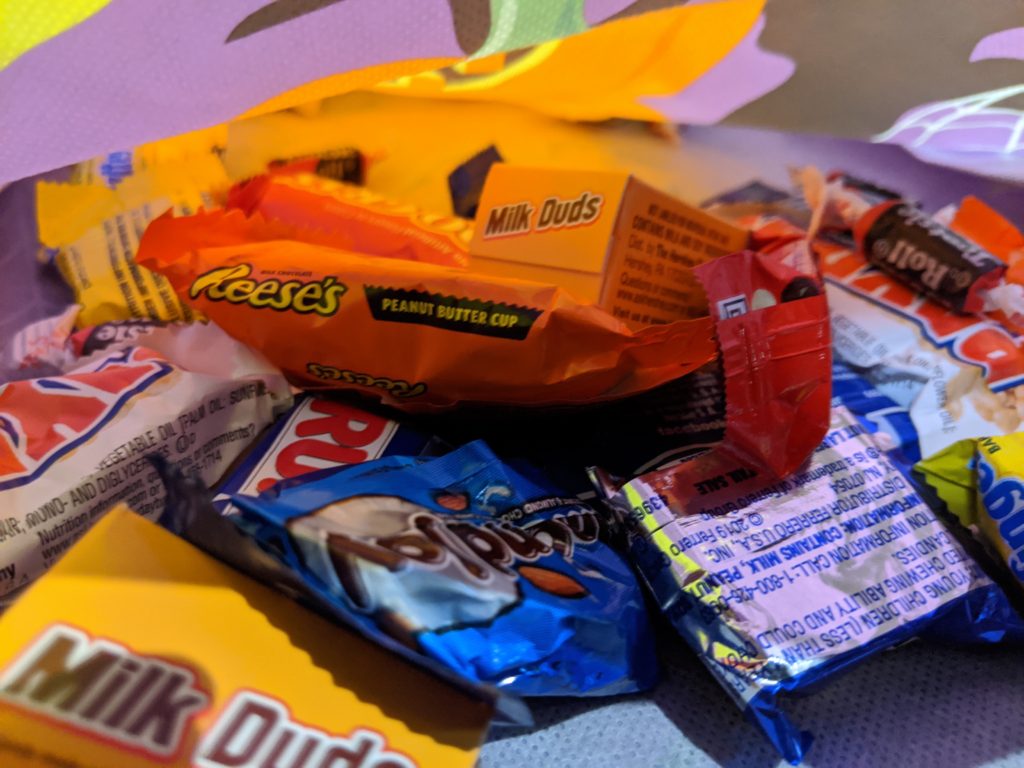
In any case, it was with light-hearted fun that the folks from Gonzalez Byass Sherries reached out and offered up the opportunity to do a candy and Sherry pairing in honor of Halloween. They sent out three different Sherries and an assortment of decadent sweets. They say, “Candy is dandy, but liquor is quicker,” but this “food” and wine pairing was the best of both worlds, with the chance to indulge our inner child while indulging in adult beverages.
In anticipation of the holiday, I eagerly opened up the wines and dived into the candy on the day before Halloween. Interestingly, while it has been proposed that all three Sherries would be a match for at least one of the candies, I was surprised at how dry the Gonzalez Byass Alfonso Oloroso was (I hadn’t paid close attention before tasting and presumed that it was a sweet Oloroso; it was not).
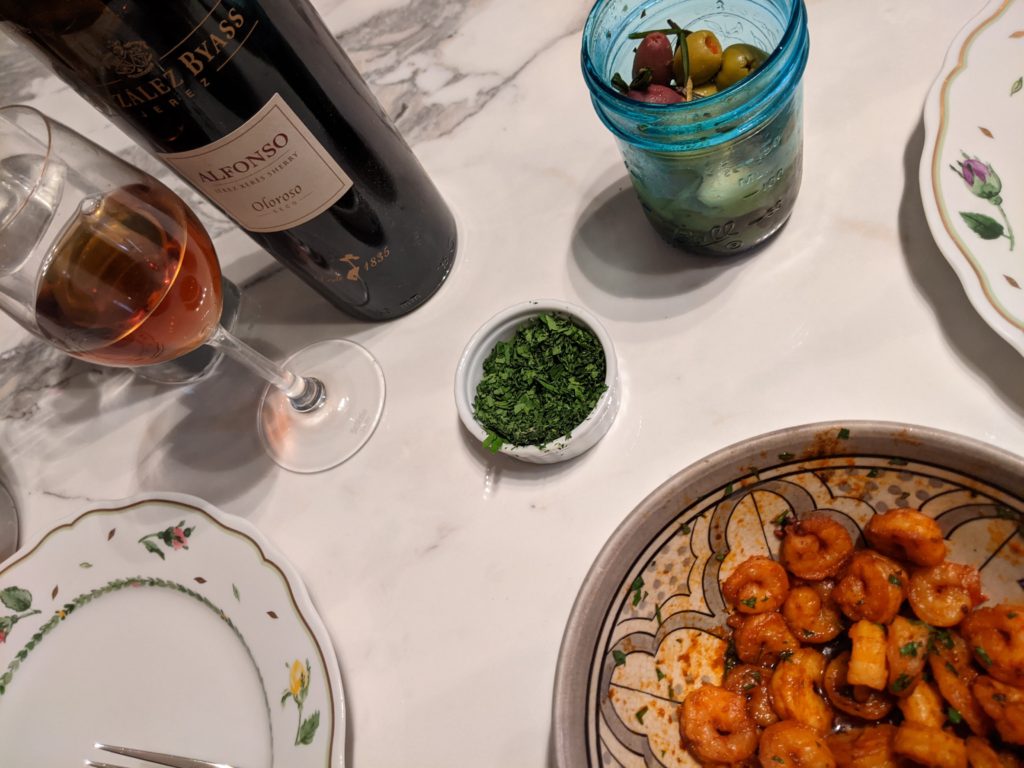
I later checked the technical sheet and noticed that the residual sugar* was less than 4 g/l, further confirming the dry character of the wine. Of course, while I didn’t personally enjoy the Oloroso with any of the sugary snacks, everyone has their own, absolutely valid, palate preferences. Moreover, I loved this wine on its own and found it to be a wonderful addition to a tapas-themed dinner the next night.
The Harvey’s Bristol Cream – always one of my favorites – was delicious with the caramel- and nut-infused treats such as the Milky Way, Payday and 100 Grand bars. Meanwhile, the intense Gonzalez Byass Nectar PX paired beautifully with rich chocolates and, most especially, with Reece’s Peanut Butter Cups. I really enjoyed the balance that the candy provided to this super sweet wine.
Although Halloween has come and gone, this tasting exercise is equally applicable to the upcoming Thanksgiving holiday where there will be treats aplenty on the table. I would serve the Oloroso with appetizers, especially dried fruits, nuts, charcuterie and cheeses. The Harvey’s Bristol Cream would be nice with lighter flavored desserts such as apple pie and cheesecake, with the PX being perfect with pecan or pumpkin pies. Or, if you are too full from the meal, you could simply pour a glass of the sweet nectar as you sit back and appreciate all that you are grateful for this year.
TASTING NOTES
Harvey’s Bristol Cream NV DO Jerez, Spain, $20.00 R/S 138 g/l* An historic wine, Harvey’s was established in Bristol, England in 1796 and this wine in particular was first produced in 1882. Creamier in style than their other Bristol Milk product, the wine was given the name of Bristol Cream although it is not actually a cream liquor. It is a blend of 80% Palomino and 20% Pedro Ximenez, which have been solera aged for an average of 7 years. With aromas and flavors of orange peel, spice, caramel, this wine is off-dry to medium sweet, with medium+ body and long length.
Gonzalez Byass Alfonso Oloroso, DO Jerez, Spain, $25.00 R/S <4 g/l* Produced from100% Palomino grapes, this wine is aged for an average of 8 years in oak casks in a solera system. It is made in an oxidized style as a result of leaving air space in the casks, thereby adding color and depth to the finished wine. It is dry with baked apple, candied apple and baking spices, medium body and very long length.
Gonzalez Byass Nectar PX, DO Jerez, Spain, $25.00 R/S 138 g/l* After being harvested, the 100% Pedro Ximenez grapes are dried in the sun on mats for up to two weeks, losing water content and concentrating flavors and aromas in the grapes. After fermentation and fortification, the wine is aged in solera for an average of 8 years. It is extremely rich and unctuous, with full body and notes of molasses, anise, raisins and other dried fruits, culminating in long length.
*Residual sugar (R/S) is a measure of how much sugar remains in the wine after fermentation has been completed and is expressed in grams per liter (g/l).
This wine was a wonderful surprise in so many ways. I had been in touch with the winery – Azienda Agricola Cortese – back in March and then as the world fell apart, I forgot all about that exchange. Then on the day of my actual birthday last month, my husband handed me an unexpected package – it was the Cortese wine. Happy birthday, indeed!
Not paying full attention to the “gift,” I stuck the bottle in the refrigerator thinking that it was a white wine. Why? I’m not entirely sure, but I think I was confusing the winery’s name – Cortese – with the grape of the same name, which is a white variety.
So, one evening when my husband and I were about to have dinner (Branzino stuffed with tomatoes, capers and olives), we reached into the fridge, pulled out the Sabuci wine and proceeded to open it to enjoy with dinner…until we discovered that it wasn’t white at all, but red.
While I don’t think that there is only one right wine pairing, I do generally shy away from reds with delicate white fish since the wine can cause a metallic taste in the fish. Instead, we opened up a Chardonnay and permitted the red wine to warm up after its lengthy chill.
An hour or so after dinner, when the fish was merely a memory, I poured a glass of the Sicilian wine and turned my attention to what was in the glass. It was such a lovely discovery!
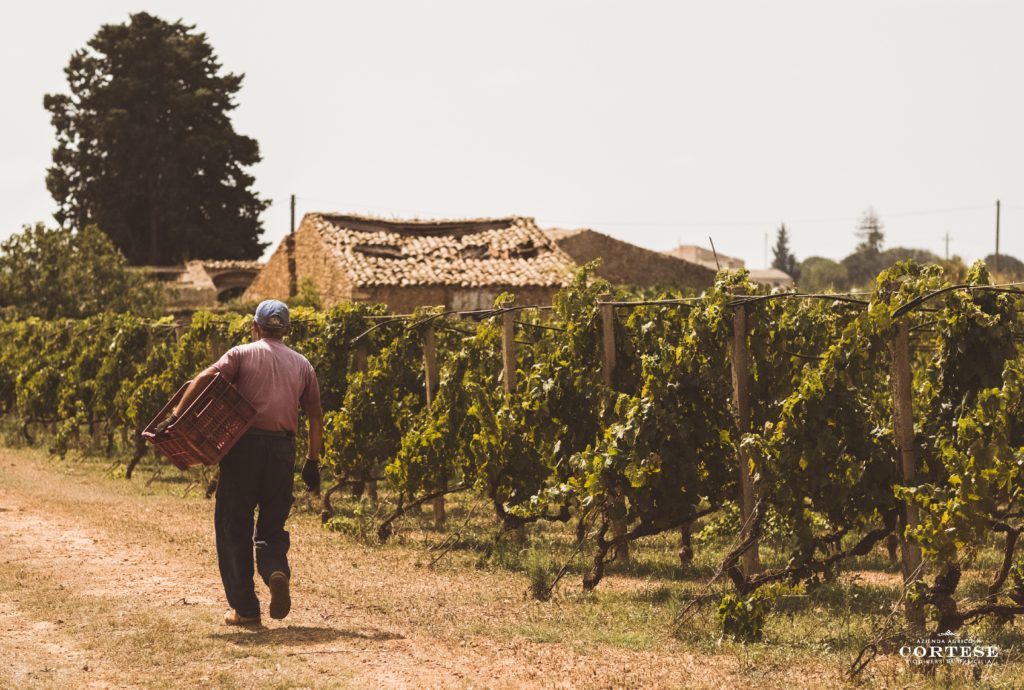
Photo courtesy of winery.
Azienda Agricola Cortese was initially owned by Giovanna Cortese. However, as Giovanna became older, she recognized that she was unable to maintain the winery on her own and, since none of her family members indicated an interest in taking over, she set out to sell the estate. After six years of intense negotiations, the winery was purchased by Stefano and Marina Girelli of Trento, Italy. The two were keenly aware that Sicily was a great wine producing region with significant potential and seized the opportunity to make their mark with organic, low-intervention wines.
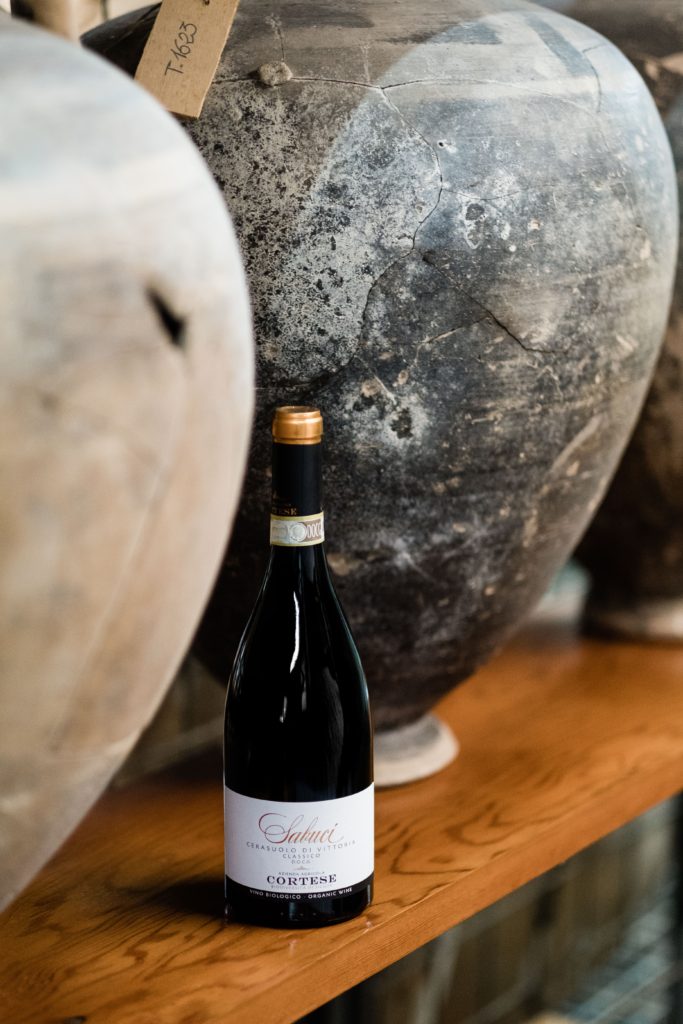
Part of their La Selezione range, the grapes for the Sabuci Cerasuolo di Vittoria DOCG are grown within the Cerasuolo di Vittoria DOCG denomination, which is situated in the south central part of the island. More specifically, the Sabuci Cerasuolo di Vittoria hails from a small hamlet of the same name, which has been an important area for wine production ever since the Greeks established vineyards there.
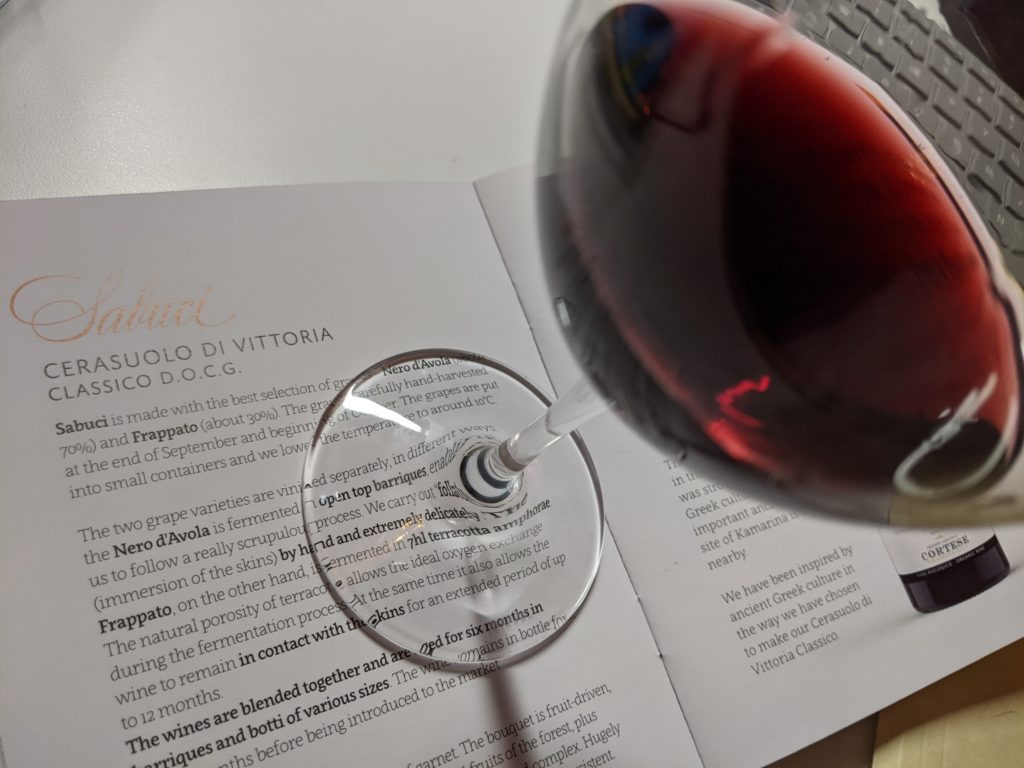
This organic wine is a blend of the indigenous varieties of Nero d’Avola (70%) and Frappato (30%). The former is fermented in barriques, while the latter is fermented in 7hl terracotta amphorae, further drawing on the wine’s historical roots. The wines are then blended together and aged for six months in various vessels before being bottled and eventually released.
After tasting the Sabuci wine, it is clear that the Girelli’s are truly harnessing the potential of their winery. It was truly a very welcome surprise in a glass!
TASTING NOTE Sabuci Cerasuolo di Vittoria DOCG 2016, Sicily, Italy, $20.00 (estimate) This wine delivers plush aromas of berries, plum and cranberry with an undercurrent of herbal notes, namely wet leaves and tobacco, along with vibrant acidity, medium+ body and long length.
This continues to be a weird year and while there is no shortage of reasons to complain, there are also reasons to celebrate. I am choosing to find the positives in my day-to-day existence and acknowledging all the good (and good wine) in my life. And Riesling is as good a reason as any to raise our glass and cheer.
I have always been a big fan of Rieslings in general and, more specifically, a big fan of those from St Urbans-Hof. Situated in Germany and established in 1947, the winery is named after the patron saint of winemakers: Saint Urban. Its 45 hectares are found within the Mosel and Saar Valleys.
The winery is presently in the hands of Nik Weis, a member of the third generation; it was Nik’s grandfather who first founded the winery. Today, the St. Urbans-Hof is a member of Fair’n Green, which emphasizes sustainability, environmental and eco audits, which reflect the winery’s dedication to protecting the land and ensuring that workers are treated well. The winery is also a member of Germany’s renowned VDP (Association of German Quality Wine Estates).
Last year I had the wonderful opportunity to taste two of the St. Urbans-Hof wines, which I pleasantly paired with takeout from my local sushi place. It was the perfectly refreshing combination of crisp wines and fresh umami flavors.
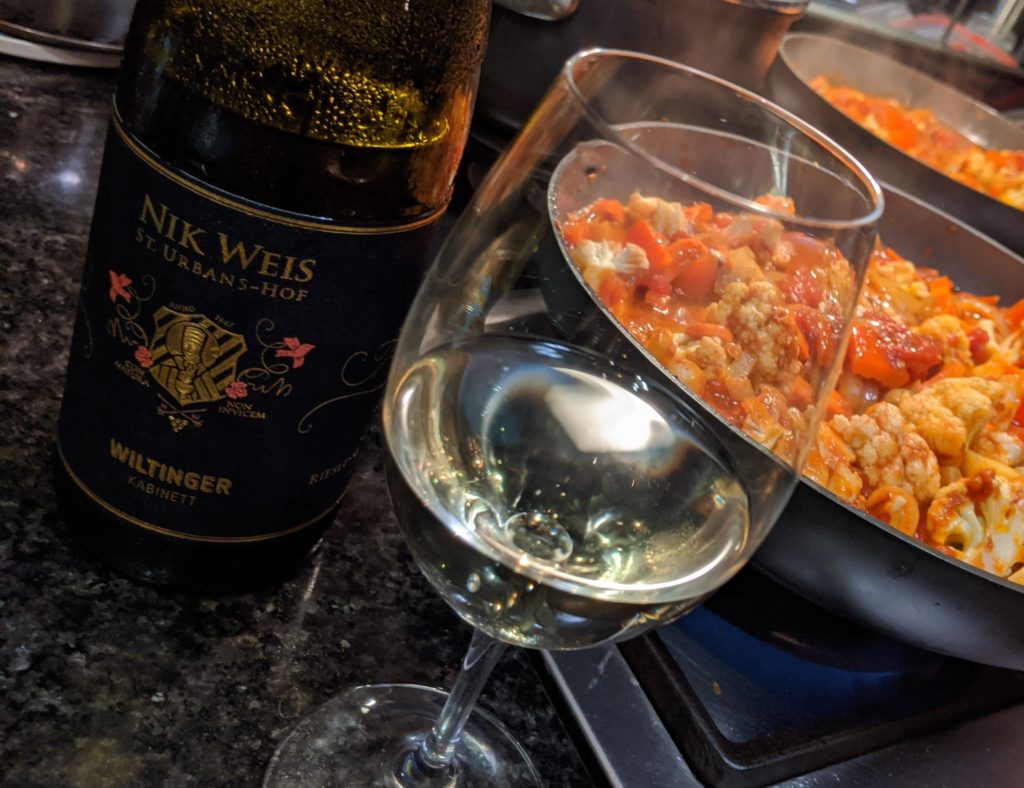
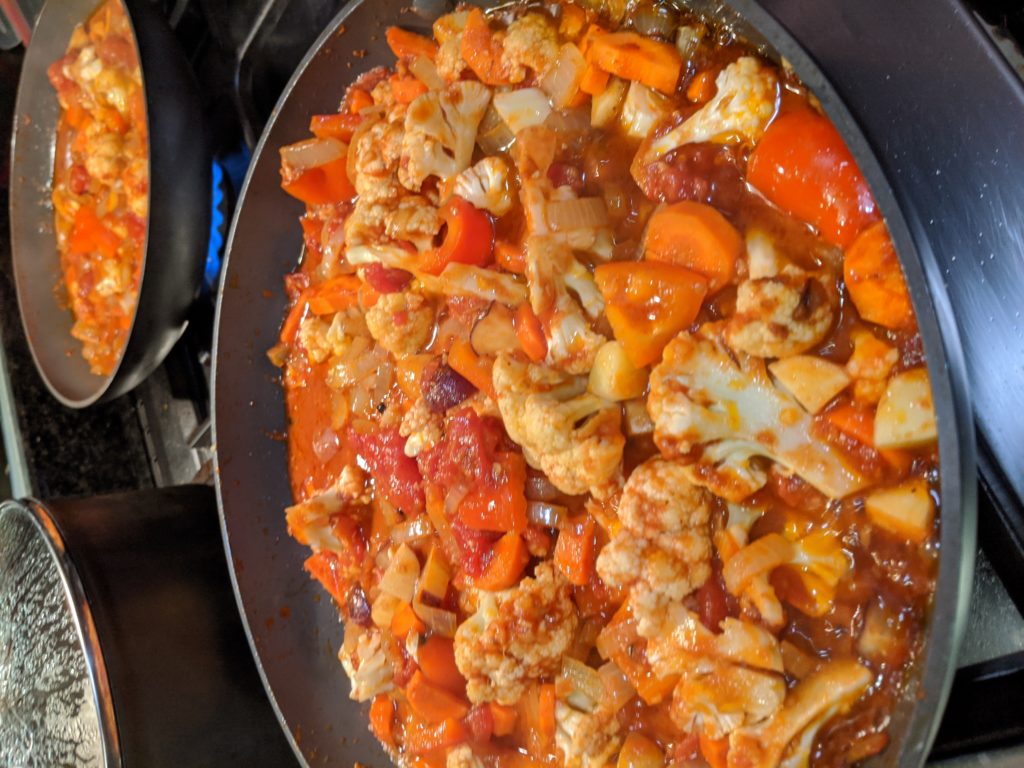
This year, I was once again offered the chance to receive wines from this vaunted producer and I readily accepted. Since Riesling is so food friendly and a good foil for various ethnic cuisines, I thought it would be fun to open up one of the wines when we tried our hand at homemade Indian food, a vegetable curry. We were not disappointed.
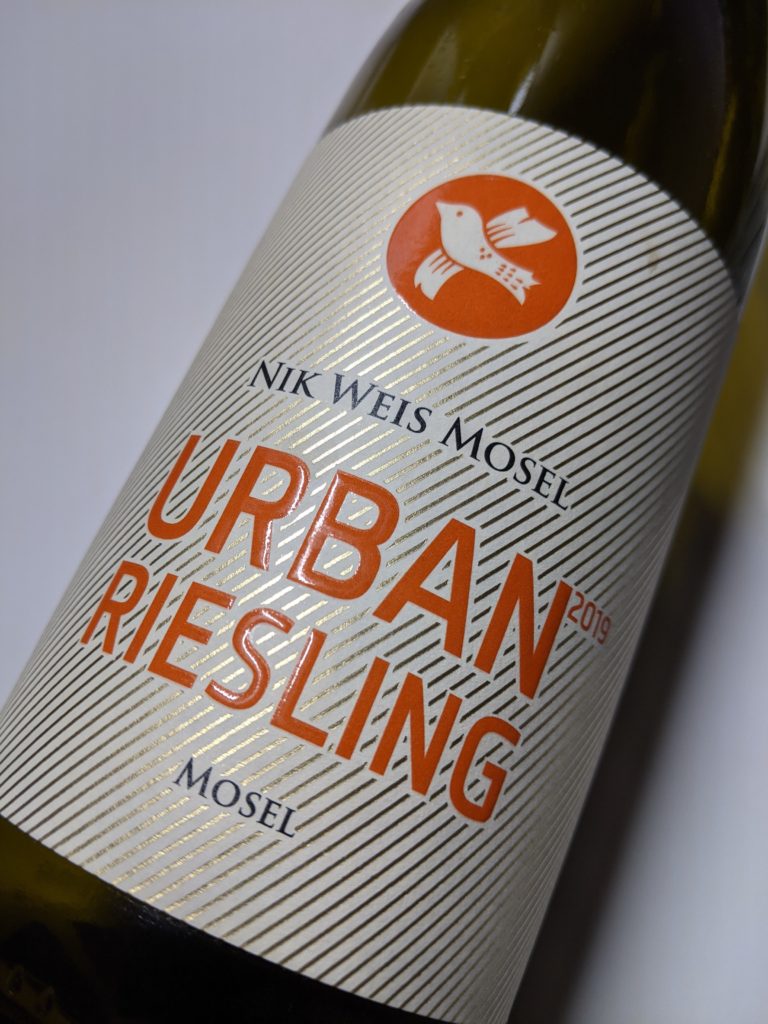
We enjoyed the second of the two Rieslings (the Nik Weis Urban Riesling 2019) later in the month and tit provided equal enjoyment.
As Thanksgiving draws closer, it is yet another reminder to be grateful for what we have and to seize every opportunity to celebrate life!
Nik Weis Urban Riesling 2019, Mosel, Germany, $14.00 This wine epitomizes the typical Mosel style of Rieslings. Aromas of floral and peach greet the nose. The slightly off-dry palate offers up bright acidity, medium body and flavors of lime, citrus zest and peach. It is elegant and restrained with angular structure, culminating in long length. It is really fantastic value for the price and not surprising that it is one of their best-selling wines!
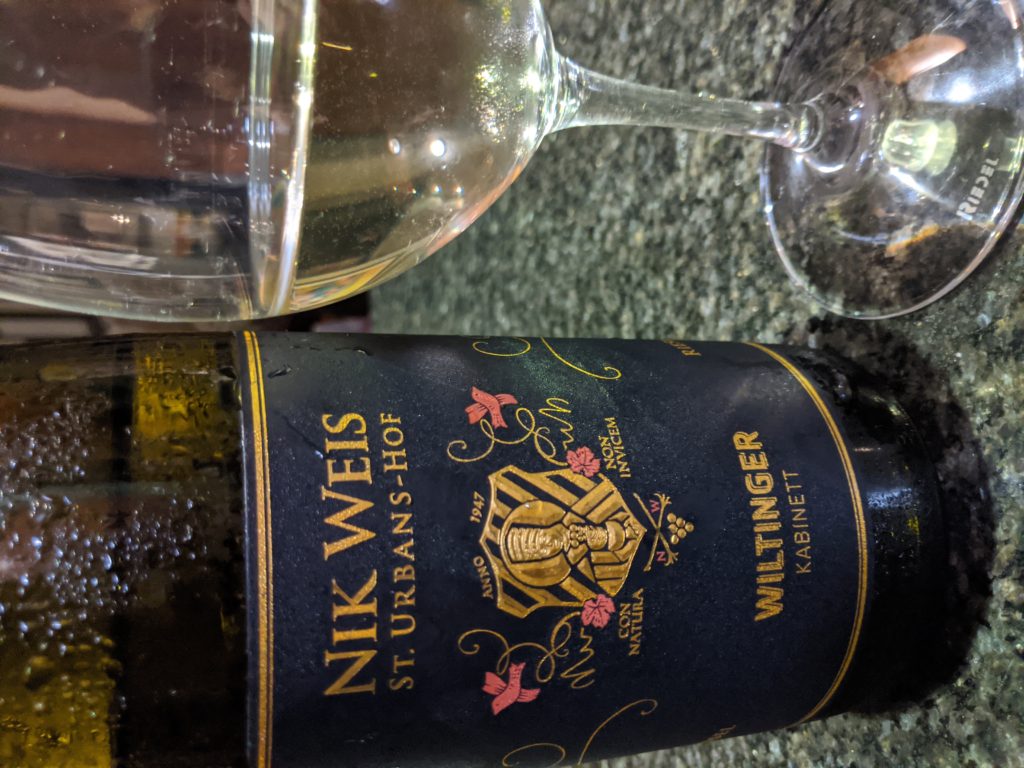
Nik Weis St Urbans-Hof 2018 Wiltinger Kabinett Mosel, $20.00 Whereas the Urban Riesling is produced from grapes sourced from a variety of blue-slate soil vineyards, this grapes for this wine come from the Wiltingen village in the Saar Valley from one of the oldest vineyards (some parcels were planted in 1905). The site has reddish slate soils, thereby adding mineral and spicy characteristics. Presenting with more exotic aromas and flavors, this wine has a pronounced nose of floral and quince. On the palate it is off-dry with medium+ body, lively acidity and notes of lime, floral, spice and quince, with long length.
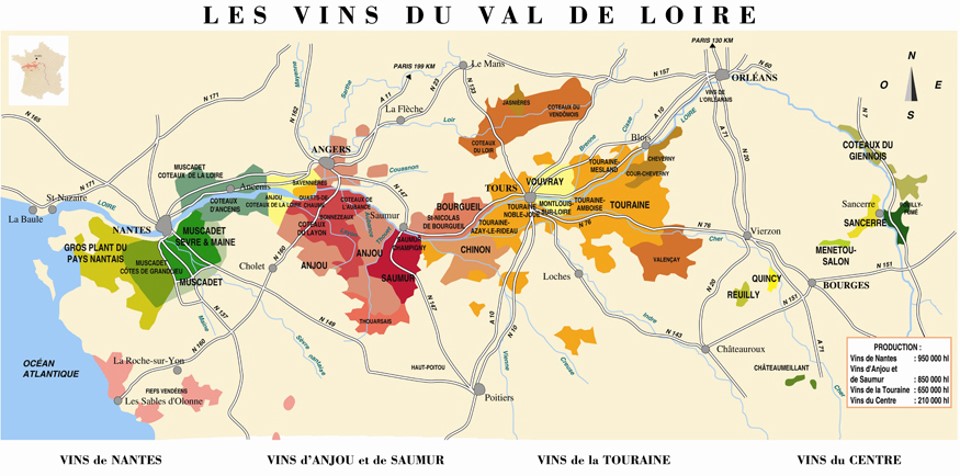
The Loire Valley is home to grand chateaux and the equally grand, but, perhaps, lesser known grape variety, Chenin Blanc. Discovered between the 10th and 15th centuries, Chenin Blanc has a lengthy history in the Loire Valley, with its name supposedly derived from the monastery of Mont-Chenin near Cormery in Touraine.
Although Chenin was somewhat abandoned in the Loire in the 1970’s in favor of Cabernet Franc and Gamay, it is finding its deserved resurgence, becoming more popular within wine circles as of late. Moreover, Master Sommelier, Pascaline Lepeltier has been championing the variety for quite some time.
And, while the grape has since migrated to other parts of France, notably the South West, as well as California and South Africa, it is in the Loire Valley (which accounts for 95% of France’s plantings of the variety) that it really shines.
Yet, despite Chenin Blanc’s long tenure in the Loire, it is not easily recognized on the shelf given that it is labeled by geographic appellation, rather than grape name. In this case, some of the important names to know are Saumur and Savennières.
Additionally, Chenin can be somewhat of a chameleon in that it takes well to different types of wine production, producing a wide range of wine styles from bone dry to lusciously sweet, still and sparkling and with or without oak, malo-lactic fermentation and lees aging. Given this diversity of styles, there is a wealth of options from which to choose.
Regardless of production style, among its various characteristics, Chenin is high in acidity making it very food friendly as it cleanses the palate between bites. Its aromas and flavors tend toward fruit: citrus, apples and (the more exotic) quince; floral: honeysuckle and chamomile; and honey, wax, and lanolin.
During this time of social distancing and a greater emphasis on staying home, this is a wonderful option to try a selection of wines paired with your delivery or take-out.
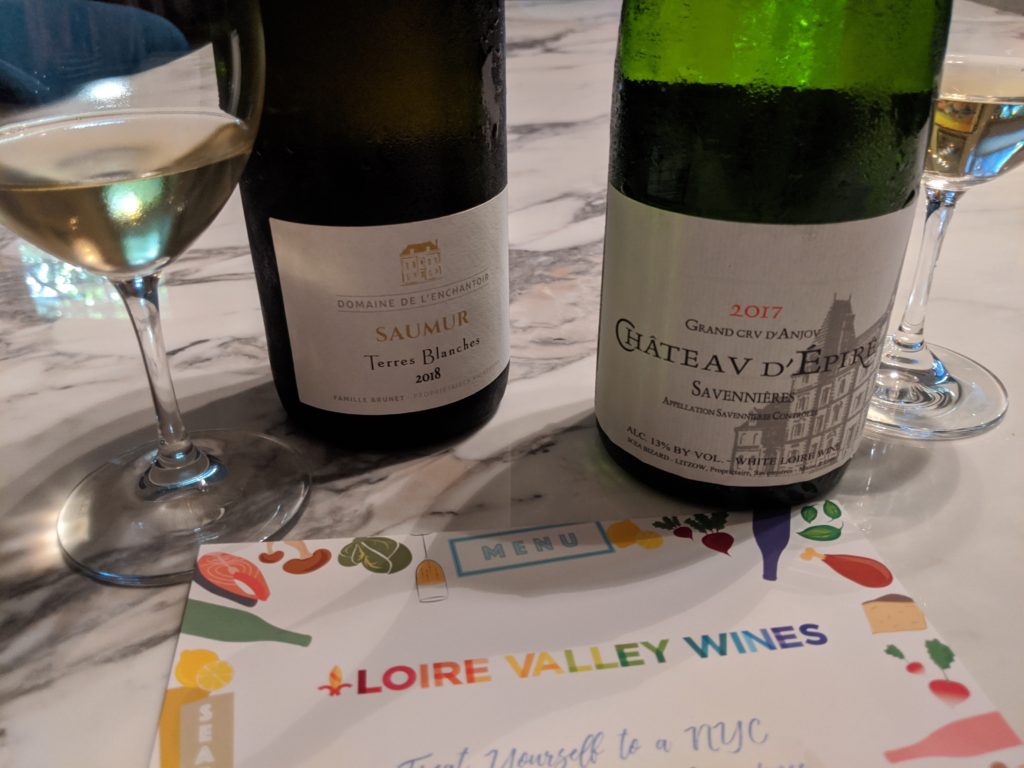
In this vein, I was recently given the opportunity to taste through several iterations of this grape, paired with the Mediterranean cuisine of Extra Virgin NYC. This black owned restaurant, situated in the West Village, draws from “coastal fare from Italy and France” and has been open for 16 years.
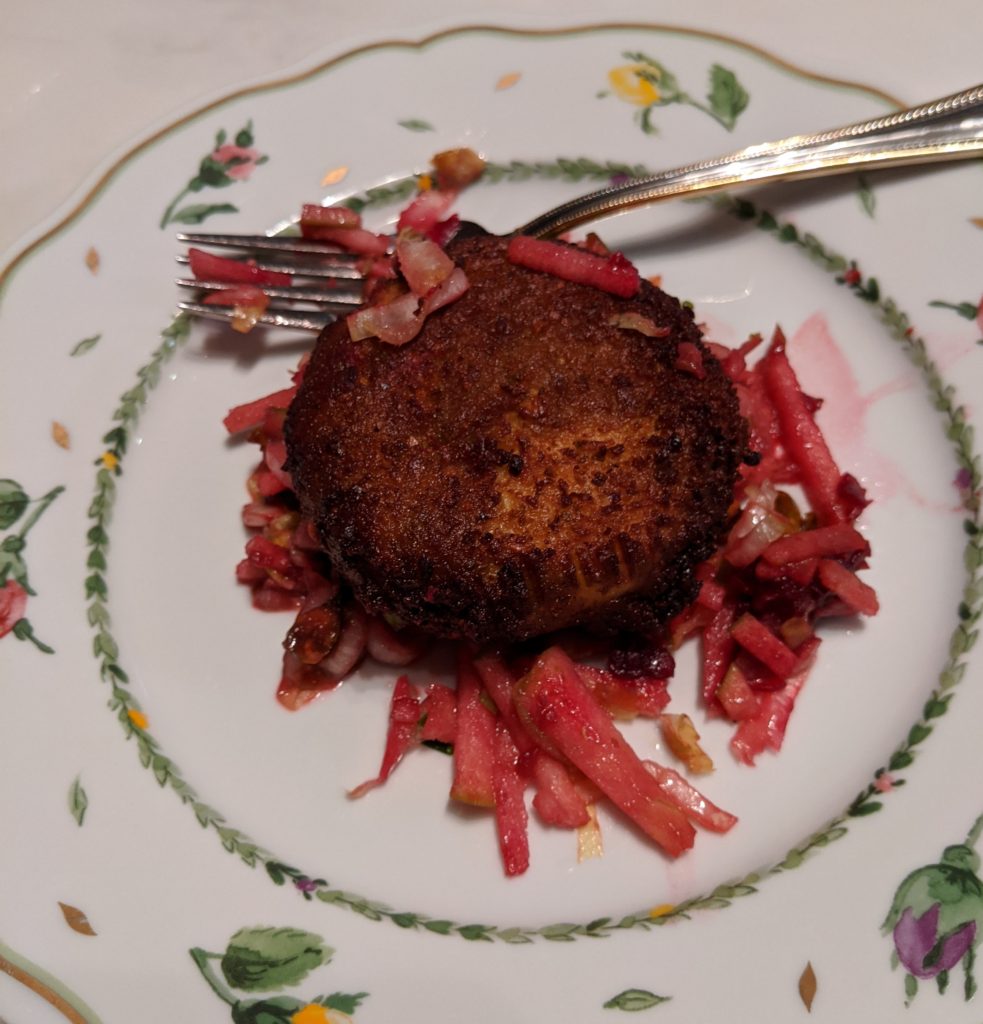
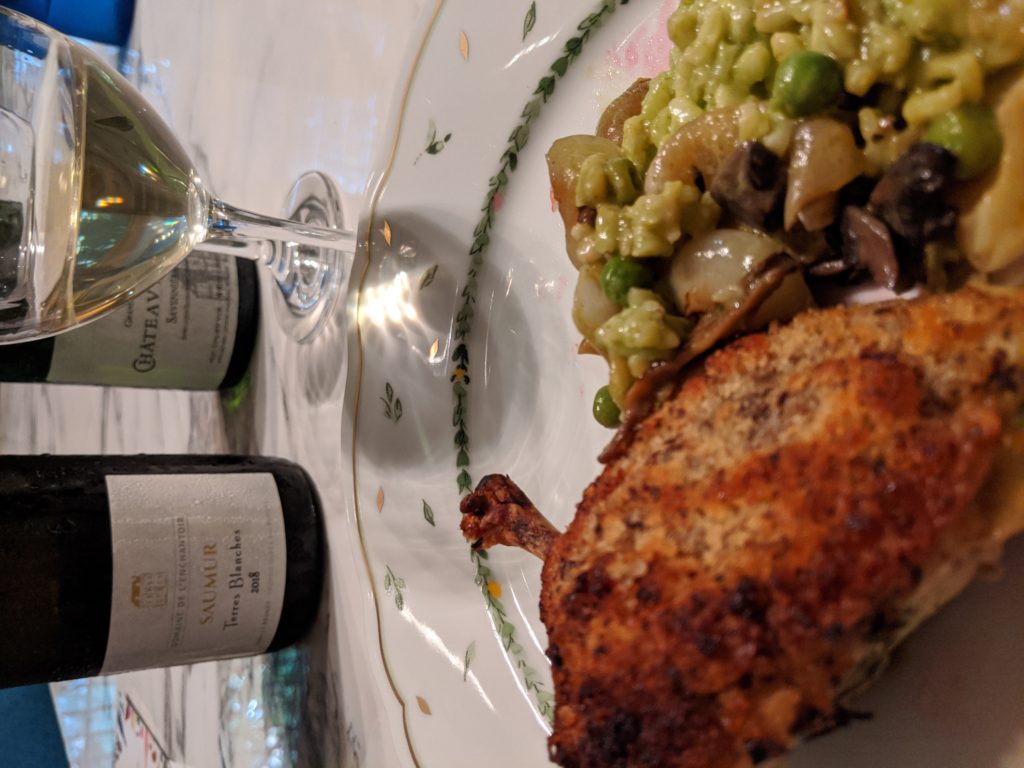
My delicious dinner consisted of a pistachio-crusted goat cheese salad with roasted beets, endive, watercress, granny smith apple vinaigrette, followed by mushroom crusted virgin chicken with sweet pea risotto, Cipollini onions and truffle broth. Both dishes were a great match for the Chenin wines.
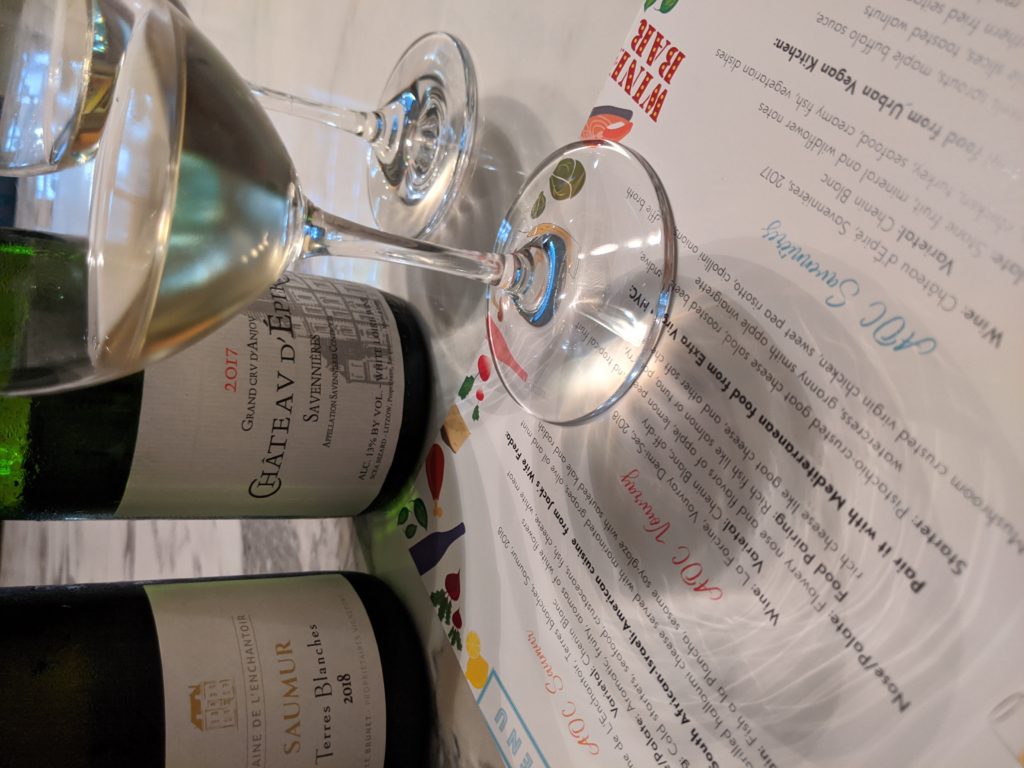
TASTING NOTES Domaine de l’Enchantoir Saumur Blanc “Terres Blanches” 2018, Loire Valley, France, $20.00 Run by the Brunet family, this domaine has been farming organically since 2010. Aromas of stone fruit/apricot on the nose give way to a dry, rich and round palate with medium+ acidity, medium body, notes of red apple and very long length.
Chateau d’Epire Savennières 2017, Loire Valley, France, $25.00 Chateau d’Epire is one of the oldest domaines in the Savennières appellation, with a history that dates back to Roman times with ownership by the Bizard family continuously since the 17th century. Exotic notes of lanolin, peach and white flowers dominate the nose and persist on the dry palate, along with high acidity, medium+ body, some minerality and long length.
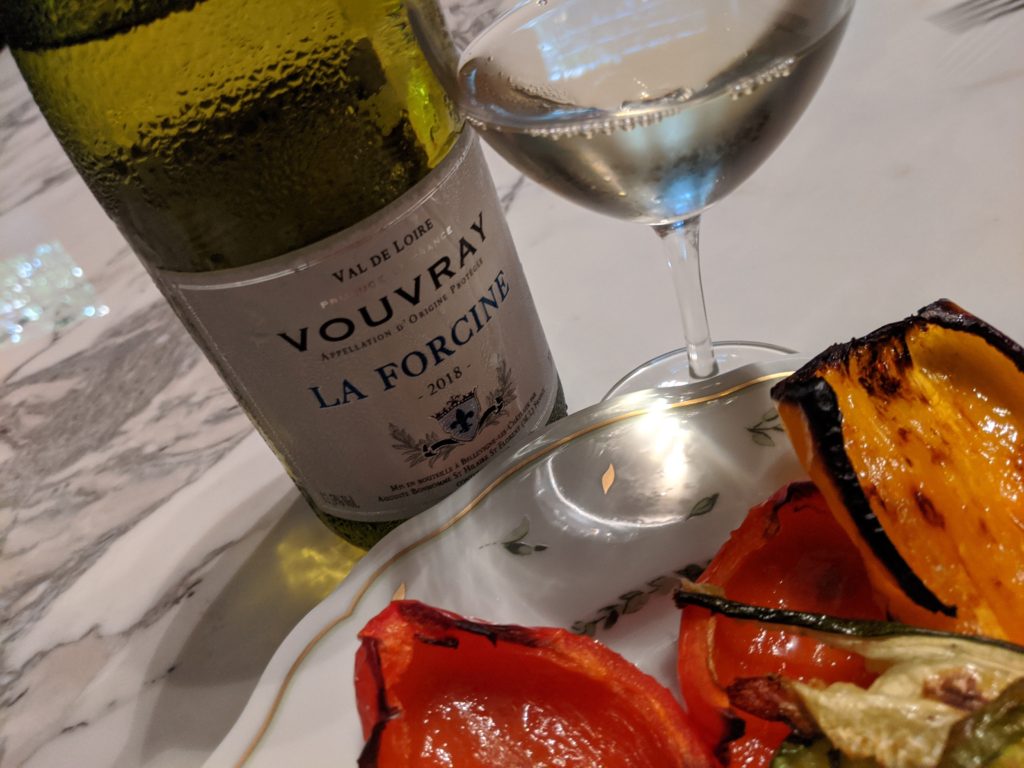
La Forcine Vouvray Demi Sec 2018, Loire Valley, France, $13.00 Produced by August Bonhomme, La Forcine is widely applauded as a value driven Vouvray. With a pronounced nose of floral and stone fruit notes, this off-dry wine is balanced with medium+/high acidity, medium+ body and long length.
Extra Virgin NYC 259 West 4th Street, New York, NY 10014 Currently open for delivery and take-out as well as limited outdoor dining, proprietors Michelle Gaton and Joey Fortunato are asking for support to close their block to vehicular traffic and permit more space for outdoor eating.
I first tasted Merry Edwards’ wines at the start of the lockdown. Who knew at the time that we’d be relegated to our homes for such a lengthy period of time? These past several months found me poured over an impossi-puzzle (devoting 2+ months to completing a 2,000-piece jigsaw of Van Gogh’s A Starry Night), finishing a paint-by-numbers and reading the 1,000 page Infinite Jest. Plus, engaging in the usual complement of Zoom happy hours, Zoom events, etc.
But, as states open up in varying degrees, there is a new lightness to the air, brought about by longer days of sunshine and the promise of freedom after feeling cooped up for so long. Moreover, with Summer’s arrival and tentative steps toward a return to business as usual (or a close approximation thereof), we are all anxious for live interaction.
A recent weekend provided just that as we hosted our first impromptu mini-dinner party on a Saturday night. We seated everyone one a different side of the table, with less direct face-to-face contact, but other than that, it was just like any other dinner party. Clearly all starved for human contact, our two friends arrived at 6pm and stayed until midnight, as we enjoyed the pleasure of each other’s company for many hours.
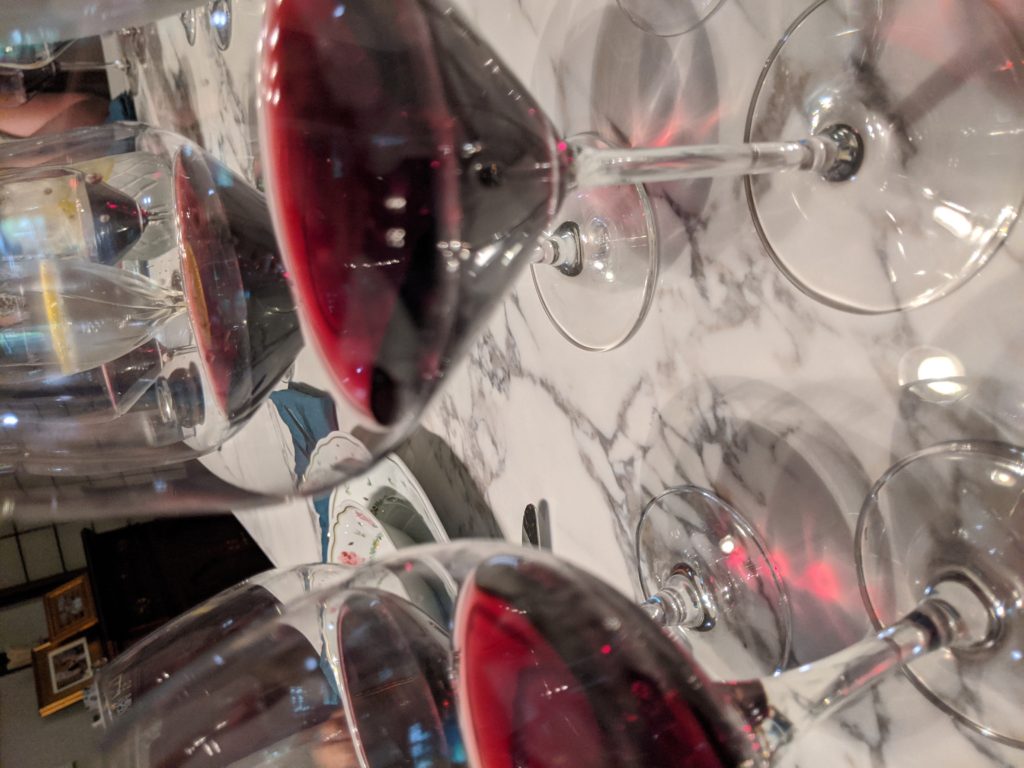
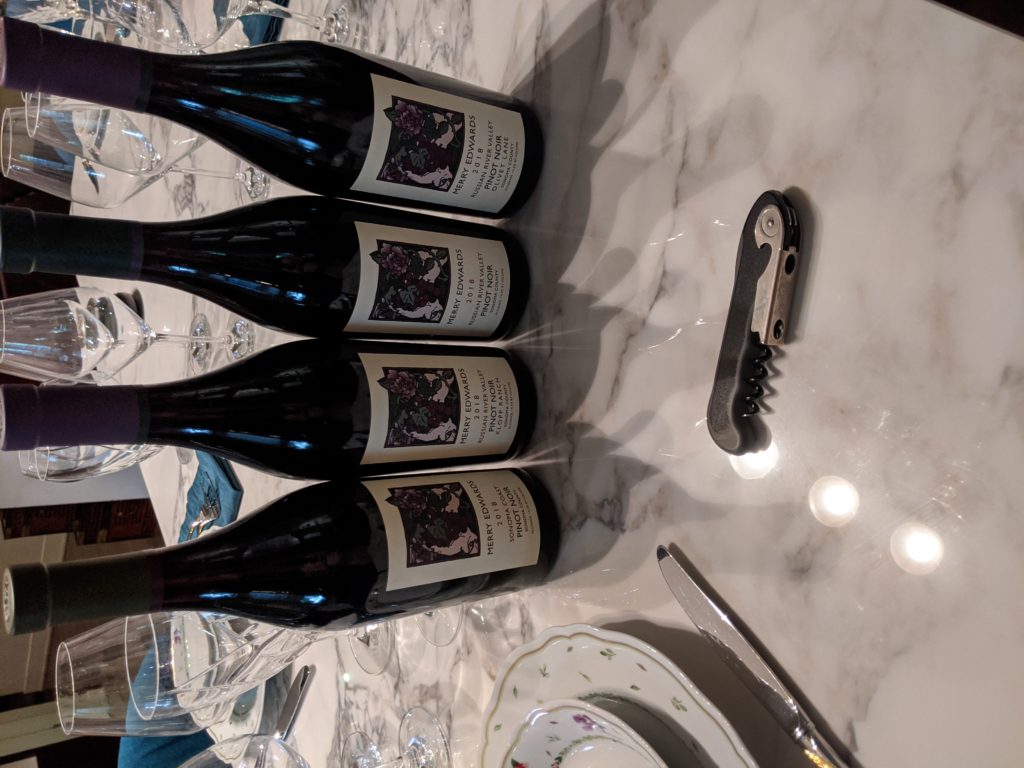
I had again been graciously sent several samples from Merry Edwards and since three of the wines were Pinot Noirs, thought it would be fun and informative to open them all up and taste them side by side with our friends. When I offered up the suggestion, no one complained. Once committed to that plan, I knew that we had purchased the Family Pack size of salmon, which incidentally pairs beautifully with Pinot Noir, so we were all set with our menu as well.
We were overdue for cleaning the apartment, so we scoured with gusto to get ready for our guests, and finished up the aforementioned puzzle just in time at 9:30am that morning, which had been taking up extensive real estate on our dining table.
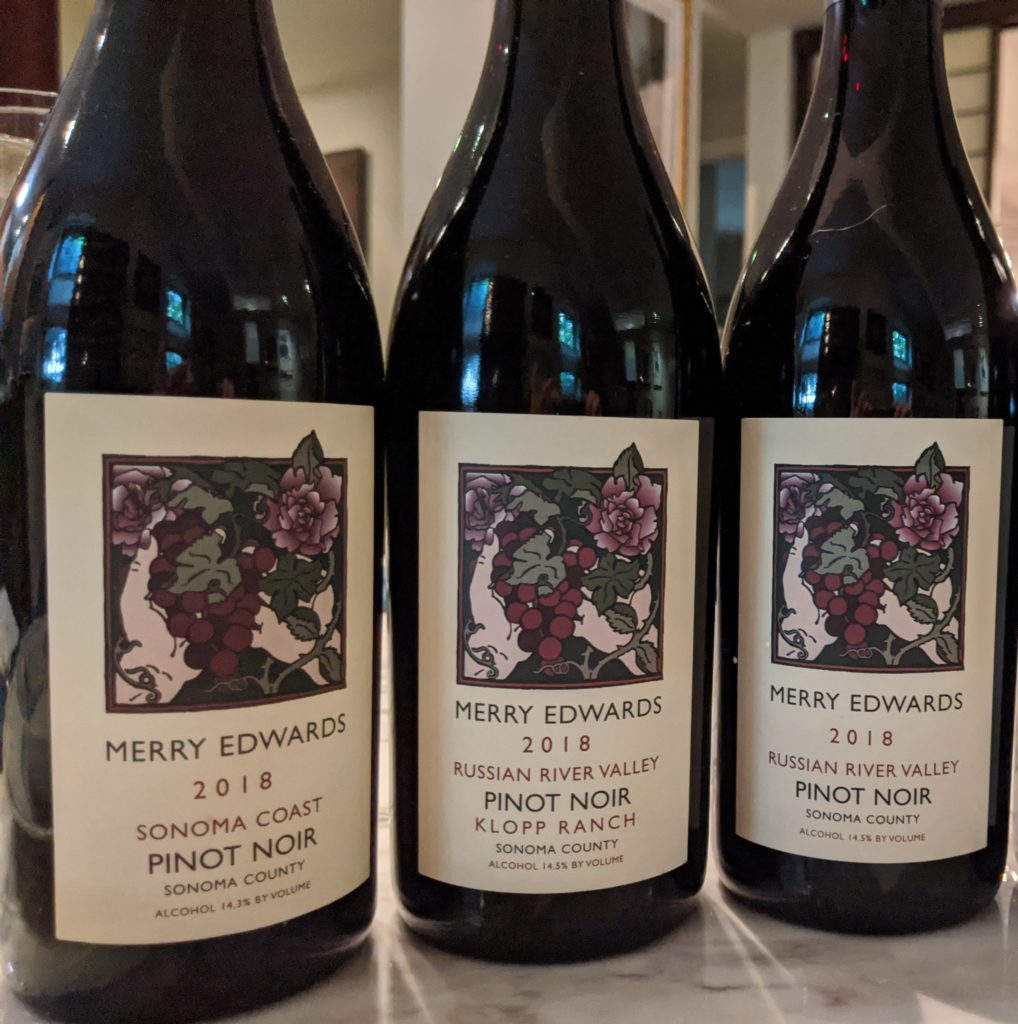
Once our guests arrived, we took our seats and turned our attention to the assembled wines, tasting them one at a time to fully appreciate the aromas and flavors of each one. Like many producers, Merry Edwards makes quite a variety of Pinot Noirs. While all our the product of Pinot Noir grapes, these wines differ in their origin in that they are produced from different appellations and/or specific vineyards.
To the uninitiated, it may seem like overkill or just unnecessary to have such an abundance of Pinots, but each wine has its own unique profile and characteristics despite being produced from the grape variety, having been influenced by the specific growing conditions. Accordingly, it is wonderful to be able to compare and contrast these wines to more easily identify their individual appeal.
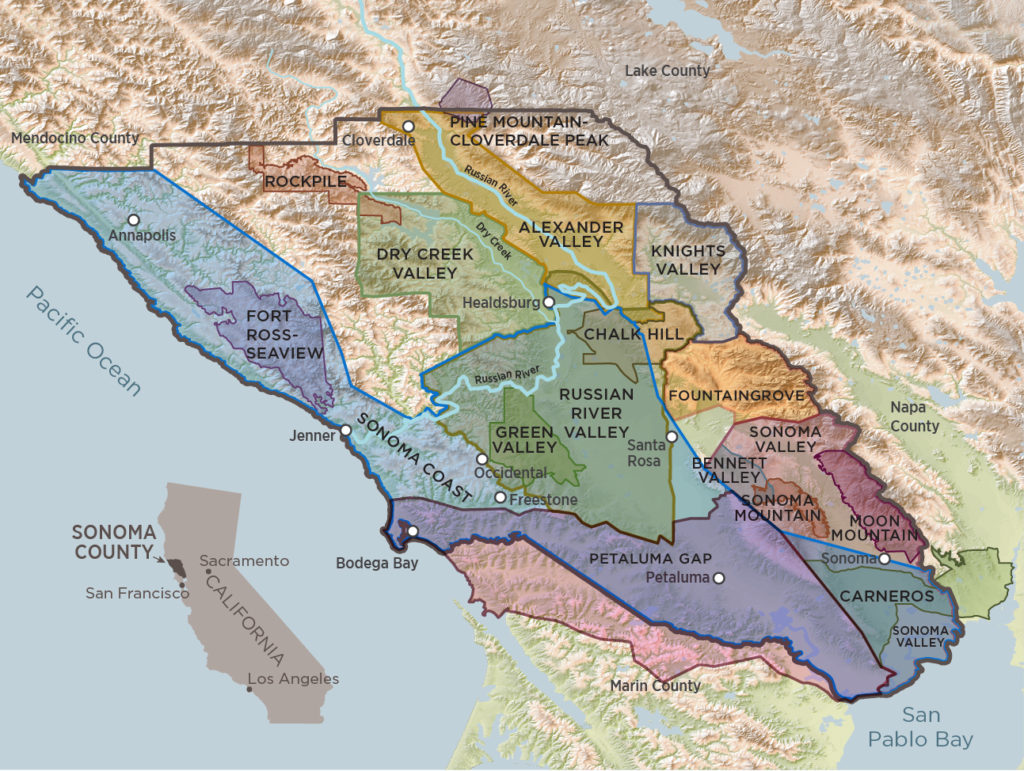
Pinot Noir 2018, Sonoma Coast (Pinot Noir 2018 (CA), USA, $48.00 5670 cases produced The first Pinot we tasted hailed from the Sonoma Coast American Viticultural Area (AVA). This swath of land runs from San Pablo Bay to Mendocino County, primarily running along the coastline. Given its close proximity to the Pacific Ocean, the area receives a higher amount of rain than other parts of Sonoma County. However, with most vineyards situated above the fog line, the grapes are able to fully ripen despite the cool climate.
TASTING NOTE: This wine was decidedly focused on fruit, with aromas and flavors of cherries, cola, and some leafy notes. The palate was dry, with bright and lively acidity, medium body and long length.
Pinot Noir 2018 Russian River Valley (CA), USA, $55 5670 cases produced The next wine was from the Russian River Valley AVA, which is situated further inland. The farther distance from the sea makes this area warmer than the coast, but it is still influenced by the fog, which helps cool the area and prolong the growing season. As a result, the grapes grow slowly, maintaining good acidity and achieving full ripeness and phenological maturity.
TASTING NOTE: Compared to the Sonoma Coast Pinot, this wine offered up darker fruit and more herbal characteristics with dried sage, black cherry and blackberry. This dry wine had high acidity, medium body and was lush on the palate, culminating in long length.
Pinot Noir 2018 Klopps Ranch, Russian River Valley (CA), USA, $55.00 930 cases produced The last of the trio was also from the Russian River Valley AVA, but all of the fruit for this wine came from the Klopps Ranch. This 37-acre property was initially planted in 1989 with input sought from Merry from the very beginning. The land has great drainage and a moderate climate, further adding to the quality of the grapes, which are deliberately kept to low yields. The wines from this vineyard generally offer up good fruit character with lush richness.
TASTING NOTE: I found this wine to be slightly shy on the nose, but once it opened up, there was a profusion of mushroom, herb and earthy notes. It was dry with high acidity, medium+ body and a complex flavors of spice, cherry, black cherry and herbs plus long length.
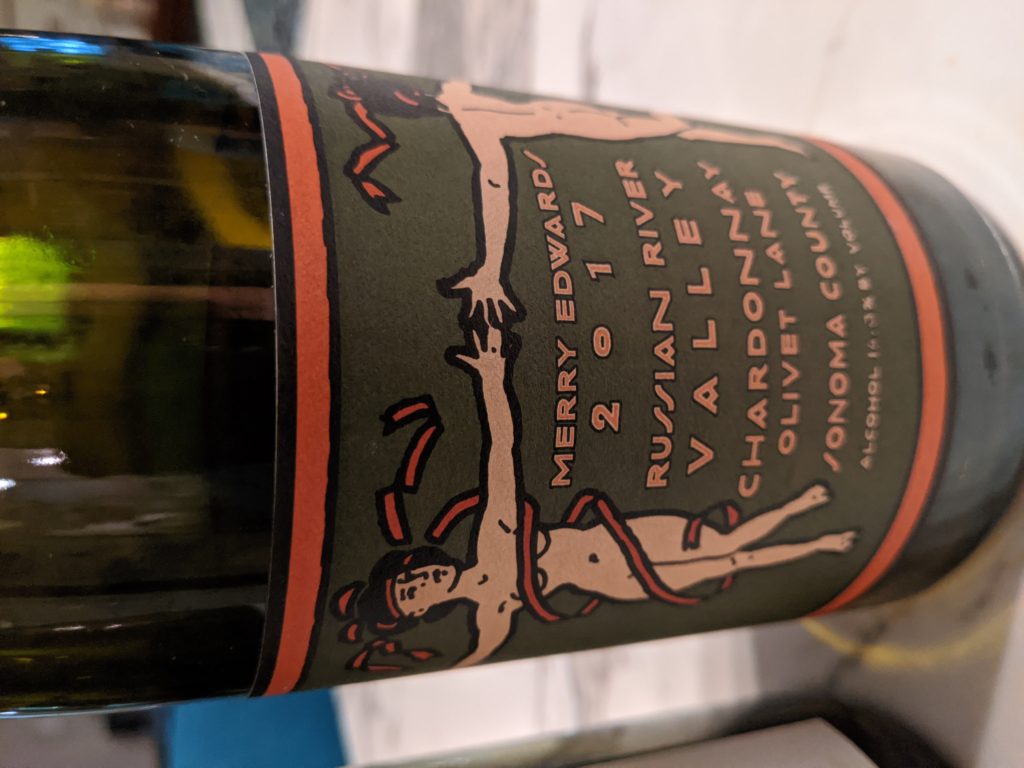
Chardonnay Olivet Lane 2017, Sonoma County (CA), USA, $68.00 630 cases produced
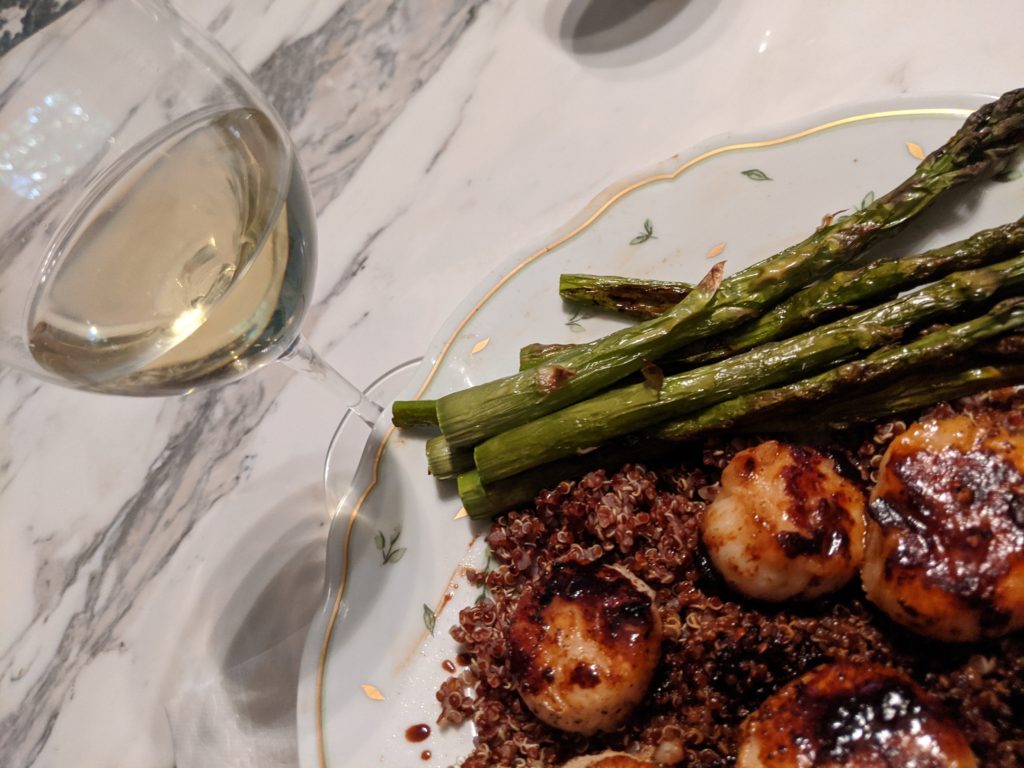
We also had the great pleasure in tasting Merry Edwards’ Olivet Lane Chardonnay at an earlier meal, which was an exquisite match for seared scallops. The Olivet Lane Vineyard totals 60 acres, 24 of which are planted to Chardonnay (and 22 of which are planted to Pinot Noir). This land has been owned by the Pelligrini family since 1973 at which point they converted the fruit and olive orchards to vineyards, with guidance from a professor at UC Davis. Over time, this vineyard has developed a stellar reputation for its classic style and its grapes are highly sought after.
TASTING NOTE: Aromas of vanilla and wood greeted the nose. The dry, full-bodied palate presented with rich nuttiness, medium acidity and notes of apple, wood, vanilla and minerality, along with long length.
Time will tell if we’ll need to hunker down again in isolation, but for we are are enjoying our new-found freedom and the promise of summer.
In January 2017, I had the immense pleasure of visiting Verona. “In fair Verona, where we lay our scene,” I found a lovely and welcoming city with bustling shops, beckoning restaurants and majestic bridges. Starting at the imposing Bra Gate, the city’s cobble-stone streets put you in mind of another time, reinforced as you pass the Roman amphitheater. Other hints of this classical connection include the Porta Borsari, an ancient Roman gate still standing in the middle of town.
In many ways, this is the city of love. Nearly synonymous with the tragic story of Romeo and Juliet, visitors are encouraged to tour Juliet’s house and tomb as well as send her letters in aid of their own romantic peccadillos. But, despite the gimmicky feel to these attractions, there is something about Verona that stirs the romance within. Or, perhaps, at least, the romance of life and adventure.
Aside from romantic love, Verona also courts business – specifically the business of wine. Home to VinItaly, Verona hosts the largest wine fair in the world, bringing the world of wine to its door each year. Moreover, Verona serves as a gateway to the Valpolicella wine region, the name of which translates as the “valley of many cellars” and with the profusion of wine production here, it is easy to see why.
An area dedicated to viticulture, local archeological evidence of these vines dates to 40 million years ago, while records of wine production in the Veneto area indicate a history as early as the 5th century BCE. The region is bound by Lake Garda and the Adige River, both of which influence the climate among the nearly 20,000 acres of vineyards.
Today, the region encompasses several different wines within its borders, but traditionally has been associated with wines produced from dried grapes. These type of wines appear to have been developed from the fourth century BCE, likely a way for the Romans to raise the alcohol level of their wines, rendering them more stable and thus more easily transported throughout their empire.
While the Romans dried their grapes over heat, more modern measures focus on drying out the grapes over a period of months through a more natural reduction in water content called appassimento. Today, the wines most well known for this type of production method is Amarone della Valpolicella.
Hailing from this region and adapting this traditional approach, the Pasqua family has focused on producing a less expensive option in both red and white. They use a modified appassimento technique in which the grapes lose “only” 15-30% volume as opposed to the 60% associated with Amarone. The family launched their Romeo & Juliet PassioneSentimento (Passion-Feeling) in 2014.
Not ones to worry about convention, Alessandro Pasqua proudly declares that “The Rosso breaks about 10 rules!” including its use of the non-indigenous Merlot grape, early vinification and a limited aging regimen. Accordingly, neither of these wines have a particular designation other than IGT Veneto, proclaiming that the wines come from the Veneto region.
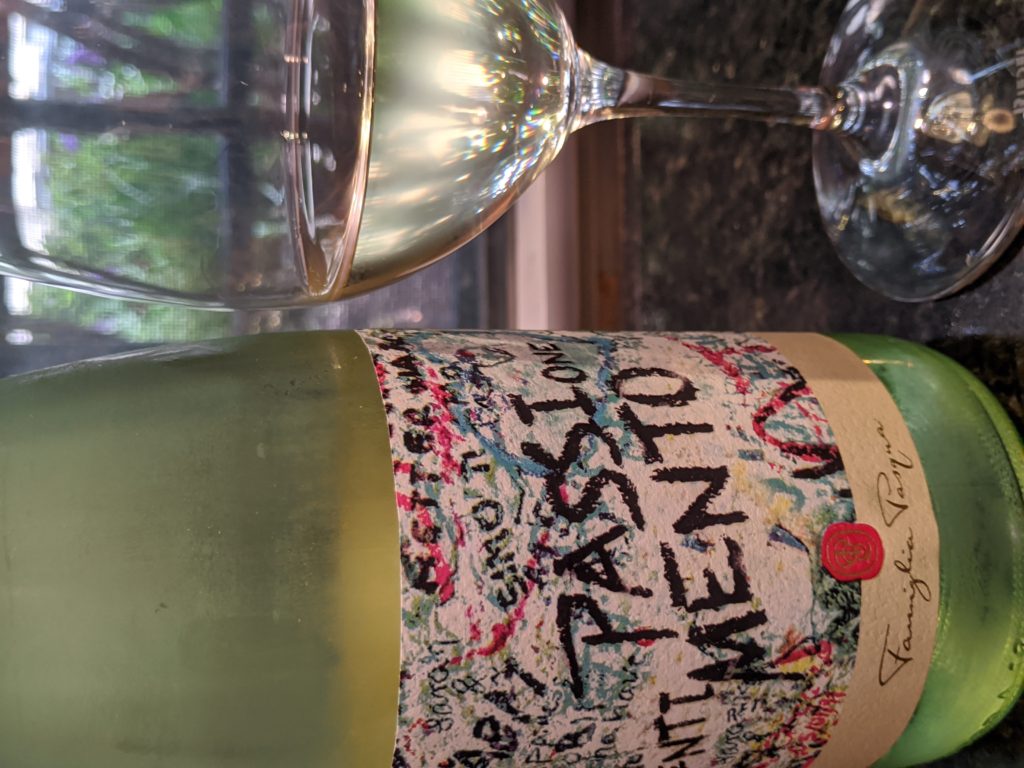
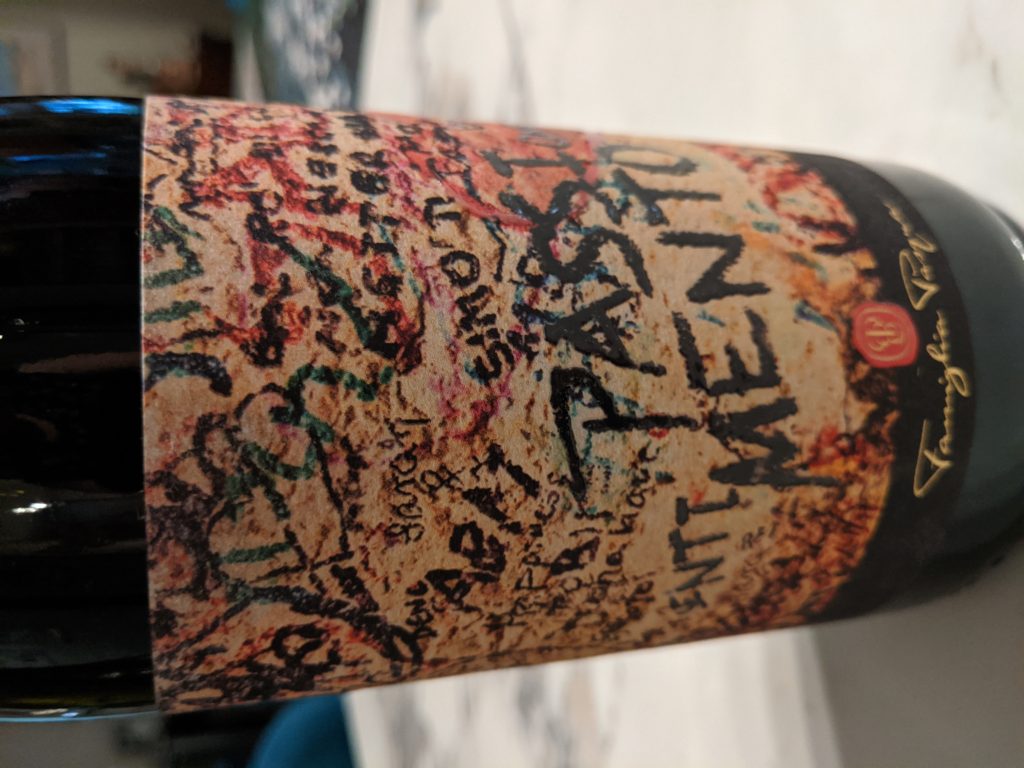
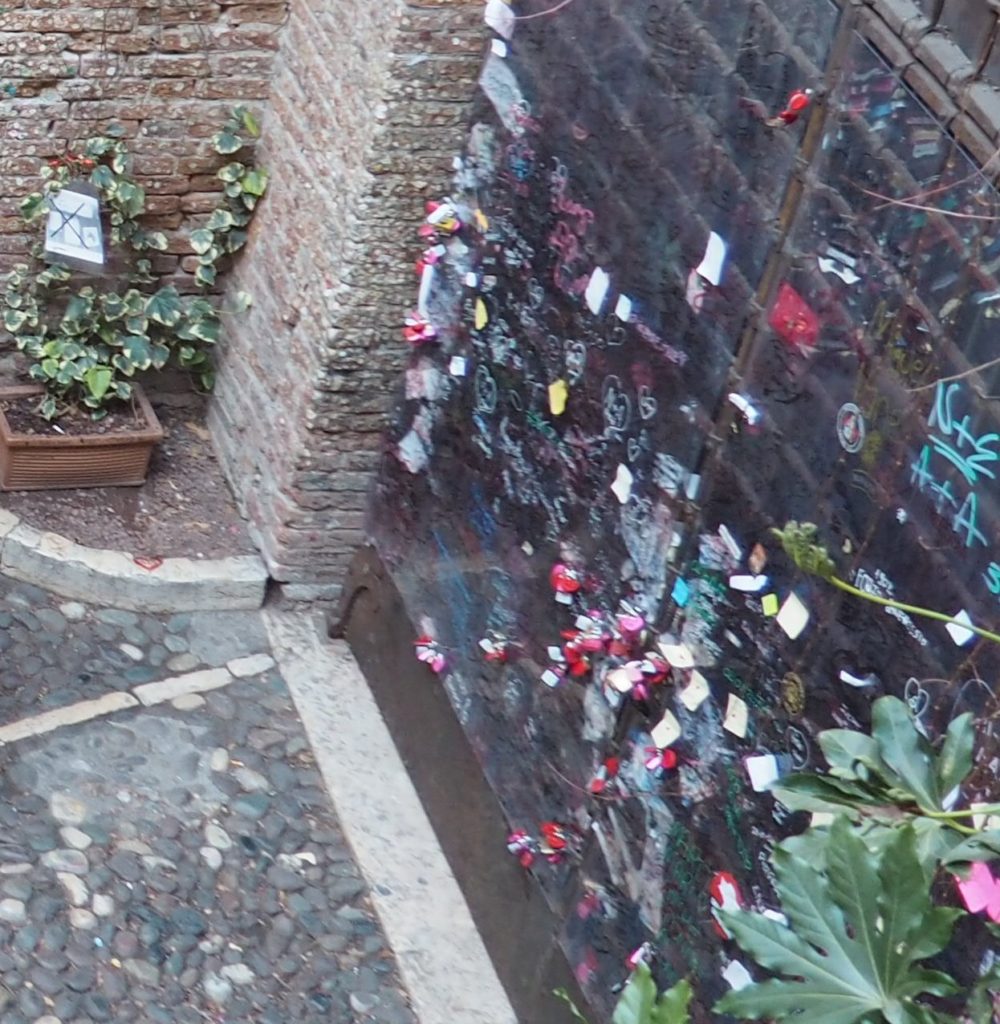
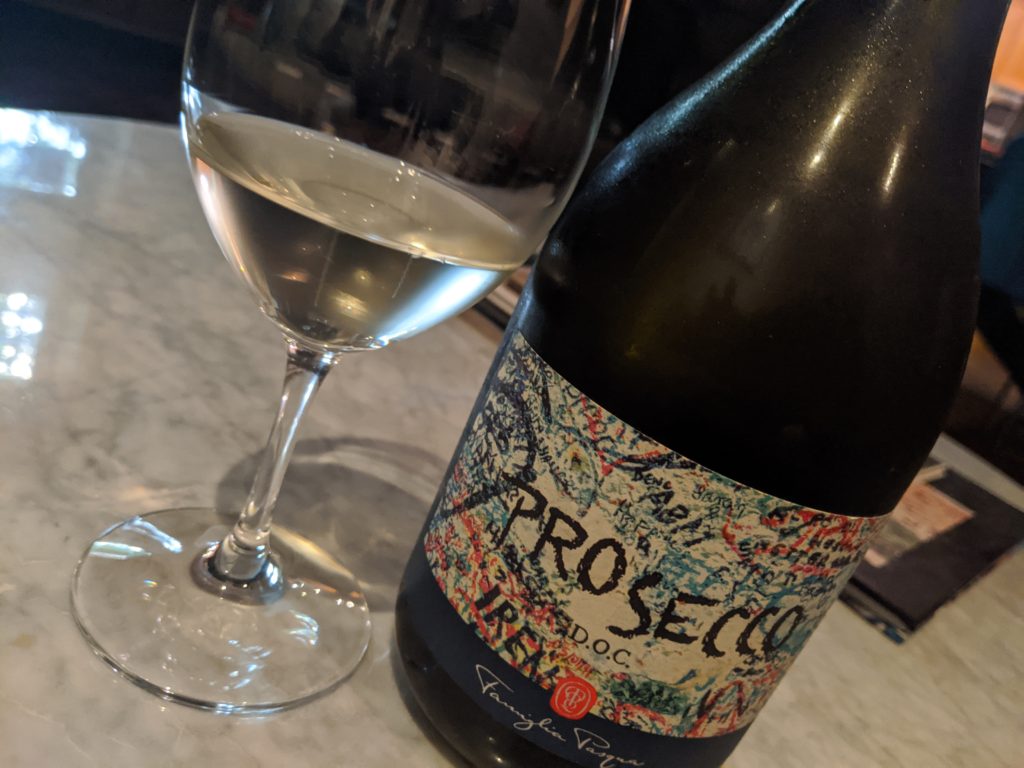
Befitting a wine named Passion-Feeling, the label features the love-inspired graffiti that lined the passageway and walls (now since removed) at the house associated as having been the Capulet’s home.
Pasqua’s PassioneSentimento collection includes a white, red and a Prosecco, another wine closely associated with the region.
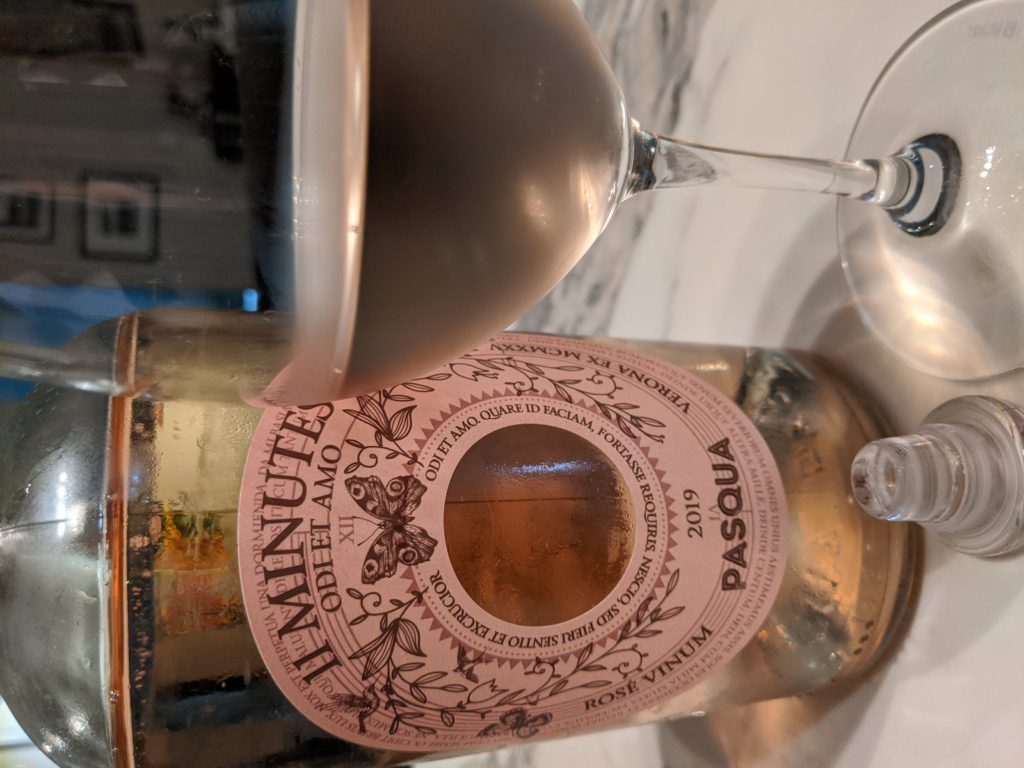
Among its other wines, the Pasqua Family also produces a an “11 Minutes Rosé ,” which, according to their winemaker is the ideal length of time for contact between the juice and skins to produce this wine. While not part of the PassioneSentimento series, this rose recalls another set of lovers: Catullus and Lesbia, with her depicted on the label.
The graffiti wall at the Capulet home in Verona.
TASTING NOTES
Romeo & Juliet PassioneSentimento Prosecco Brut, Treviso DOC, $16 SRP Fresh and lively on the nose and palate, with bright pear fruit and floral notes, persistent effervescence and long length.
Romeo & Juliet PassioneSentimento Bianco 2018, Veneto IGT, $16 SRP Produced from 100% Garganega, the grapes for this wine are harvested early, hand-picked and then dried for around 15 days, thereby concentrating the aromas and flavors. A portion is aged in French oak barrels for a few months. With an intense, concentrated nose, one is greeted with notes of melon, musk and a slight nuttiness. On the palate, it is dry, with high acidity, rich and round with citrus, melon, culminating in long length.
Pasqua “11 Minutes” Rosé TreVenezie IGT, $20 SRP This rose is very much in the Provencal style, with a barely there pale salmon color. Aromas of watermelon and strawberries greet the nose and continue on the palate, with good acidity, medium body and long length. Very refreshing and food friendly.
Romeo & Juliet PassioneSentimento Rosso 2017, Veneto IGT, $16 SRP A blend of 40% Merlot, 30% Corvina and 30% Croatina, the grapes are left to dry for four to six weeks, losing water content over time. On the nose, this wine offers up notes of plum, cherries, a hint of vanilla and menthol. The palate is dry, but with a slightly sweet attack, with medium acidity, medium tannins, flavors of berries, baking spice and anise, with long length.
This moment in time continues to be challenging for us all as the world grapples with both the pandemic and protests. The uncertainty for what it will all mean in the future is unsettling, but I am choosing to find hope amidst the pain.
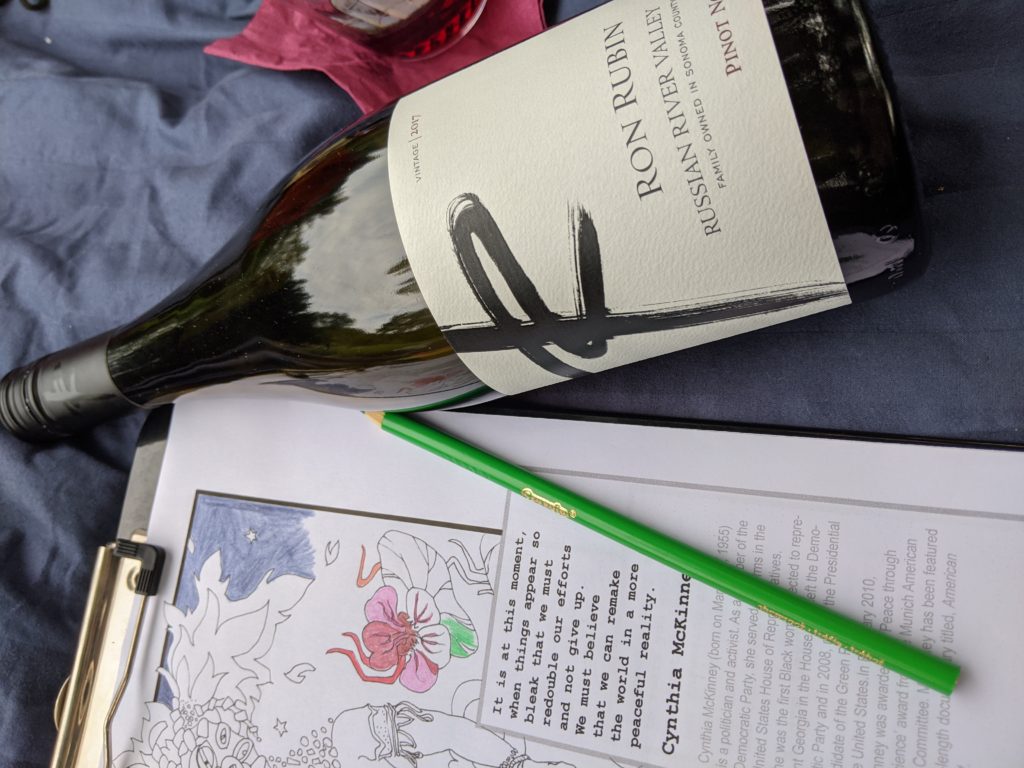
Last week found me on a socially distant, “Pandemic Playdate” in the local park with my friend. She supplied the colored pencils and I brought a bottle of wine. The page I had selected to color that day read:
It is at this moment, when things appear so bleak that we must redouble our efforts and not give up. We must believe that we can remake the world in a more peaceful reality. ~Cynthia McKinney
I was in a dark place that afternoon, but this quote touched me deeply.
As we move forward to remake the world, I am holding my hopes and dreams in my heart and in my mind even though I don’t know when they will come to fruition. Along these lines, while some people leap straight into pursuing their passions, others wait patiently for their dreams to come true.
Ron Rubin first dreamt of having his own winery while a student at UC Davis. That was back in 1971. But life had other plans for Ron. In 1972, he returned home to Illinois and entered the family business, Central Wholesale Liquor Co., bringing innovation and expansion over his 22 year tenure with the company before moving on to become a top seller of Clearly Canadian Sparking Water.
Yet, he never forgot about his dream.
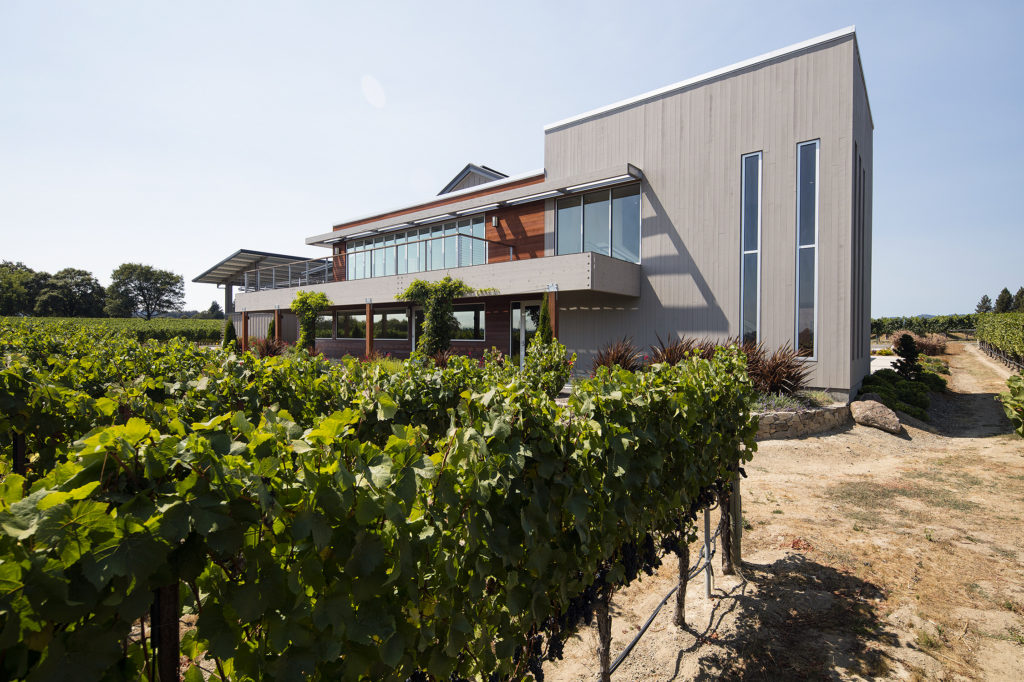
Forty years later, Ron parlayed his success into the purchase of River Road Family Vineyards and Winery, in the Russian River Valley’s Green Valley, renaming the winery Ron Rubin Winery. He had finally manifested his dream!
Not one to rest on his laurels, Ron threw himself into his new venture, earning himself the honor of Innovator of the Year Award from the North Bay Business Journal in 2016.
And, interestingly, while wine continues to be an important passion, his love of beverages is quite broad. In this regard, Ron was so inspired by the book The Republic of Tea that he made an offer to the authors (and owners of The Republic of Tea), Mel and Patricia Ziegler, to purchase their company back in 1994.
Beyond beverages, Ron’s other guiding passion is philanthropy, giving both his financial support and business acumen to numerous causes including serving on the Board for Sonoma State University’s Wine Business Institute; donating to Wine Spectator Learning Center’s state-of-the-art education complex; funding The Maynard Amerine Wine Label and Menu Collection, at U.C. Davis; and establishing the Ron Rubin Winery TRAINED FOR “SAVING LIVES” program.
This latter program was launched in 2017 in collaboration with the American Red Cross and ZOLL Medical Corporation, with the Ron Rubin Winery covering the cost of supplying qualifying California wineries with a ZOLL AED PLUS (Automated External Defibrillator) unit.
In keeping with his life-long pursuit, Ron’s top wines are part of his Dream Series and include two Chardonnays and a Pinot Noir.
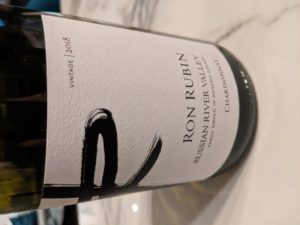
TASTING NOTES Ron Rubin Winery Russian River Valley Chardonnay 2018, $20.00 A bit shy on the nose, but really lovely on the dry palate with medium acidity, medium+ body and complex flavors of melon, apple, a slight woody note and vanilla, culminating in long length.
Ron Rubin Winery Russian River Valley Pinot Noir 2017, $25.00 With berry and cherry aromas on the nose, this beautiful wine offers up good acidity, fresh cherry fruit, slight leafy notes and long length on the palate.
My passport expires at the end of this year, but this has definitely not been a year where it is getting much use. In fact, it’s been a full year since my last international trip, with no plans on the horizon. I know that this is temporary, but travel has always been an important part of my life, so it feels strange to be so rooted in one place without the pleasure of exploring new (to me) and exciting places.
Interestingly, I remember a friend telling me once that the number of Americans that hold valid passports is relatively small compared to the overall population. Now, we are all stuck at home, unable to experience the culture and cuisines of the world firsthand.
However, while we are all on lockdown, we can choose to travel from the safety of our dining rooms. We can open up a bottle of wine from nearly anywhere in the world and travel in an instant — no passport or security check needed. You can leave your shoes on, although perhaps you haven’t put on shoes in weeks?
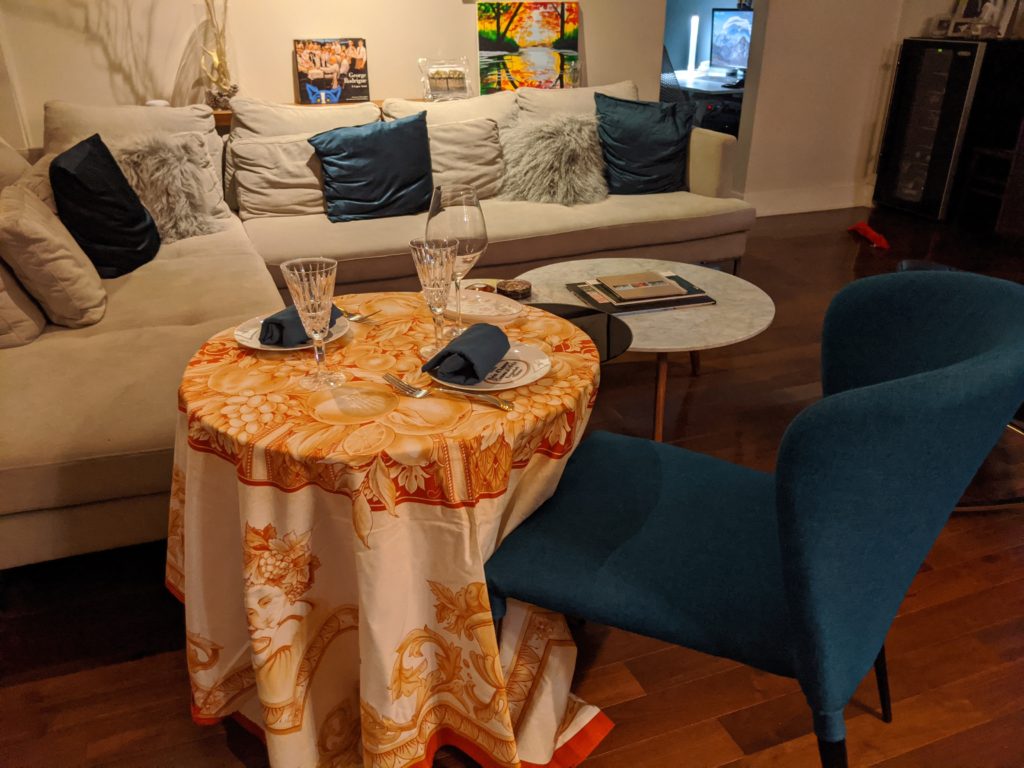
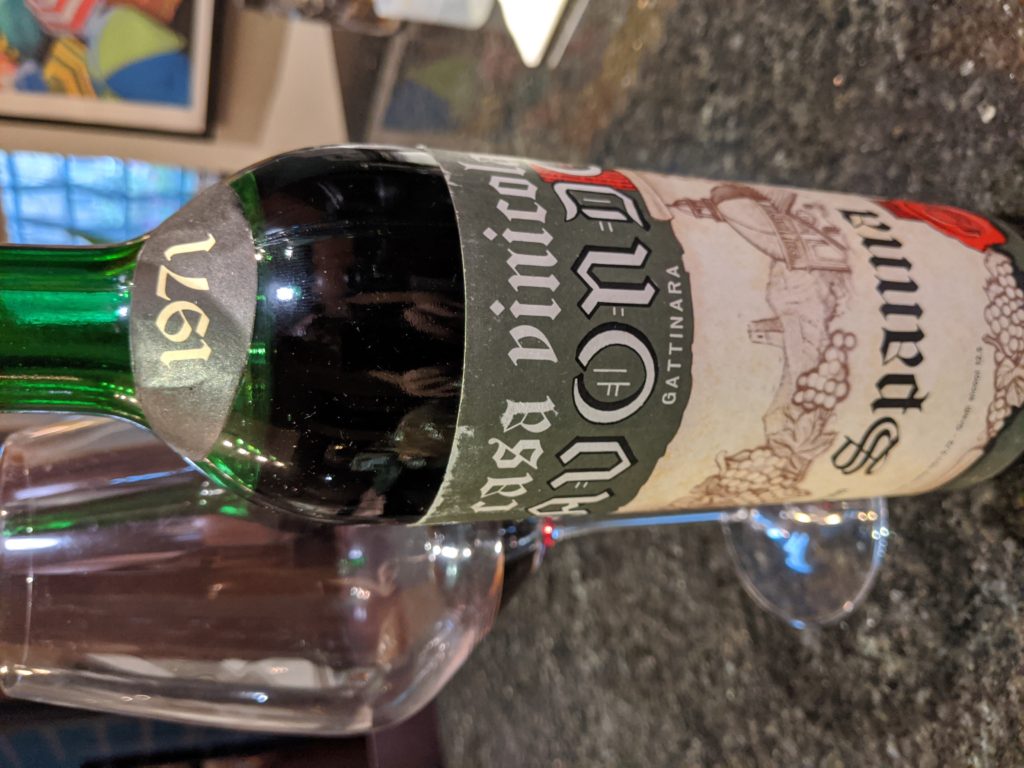
In addition to traveling to other locales, we can also travel in time and space. This past week marked my husband’s 49th birthday, which we celebrated at home in style, setting up a bistro table in the living room, instead of eating at the dining table, which is now shared with the impossi-puzzle (a 2,000 piece jigsaw puzzle of Van Gogh’s A Starry Night). We had a delicious gourmet pantry-raid meal with souvenirs from various trips to Italy (truffle cream, tomato jam, true Balsamic vinegar and other finds), served with vintage Champagne (2008) and a wine from his birth year (1971). It was magical to be transported from the present to the past in a single sip, thinking about what had occurred during those growing seasons.
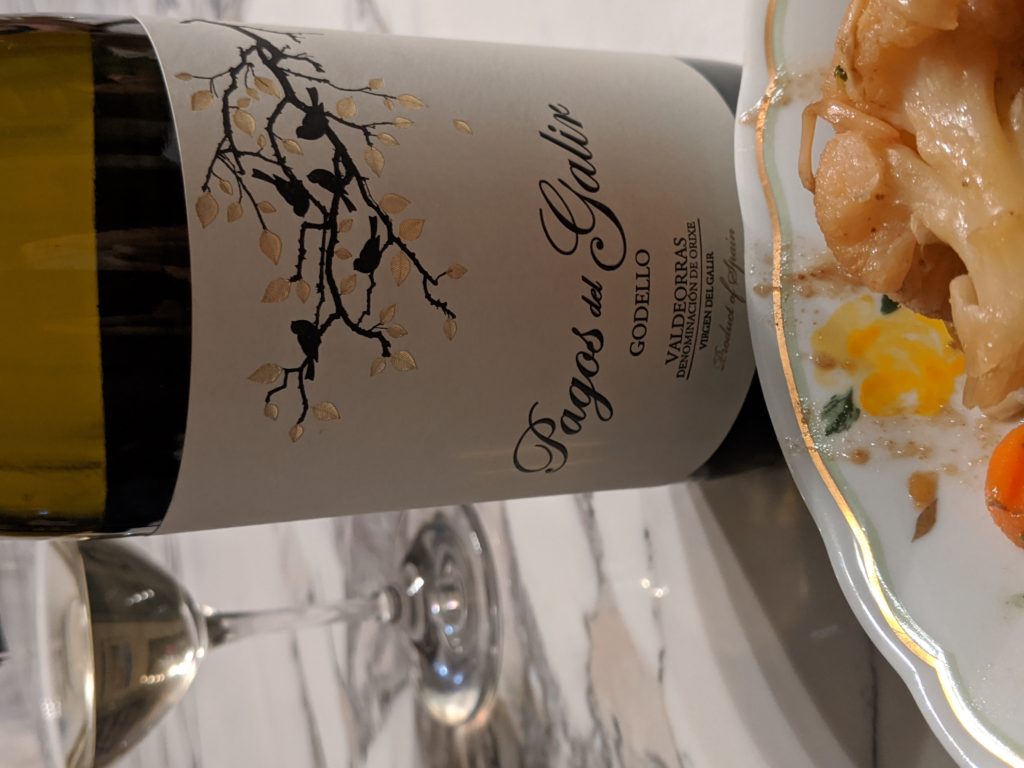
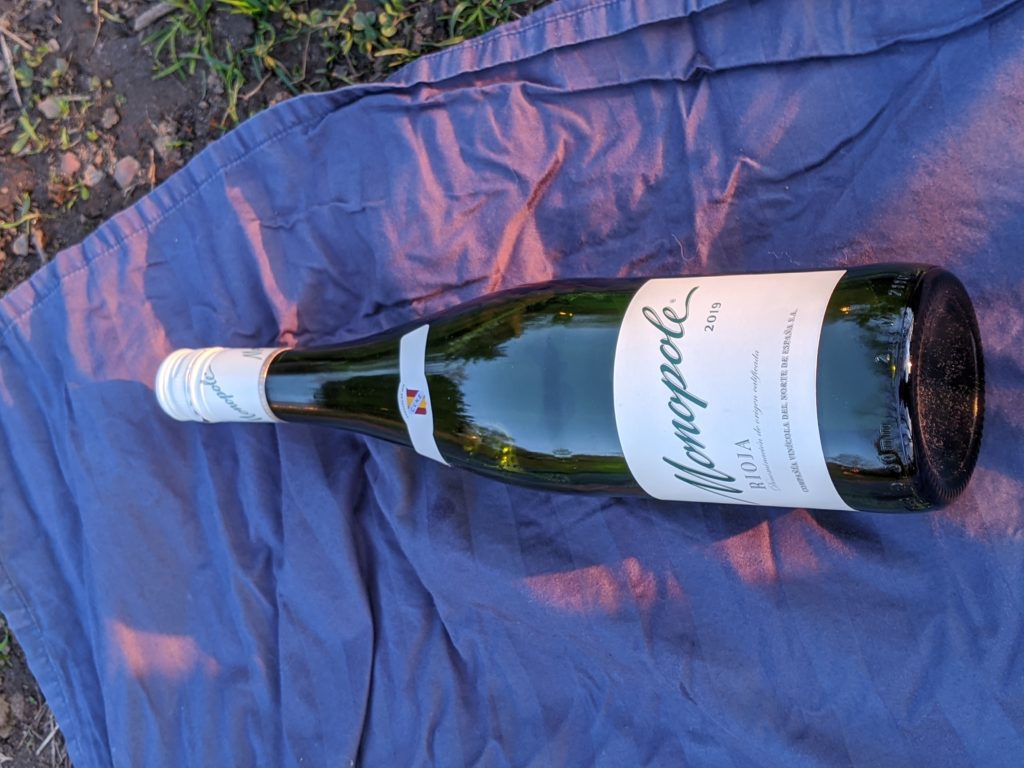
In addition, I had the wonderful opportunity to taste through a selection of Spanish wines recently, ready for spring. I had been overly optimistic about preparing Spanish cuisine to accompany them and further expand my non-travel horizons, but, no matter, the wines were still enjoyable without a perfect pairing. The Rosado (aka rose) was a great option for a Zoom happy hour, the Godello went well with stir-fry and the Monopole was the perfect picnic partner on a rare visit to the park.
Virgen del Galir Pagos del Galir Godello 2018, Valdeorras, Spain, $21.00 Notes of smoke and spice greet the nose, giving way to melon and minerality on the palate, along with a slight oxidative/yeasty note, likely due to the 4 months aging on the lees, culminating in long length.
Vina Real Rosado 2019, Rioja, Spain, $14.00 A blend of Garnacha, Tempranillo and Viura, this wine is very lovely, redolent of tart, strawberries and watermelon, with lively acidity and freshness on the palate. Long length.
CVNE Monopole 2019, Rioja, Spain, $15.00 This 100% Viura white wine was first produced by CVNE in 1915 and is full-bodied with floral and apple aromas and flavors, along with good length.
For more information on CVNE and Vina Real, please see my previous story.
As Natalie Merchant, of 10,000 Maniacs, once sang, “These are Days you’ll remember Never before and never since I promise”
I know that I have been fortunate thus far and am choosing to see the beauty amidst the chaos, so I am proceeding to sing the whole song in all its positivity.
Yes, these are interesting, challenging, unprecedented times. We don’t know what will happen. There is so much uncertainly, but I am choosing to live day by day — to celebrate my life and all that I have right now. I realize that this may be much more difficult for others and I send them much love and healing.
All of this is not to say that everything is perfect. I am doing my fair share of stress eating and drinking. Not the best self care plan, but sometimes the creature comforts work.
Despite the stress and overwhelm, I am trying to follow my mantra of “Everything in moderation…including moderation,” and, to that end, am enjoying a glass or two of wine with meals. It brings a sense of normalcy and elevates our home cooking. We have also adopted the practice of ordering in once a week in an effort to support local businesses specifically and the food industry in general.
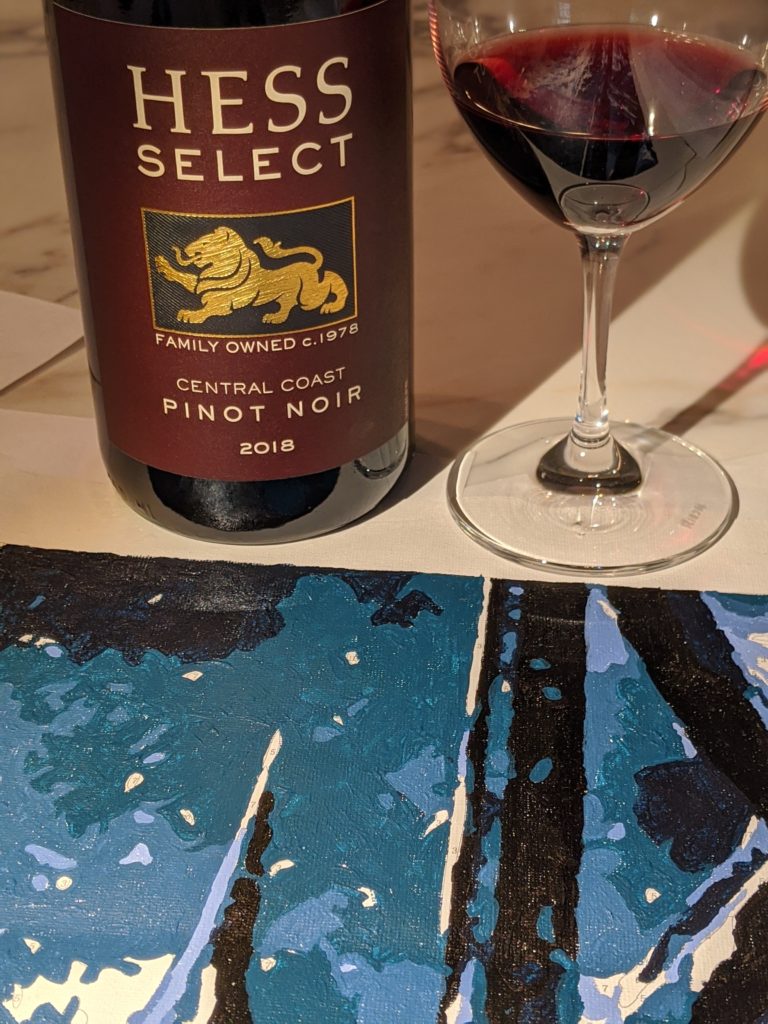
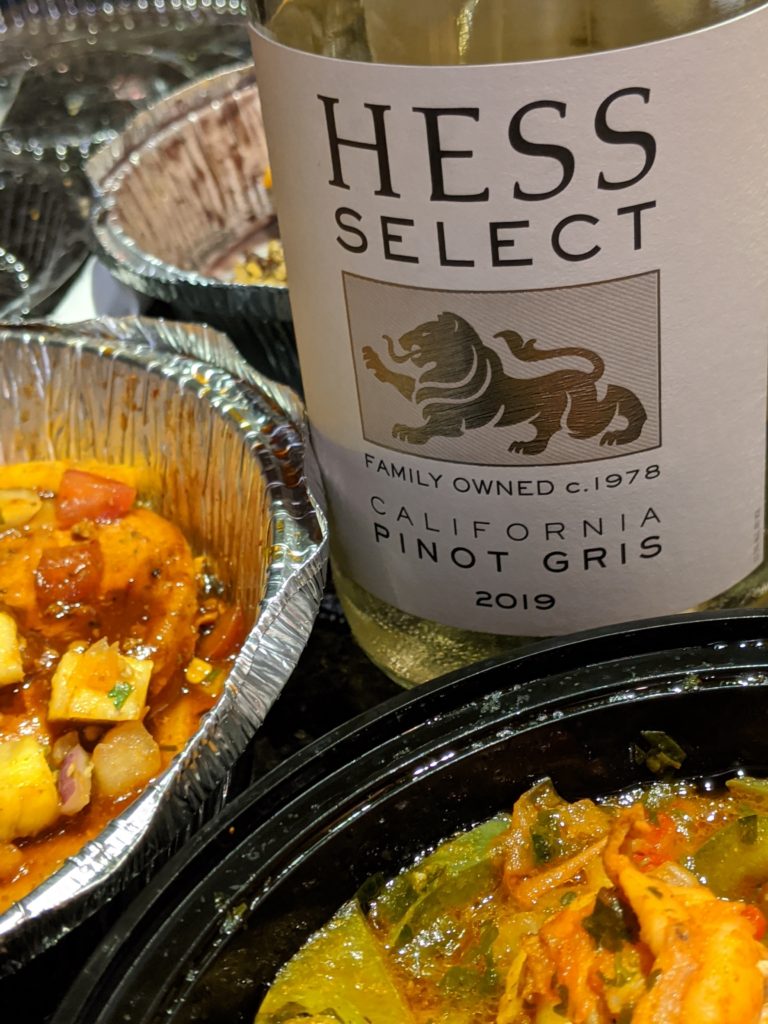
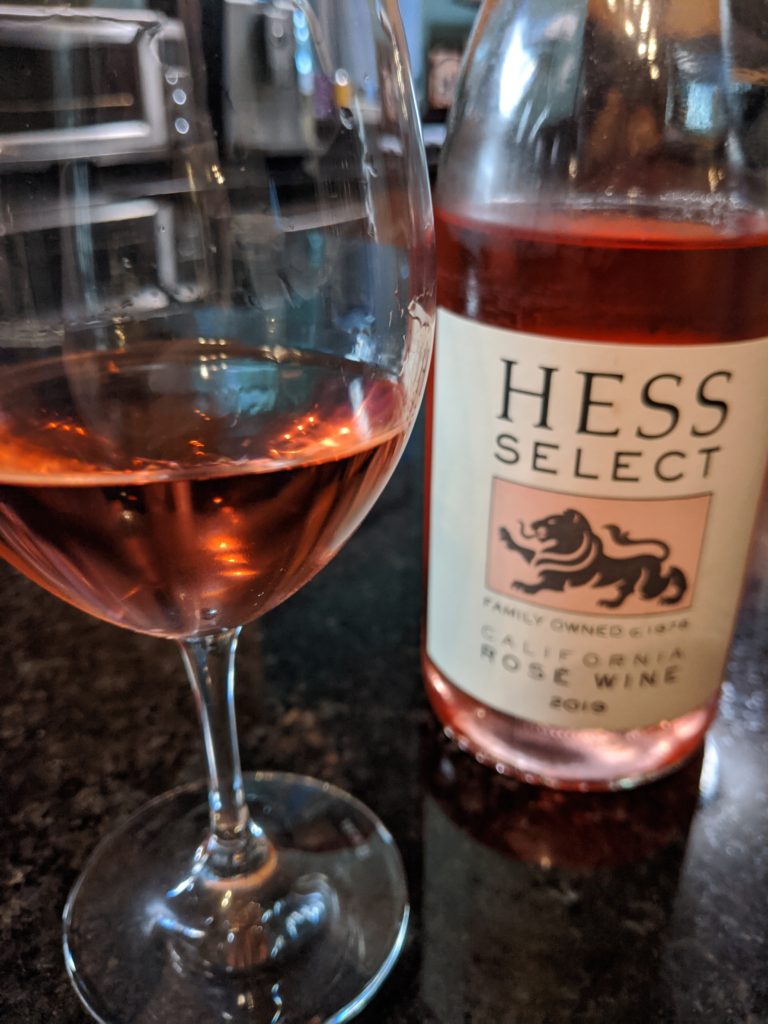
This week found me enjoying a trio of wines from the Hess Select collection: a white, rose and red. I have previously tasted wines from Hess’ more upscale production and have always been impressed with them and their winemaking. With 40 years of experience, it is not surprising that they are so well made.
While the Hess Select wines are produced on a much larger production scale and offer less complexity than higher end wines, they definitely deliver. They are the perfect go-to wines when you want to pour a food-friendly option that won’t break the bank, require significant thought or seem like an extravagance.
My favorite of the three was the Pinot Noir from California’s Central Coast. It was really lovely and provided a great Pinot Noir experience at a very reasonable Pinot price point ($19 SRP). The nose offered up herbal and mushroom aromas, giving way to a ripe palate of spice, dried herbs and rich cherry and berry flavors, with long length.
With the arrival of Spring, the rose was a welcome ray of sunshine, greeting the nose with watermelon and cotton candy, both of which persisted on the dry, crisp palate. Finally, the full-bodied Pinot Gris presented with ripe melon notes and paired well with our Mexican take-out.
When not eating or drinking, in order to keep busy and step away from the computer, I have taken up painting-by-numbers. This has become a meditative practice for me as well as a creative outlet. May you each find your own way to navigate these days with health, sanity and (perhaps) a glass of wine!
WINES MENTIONED ABOVE Hess Select Pinot Gris 2019, California, USA, $12.00 Hess Select Rose 2019, California, USA, $12.00 Hess Select Pinot Noir 2018, Central Coast (CA), USA, $19.00
Full Lyrics: These are days
These are days you’ll remember Never before and never since I promise Will the whole world be warm as this And as you feel it You’ll know it’s true That you are blessed and lucky It’s true that you Are touched by something That will grow in you, in you
These are days you’ll remember When May is rushing over you with desire To be part of the miracles you see in every hour You’ll know it’s true that you are blessed and lucky It’s true that you Are touched by something That will grow and bloom in you
These are days These are the days you might fill with laughter until you break These days you might feel a shaft of light Make its way across your face And when you do you’ll know how it was meant to be See the signs and know their meaning It’s true You’ll know how it was meant to be Hear the signs and know they’re speaking to you, to you