I’m Down with DAC (Grand Cru Grapevine: November 2011)

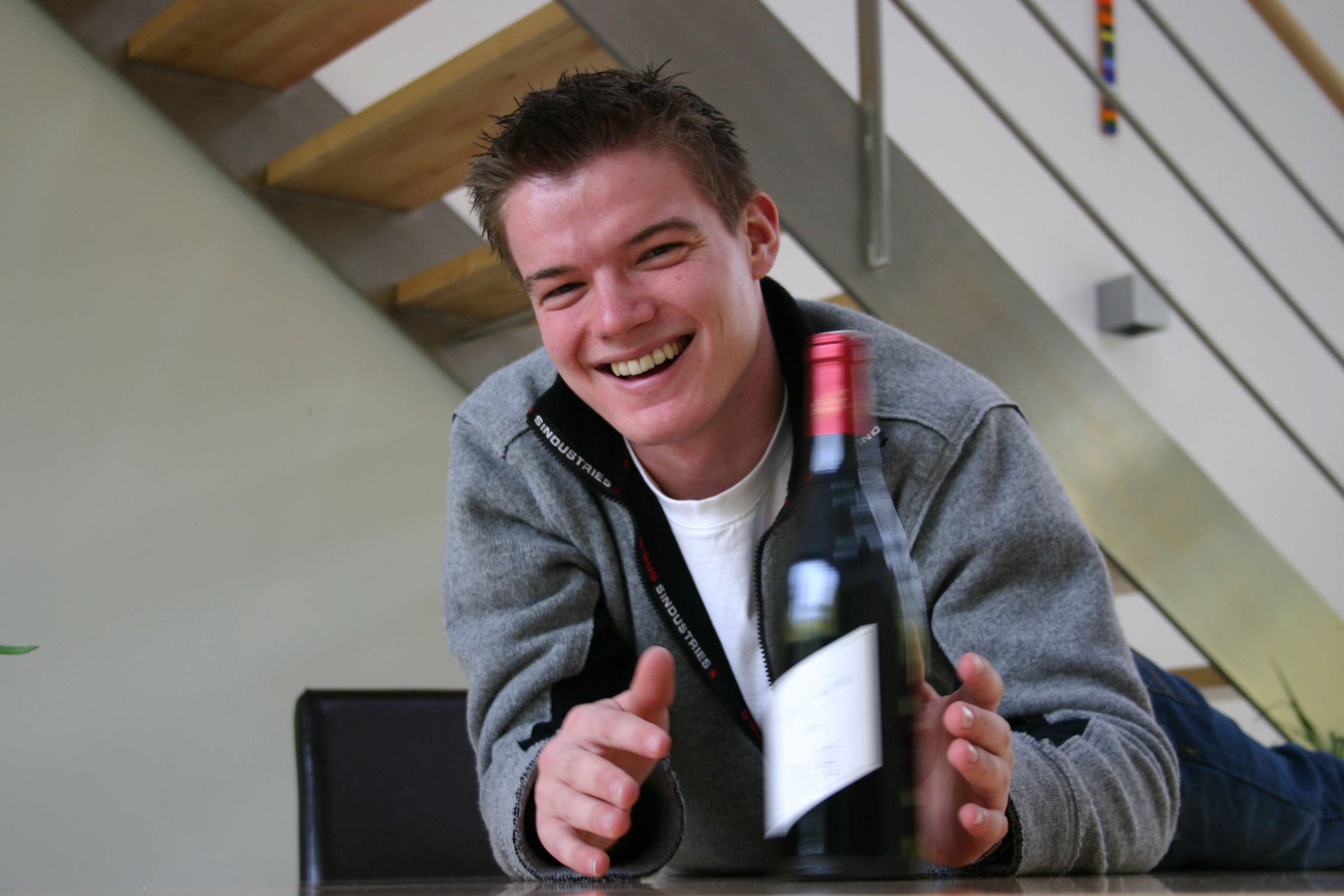
At 26, Roman Pfaffl, Jr. is a not only a handsome, young man and a winning athlete (his all-winemaker soccer team recently won in Munich), but, most importantly, he is quite charming. OK, even more importantly than that, he makes great wine. The Austrian winemaker is now at the helm of his family’s winery, having been passed the reigns (or perhaps more correctly, the refractometer) at a ceremony in August of this year. Although Roman has started to implement some changes (i.e. new pruning techniques and experimentation with different types of oak), he does admit that his parents are “still the bosses.” Joined by his sister Heidemarie, who handles marketing, the business is truly a family affair.

Established in 1978, Pfaffl Winery was created when Roman (Sr.) and wife Adelheid converted the family farm in Weinviertel (which translates as “wine quarter”), near Austria’s capital of Vienna, from potatoes to grape vines. Today, the Pfaffls have 80 hectares in total under vine, 65% of which is planted to white grapes.

Among the Pfaffl’s holdings are several highly prized parcels – Haidviertel (in the town of Stetten) and Hundsleiten (situated on a mountain range near Vienna), both of which prominently feature Grüner Veltliner, where the loess soils impart great minerality to the wines. The equally vaunted Altenberg vineyard highlights the red, St. Laurent grape. The grapes from Haidviertel and Hundsleiten are generally sourced for the Pfaffl’s best wines, which qualify for DAC status.

While Austria’s wines have historically followed a similar approach to that of Germany – using must weight (sugar content) as a designation of quality – the same concern with broad-brushing all Austrian wines as being sweet emerged. Accordingly, Austria sought to further define quality for its dry wines, instituting the terms Steinfeder, Federspiel and Smaragd to indicate increasing levels of ripeness (still equated with quality) for Wachau wines that were dry on the palate. However, many in the industry felt that a more appellation-based system was needed. Enter the DAC.

Austria’s DAC (Districtus Austriae Controllatus) system was launched in 2001, with Weinviertel defined as the first in 2003 (taking effect with the 2002 vintage). To qualify for the DAC designation, the wines must be produced from specified grape varieties, which in the case of Weinviertel is 100% Grüner Veltliner. The Leithaberg DAC, which came on line with the 2008 vintage, is specified for both red (minimum of 85% Blaufränkisch, blended with up to 15% St. Laurent, Zweigelt or Pinot Noir) and white (single variety or blends of Pinot Blanc, Chardonnay, Neuburger and/or Grüner Veltliner). Wines that are produced within these DAC areas, but that don’t meet the DAC requirements must be labeled as Qualitätswein. Five other DACs presently exist, with a few more additions expected down the road.

In speaking about the effect of the DACs, Roman, Jr. indicated that the system has not only improved wine quality, but also has encouraged more young winemakers to get involved in the industry.

In addition to the more general Klassik (classic) level, the Weinviertel DAC also allows for a Reserve level, as of the 2009 vintage, which represents the top wines of the region. While the requirements for Reserve include an increased degree of alcohol, more emphasis is placed on the taste profile expected for these wines. Specifically, Reserve wines should be fuller bodied, with “subtle botrytis notes” and oak aging is permitted (it sn’t for Klassik). A further qualification for all DAC levels is that a six-person tasting panel must unanimously agree that the wine meets the expected caliber for the respective level; without their approval, wines cannot be labeled as DAC.

Grüner Veltliner is Austria’s signature white variety known for citrus, white pepper and mineral characteristics on both the nose and palate. Young examples provide fresh fruit characteristics and vibrant acidity. However, wines produced from older vines and better vineyards are capable of aging for 3-10 years. In this regard, a vertical tasting of wines from the steep, sandstone Hundsleiten vineyard showed off the development of the variety, while also highlighting vintage differences.

Wines produced from Hundsleiten’s 30-year-old vines are fermented in large casks and then aged for 5-6 months in a combination of large, wooden barrels (80%) and stainless steel tanks (20%).

Pfaffl Grüner Veltliner 2010, Hundsleiten Weinviertel DAC Reserve, Weinviertel, Austria, $31.00
Produced from the challenging 2010 vintage, Roman described this wine as being Burgundian in style, which was reinforced by the wine’s aromas and flavors of minerality, wet earth, citrus and restrained, but still noticeable, use of wood. The full-bodied palate was creamy, with long length.

Pfaffl Grüner Veltliner 2006, Hundsleiten Weinviertel DAC Reserve, Weinviertel, Austria, $31.00
While 2006 was a hot year, spring had arrived later than usual, preventing problems with overripe fruit as was seen in 2003. A less intense nose than the 2010, but with more pronounced notes of pepper, orange, wood and yeast.

Pfaffl Grüner Veltliner 2004, Hundsleiten Weinviertel DAC Reserve, Weinviertel, Austria, $31.00
Lots of rain plagued June, which was followed by a cool August, but a dry September and October saved the vintage. This wine showed some development with damp earth, wood and mineral notes, and just a hint of citrus aromas, which were repeated on the dry palate with the addition of a bit of pepper.

Pfaffl Grüner Veltliner 2000, Hundsleiten Weinviertel DAC Reserve, Weinviertel, Austria, $31.00
Near perfect conditions resulted in a great vintage and ideal ripeness. A spicy nose with concentrated orange fruit gave way to rich, ripe orange and tropical fruit on the creamy palate, joined by flavors of spice and wood, throughout the wine’s long length.

Although St. Laurent doesn’t qualify for DAC status, Pfaffl’s wines from this variety were also quite noteworthy.

Pfaffl St. Laurent 2009, Altenberg Estate Qualitätswein, Weinviertel, Austria, $44.00
From a good vintage, this younger wine showed earthy aromas, with a fuller body and more fruit than the 2004, with flavors of cherry, herbs, mint and oak.

Pfaffl St. Laurent 2004, Altenberg Estate Qualitätswein, Weinviertel, Austria, $44.00
This wine offered aromas of spice, earth and concentrated notes of cherry and mulberry. Its dry palate gave way to plum and spice flavors and, in sum, was gorgeous and complex with long length.
 

DiamAndes – A Diamond in the Argentine Rough

Bruno LaPlane is at home and ensconced in the Bordeaux wine industry having married into the Bonnie family, producers of Château Malartic-Lagravière and Chateau Gazin-Rocquencourt. However, with the increasing popularity of Argentina, he and the Bonnie family were eager to expand their interests. So, when the opportunity to join the Clos de los Siete project in Mendoza arose, they jumped at it. Accordingly, in 2005, the family purchased 130 hectares and built their own winery on the property, completed in 2009. Named for nearby Diamond Lake, in which the reflection of a volcano appears as a diamond, and the imposing Andes mountain range, DiamAndes was born.

DiamAndes released its Gran Reserva wine in New York earlier this year. This flagship wine is a blend of Malbec and Cabernet Sauvignon.  The company is now ready to introduce additional wines to the market under the name of DiamAndes de Uco, which includes: Chardonnay, Viognier, Malbec and Syrah. Another new wine is the entry-level Perlita by DiamAndes, which blends Malbec and Syrah and retails for $10.00/bottle.  Like LePlane, the Malbec grape, which does so well in Argentina’s high altitude vineyards, is also from Bordeaux. Not surprisingly, it accounts for 66% of the DiamAndes plantings.

Although these wines are priced at the value end of the market, they are still produced with the same careful attention to detail as those used in Bordeaux. More specifically, there is a keen emphasis on terroir, self-imposed strict yields (45 hl/ha) and hand harvesting, with a focus on crafting elegant wines. Aside from being located a world away from one another, the difference is that the cost of land and labor makes these Argentina exports much less expensive to produce, while still retaining the high quality for which the Bonnie family is known.

Chardonnay 2010
This grape variety represents 72% of the white plantings at DiamAndes. With a nose of slight spice, pear, some citrus and vanilla, the aromas repeat on the typically full-bodied palate, joined with some slight minerality.

Viognier 2010
Spice, apricot and tangerine aromas persist on the palate, along with floral notes. The full-bodied wine has medium acidity.

Malbec 2010
This wine presents with mostly black fruits and a slight floral character. It has nice acidity, with firm, yet ripe, tannins, becoming more complex on the palate with its flavors of blackberry, spice, vanilla and oak.

Gran Reserva 2007 (70% Malbec, 30% Cabernet Sauvignon)
A structured and elegant wine with spice, oak, blackberry, bramble fruit and slight eucalyptus notes, the tannins are quite firm, but should mellow with bottle age.

Also see my previous article on the Gran Reserva.

Romania’s Renaissance (Grand Cru Grapevine: October 2011)

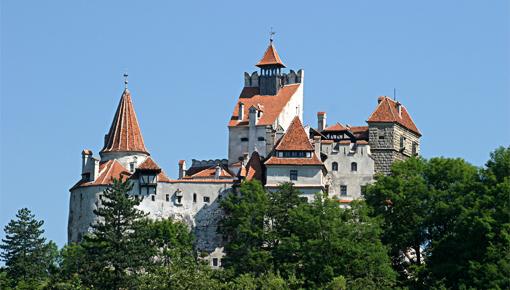
Despite its 4,000 year history of viticulture, like many formerly-Communist countries, Romania found itself at the end of the Cold War with its vineyards in shambles. After years of state ownership, where quantity reined over quality, the wine had suffered greatly. However, during the 1990s, the country’s shift toward privatization has repatriated much of the land, with owners investing significantly in their vineyards and modern winemaking.

And, with the passage of two decades, things have changed for the better. Ranking 6th largest in world wine production, Romanian wines are worthy of a second look. As a victim of the original phylloxera epidemic, many of Romania’s vineyards were replanted to French varieties at that time. Today, a dual focus on both indigenous and international grapes has led to interesting combinations and as well as more commercially-viable wines. For example, Pinot Noir and Chardonnay, priced at $7.00/bottle will play well with consumers. Meanwhile, the Feteascas – Alba (white); Regala (royal) and Neagra (black) – all take their name from the word maiden and are uniquely Romanian. The white maiden (Feteasca Alba) is the most popular Romanian grape.

The physical size and geographical diversity of Romania result in creating several different wine regions within the country, each of which has its own microclimate. However, in general, Romania is home to a continental climate, which is moderated by the Black Sea, Danube River and Carpathian Mountains. Dealu Mare, nestled at the foot of the mountains, features red wines, while Tarnave’s emphasis is on white due to its altitude and consequent cooler climate. Similarly, Cotnari, located further north, also focuses on whites. Murfatlar, on the Black Sea, produces both red and white varieties.

With Romania’s entry into the EU in 2007, marketing dollars have begun to flow into the country, permitting it to promote its wines overseas. Accordingly, a trade tasting was held in New York City in April 2011. Wines included the usual suspects – varietally labeled Chardonnay, Merlot, Pinot Gris and Pinot Noir were all on hand to be tasted. However, more intriguing were those produced either solely from indigenous varieties or from unusual blends of both the French and Romanian varieties.

TASTING NOTES

Cramele Recaş Feteasca Regala 2010, Recaş, Romania
Producer Cramele Recas is relatively large with 1,750 acres under vine. With its aromatics of floral and tropical fruit, this wine was reminiscent of Torrontés. The dry palate has high acidity, is medium-full bodied and showed notes of tropical fruit, melon and spice.

Cramele Recaş Solo Quinta 2010, Recaş, Romania
This wine joins Feteasca Regala (30%) with 30% Sauvignon Blanc, 30% Chardonnay, 5% Pinot Grigio and 5% Cabernet Sauvignon, the latter of which is vinified as a white wine without any skin contact. The pronounced nose showed notes of citrus, apple, floral and herbs that continued on the dry, full-bodied palate.

Halewood, Pinot Noir 2009, Dealu Mare, Romania
Forty percent of the wine was aged in French oak. The nose offered floral, cherry and berry aromas while the palate provided medium+ acidity, medium tannins and rich cherry/berry flavors mingled with herbal notes.

Senator, Glia Babeasca Neagra 2008, Insuratei, Romania
The second most planted grape variety in Romania, Babeasca Neagra translates as “grandmother’s grape.” Floral and spicy on the nose, this wine’s palate has medium+ acidity and low tannins along with sour black cherry and spice flavors.

Murfatlar, Trei Hectare Feteasca Neagra 2006, Murfatlar, Romania
Murfatlar (a winery named for the region in which it is located) is the largest Romanian producer at 8,200 planted acres. The Feteasca Neagra was showing some development as well as complexity and balance. Dried herbs, dried cherries, earth and cocoa persisted throughout the long length.

Lovable, but Lesser-known Lombardy and its Lago di Garda Wines

When asked to name an Italian wine region, most people will probably answer Tuscany or Piedmont, while Lombardy is less likely to come to mind. Yet, this northwestern region boasts many high quality wines such as Franciacorta and Valtellina. Known much more for its lake district and its capital city of Milan, Lombardy has attracted U.S. visitors for decades, but its wines generally remain unknown even though its viticultural history dates back to the 1300s.

The sizeable Lago di Garda (Lake Garda) not only adds to the beauty of the area, but also serves as an important climatic influence. Formed by glacial activity, the lake is at the center of concentric hills, which flow westward and is responsible for the area’s Mediterranean climate despite its northerly locale (it shares a border with Switzerland). In addition to grapes, capers, lemon trees and olive groves flourish, marking the northernmost point for these plant species.

Among the red grapes, many indigenous varieties are planted here. Known for its spicy aromatic character, Gropello is the most planted variety with its plantings limited to the slopes of Valtènesi. The local rosé is called Chiaretto and shares the same recipe as the red wine Rosso Garda Classico: Gropello (30% minimum), Marzemino (5% minimum), Barbera (5% minimum) and Sangiovese (5% minimum). The difference between the two wines is in the winemaking. The Chiaretto, produced since the 15th century, has its must separated from the grape skins after a single night’s maceration,. The Classico moniker in Rosso Garda Classico denotes the wine’s origin from the traditional/original viticultural area.

The region’s white grapes are less obscure – Riesling, Pinot Bianco, Pinot Grigio and Chardonnay – with the exception of Tocai, which is also known as San Martino. Denominations for white wines include Lugana DOC, San Martino DOC and Benaco Bresciano Bianco IGT. The Chardonnay is also used to make sparkling wines, often blended with Pinot Noir, produced in both the Traditional and Charmat Methods.

That being said, Peri’s Peri Talento Brut IGT 2007 is 100% Chardonnay. Produced using the Traditional Method, the wine showed some yeasty notes along with citrus and apple, finishing cleanly on the palate.

Lugana DOC Perla 2008 from Perla del Garda, blends 90% Trebbiano di Lugana and 10% Chardonnay for a wine with high acidity, citrus notes and minerality.

The indigenous Lugana grape makes its appearance in the Lugana DOC although other white grapes are permitted. Marangona’s Lugana DOC Tre Campane 2008 made solely from this variety has nutty and herbal aromas along with citrus on the dry palate. The Lugana DOC 2008 from Monte Cicogna is 100% Trebbiano di Lugana with aromas of stone and hay joined by citrus, honey, herbal, and bitter almond notes.

The rosé Chiaretto Garda Classico DOC Giovanni Aranzi 2009 is comprised of 60% Gropello, 10% Barbera, 15% Sangiovese and 15% Marzemino and greets the nose with fresh strawberry and cherry. The dry wine shows off its fresh fruit and floral flavors on the palate finishing with a bitter almond note.

Among the reds tasted, the Benaco Bresciano Rosso IGT 2005 Nepomucceno from Cantrina (70% Merlot, 15% Rebo and 10% Marzemino) displays deep, rich black fruit and chocolate. The Cascina Spia d’Italia’s Garda Classico DOC Rosso Superiore 2007 includes the required grapes (percentages unspecified) as well as Cabernet Sauvignon. This wine offers aromas of black fruits, floral and vanilla while berries and bitter almond dominate the palate.

Speaking to a group of press and trade members, Santi Bonhomme, President of the Lago di Garda Consorzio, explained that a project to group all of the red wines under a single denomination – Valenèsi – was underway. This move may help to simplify these wines in the U.S. marketplace, but will not go far enough in demystifying them. I would suggest that Lago di Garda may be a better choice because perhaps it will be a fond reminder of vacations past for the American buyer.

Grand Cru Classes Invites a Wild Child to Dinner

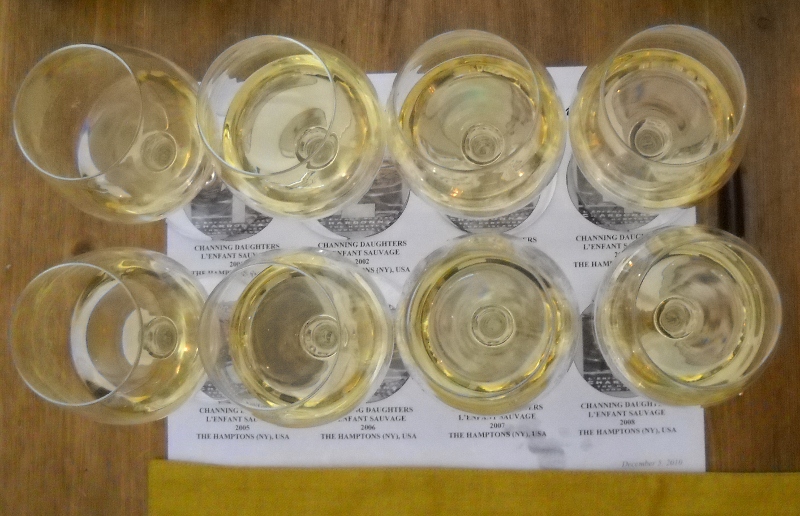
As former members of Channing Daughters’ wine club, we annually received a bottle of the winery’s L’Enfant Sauvage Chardonnay. We have been fans of this wild ferment wine since our very first visit to the winery way back when and so were always reluctant to open the wine since we wanted to save it. Well, if you do that long enough, you end up with a mini-vertical. Once we realized what we had amassed, we decided to taste the wines together to more easily compare and contrast them, but determined that drinking five bottles on our own was a bit much. Hence, we decided to host a dinner party featuring these wines.

Communication with Channing Daughters’ winemaker, Christopher Tracy, revealed that the wines were still showing quite well and that, yes, he would be interested in joining us for the dinner if he were available.

Planning ahead, we selected a date in early December – sufficiently past harvest, but before the holidays – and were able to host local winemakers and other members of the wine industry. Christopher graciously offered to bring the two vintages we were missing – the 2001 and the 2008, permitting us to complete the L’Enfant Sauvage set.

Attendees:
Hosts: Tracy Ellen Kamens and Jared M. Skolnick, Grand Cru Classes
Christopher Tracy, Channing Daughters
Juan Micelli-Martinez, Martha Clara Vineyards
Bridget Quinn Micelli-Martinez, Palmer Vineyards
Kareem Massoud, Paumanok Vineyards
Karen Kankel, Paumanok Vineyards
Kelly Urbanik, Macari Vineyards
Rob Koch, All-around nice guy
Kristina Szama, Michael Skurnick
Lenn Thompson, New York Cork Report
Remy Charest, Palate Press

We kept the wines top of mind when designing the menu:
Gougères – to accompany the sparkling wines poured upon arrival
Tuscan white bean soup and black bean soup garnish (see above image)
Deconstructed BLT – Smoked pork belly, wilted spinach and oven-dried tomatoes on a bed of polenta
Wild Mushroom Risotto
Swordfish with Butternut Squash Purée and Roasted Cauliflower
Flourless chocolate cake for dessert

My tasting notes are a bit abbreviated as I was focused on being a good host and getting each course on the table.
2001 – deep gold, oxidized note, bruised apple; bruised fruit, butter and nuts
2002 – medium+ gold, lightly oxidized character, citrus, apple, nuts
2003 – deep gold, oxidized character, slight sweet aroma, bruised red apple
2004 – deep gold, cleaner nose, spice, oak and apple
2005 – medium gold, perfume, oxidation, spice
2006 – medium+ acidity, citrus and green apple
2007 – medium gold, citrus and apple
2008 – medium gold, spice, citrus, medium+ acidity


What’s New with Old Rioja

Located in north-central Spain, along the Ebro River, the Rioja region is made up of three subregions – Alta, Alavesa and Baja – and holds Spain’s highest quality wine classification, DOCa.

Within Rioja (as in the rest of Spain), aging requirements for wines and their labels are legally defined. For each term, a minimum aging period in oak and bottle applies, but producers are permitted to and often do exceed these minimum requirements.

• Joven/Cosecha – young wines, no aging requirements

• Crianza – 12-18 months in oak + 1 yr in bottle

• Reserva – 18-24 in oak + 1-2 years in bottle

• Gran Reserva – 24-36 months + 3 yrs in bottle

Although there are similar aging terms applied to whites and rosés, the length of time is reduced, preventing the wines from otherwise being overwhelmed by oak.

At the Vibrant Rioja trade tasting earlier this year, some interesting wines and equally interesting production techniques came across my radar.

In an unusual move, producer Sierra Cantabria employed the use of carbonic maceration as part of its fermentation process for its Cuvée in an attempt to get significant fruit concentration. The wine then spent 14 months aging in French and American oak.

At San Vicente, the observation of vines with hairy leaves in their vineyard, led to the discovery of a clone of Tempranillo now known as Tempranillo Peludo. There are 50ha on the estate, which have been isolated from the rest of the property. Surprisingly, this clone seems to prefer clay soils, as opposed to the sandy and stony soils preferred by other Tempranillo vines.

While Rioja is generally produced from some combination of Tempranillo, Garnacha, Mazuelo and Graciano, winemaker David Sampedro from Bodega Don Sancho de Londono blends in 5% Viura, a white grape variety, in his Phincas 2008.

Cepas Antiguas’ importer asked if the estate would produce an unaged wine from 40 year-old vines, which is unheard of for a Joven wine, with some grapes harvested from vines as old as 80 years. Why? The importer wanted to show the terroir. At $12.00 retail, this is an excellent wine for the price, providing much more complexity than other young wines with a well integrated palate.

Although most wineries produce a range of Rioja wines from Joven through Gran Reserva levels, the Valenciso estate only makes one wine and it is always at the Reserva level.

These wines highlight just some of the diversity and innovation taking place in Rioja today.


TASTING NOTES

Sierra Cantabria Cuvee 2007, 100% Tempranillo, $30.00 SRP
Very fruit focused nose of blackcherry and raspberry, but the palate was more oak driven with notes of cedar, spice with a strawberry undercurrent.

R. Lopez de Heredia – Vina Tondonia Reserva White 1993, blend of Viura and Malvasia, $43.00 SRP
Slight oxidative note, showing some development, herbal and citrus notes. Honey, oxidized, and apricot flavors, with medium+ acidity, medium+ body and long length.

Cortijo 2010, 80% Tempranillo, 20% Garnacha; $10.00 SRP
Strawberry and leafy notes on the nose. Very lush fruit on the palate – strawberry and tobacco leaf, medium+ length.

Phincas 2008, 70% Tempranillo, 15% Graciano, 10% Garnacha, 5%; $38.00 SRP
Very modern in style and very tannic – needs time to mellow.

Cepas Antiguas Tempranillo 2009, 100% Tempranillo; $12.00 SRP
Strawberry, herbs, tobacco on the palate and nose. Full body, nice acidity and medium+ length.

Valenciso Reserva 2004, 100% Tempranillo; $40.00 SRP
aged in 100% French barriques. The wine was showing some development on the nose with faint fruit notes, oak, leaf/tobacco. On the  palate, the strawberry and raspberry flavors were more prominent, joined by the leaf/tobacco notes, all of which lingered on the long palate.

Italy by the Glass

On a hot, humid day in June, I headed to the Hudson Hotel for an Italian wine tasting. After ascertaining the exact location of the event from the hotel staff, I took the elevator to the top floor. After I walked down the long corridor, I checked in and proceeded to begin tasting. The winery representatives were at tables arranged on the perimeter of the room, while open doors at the end of the room beckoned. Unfortunately, the heat was just too oppressive to take advantage of the view afforded by the rooftop terrace, so I turned my attention to the wines.

The assembled group of producers was a bit of a hodgepodge, representing a diverse set of regions including: Abruzzo, Umbria, Lombardy, Sicily, Trentino and Tuscany. Despite the lack of an overtly cohesive theme, the wine line-up provided an opportunity to taste lesser-known varieties and appellations.

From the Tuscan seaside – the Maremma – Casal di Pari produces wines in the Montecucco DOC. Sandwiched between Brunello and Morellino, the hillside vineyards benefit from cooling sea breezes and are planted to Sangiovese, Merlot, Syrah and Petit Verdot. The two wines available for tasting were the Montecucco Rosso DOC 2007 and the Montecucco Rosso DOC Ciarlone 2009, the latter of which was more expressive even though the blends were precisely the same.

Italy’s northern region of Trentino is home to Marco Donati, whose family has been growing grapes in the area since 1863. The appellation wine, Teroldego Rotaliano DOC consists entirely of the indigenous Teroldego and was full of dark fruit with noticeable oak, smoke and vanilla. The Vigneti Delle Dolomiti IGT Situla Rosso 2009 is a mix of Lagrein, Teroldego and Marzemino and displayed notes of plums, berries and smoke.

The wine that stole the show was Terre de Trinci’s Montefalco Sagrantino DOCG 2004. As I walked through the room, I was constantly greeted by colleagues and friends who kept asking if I had tasted it yet. Continually waylaid by the aforementioned friends, I didn’t reach the producer’s table until much later. However, when I finally did, I was in agreement with their favorable assessment. Produced from 100% Sagrantino, previously only used to create sweet wines, Terre de Trinci was the first to make a dry version of Umbria’s native grape back in the 1960s. The wine’s complex aromas included Port, licorice, vanilla, berries and spice coupled with full body, medium+ tannins and long length. The producer’s Umbria IGT Rosso Trinci 2009 is a blend of 80% Sagrantino and 20% Merlot and, while not as complex, showed much of the same characteristics.

Another highlight was the wine from Cantina di Villa, based in the Valtellina denomination of the Lombardy region. Here, the Nebbiolo grape, made famous by Piedmont’s Barolo and Barbaresco, sometimes travels under the pseudonym of Chiavennasca. Of course, file that under the adage “a rose by any other name,” because these wines deliver on Nebbiolo’s promise. The Cantina had four separate wines available to taste starting with the basic Valtellina Rosso DOC 2006 (90% Nebbiolo and 10% Pignolo) which offered dried flowers and sour cherry. Moving up to the Valtellina Rosso Superiore DOC Incontri 2003 (95% Nebbiolo and 5% local varieties), these aromas and flavors were joined by dried cherries, dried herbs, rose and slight earth. The younger Valtellina Rosso Superiore Grumello 2006 was earthier with fuller body, but less developed. At the top of the range, the Sforzato di Valtellina DOCG Tinaia 2006 (100% Nebbiolo) was, in a word, gorgeous! (yes, my tasting notes include the exclamation point). More floral than the Grumello, the intricate production process of drying the grapes for several months prior to pressing, then repassing the must through the skins multiple times and aging the wine in large casks for a minimum of three years, showed in its richer, more concentrated palate. Notes of dried cherries and plums remained throughout the wine’s long length.

The preponderance of reds was unfortunate since the high temperatures really called for whites, but those to be found were less interesting – a typical Pinot Grigio from the Veneto, a Trebbiano-Chardonnay blend (untasted) and a Müller-Thurgau (also untasted because I had already assaulted my palate with powerful reds). However, all in all, the tasting offered a great selection of wines.

Alto Adige’s White Wines Hit A High Note

Introducing a seminar on Italy’s Alto Adige region, Cornerstone Communication’s CEO Marsha Palanci explained that, “This is the only part of Italy where you can hear yodeling in one window and arias in another.” Not surprisingly, in looking at regional photos, you would half expect Julie Andrews to suddenly appear and belt out songs from the Sound of Music.

Marsha further added that both Mediterranean and Alpine botany could found growing side by side in the region, before turning the presentation over to the panel moderator Mary Ewing-Mulligan. Mary stressed the homogeneity across the region and underscored the ageability of these wines due the high mineral content in the soil.

Alto Adige, the northernmost region of Italy, was under Austrian rule until 1919, hence the yodeling. And, to this day, both German and Italian are the official languages. With the Dolomites to the East and the Alps to the north, these mountain ranges shelter the area from the cold forces of the North and trap air from the lakes. This protection also extends to the limited rainfall with the region seeing 300 sunny days per year. (Although with my luck, I’d be liable to visit on one of the other 65 days.)

When considered separate from Trentino, Alto Adige is the smallest of Italy’s 20 regions. To put its size in perspective, Mary explained that the land was 50% larger than New Jersey, but that the population was just 6% of New York City. Yet, despite its limited size, 98% of its production is at the Protected Designation of Origin level – the most of any Italian region. In fact, three times as many of Alto Adige’s wines win Tre Biccheri awards compared to Tuscany.

The area’s steep slopes are given over to white grapes while the lower, rolling hills are planted to reds. The core varieties seen in the U.S. market are Pinot Bianco (aka Pinot Blanc), Gewürztraminer, Pinot Grigio, Pinot Nero and Lagrein, which highlight the region’s Germanic and French influences. Regardless of the specific variety, white plantings account for 55% and are on the rise.

The seminar’s tasting was a varied set of grape varieties and vintages, with the oldest wine dating to 2002.


Franz Haas Cuvée Manna 2004, IGT Dolomiti, Italy, ($40.00, 2009 vintage)

In 1988, the winemaker attended a 7-course tasting dinner and was inspired to create a wine that would pair well with a broad range of foods/courses. This wine, a blend of Riesling, Chardonnay, late harvest Gewurztraminer and Sauvignon Blanc, is the result of that inspiration. The Chardonnay and Sauvignon Blanc are both barrel-fermented, which add complexity to this unusual wine. With six years of age, the wine was showing some development with notes of honey, spice, pear and floral. The high acidity and medium+ body provided nice structure to the complex and concentrated flavors, which culminated in long length throughout the mineral finish. The wine is IGT as opposed to DOC designated due to its unorthodox blend.

Nals Margreid Pinot Grigio Punggl 2007, Alto Adige DOC, Italy, ($24.00, 2009 vintage)

In an old German dialect, the word Punggl means hill, which, in this case, refers to the name of this hilltop, single vineyard located in the southern part of the region. Earth, mineral, green apple and a hint of citrus aromas gave way to a palate of high acidity, medium body, mineral, citrus, orange peel and long length. Aromatic with crisp acidity, Mary described the wine as having one leg in Alsace and another in Italy, while Klaus Gasser, oenologist at Terlan, suggested that it had great tension now, but could age up to 10 years.

Terlan Nova Domus Terlaner Riserva 2005, Alto Adige DOC, Italy, ($55.00, 2007 vintage)

The reason for the apparent duplication is that Terlan is both the town and the name of the appellation. Intertwined in the region for ages, this Pinot Bianco, Chardonnay and Sauvignon Blanc blend has been made by Terlan for 100 years. Floral aromas with slight honey, spice, stone and pear greet the nose while citrus, floral, yeast and mineral notes persist on the youthful palate. Klaus attributed the mineral character to the Pinot Bianco. Mary remarked that the Sauvignon Blanc was speaking, but further admitted that the wine could age beautifully and that, “great Pinot Bianco is from Alto Adige.”

Alois Lageder, Chardonnay Löwengang 2002, Alto Adige DOC, Italy, ($40.00, 2007 vintage)

Löwengang refers to the 400 year old Manor House known as Lion’s Gate at the winery. Here, these 40-60 year old vines are grown on southeast facing vineyards, which receive good sun exposure. The long growing season permits the grapes to develop concentrated wines. At fours years old, the wine was showing some development with earth, slight oak, mineral, apple and citrus aromas. The palate was still quite youthful with high acidity, full body and an undercurrent of spice and oak throughout its long length. Mary advised that the wine’s strong acidity masked the fact that it had undergone malolactic fermentation.

Peter Zemmer Gewürztraminer Reserve 2006, Alto Adige DOC, Italy, ($29.00, 2009 vintage)

The winery’s stated goal to capture grapes at their natural freshness comes through on this pungent, but balanced wine. Both beautiful and elegant, the wine showed pronounced notes of floral, tropical fruit, spice, smoke and mineral. The medium+ body, medium+ acidity and oily texture provided a backdrop for the spicy, honey, tropical fruit flavors with good concentration and ripeness in the finish. Mary noted that while there was some noticeable residual sugar on the palate, it came across more as richness than sweetness due to the wine’s high acidity.

In A New York State of Mind Revisited: The Hudson Valley

Phyllis Feder of Clinton Vineyards

A relative hop, skip and a jump from New York City, the Hudson Valley wine region is much closer to Manhattan, but much less well known than its northerly neighbor, the Finger Lakes. Yet, this region actually boasts a longer history, with America’s oldest winery—Brotherhood Winery, which was established in 1839—located within its borders. Corresponding with the Hudson River Valley National Heritage Area map, this large region can be divided into three areas – Lower Hudson Valley, Mid-Hudson Valley and Upper Hudson Valley. Possessing neither the lake influence of the Finger Lakes, nor the maritime climate of Long Island, the Hudson Valley is cooler and thus, more conducive to cold-hardy European varieties and French-American hybrids, both of which are planted there. Despite its age, the Hudson River Region AVA has seen much of its growth in the past decade, with many of its wineries only a few years old. Accordingly, the region has a few well established wineries, but most are still getting their bearings.

A Modern-Day Veuve
The widowed, Mrs. Cliquot (aka Veuve Cliquot) took over the family Champagne house upon the death of her husband. Similarly, in 2009, Phyllis Rich Feder said goodbye to her husband, Ben, but not to the winery he had spent his life building. Today, she diligently keeps his vision alive, continuing to craft high quality, Traditional Method sparkling wines, along with several dessert wines, including an award-winning cassis. The Bronx-born Ben bought the property in 1969, but didn’t plant grapes until 1974, a decision further reinforced by New York’s Farm Winery Act in 1976. After studying in France at Bollinger in 1980, Ben learned to produce wines using the same techniques as those used in Champagne, but chose to focus on French hybrid, Seyval Blanc rather than the usual suspects (Chardonnay, Pinot Noir and Pinot Meunier). Phyllis remains dedicated not only to Clinton Vineyards, but also to the New York State wine industry, serving on board of the New York Grape and Wine Foundation.

Driven to Succeed
As an undergraduate at Fordham University, Matthew Spaccarelli used to shuttle students between the Manhattan and Bronx campuses, but an early September day found him driving a group of journalists to the Hudson Valley. While you might think that he is a professional cabbie, Matthew is actually the winemaker and general manager for Benmarl Winery. Having purchased Benmarl in 2006, the Spaccarelli family is new to the world of wine, but is no stranger to the region. When Matthew was a child, his family lived locally on an acre and a half of land that abutted a state park. He and his brother would depart early in the day with a sleeve of chocolate chip cookies, not to return again until dinner. These childhood treks instilled a love of the land in Matthew, which is evident as he talks about the new vineyards that are planned. Although he studied Political Science, he has spent several harvests in Mendoza, Argentina as a cellar rat, relegated to managing pump-overs as much due to his inexperience as due to his broken Spanish. However, his limited knowledge is clearly not an obstacle as a barrel tasting of wines from the 2010 vintage shows.

Defying Gravity
Steve Osborn prides himself on his winery’s sustainable practices. Active with Cornell’s sustainability study, the winery seeks to minimize its environmental impact and, to that end, Scott has installed a solar photovoltaic array on the winery’s roof. In addition, the winery was designed to take advantage of natural cooling, having been constructed in a hillside. Utilizing gravity flow production, Stoutridge’s winemaking practices are non-interventionist with none of the wines ever filtered or fined. Accordingly, all wines are only available at the winery due to this lack of processing and more fragile state of the wines. In 2009, Stoutridge added a distillery, thereby expanding its range of products.

Bee Mine
Beekeeper Ray Tousey fell in love with Clinton Vineyard’s Cassis and went about creating his own version with the addition of honey to balance out the tartness of the black currants. After branching out into other wines, he realized that he didn’t enjoy winemaking nearly as much as beekeeping. So, a quick call to his daughter and son-in-law, Kimberly and Ben Peacock, brought the pair home from England and to the helm of the family operation. Today, Ray and his partners can turn their attention to bees and other projects as Ben serves as manager of the winery.

Beyond wine, the area is also home to farmstead cheese producers and several distilleries including Harvest Spirits, producer of CORE Vodka and other apple-based spirits, and bourbon-producer, Tuthilltown Spirits Distillery.


TASTING NOTES

Benmarl Winery, Slate Hill White NV, Hudson Valley (NY), USA, $18.00
The Slate Hill (a translation of Benmarl) White is a blend of Chardonnay, Riesling and Traminette. With high acidty, this dry wine has floral, citrus and bitter almond notes.

Clinton Vineyards, Jubliee NV, Hudson Valley (NY), USA, $30.00
Produced entirely from Seyval Blanc, this fully sparkling wine is made using the Traditional Method and is topped off with minimal dosage, resulting in a relatively dry wine. The nose is a mix of yeast and brioche, while the palate also includes apple peel and citrus.

Hudson-Chatham Winery, Chelois 2008, Hudson Valley (NY), USA, $22.00
Chelois is a French hybrid developed during the phylloxera epidemic as a replacement for Pinot Noir. Fortunately, Pinot Noir didn’t disappear, but equally fortunate is the development of this grape variety. Earthy and leafy with red fruit, this wine is vaguely reminiscent of Pinot Noir, but with a slightly foxy note.

Stoutridge, Gravitas 2008, Hudson Valley (NY), USA, $24.00
This wine is a blend of locally-grown, red grapes—Frontenc, de Chaunac and Cabernet Franc—which come together to create a dry wine with aromas and flavors of wet leaves, herbal characteristics and red berries.

Tousey Winery, Cabernet Franc 2010, Hudson Valley (NY), USA, $22.00
The grapes for this wine are purchased from Oak Summit Vineyards, which limits its own wine production to Chardonnay and Pinot Noir. The wine showed spice and plum aromas, which were joined by wet earth and mushroom on the palate.

Whitecliff Vineyard, Awosting White NV, Hudson Valley (NY), USA, $13.00
Among the more veteran members of the region, husband and wife team, Michael Migliore and Yancey Stanforth-Migliore, founded Whitecliff Vineyards twelve years ago. Referred to as a Hudson Heritage White, their Awosting White is a blend of Seyval Blanc and Vignoles and will be the first hybrid wine served at The Gramercy Tavern. Aromas of floral and grapefruit greet the nose, while the palate is slightly off-dry, but with vibrant acidity and beautiful balance.

New Wines from Old Vines – Ravenswood’s Single-vineyard Zins

“There’s a lot of Zin’ because that’s what I do.” So began Joel Peterson, founder and winemaker of Ravenswood, as he welcomed us to dinner at Blue Hill in mid-June. Concerned that one might jump to the conclusion that these are monster wines, Peterson was quick to describe his Zins as being “in proportion” with “lovely character”. He further advised that he grew up drinking European wines, which informs his winemaking to this day. The winemaker also insists that Zinfandel is expressive with regard to terroir. And, in that vein, he proceeded to show us his single-vineyard Zinfandels from low yielding, old vines as proof.

A founding member of ZAP (Zinfandel Advocates and Producers), Peterson is intimately familiar with Zinfandel’s history. As modern DNA analysis has shown, the variety dates back to Croatia as a descendent of Crljenak Kaštelanski (I don’t know how to pronounce it either). However, Zinfandel arrived on America’s shores in 1824, landing first in the Ravenswood section of Queens then making its way to California in the 1850s. By 1884, there were 30,000 acres planted there.

Yet despite this heritage, Peterson’s choice of company name is unrelated and simply coincidence. Rather, in 1976, when Peterson harvested his first crop of grapes, it began to rain. He hastened to pick all the grapes before the precipitation could ruin them and noticed during his work that two, large ravens watched him throughout the entire day. These black birds became his totem and, along with an operatic connection to Lucia di Lammermoor, an opera he favors, cemented the moniker. With its purported hypnotic design, the three entwined birds of his logo have become a much-requested tattoo.

Although he initially began his career in clinical research, Peterson was drawn to winemaking, serving first as an apprentice and then obtaining money to go out on his own. And, while many adults might credit their parents for sparking their curiosity in wine, few children can say that their arrival was the catalyst for a similar pursuit by their parents. Peterson can say both – that his parents influenced his interest in wine and that he is partly responsible for them ever getting involved in wine in the first place.

When Joel was born in 1947, his mother, a nuclear chemist, chose to leave the workforce and become a stay-at-home mom. Spending time in the kitchen instead of the laboratory, she taught herself to cook. Among her food-related reading, she noted that the French drank wine with their meals, a novel concept in U.S. culture at the time. Intrigued, she set out to buy a bottle of French wine for Thanksgiving; it took two weeks to find one in California, but her search was rewarded with a bottle of 1945 Châteauneuf-du-Pape. The next purchase was a mixed case, which cost $15.00 and included Haut Brion and Château d’Yquem.

From this simple introduction, Joel’s dad went on to found the San Francisco Wine Sampling Club (now known as the San Francisco Vintners Club) and called upon his 10-year old son to smell, taste (and spit) the wines in order to identify simpler terms for describing the wines in his newsletter. To this day, Peterson says, “You can tell everything about a wine just by smelling.” Joel’s more formal education includes a degree in microbiology from Oregon State University.

Given his exposure to French wines, Peterson selected Zinfandel as his grape of choice because, to him, it was the most European variety in California at the time. While the Ravenswood Vintner’s Blend is much better known, Peterson actually began crafting single-vineyard designated wines from Sonoma County with that first, rainy vintage. His current range includes six, single-vineyard designated wines.

Having commented that he, “…like[d] acid and tannin; these are my friends,” during dinner, it was not surprising that both were evident as we tasted through the wines.

The Dickerson Vineyard, in Napa Valley, dates to 1920. Infected with the leaf-roll virus, the vines do not photosynthesize well, which leads to higher acidity in the grapes and the resulting wines. The 2008 is angular with bright red fruit.

Situated at the south end of the Alexander Valley, Big River Vineyard is comprised of volcanic soil. The wines it produces are “perfume-y and pretty” and the 2008 was no different with its elegance and long length.

Owned by the Belloni family, Ricardo (now deceased) used to make wine from his own grapes as well as sell them until he tasted Joel’s Belloni Zinfandel, feeling that the grapes were better in Joel’s hands than his own. Referred to as a “big bruiser” by Peterson, this Zinfandel is co-fermented as a field blend with Alicante Bouschet, Carignane and Petite Sirah. The 2008 showed rich, jammy fruit with soft tannins.

Named for BARbara and PatRICA, the Barrica Vineyard is located in the Sonoma Valley appellation. Originally established in 1860, this historic vineyard was owned by George Hearst, father of William Randolph Hearst, and, in 1885, was the first vineyard in California to be planted on American rootstock. The 2008 displays distinct structure and weight with blueberry, vanilla and floral aromas.

The certified organic, Old Hill Ranch was the first non-Mission vineyard and contains roughly half Zinfandel and half “mixed blacks,” some of which that have yet to be identified. The wine itself is composed of 75% Zinfandel and 25% mixed blacks and is the spiciest of the 2008 line up.

From Sonoma’s Dry Creek Valley, Teldeschi’s vines include Zinfandel, Carignane and Petite Sirah, which are fermented separately. Peterson described this wine as “big,” “beautiful” and with “rich cherry and vanilla.” In addition to the usual bramble fruit, the 2008 had smoky aromas along with dried herbs.

Shifting attention somewhat away from Zinfandel toward the end of the night, Peterson presented us with two more wines –the ICON Mixed Blacks, a field blend of Zinfandel, Petite Sirah, Carignane and Alicante Bouschet and his proprietary red blend, Pickberry Red.

The former is the “once and future wine of California” representing grape varieties that were planted prior to 1920, while the latter, from Sonoma Mountain, is a Bordeaux-style wine. The 2007 Pickberry is a blend of 58% Merlot and 42% Cabernet Sauvignon, without the usual Cabernet Franc he usually adds, due to vintage conditions.

Regardless of which vineyard’s grapes were in the glass, none of the wines had what Peterson refers to as the “three sins of Zin – too much sugar, alcohol and/or oak.” They were all beautifully balanced and did, indeed express the individual terroirs.