Always a good idea: Champagne and caviar

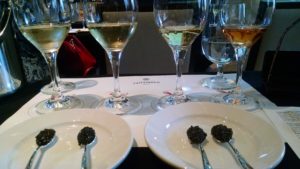
2016-07-12 18.12.23At its The Art of Celebrating the Holidays event, Tattinger’s corresponding event booklet proclaimed that, “Champagne is always a good idea.” It’s hard to disagree, especially given that the event also featured a smorgasbord of raw oysters, chilled shrimp and… caviar.

The picture perfect evening, held on the Hotel Eventi’s South Veranda, showcased a lovely line-up of Tattinger’s Champagnes, many of which were matched with a specific caviar from Calvisius.

2016-07-12 18.12.13

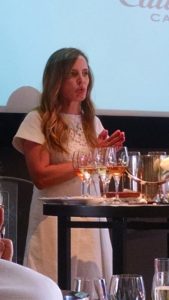
Vitalie Tattinger

Welcoming us at the beginning of the seminar portion of the event, Vitalie Taittinger called the marriage of Champagne and caviar “A pure pairing.”

Although the event’s emphasis was on the palate, it was interesting to note the similarities in these two products – both of which require long aging processes and an attention to quality and detail.

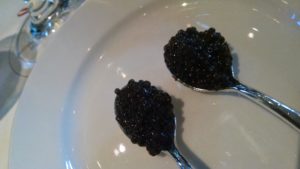
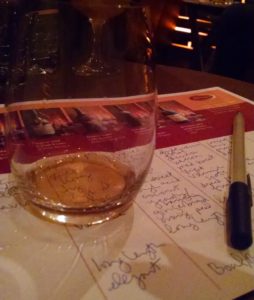
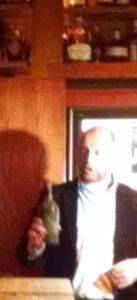
As we began to taste through the pairings, John Knierim, National Sales Manager for Calvisius USA, directed us to place the caviar on the back of our hand to enjoy it without the flavor or distraction of the spoon and then crush the eggs on the roof of the mouth to get the full sensation.

An Italian-based company, Calvisius started its foray into farm-raised caviar with the importation of six fish from UC Davis as part of the University’s plan to repopulate the earth with sturgeon. Not surprisingly given its heritage, Calvisius has earned Friends of the Sea certification and follows sustainable fishing practices.

Among some of the fun facts gleaned during the seminar:

  • Sturgeons are older than dinosaurs.
  • The different styles of caviar can be attributed to sturgeon variety as well as egg size.
  • The front half of the egg sac differs from the back half in that the front portion has a much higher fat content.

TASTING NOTES

Champagne Taittinger Brut La Française NV, $60.00
Beautiful aromas of yeast and apple peel with long length.
→Calvisius Caviar Tradition Prestige: From white sturgeon females aged 7 to 22 years, this caviar takes 11 years to produce; salty and buttery, delicate, saline/marine.

Champagne Taittinger Prelude Grands Crus NV, $95.00
An intense nose of brioche and nuts with a fuller mouthfeel than the Brut La Française.
Calvisius Caviar Oscietra Classic: Nuttier and less salty than Tradition Prestige.

Champagne Taittinger Comtes de Champagne Blanc de Blancs 2006, $199.00
This vintage wine displays lovely citrus and toast aromas and flavors.
Calvisius Caviar Siberian: Produced from a Russian species of sturgeon; sticky texture with slightly salty notes; bold; an intense, yet enjoyable, combination.

Champagne Taittinger Comtes de Champagne Rosé 2006, $262.00
Also a vintage wine, this offers up berries and yeast, with a hint of peach on the delicate palate.
Calvisius Caviar Oscietra Royal: Differs from the Oscietra Classic since this features eggs from the front 10-20% of the egg sac; very rich and salty.

Not paired with caviar, but also available for tasting that evening were the Prestige Rosé NV ($84.00), Nocturne NV ($82.00) and the newly launched Nocturne Rosé NV ($84.00), due out this holiday season. The Nocturne range are Sec Champagnes with a slight sweetness (17.5 g/l of dosage) that add a hint of sweetness, but are still well balanced.

To purchase Calvisius caviar, see Foody Direct’s website.

2016-07-12 18.23.54

The fries have it

2016-06-16 15.57.23Pairing food and wine can be quite complicated – finding the perfect combination of flavors and textures on both the plate and in the glass that harmonize with one another.

But, it can also be rather simple: salted, buttered popcorn with a glass of Brut Champagne!

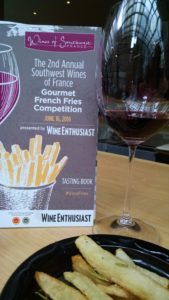
Of course, most frequently, the reality lies somewhere in the middle as was the case at the 2nd Annual Southwest Wines of France Gourmet French Fries Competition held in June. The Wine Enthusiast-sponsored event brought together a wealth of wines from Southwest France, a wide swath of land that includes numerous appellations. Here, internationally renowned grapes co-mingle with lesser known varieties. In this regard, Cabernet Franc and Malbec rival Fer Servadou and Gros Manseng in acreage among the top 12 planted varieties. The result of these diverse plantings produce nearly every style of wine from still and sparkling to white, rosé and red.

Frankly, like the simple popcorn and fizz pairing noted above, unadorned French fries are a tasty companion to many wines. But, the assembled chefs brought their A-game to elevate the humble potato stick.

Ricky Camacho, Anejo
Carnita Fries: Confit pork shoulder, poblano lime aioli, garlic crisps, cilantro and pickled onions
Served alongside a selection of dry white wines

Christopher Stam, Spice Market
Thai Fry: Hand-cut French fry with kaffir lime, garlic crumbs, Nouc cham mayonnaise, house made chili sambal, scallions and cilantro
Served alongside a selection of dry rosé wines

Greg Rubin, American Cut
Beef Fat Fries: Hand cut fries, fried to perfection. Tossed with parsley, rosemary salt and dry aged beef fat.
Served alongside a selection of fruity red wines

Pedro Duarte, Sushisamba
Crispy Potato Confit: Chicharrón de pato (duck crackling), black garlic, balsamic, rosemary and sea salt.
Served alongside a selection of 100% Malbec wines

Aaron Lamonica, Seamstress + Belle Shoals
Freedom Fries: Slow smoked brisket folded into a pork based gravy. Kennebeck potatoes blanched twice, topped with grated Midnight Moon Goat cheese, chives and orange zest.
Served alongside a selection of full-bodied, red wines

I tasted through many of the wines and found a few favorites of the bunch.  Most of the wines hailing from this region are well priced, making them an affordable pleasure, whether or not you hold the fries.

TASTING NOTES

WHITES
Alain Brumont Les Jardins de Bouscasse 2011, Pacherenc du Vic Bilh, $15.00

Rich and waxy with nutty and pear aromas and flavors.

Château Tour des Gendres Cuvée des Conti 2014, Bergerac Sec, $16.00
Fresh, with lots of citrus notes; bright and pretty.

Cave du Marmandais Château La Bastide 2014, Côtes du Marmandais, $15.00 Grapefruit, slight oak, toast, rich and round on the palate.

ROSÉS
Domaine des Terrisses Grande Tradition Rosé 2015, Gaillac, $16.00
Pale in color with berries and floral notes.

Domaine de Pellehaut Hamonie de Gascogne Rosé 2015, Côtes de Gascogne, $11.00
Slightly more color, redolent of peaches and plums.

Producteurs Palimont Colombelle L’Original Rosé 2015, Côtes de Gascogne, $15.00
A really lovely wine with floral and citrus notes.

REDS
Domaine du Moulin 2013 Gaillac, $12.00
Complex, yet fruity, with red and black fruit and an herbal undercurrent.

Domaine Guillaman Les Hauts de Guillaman 2012, Côtes de Gascogne, $25.00
Displaing a rich and intense nose, with depth on the full-bodied palate; black fruit and floral notes.

Domaine des Terrisses Grande Tradition 2014, Gaillac, $18.00
Rustic in character, yet fresh and lively, with red fruit and slight bitter note in finish.

Château Flotis Si Noire 2011, Fronton, $24.00
Offers up a really interesting, somewhat funky nose, with concentrated and rich red and black fruit on the palate.

Alain Brumont Château Bouscasse 2010, Madiran, $25.00
Beautiful nose with fresh, spicy, red fruit and tobacco on the palate.

Time in a Bottle: The Pleasures and Treasures of Old Liquors

2016-04-12 20.47.39If we are lucky, we live in the present moment, enjoying and savoring the here and now, rather than constantly worrying about the future still to come. Yet, the opportunity to virtually travel back in time, uniting us with the past, can be a special experience. It is why, at least in part, we visit historic places and hold onto souvenirs imbued with memories from time gone by. Most mementos are a tangible, but fleeting glimpse, crumbling with the passage of years. For most things, we rely on museums to carefully preserve the past under lock and key and precise storage conditions.

While a stroll through an ancient site or viewing an antique document can bring the past to life, there is something inherently unique in partaking in a gustatory experience asynchronously shared with those who lived long ago. Much more than simply opening up a bottle of wine from a previous vacation destination (which momentarily brings us back to that seaside table in sleepy coastal town), older wines and spirits from decades — even centuries ago — can transport us to another era. In this way, an extremely rare tasting of 19th century Cognac, Armagnac, Port and Madeira provided the sensory time machine to visit the more distant past.

Held in connection with an auction at Christie’s featuring 39 bottles of Cognac and Armagnac, each dating to a presidential term of office, from 1789 to 1977, the tasting was presented by Old Liquors, a wine shop specializing in vintage wines and spirits.

The tasting event was hosted by Old Liquors’ CEO, Bart Laming at New York’s Brandy Library. Interestingly, Brandy Library owner, Flavien Desoblin, a specialist in Cognac, noted that, “The U.S. palate has matured to appreciate older brandies, but is still whisky focused.”

Also present that evening was Christie’s Head of Wine, Edwin Vos, who painstakingly opened each bottle and shared tips for cellaring such treasures such as the admonition to store Madeira upright due to its high alcohol and high acidity content, which would damage the cork if left horizontally.

Admittedly, indulging in such wines is an expensive and limited proposition – there are scant bottles remaining. However, it was truly a once-in-a-lifetime experience to taste these rare wines and recall the world as it once was even if none of us had been there ourselves.

For those with the means and interest in pursuing their own sensory experiences, Old Liquors bills itself as the “World’s largest Old Liquors Store,” with a robust website that accepts orders from around the world.
By Phone: +31 76 5416227
By Email: info@oldliquors.com

TASTING NOTES
Madeira 1865 Café Anglais Madere Vieux, Bual
Aromas of candied ginger, honey and spice; medium sweet palate with high acidity, flavors of coconut, yeast, rancio, ginger bread and orange peel; long length.

Port 1887 Brand unknown, Unknown shipper
A slight rancio note gives way to floral, cherries and bacon on the nose; medium sweet palate, with dried red fruit dominating; much fruitier than the Madeira; long length.

Cognac 1928 Croizet B. Léon Grande Réserve
Greeted by orange peel, spice and slight honey aromas; dry palate with high alcohol, displaying spices, oak and vanilla with elegance and long length.

Cognac 1914 Maxim’s, Caves du Restaurant, Fine Champagne, Réserve
This has an intense nose with woody and vanilla aromas and flavors; it is fuller-bodied on the palate than the above Cognac.

Armagnac 1893 Jacques Marou, Vieil, Handwritten label
This spirit offers concentrated dried fruit, most notably prunes and dates, along with oak and vanilla; simply lovely.

Cognac 1811 Napoléon, Grand Réserve, Imperial glass shoulder, button ‘N’
Aromas of bruised banana, vanilla, dried fruit and orange rind; dry on the palate with high alcohol, offering up spice and floral notes.

2016-04-12 19.10.19 2016-04-12 19.03.00 2016-04-12 19.02.07

Looking at the world through rosé-colored glasses

2015-mathilde-rose-backMy family and I visited Provence back in 2001. We didn’t know a lot about wine at the time; we just knew that we liked it.

On our first night in Provence, we stumbled across a lovely little restaurant with outdoor dining and knew that we had to join in the fun. We requested a table, sat down and gave the server our simple request: we want what the table next to us is having! A short while later our table was filled with incredible-looking, large grilled shrimp and glasses of rosé wine.

I don’t remember the name of that restaurant or even which town it was in, nor do I have any idea who produced that rosé, but that evening remains perfectly etched in our minds – a rosé moment! It is precisely for such moments that Mathilde Chapoutier crafted her wine (although admittedly, she hopes you will remember that she made it).

Accordingly, I don’t think she took much offense, if any, when I spent more time catching up with my colleague as we gorged on towers of seafood and several bottles of her wine on a summer Friday, rather than peppering her with questions about her background and winemaking philosophy. We were creating yet another rosé memory.

When your last name is so synonymous with wine, it is challenging to stay away from the wine industry. Mathilde Chapoutier tried it for a while, contemplating a career as a shooter (after many years as a successful competitor), but the 24-year old eventually gave in and joined the family business.

Today, as a member of the 8th generation of her family to make wine, she serves as Chief of Strategy and Business Development, a position, which has been quite rewarding. However, she was drawn to the idea of creating something uniquely hers – she wanted to make her own wine.

Her approach has been to create a wine that would appeal to her friends and other similar-minded folks who are afraid of wine or find it elitist. Overall, she wanted, “something simple, elegant and easy to drink.” She has succeeded in spades.

Although her family had previously produced what she refers to as food rosés – such as the hearty, deep pink Tavels – her father, Michel Chapoutier, was decidedly not a fan of Provençal rosé. In his opinion, there really weren’t many good ones in the market.

But, Mathilde was determined to prove him wrong and fought for this project despite his objections, eventually finding the Grand Ferrage estate, situated in the foothills of the Saint-Victoire Mountain. For her first vintage (2014), she purchased the juice, ultimately fermenting and blending the wine to her exacting standards.

Dad saw how receptive everyone was to the wine and relaxed his view. For her next vintage, she purchased the entire domaine, giving her full autonomy over the grapes and harvest as well as production. The wine is now available in the U.S. and ready for you to create your own rosé moments.

Mathilde Chapoutier Grand Ferrage Rosé 2015, Côtes de Provence, France, $24.99 (SRP)

untitledVery light in color, thanks to only a few hours of skin contact, this wine offers up floral and citrus aromas, with a dry and delicate palate with peach and floral notes, culminating in long length.

Drinking Wisely and Well: Return to Roussillon

http://issuu.com/tracyellenkamens/docs/drink_wisely_and_well_return_to_rou?e=9398511/35346933

Velenosi: Wines of Poise and Passion

VelenosiWhen I was first invited to meet with Angela Velenosi, owner of Velenosi Winery in Le Marche, I was intrigued by her name. Having studied Italian, the word velenosi struck an immediate cord; we had read stories in class about a character named Valentino Valentini who had first gone on a walk through the forest collecting mushrooms and making a tasty risotto with them. Unfortunately, as the tale went, “Ma…spesso i funghi sono velenosi” – but…often mushrooms are poisonous – so Valentino was brought to the Emergency Room. After leaving the hospital a few days later, our dear friend Valentino was treated to a dinner of oysters, but, as was pointed out: “Ma…spesso le ostriche sono velenose” (but…often oysters are poisonous), so Valentino was again rushed off for emergency care.

After meeting Angela Velenosi in person, I am pleased to note that, while Valentino Valentini was quite unlucky, Angela has had a much better track record with her life. This poised and passionate Italian woman has been the driving force behind her family’s wine label, which she founded in 1984 with then husband, Ercole, when she was only 20 years old. The two saw the opportunity, had a good relationship with the local wine community and, perhaps most importantly, a passion for wine. Angela admits that she had very limited knowledge and experience, but clearly had an abundance of conviction, confidence and courage.

Thirty-plus years later, it is evident that her gamble and dedication has paid off. An award winning winery (listed among Wine Spectator’s top 100 wineries in both 2012 and 2013), Velenosi is firmly established in the region today and is the second largest, family-owned estate, with 100 hectares planted in the south of the region and another 48 hectares located closer to the sea in the province of Ancona.

This same fearlessness seems to pervade everything she does. During dinner she revealed that she has run a total of 11 marathons – three of them in New York. Unfortunately, her knees have kept her from continuing this particular passion, but while, marathons are not a part of her life anymore she is still extremely active.

In addition to being a staunch supporter for her own brand, Angela is equally heartfelt about the region and currently serves as President of the Consorzio di Tutela Vini Piceni, a post she has held since 2014.

Admittedly, among Italian wines, at least in the U.S., Le Marche is much less well known, but this region, situated along Italy’s Eastern coast along the Adriatic Sea, has a lengthy history. The only plural among Italy’s 20 regions, Le Marche got its name in 1105 when three border regions were joined by the Roman Emperor Henry IV. (And, perhaps it’s a bit like New York City’s The Bronx in that it is the only region to possess an article.) Within Le Marche, the town of Ascoli dates back to 1000 BCE and was established by the Piceni tribe of warriors. It pre-dates the Romans’ rise to prominence and was known for its iron works and jewels.

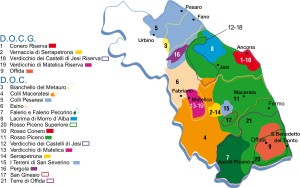
Today, Le Marche is home to 5 DOCGs and 16 DOCs, featuring a diverse range of climates, depending upon topography and distance from the coast. The area features various hills and mountains; there are no flat lands to be found. The relatively small region is primarily known for its crisp, refreshing whites and its Montepulciano-based reds. Although Sangiovese features heavily in many of Le Marche’s wines, the Sangiovese in the Le Marche is a different clone than that found in Tuscany. Consequently, these wines share more similarity to those produced in Abruzzo than in Tuscany.

Velenosi produces 20 different wines, from a combination of indigenous varieties (such as Pecorino, Passerina, Verdicchio, Montepulciano, Sangiovese and Lacrima) and international grapes. In general, Angela likes wines that are both ready to drink, but also have good aging potential, a philosophy she applies to all of the wines she produces. With this mind, many of her wines are bottled in dark, heavy glass to keep the light out during the lengthy aging process. Additionally, Angela looks for clarity and purity in all of her wines. As a result, Angela’s wines are anything but poisonous. – they are elegant, well made expressions of the Le Marche terroir.

Eight of the Velenosi wines are exported to the U.S., covering a range of styles and providing an excellent introduction to the wines of Le Marche!

TASTING NOTES
Passerina Brut NV, Marche, Italy
A Charmat Method sparkling wine produced from 100% Passerina grapes, this slightly off-dry sparkler presents light aromas of peach and pear on the nose and palate. It has nice acidity, with a lovely mousse, finishing cleanly and pairing well with food.

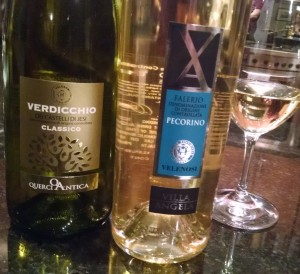
Pecorino Villa Angela Falerio DOC Pecorino 2014, Marche, Italy
Named for the tradition of grazing sheep in the mountains, this variety stems from the Italian word pecora, which translates as sheep. The wine has notes of anise, citrus and apple on the nose. The light to medium-bodied palate offers up savory, herbal and vegetal flavors with high acidity and a slight, textural grip.

Verdicchio Querciantica Verdicchio dei Castelli di Jesi DOC Classico 2014, Marche, Italy
This wine has fresh fruit aromas of peach and almond and is more fruit-forward than the Pecorino, although it is still dry and balanced. There is bright acidity on the medium to full-bodied palate, with flavors of pear, peach and almond.

Lacrima Querciantica Lacrima di Morro d’Alba DOC 2014, Marche, Italy
An aromatic red variety, Lacrima has thins skins, resulting in a lighter-bodied red, with little to no tannins. The grape’s freshness is deliberately preserved through the use of stainless steel and no wood contact. This wine expresses its fresh raspberry, cherry and plum fruit so vibrantly with bright acidity and beautiful balance.

Brecciarolo Rosso Piceno DOC Superiore 2013, Marche, Italy
Falling within the Rosso Piceno DOC rules, the specific blend is up to the producer, with this wine being a blend of 70% Montepulciano/ 30% Sangiovese, aged in older oak for 10-12 months. The heavy reliance on Montepulciano produces a stronger, darker wine than other Rosso Piceno wines.

Ludi, Offida DOCG Rosso 2011, Marche, Italy
One of Angela’s top wines, Ludi was first produced in 1998, named for the Latin root for play – ludo – a reminder that wine is meant to be enjoyed. It is a blend of 50% Montepulciano, 30% Cabernet Sauvignon and 20% Merlot, which is aged in new French oak for 24 months. This wine offers up ripe, yet elegant, black fruit with cedar, vanilla and a hint of anise, with finely grained tannins and long length.

Roggio del Filare 2010, Rosso Piceno DOC Superiore, Marche, Italy
Velenosi’s flagship is the Roggio del Filare, literally “fire in the vineyard,” whose name stems from a poem by the Italian poet Carducci, recalling the way that the sun looks on the vines as it sets in the vineyards. This 70% Montepulciano – 30% Sangiovese blend is produced from 50+ year old vines with a long maceration on the skins and then aged in new French oak for 18 months. It is intense, powerful and structured, with beautiful, concentrated black fruit, wood and minerality on the full-bodied palate with very long length.

Visciole Selezione Cherry Wine NV, Marche, Italy
This fresh and delicate dessert wine is produced from a combination of fully-fermented Lacrima grapes to which a wild cherry syrup, known as visciole, is added, causing a second fermentation and ultimately resulting in a wine with remaining sweetness. Redolent of ripe cherries on the nose and palate, the wine is nicely balanced, with enough sugar to marry well with dessert without being cloying.

Marche

The DOCGs and DOCs of Le Marche

Rose dreaming on a winter’s day

IMG_20160215_155342120_HDR

Certainly, a bottle of bubbly makes any occasion special – an instant upgrade from blah to ta-dah! It can brighten days and elevate moods as evidenced on a recent vacation.

Specifically, on said vacation, we were asked to wait in the restaurant’s lounge while they found us a table for dinner. About 15 minutes later, the manager brought over two complimentary glasses of Cava for us, immediately ensuring happy guests, made even happier when we were ushered to the best table in the house only a short while later.

And, every evening at 6:00 PM, the St. Regis Bahia Beach continues the tradition of sabering a bottle of sparkling wine to mark the transition from day to night, as the sun sinks below the horizon and the coqui frogs begin their song.

Moreover, if looking at the world through rose-colored glasses brings a change in attitude, just imagine what a glass of pink-hued, sparkling wine can do for you in the middle of a dreary winter!

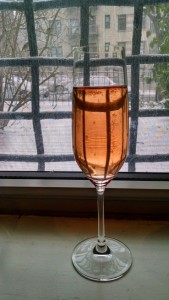
Thinking pink, a recent tasting brought together a beautiful range of salmons, pinks and pale reds, all bursting with bubbles and imbuing the day with beauty and brightness.

Thankfully, while a winter vacation might be just a dream, enjoying a glass of sparkling rosé wine just requires an easy trip to your local retailer. Here are a few options to get you in the mood.

IMG_20160215_153637131

Mionetto Prestige Gran Rosé (SRP: $14.00)
While not technically a Prosecco, since it is both a rosé and a blend of Raboso and Lagrein, this wine hails from the same area where Prosecco is produced. Medium salmon in color, this fresh and fruity wine offered up berry, floral and cotton candy aromas, with a slightly off-dry palate (fittingly, since it is labeled Extra Dry).

Mionetto Luxury Cuvée Sergio Rosé (SRP: $19.00)
Much darker hued than its fellow rosé from Mionetto, this deep pink wine displayed aromas of roses, cherries and strawberries on the nose, all of which persisted on the off-dry palate.

Ruffino Sparkling Rosé (SRP: $15.00)
Ruffino is a well known Tuscan producer, but they have begun to branch out to other Italian regions and recently released this sparkling wine made from the Glera grape of Prosecco fame. It has a pronounced nose of floral and red fruit (raspberry and strawberry) notes, joined by a hint of cotton candy on the slightly off-dry palate.

Cavas Hill 1877 Rosado Cava (SRP: $13.00)
A blend of Garnacha and Monastrell, this Traditional Method sparkler hails from Spain and was deep salmon in color.  Notes of ripe, dark berries and a hint of earthiness dominate both the nose and palate.

Alfred Gratien Brut Classique Rosé Champagne (SRP: $65.00)
Light and ethereal, this pale hued rosé Champagne presented classic yeasty, bready/brioche notes with a touch of strawberry and minerality on the brightly acidic palate, culminating in long length.

Drinking Wisely and Well: Sangiovese Spoken Here

http://issuu.com/tracyellenkamens/docs/drink_wisely_and_well_-_sangiovese_/1

Miner Family Winery: The Cool Miners’ Water

Miner
With their name proudly displayed on every bottle of wine they produce, the Miner family has made a name for themselves in Napa Valley wine. Founder Dave Miner initially launched his career in the software industry, following in the footsteps of his uncle, Robert Miner, who was among the co-founders of Oracle Corporation.

Dave continued to pursue his uncle’s passions when he took over as President of Oakville Ranch Vineyards, which Robert had established in 1989. While Oakville Ranch continues to remain in the hands of Robert’s widow, Mary Miner, Dave went on to found his own winery, Miner Family Winery in 1996, after meeting his future wife, Emily, who served as Tasting Room Manager at Oakville.

Ten years later, Dave and Emily’s efforts were duly rewarded when Miner Family Winery was honored as a Top 100 “Winery of the Year” by Wine & Spirits Magazine.

The Miner Family wines were initially crafted at a custom crush facility, but, by 1997, the pair had hired Gary Brookman on as winemaker and spent the following two years buying a building, excavating caves and releasing their first wine. In 2008, the winery was able to become energy-independent, running exclusively on self-generated solar power.

Interestingly, while they have spent considerable time and effort focused on their facility, the fruit for their wines is generally sourced from other people’s vineyards, some of which, like Hyde, Stagecoach and Garys’ Vineyard, have become extremely well known.

A wide range of wines are produced, including those from Bordeaux, Burgundy and Rhone varieties. In a fitting tribute to uncle Robert, the winery’s flagship Bordeaux-style blend, Oracle, was launched in 2004. Today, Miner Family Winery wines continue to earn critical acclaim and have been served at several White House dinners. Yet, the wines remain reasonably priced and accessible.

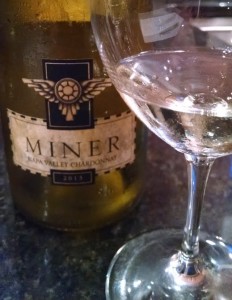
Miner Family Winery Chardonnay 2013, Napa Valley (CA), US, $30.00
As a high quality, well-made wine, this is an oaked Chardonnay for the haters out there. Aromas of apples, spice and pear greet the nose and persist on the dry palate; overall, it is really enjoyable with complexity and elegance.

Miner Family Winery Wild Yeast Chardonnay 2011, Napa Valley (CA), US, $50.00 Produced with only indigenous yeast cultures, this wine offers up yeasty, nutty characteristics on both the nose and palate. Despite spending 16 months in 70% new French barrels, it is well balanced with integrated oak, showing slight development and culminating in long length.

Miner Family Winery Garys’ Vineyard Pinot Noir 2012, Santa Lucia Highlands (CA), US, $60.00
Beautiful aromas of floral, cherries and a hint of herbs are displayed on the nose while rich, concentrated, ripe cherry flavors are joined by wet leaves and a kiss of oak on the palate.

Miner Family Winery Stagecoach Vineyard Cabernet Sauvignon 2012, Napa Valley (CA), US, $75.00
From the Krupp Family’s famed Stagecoach Vineyard, this wine is redolent of red and black fruits, coupled with spice notes.  The full-bodied palate delivers firm tannins, with rich blackberry and spice along with long length.

Versatile Vermentino: Rolle with it!

IMG_20151207_133046568[2]Stuck in a rut? Instead of reaching for the same-old grape varieties, why not try a versatile Vermentino? This Mediterranean grape offers up unoaked, fresh fruit flavors with bright acidity. Masquerading under a myriad of synonyms, the grape is also known as Rolle (France’s Provence and Corsica), Favorita (Piedmont) and Pigato (Liguria).

Vermentino is also widely planted in Tuscany and is the main white variety found in Montecucco and the Maremma. These dry, white wines typically display peach and pear fruit aromas with an occasional floral or spice note.

However, Vermentino probably shines brightest on the island of Sardinia where it has earned the highest designation for quality wine: Vermentino di Gallura DOCG. It was here that the vines were initially introduced to the island from Corsica in the early 1800s. Situated on the northeast of the island, Gallura’s name translates as an area located on high ground due to its elevation. The spot is also prized for its granite soils, which provide a mineral character to the wines, while the proximity to the sea adds a note of salinity.

One of the leading wineries in the area is Vigne Surrau, which produces 300,000 bottles annually. Although they also produce wines from Cannonau and Carignano, 60% of the winery’s production is dedicated to white wines, especially from Vermentino. In this regard, they make a range of styles from the variety, including dry, sweet and sparkling. Like the people on the island (Sardinia is known for being among the top five places in the world where people live the longest), these Vermentinos have great longevity. They can easily age for 5 to 7 years due the granitic soils, and, while they lose some of their freshness similar to aged Riesling, they retain their beautiful structural elements and evolve in the bottle.

VDSC_0052al delle Rose Litorale Vermentino 2014, Maremma Toscana DOC, Italy
With 10% Sauvignon Blanc in the blend, this wine displays a nice richness on the palate with pear and lanolin, along with fresh acidity.

La Mora Vermentino 2014, Maremma Toscana DOC, Italy Very floral nose joined by flavors of peach and pear on the round palate.

Moris Farms Vermentino 2014, IGT Toscana, Italy
Tropical in style with intense peach fruit, floral and spice notes on the nose and palate.

Massi di Mandorlaia Vermentino 2014, IGT Costa Toscana, Italy Aromas of peach, pear and mineral persist on the fresh palate with good acidity and long length.

2015-09-24 13.06.33Marchesi de Frescobaldi Massovivo Ammiraglia Vermentino 2014 IGP Toscana, Italy
Having spent time on the lees, this elegant wine has a lovely waxy texture along with pear and peach flavors, culminating in long length.

Ribusieri Vermentino Chiaranotte 2014, Montecucco DOC, Italy
This wine shows ripe peach fruit with lanolin and spice, along with medium acidity.

ColleMassari Melacce 2014, Montecucco Vermentino DOC, Italy
A very fresh wine with high acidity and a pleasing palate of mineral, pear and peach notes.

ColleMassari Irisse 2013, Montecucco DOC, Italy
An 85% Vermentino – 15% Grechetto blend that spends ten months aged in large oak vessels, this wine displays aromas and flavors of smoke, citrus and mineral with an angular structure and a hint of spice in the finish.

2015-09-26 10.40.21Prato al Pozzo Vermentino 2014, Maremma Toscana DOC, Italy Bright and fresh with high acidity and lots of citrus and pear along with saline and mineral characteristics.

Tenuta I’Impostino Ballo Angelico IGP Toscano Vermentino, Italy There is almost no fruit on this wine; instead, it offers up overt mineral, chalk and salty notes on the rich palate.

Vigne Surrau Branu Vermentino di Gallura DOCG 2014, Sardegna, Italy, $18.00 Pronounced floral aromas give way to ripe peach and pear on the palate with bright acidity, richness and long length.

Vigne Surrau Sciala Vermentino di Gallura DOCG Superiore 2014, Sardegna, Italy, $25.00
Named for the Italian word for “enjoy,” this higher-end version of Vermentino offers a more restrained nose, but with more richness and texture on the medium-full palate thanks to 24 hours of skin contact and five months on the lees, along with distinct salinity and minerality.

Vigne Surrau Sole di Surrau IGT Isola dei Nuraghi Passito di Vermentino 2014, Sardegna, Italy, $N/A
This unctuous dessert wine offers up both fresh and dried apricot notes accompanied by honey and orange peel; it is beautifully balanced with bright acidity.