Cooking by the book

Like anyone else who’s ever gone away for more than a week, I came home to a lot of mail… most of it junk. But, having forgotten the promise made by a friend, I found a pleasant surprise amid the bills and circulars — a new cookbook. In fact, there was not just one, but two cookbooks waiting for me upon my return.

Now, I already have a lot of cookbooks. No, not as many as those folks who wax poetically that they’ve been collecting cookbooks since the year of the flood and have subsequently had to build a special wing on their home just to shelter them. But, enough that I don’t really need another cookbook; especially since lately I seem to use online recipe sites more frequently than reaching for one of my printed tomes. Yet, there they were.

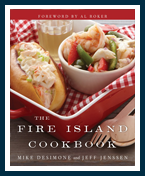
The first came to me from wine colleagues, Jeff Jensen and Mike DeSimone, by way of their publisher. Their latest book –The Fire Island Cookbook – is a collection of menus, one for each weekend of the summer, along with suggested wine pairings. Although Fire Island is the title’s stated destination, the recipes are culled from around the world and are appropriate for any summer supper – whether enjoyed in your Hamptons share, island retreat or suburban backyard.

Flipping through the book, we picked a page at random and found ourselves preparing a shopping list for seafood and sausage paella. Since it was just the two of us, we chose to forgo the other menu items and also halved the recipe regarding the rice itself, while being more lavish with the seafood. Even with the revision, it was all paella all the time for the next few meals (but, since the dish was as tasty as it was, we had no complaints). If you’ve never made paella before (I’ll admit to having been a paella virgin, myself), it is actually made just like risotto, but with a lot of flavorful spices.

We chose to ignore Jeff and Mike‘s wine pairing recommendation simply because we had a lot of wine waiting to be opened, but it’s a nice bit of information for them to have included, making it easy for the wine novice to easily find a pairing for the meal. A few weeks later, we tackled two more recipes, pulling an appetizer of grilled romaine from one meal and a Tequila-marinated steak from another, and pairing the meat with a Malbec as suggested.

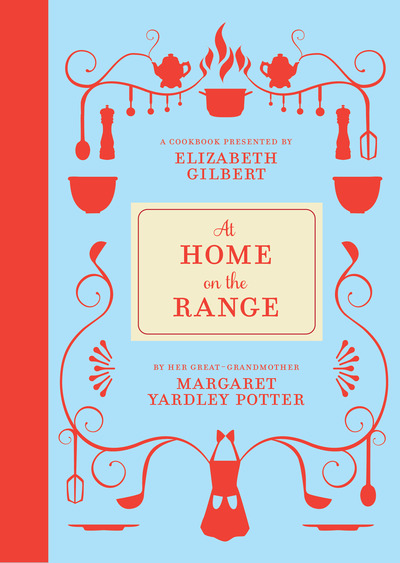
The second, extremely unexpected volume was a gift from my husband. He had attended a literary event at the New York Public Library during my absence (the quintessential bachelor, no?) and had obtained a signed copy of Elizabeth Gilbert’s newest publication for me, At Home on the Range.

According to my husband, Elizabeth Gilbert does not look like Julia Roberts. I know that I shouldn’t be surprised the author doesn’t resemble the actress who portrayed her in the film version of her Eat, Pray, Love book, but I am. Regardless of whom she does or does not resemble, it was apparently quite a humorous event. John Hodgman (of the Mac commercial, and, perhaps to a lesser extent, The Daily Show fame) interviewed Ms. Gilbert, but since they have been friends for years, it was more like a conversation replete with inside jokes than a usual interview.

The important gist of the discussion is that, once upon a time, Elizabeth’s great-grandmother, Margaret Yardley Potter, wrote a cookbook, which was ahead of its time with its focus on nose-to-tail eating; reliance on fresh, local ingredients (as opposed to the modern conveniences of canned or frozen items); and unusual (for the period) cuisine such as, believe it or not, pizza. Curating recipes from unlikely sources such as shopkeepers and obstetric nurses, Potter crafted a cookbook that reads more like a letter from grandma than the Galloping Gourmet, but is made all the more entertaining for this novel approach.

Having only formally discovered this piece of family heritage recently, Elizabeth has republished At Home on the Range, along with the insertion of an Introduction and a few helpful hints with the recipes. With a goal of having these recipes reach a more amenable audience than when the book was first launched, rather than profit, all proceeds from the sale of the book will benefit Scholar Match. In this regard, you are helping you to feed the mind of the next generation while feeding yourself.
 

Captain & Tennille Redux – Muscat Love (Grand Cru Grapevine: June 2012)

Back in the day, Captain & Tennille sang about Muskrat Love, but these days everyone seems to have fallen, not for rodents, but for the Muscat grape. In fact, Nielsen data presented in January 2012 indicated that sales of Moscato (which is a wine produced from the Muscat grape) has risen more than 70% from 2010 to 2011.

Among the oldest grape varieties in the world, Muscat shines in a plethora of places from the cool climate of Piedmont where it sparkles as Asti and Moscato d’Asti to the warmth of Southern France where it dazzles as Muscat de Beaumes-de-Venise. And, equally notable, it thrives off the coast of mainland Greece in the Aegean Sea.

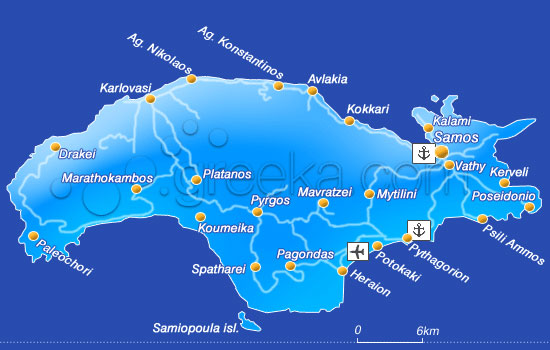
Here, the Mediterranean island of Samos nurtures the Muscat Blanc à Petits Grains grape with its steep, terraced vineyards (“pezoules”), deep soils, high altitude and abundant sunshine (3,300 hours per year). Home to the philosopher Pythagoras, of triangular fame (which is presumably better than singular fame), Samos has produced Muscat wine for centuries and is closely linked with its use for the liturgies surrounding the sacrament of Holy Eucharist service of the Roman Catholic Church.

In more modern history, the Union of Winemaking Cooperatives of Samos (UWC) was established in 1934 and was among the first cooperatives in Greece. With the participation of 26 wine growing villages, EOSS represents all of the island’s growers. In this regard, it is responsible for wine production (it maintains two full-scale wineries for its members), along with sales and marketing activities on behalf of brand Samos.

Given that 97% of the island’s 4,000 acres of vineyards are planted to Muscat, Samos wines are nearly synonymous with this indigenous variety. As per Greek wine laws, Samos wines are one of eight dessert wines classified under the Appellation d’Origine Contrôlée (AOC) designation and are produced in three different styles: Samos Doux, Samos Vin Doux Naturel and Samos Nectar.

Samos Doux is known as a vin de liqueur (aka mistela), produced by the addition of a neutral spirit almost immediately after pressing. With fermentation stopped so quickly, these wines have high levels of residual sugar (200 g/l). The Samos Vin Doux Naturel is akin to the fortified wines of Languedoc-Roussillon, whereby the neutral spirit is added after fermentation has begun. Conversely, Samos Nectar wines are not fortified at all; rather, their sweetness is a result of drying the grapes in the sun to concentrate the sugars before fermentation and then being aged in cask for three years. Although still quite sweet, these latter two wines are less sweet than the Samos Doux wines.

With rich, unctuous notes that range from honey, apricot and candied citrus to burnt orange and butterscotch, what’s not to love?

SAMOS NECTAR 

Despite the high levels of residual sugar in these wines, they do have  balanced acidity to keep them from becoming cloying on the palate.

However, with that said, these are decidedly dessert wines and pair best  with rich, flavorful cheeses (such as sharp cheddar or intense blue  cheese), or fruit- or custard-style desserts (i.e. strawberry  cheesecake, zabaglione).

A third option is to pair them in a cocktail as  their aromatic profile and sweet taste can balance bitter elements and  add weight to the palate. Dushan Zaric, co-owner and bartender of the  New York City-based Macao Trading Company, has crafted a number of  Samos-based cocktails, which work well, including the Nectar Fix. And, with the arrival of summer’s warmer weather, a chilled cocktail might be just the thing.

Nectar Fix

Glass:
Martini-Cocktail
Ingredients:
1¼ ounces Samos Nectar
1 ounce Rye
½ ounce Campari
1 fresh strawberry, quartered
fresh strawberry, halved, for garnish
Directions:
Pour all ingredients including the quartered strawberry into a mixing glass. Add large, cold ice. Stir for 40 revolutions. Strain into a Martini-Cocktail glass and garnish with half a strawberry.

Bodegas Fariña celebrates 70 years

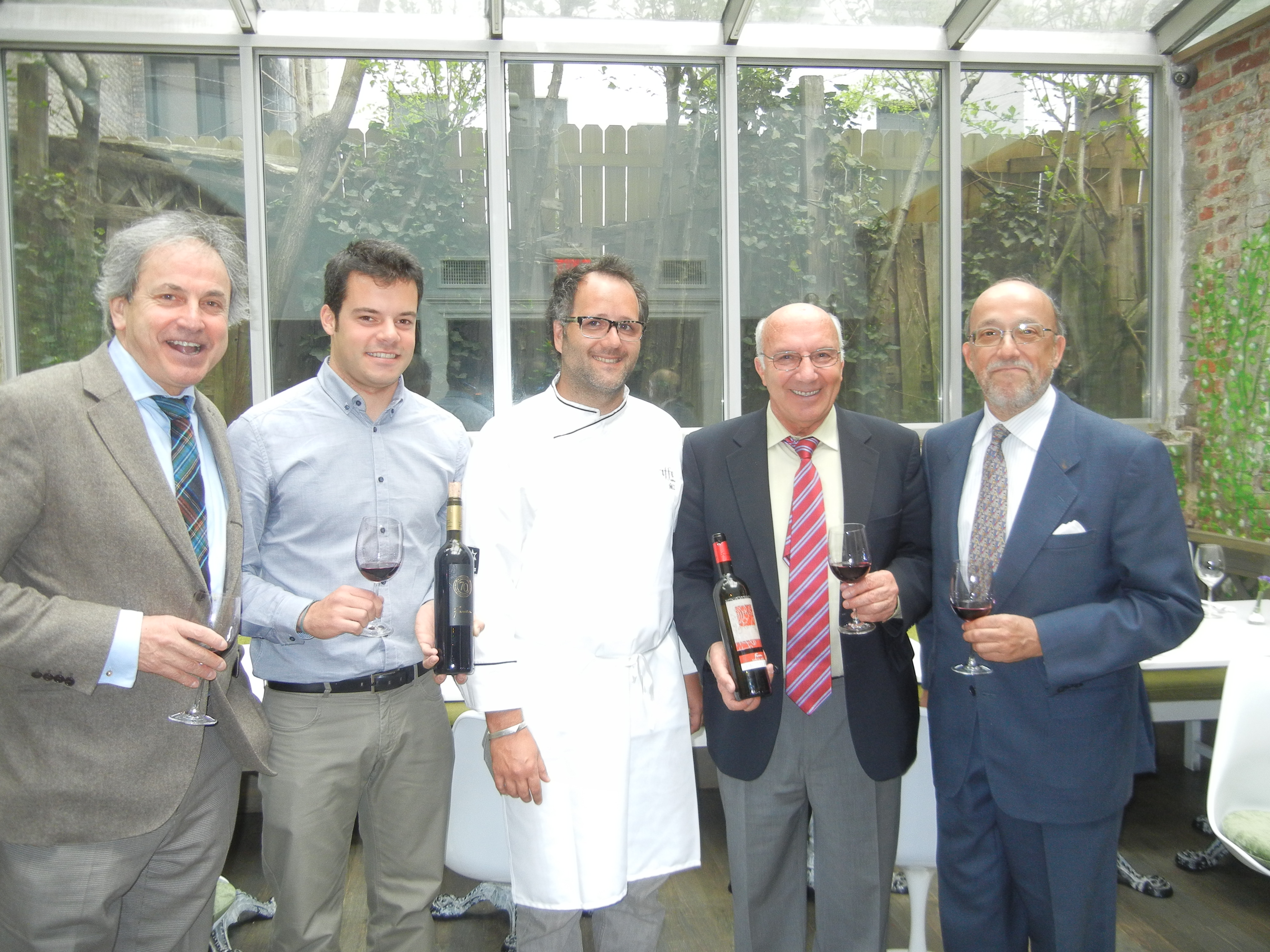
Pictured left to right: Inigo Ramirez de Haro Valdes (Cultural Attaché to the Consul General of Spain), Manuel Farina Jr, Chef Jesus Nunez, Manuel Farina Sr, Juan Martinez Salazar (Consul General of Spain)

Manuel Farina, Jr. looks very young, but at 25 years old he is supposed to. His father, Manuel, Sr., looks more weathered after being at the helm of the family business for more than 40 years. The newly minted viticulturist was in New York for the first time in April, along with dad, to mark a special occasion – their esteemed Toro winery, Bodegas Fariña, celebrates its 70th anniversary this year.

Situated in northwest Spain, the Toro region is a little over two hours from Madrid and about an hour from the Portuguese border. Wines have been produced here for centuries, but the denomination of origin (DO) only dates to 1987, thanks considerably to the efforts of Manuel, Sr. and his belief in the area.

With its span of seven decades, Bodegas Fariña is one of the oldest wineries in the Toro DO. Beyond simple longevity, the winery can also claim to be a pioneer in establishing the reputation of Toro wines. Founded in 1942, Bodegas Farina was created by Salvador Fariña in the village of Casaceca de las Chanas, located 30km from Toro. A new winery was built within the Toro border upon creation of the DO.

Born just a year before the winery was established, Salvador’s son, Manuel was destined to take over the business. However, Manuel wondered why the Toro wines weren’t doing better in the world wine market.

Studying wine in Bordeaux as part of his studies proved pivotal, revealing to him that people didn’t want high alcohol wines. Back then, tradition dictated that the local wines should be harvested in mid-October, the result of which was wines that clocked in at an average of 17% abv. Returning home, Manuel changed his family’s practices, producing the first wine at 13.5% abv.

Other trail-blazing measures included being the first to use a de-stemmer and the first to use temperature controlled stainless steel for fermentation. Historically, the wines were packaged in jugs, but along with his other shifts, Manuel, Sr. began bottling in Bordeaux bottles. Not surprisingly, the winery was also the first in the region to be exported.

Today, Bodegas Fariña is highly regarded, with the wines available in numerous countries. Not content to rest on these laurels, both of Manuel, Sr.’s sons share their dad’s passion for wine and innovation. Bernardo, the oldest, serves as technical director, while Manuel, Jr. focuses on the vineyards. The 2011 vintage found them actively evaluating their soils and vine nutrition and was their first vintage with separate vinification of different vineyard plots. The family’s next challenge is to convert 65 ha of their land to organic farming.

The impact of this innovation can be found in the glass. The Bodegas Fariña wines over deliver for the money, especially in the mid-range. At the lower end, fresh fruit flavors of strawberry and plum showed nicely in the Pimero 2011 ($n/a), a 100% Tempranillo wine, which begins with carbonic maceration before regular fermentation takes place. The Dama de Toro Tempranillo Roble 2010 ($13.00) was barrel aged for four months and offers more complexity with dried herbs, spice and a hint of the oak as well as strawberry aromas and flavors.

Even more complex, the Dama de Toro Crianza 2006 ($17.00) had aromas of strawberry, oak, herbs, balsamic notes, and spice, all of which persisted on the palate and culminated in long length. The winery’s special release, Bodegas Fariña 70th Anniversary 2009 ($25.00) had similar notes, but was more floral on both the nose and palate. And, to cap off one’s meal, the Val de Reyes “Tino Dulce” ($20.00) is a late-harvested Tempranillo wine with black raspberry, dried red fruit and cocoa, which was much lighter on the palate than Port.

Wine with the Vanderbilts (Grand Cru Grapevine: May 2012)

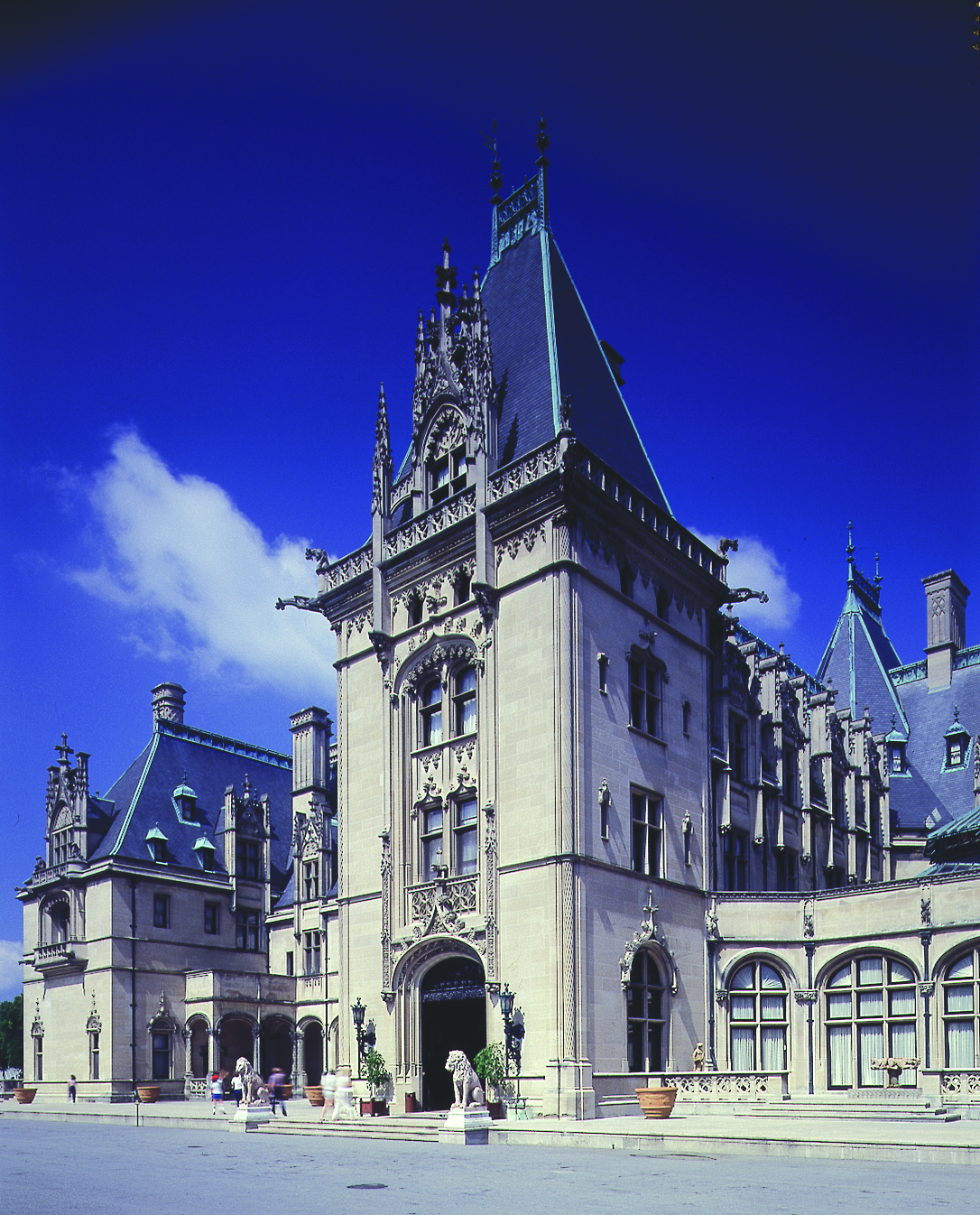
America’s most visited winery isn’t in Napa. It isn’t even in California. Rather, with 600,000 guests annually, the imposing Biltmore Estate can be found in the Blue Ridge Mountains of Asheville, NC. With its driveway measured not in feet, but in miles (glad I don’t have to shovel it), the 1895 mansion was ahead of its time with electric lighting and an elevator and continues to be forward-thinking in its emphasis on being a self-sustaining estate. As part of these efforts, the on-premise dairy was replaced with a winery in 1985.

In 1997, a belated honeymoon included a visit to the Biltmore, along with a tour and tasting at the winery (in fact, our first winery visit as a couple). By design, our arrival coincided with the Flower Festival, which spanned the full weekend and entailed a myriad of events held at the immense estate. Our attendance at such events meant that our rental car became well acquainted with the lengthy driveway, but each time that the “house” came into view, it took our breath away. Coupled with the lush landscape and numerous gardens designed by Frederick Law Olmstead (of Central Park fame), we departed Asheville with fond memories.

Thus, it was with some delight that I accepted an invitation to meet with Biltmore Estate’s winemaker at a recent lunch in New York City. As you might imagine, growing grapes in North Carolina is not an easy task. The humid climate wreaks havoc in the vineyard, encouraging the growth of mildew and healthy grapes at harvest are not a given. Yet, despite these less than favorable conditions, Bernard DeLille has made wine at the Biltmore Estate for over 25 years.

The Burgundy-trained winemaker responded to an advertisement in 1986, intrigued by the opportunity to make wine in the U.S. Although he was working in Madiran and Jurançon (both in southwest France) at the time, DeLille welcomed the opportunity to produce wines without the rigid constraints of France’s appellation system. Accordingly, he packed up his wife, two children and their belongings and headed to North Carolina to begin his new position. Joining the staff under the direction of Philippe Jourdain, by 1991, he was promoted to the position of winemaker.

Given the challenges that North Carolinian viticulture presents, Biltmore Estate now sources grapes from California for many of its wines. In order to comply with U.S. regulations, wine production takes place in California as well. However, the estate vineyards have not been abandoned; DeLille will continue to make wines at home as well. In this regard, consumers can choose from two Blanc de blanc sparklers – one from North Carolina and the other from Sonoma County’s Russian River Valley. Two still Chardonnays are also similarly produced (Sonoma County and North Carolina). Not surprisingly, their red wine production centers on California.

This new approach to winemaking has provided DeLille with many rewards. Yet, he admits that it can be complicated to keep up with the need to make wine in two different facilities, separated by an entire continent. But, on the whole, DeLille seems to have taken well to the balancing act required. I wish I could say the same of the restaurant’s servers. In clearing the flutes and white wine stemware, both DeLille and I were the recipients of a Chardonnay shower. Luckily, as a veteran journalist, I was wearing black and was consequently, soggy, but not visably stained.

All in all, it was a nice reintroduction to these wines and I appreciated the changes being made in expanding the Biltmore Estate’s range of wines. The new wines should be available in the New York market soon and I would encourage you to seek them out. Or, even better, go join the other 600,000 guests and taste the wines at the estate. It’s truly a great way to spend the weekend!

Biltmore Estate Château Reserve Blanc de Blancs Brut 2008, North Carolina, $30.00
Produced from 100% Chardonnay grapes, this sparkling wine is made in the Traditional Method and receives 12-16 months of lees aging, yielding yeasty, toasty, apple and floral notes on the nose and palate.

Biltmore Estate Blanc de Blancs Brut 2007, California, $25.00
While produced similarly to its North Carolina sister, this sparkler’s grapes are sourced from the Russian River Valley and it spends 18-24 months on the lees. A more pronounced nose offers up riper fruit with apple and pear aromas. On the palate, some yeasty character is evident, but this wine is less toasty and more fruit forward than the other.

Biltmore Reserve Chardonnay 2010, Sonoma County (CA), $20.00
As an unoaked Chardonnay, this wine is all about pure fruit, showing aromas and flavors of pear, apple and citus. Bone dry on the palate with vibrant acidity and a full body, it is an excellent dining partner.

Biltmore Reserve Chardonnay 2010, North Carolina, $15.00
In contrast, this wine is fermented in French and American barrels and approximately 50% of the wine undergoes malolactic fermentation (sharper malic acid is converted to the softer and creamier lactic acid). The nose is rich and buttery with apple notes, while the palate offers apple and a hint of oak.

Biltmore Reserve Cabernet Sauvignon 2010, Alexander Valley (CA), $20.00
A varietally-correct, California Cab, this wine shows lots of black fruit and slight herbal notes, with moderate tannins, balanced acidity and good length.

Searching High and Low for Bordeaux (Grand Cru Grapevine: April 2012)

At a recent Wine Media Guild lunch featuring Château d’Issan and Château Rauzan-Segla, it was stated that, “as Bordeaux goes, so does the whole industry,” with the further comment that, it was a “lynchpin by which other regions measure themselves.” And, with the iconic nature of these two Margaux producers, it is not surprising that the wines showed quite well that afternoon. Several months earlier, four Pauillac châteaux – Château Lynch Bages, Château Pontet-Canet, Château Mouton Rothschild and Château Clerc-Milon – gave equal pleasure to the assembled journalists.

However, with the price of the classified growths reaching astronomical figures, many wine drinkers feel priced out of the Bordeaux market. Yes, it’s true, wines from pedigreed châteaux have become the object of collectors who may never drink a drop rather than the cherished claret they once were. Such wines are the result of high scores and top reputations, which have made them more prized for their investment value than for their hedonistic value. But, thankfully, the majority of Bordeaux is still very much for drinking.

As an extremely large French wine region, representing 26% of all AOC (quality) wine produced in the country, Bordeaux is home to 63 appellations. Yet, Bordeaux AOC and Bordeaux Supérieur AOC together comprise 55% of the total production. And, despite the volume this entails, Bordeaux has thousands of small, family-run estates such as Château Penin run by Patrick Carteyon, the fifth generation of his family to work in wine. Similarly, at Château de Bonhoste, winemaking is the domain of Yannick Fournier, while his sister, Sylvaine, and mother, Colette, tend to the vineyard.

Although these two appellations stem from grapes grown on both sides of the Garonne River, on its own, the Right Bank has been the scene of recent change. A new appellation – Côtes de Bordeaux – was established in 2009, providing these wines with more market recognition. For example, wines previously labeled as Blaye or Côtes de Francs were not instantly recognizable. Now, the name Bordeaux is featured prominently on their labels.

While not as prestigious as the wines from the various classifications, wines from these three appellations offer great value, with most under $20.00 and many in the $10.00-13.00 range. And, at these prices, you can take a chance on a bottle or two to try before splashing out on a whole case.

Château La Rivalerie, Côtes de Bordeaux Blanc 2009, Bordeaux, France, $N/A
(60% Sauvignon Blanc, 20% Sauvignon Gris and 20% Semillon)
This wine offers aromas of oak, bruised apple, citrus and ginger on the nose. With bright acidity and medium body, the flavors echo the nose and linger throughout the long finish.

Château La Goutere, Bordeaux Rouge 2009, Bordeaux, France, $12.00
(77% Merlot, 20% Cabernet Sauvignon, 3% Cabernet Franc)
Hailing from vineyards located near Saint Emilion, this wine showed aromas of blackcherry, vanilla and a hint of oak on the nose. Its palate also offered notes of earth and herbs along with medium tannins.

Château Penin, Grande Selection Bordeaux Supérieur Rouge 2008, Bordeaux, France, $13.00
(100% Merlot)
Blackberry, plum and some herbal character were present on the nose. Showing a supple texture, the wine had good acidity, with flavors of blackberry, plum, dried herbs and slight oak notes.

Château Peynaud, Bordeaux Supérieur Rouge 2009, Bordeaux, France, $12.00
(50% Merlot, 35% Cabernet Sauvignon, 15% Cabernet Franc)
Aromas of spice, oak, vanilla and black cherry greet the nose. On the palate, the wine is very fruity, with similar notes.

Château Saincrit, Vieilles Vignes Bordeaux Supérieur Rouge 2008, Bordeaux, France, $18.00
(70% Merlot, 30% Cabernet Sauvigon and Cabernet Franc)
This château is owned by Florence Prudhomme who took over the property in 2003. Showing aromas of plum, raisin and spice on the nose, the palate gives way to blackcherry and oak.

Et tu, Brunello? (Grand Cru Grapevine: March 2012)

The Ides of March is upon us, so all Caesars are cautioned to beware. And, while you may not be able to trust Brutus, you can feel confident about the most recent releases from Brunello di Montalcino, with three stellar vintages all now available in the market: 2006 Brunello di Montalcino Reserva, 2007 Brunello di Montalcino and 2010 Rosso di Montalcino.

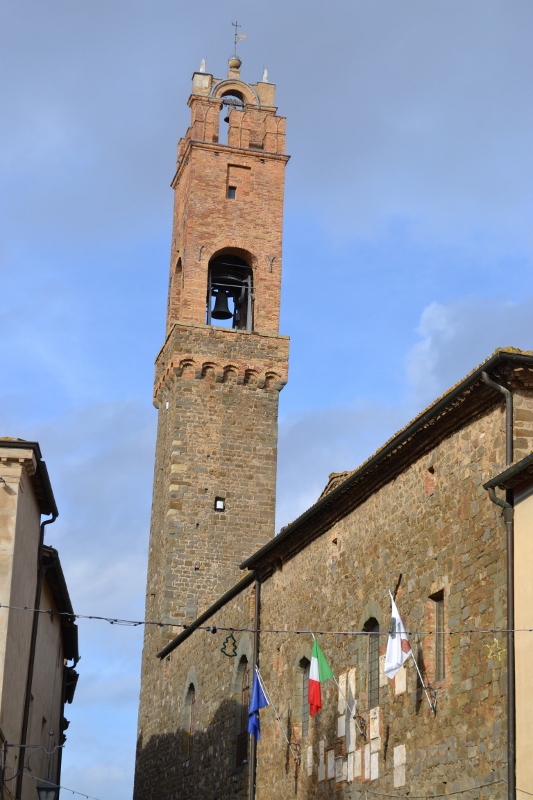
Although Brunello di Montalcino doesn’t quite date as far back as Julius Caesar’s time, the origin of this Tuscan wine traces its heritage to a mention in an historical document dated 715. Production centers near the hilltop (monte) town of Montalcino, which takes its name from the oak trees (leccio) found growing there. The town’s vertical advantage placed it in a strategic position since its inhabitants could clearly see who was traveling on the main road between Florence and Rome during the Middle Ages. Consequently, the city maintained its independence as a municipality for centuries before the Medici’s took possession in 1559.

The history of Brunello itself stems from 1869 when Clemente Santi defined the wine. Santi won an award for his 100% Sangiovese wine that, aged for a long period of time, was unusual for his integration of advanced racking and barrel-ageing techniques that had not been used previously. Several decades later, his grandson Ferruccio Biondi Santi built upon Clemente’s initial work, establishing strict production standards and, unlike his peers, focusing exclusively on a wine meant to be aged. Biondi Santi’s labors also isolated a particular clone of Sangiovese, known locally as Brunello, and in 1932, an Interministerial Commission described him as the inventor of Brunello.

Steeped in Medieval history, Montalcino offers visitors the chance to step back in time – thick stone walls, an imposing fortress and cobblestone streets transport you from 2012 to 1512. Yet, despite the ancient ambience, Montalcino embraces its decidedly commercial culture. Walking down the town’s narrow streets, one encounters wine shop, after wine shop, after wine shop, almost to the exclusion of all else. As a colleague remarked during a recent visit, at no time did we come across a hardware store or a place to buy non-touristic garments. Got wine? No problem. Got underwear? That’s another story.

Initially established as a DOC in 1966, Brunello was among the first denominations to be promoted to DOCG status, Italy’s highest quality wine level, in 1980. By then, it had achieved worldwide recognition as an ageworthy wine. Today, the denomination is home to 250 producers and, while the delimited area itself comprises 60,000 acres, only about 5,200 acres are planted to Brunello vineyards. Another 1,275 acres is given over to Brunello’s baby brother – Rosso di Montalcino. Whereas Brunello must be aged for a total of 5 years (or 6 years for Riserva) with at least two years in oak, the Rosso wines may be released immediately.

The square-shaped region is home to four rivers and valleys and is situated midway between the center of Italy and the sea. Moreover, the area is slightly further south than Chianti Classico and Montepulciano. Accordingly, the Mediterranean climate provides a warmer and drier climate than these other two regions, impacting the ripeness and tannin development of the grapes. With richer cherry fruit and less vegetal notes than Chianti Classico (and less earthy ones than Vino Nobile di Montepulciano), these tannic wines need time to truly develop as evidenced by the beauty found in both the 1995 Col d’Orcia and 1994 Villa Poggio Salvi described below. Hailed as a five-star vintage, the 2007s will have similar staying power and should be laid down in the cellar and perhaps forgotten about until the Ides of March circa 2024.

Camigliano 2007 Brunello di Montalcino, Tuscany, Italy, $40.00
With aromas of cherry, slight earth and hint of oak, this dry wine is light and elegant with bright acidity, medium tannins and cherry dominating the palate. 

Capanna 2007, Brunello di Montalcino, Tuscany, Italy, $41.00
Aged for four years, this wine is classic with rich and concentrated aromas of cherry, anise and wood, culminating in long length.
 

Fanti 2007 Brunello di Montalcino, Tuscany, Italy, $45.00
A combination of black cherry and sour cherry, the aromas are repeated on the palate, with firm tannins and nice length.

Il Poggione 2007, Brunello di Montalcino, Tuscany, Italy, $69.00
This wine is beautifully rich with cherries and balsam notes on both the nose and palate. The concentrated flavors linger throughout the wine’s long length.

Col d’Orcia Riserva Poggio Al Vento 1995, Brunello di Montalcino, Tuscany, Italy, $85.00
This wine saw four years in oak and two years in bottle before being released. Now, 17 years after its initial production, it is showing development on both the nose and palate and offered dried fruit, herbs and cherries.

Villa Poggio Salvi 1994 Brunello di Montalcino, Tuscany, Italy, $NA
Almost Barolo-like in its black fruit character, this wine also offers dried herbs and fig notes. However, its body was lighter than the Col d’Orcia 1995.

Bonjour with a side of French wine and cheese

If you are planning a trip to France (or another European destination), you might want to pick up a bit of language skills before you head off into the Parisian sunset. Enter Manisha Snoyer, educator and proprietor of Into this City. This unique company not only offers foreign language classes, but also provides acting classes in both English and French.

Among the French classes scheduled is Act French for Travelers, which is further described as a basic French language class with cheese tasting. My husband and I attended this class on a Friday evening earlier this month and were pleasantly surprised. In addition to learning key terms and phrases concerning introductions, ordering food and inquiring about where someone is from, Snoyer offers participants with the opportunity to sample four different French wines, each paired with a different cheese.

Moreover, drawing on her acting experience, Snoyer teaches language skills utilizing a variety of activities and games. There is very little occasion to sit still in this class. Instead, students are called upon to identify pantomimes to reinforce the names of months, adding a physical or tactile learning approach to the already verbal one, further enhancing knowledge acquisition. Afterward, while standing in a circle, a ball is tossed from person to person, with each one calling out the French number in sequence. Next, the assembled group is divided into smaller groups and menus are distributed. Returning a few minutes later in the guise of a server, Snoyer takes each member’s food order. And, toward the end, classmates must circulate throughout the room, asking an assigned question and providing a prize (stickers) for correct responses en Français, of course.

Breaks between these exercises are punctuated with the wine and cheese, while French music plays in the background and the structure, aromas and flavors of the wine are discussed. Admittedly, Snoyer is not a wine educator, but she does a nice job with this aspect of the class as well.

The students themselves were a diverse mix of people — different nationalities, different ages and different professions — adding to the atmosphere and congeniality of the evening. All in all, it was a lot of fun, and, we even improved our French. Bien sûr!

Tavel, the Original Rosé (Grand Cru Grapevine: February 2012)

If you only drink rosé in the summer – challenge that! Sure, rosé wines are perfect summer sipping wines with their lighter body, refreshing acidity and affinity for being served at cooler temperatures. However, meatier rosés can make a wonderful addition to the dinner table year-round and will provide a rosy hue for your Valentine. And, France’s Tavel is a perfect example.

Produced from vines originally brought to the Rhône Valley by the Romans, Tavel was first made for the popes at Avignon as early as the 1300s. With its lighter body, low tannins and fruit driven character, the Popes enjoyed these wines, which became famous as the most red of all pink wines. After finding favor with the clergy, Tavel continued its long history, receiving official recognition as a controlled appellation in 1936, becoming the first AOC rosé wine in France.

With the iron-rich, clay and sandstone soils on the Rhône’s Left Bank more suitable for red wines, Tavel vines are grown on the Rhône’s Right Bank. Known for the wind-blown silts and sand that were deposited by the mistral after the ice age, these vineyards offer ideal conditions for fruit-forward, less-structured wines. Here, the soils are composed primarily of limestone, which formed millions of years ago when the area was initially under the sea. The land was eventually pushed to the surface where its mineral content provides acidity, minerality and aroma to today’s wines. Referred to as garrigue, which is also the name for the scrub vegetation that grows on it, these scents include lavender, thyme, rosemary.

Theoretically, Tavel may be made from a blend of up to 15 different grapes, most of which are red. Yet, in practice, the wines are limited to nine varieties and no grape can constitute more than 60% of the blend. These authorized grapes span from Roman (Bourboulenc) and Spanish (Grenache, Carignan and Mourvèdre) origin to French (Syrah, Cinsault, Calitor, Clairette, Picpoul) varieties, all of which thrive in the sun-drenched climate.

Crafted using the saignée method, the wines undergo an average of 12-48 hours during which the fresh grape juice is in contact with the red skins before being bled off.  However, the soak may last up to 72 hours to pull significant tannins and color from the grape skins. Regardless of the time period, the wines are fermented at cool temperatures to preserve the intense aromatics.

The range of colors is determined by the combination of grape varieties, ripeness of the vintage (pH), temperature of the grapes at harvest, length of maceration and oxygen exposure. Moreover, the quickly oxidizing Grenache imbues the wines with more orange hues while high acid grapes add pinker tones. Finally, while Tavel has historically been known for its salmon hue, with the advent of modern technology, the wines are now more pink. And with the legal revisions made in 1997 that mandate the use of clear bottles, you’ll be able to admire the wine’s beautiful shade well before you pour it in your glass.

TASTING NOTES

Château d’Aqueria 2010, Tavel, Rhône Valley, France, $18.00
(52% Grenache, 12% Syrah, 11% Mourvèdre, 9% Clairette, 9% Cinsault, 6% Bourboulenc, 2% Picpoul)
This deep pink wine offers up aromas of cherries and berries. Its medium acidity and medium tannins provide nice structure for the darker red fruits, which pervade the palate.

Domaine de la Mordorée La Dame Rousse 2010, Tavel, Rhône Valley, France, $15.00
(56% Grenache, 20% Cinsault, 10% Clairette, 4% Syrah, 3% each – Mourvèdre, Bourboulenc and Grenache Blanc)
Medium pink in hue, this wine has aromas of berries, with some slight citrus pith and minerality, all of which persist on the palate. Vibrant acidity and light tannins result in a refreshing wine.

Domaine Maby la Forcadière 2010, Tavel, Rhône Valley, France, $20.00
(70% Grenache, 10% Cinsault, 10% Grenache Blanc, 10% Other)
Decidedly salmon in color, this wine shows floral and berry notes. The palate has medium acidity, low tannins and is dominated by fresh berry fruit flavors.

Prieuré de Montézargues 2010, Tavel, Rhône Valley, France, $19.00
(55% Grenache, 30% Cinsault, 13% Clairette, 2% Other)
Pale pink, with salmon highlights, berries and herbs greet the nose on this wine. Flavors of citrus and berries linger on the lively palate.

Château de Trinquevedel 2010, Tavel, Rhône Valley, France, $17.00
(60% Grenache, 15% Clairette, 10% Cinsault, 10% Syrah, 5% Bourboulenc)
With its medium pink appearance, this wine offers a range of floral, berry and herbal notes. Red berries and cherries are joined by a chalky/mineral character on the palate.

Truth or Dare? (Grand Cru Grapevine: January 2012)

If you make only one wine, it can be a bit risky. If you only make Riesling in New Zealand, it’s downright daring! In fact, that is precisely what Hennie Bosman and his wife, Celia, are doing. The proprietors of True & Daring admit that the venture is high risk; at a recent event Hennie joked that they should have called it Truly Mad. But, despite the inherent madness, the result is a wine that is true to their palate.

Born in South Africa, the affable Hennie planned to make wine in retirement, but their relocation to New Zealand prompted them to accelerate their plans. Starting out in the usual vein, they made several different varietally-labeled wines, including Pinot Noir, Pinot Gris, Chardonnay and Sauvignon Blanc. However, as Hennie explained, they “decided to be daring; to stay true to the wine [they] love.” Accordingly, they turned their attention exclusively to Riesling.

Not wanting to imitate a particular style or region, Hennie believes that the vineyard speaks through Riesling more than other grapes. In this regard, the grapes are carefully sourced from vineyards in Nelson, on the northern tip of New Zealand’s South Island. He then works in small batch fermentations and leaves the wine on the lees for a longer period of time (by New Zealand standards). Consequently, the wine is bottled in December or January as opposed to September. Finally, the couple allows the wines to age before releasing them, further adding to their audacious behavior. Production is deliberately kept tiny with only 2,200 cases produced.

So what does all this mean in the end? An event held at Porterhouse brought together several top New York sommeliers, including Roger Dagorn, MS, all of whom were asked to taste nine wines blindly. While the tasters knew that the wines were all Riesling and that the True & Daring was among them, they didn’t know what else was in the line-up. Despite the tasters’ honed skills, upon tasting the True & Daring Riesling they couldn’t place the wine as being either distinctly Old World or New World. Moreover, the wine held its own in the company of such wines as Trimbach’s Cuvee Frederic Emile 2004 from Alsace, France, the Muller-Catoir 2009 from Pfalz, Germany and Eroica 2009 from the Columbia Valley, WA joint venture between Chateau Ste. Michelle and Dr. Loosen.

First released with the 2004 vintage, True & Daring’s current release is the 2007 vintage. Tasted in October, this wine was showing some development with honey, citrus and a hint of petrol on the nose. The dry palate was dominated by citrus and petrol with high acidity, medium body and long length.

Unfortunately, all of the Bosmans’ audacity doesn’t come cheap; the wine retails at $35.00/bottle, but it is well-worth the splurge.

Make Mine Spumante (Grand Cru Grapevine: December 2011)

While France and Champagne are frequently the standard bearers for sparkling wines, Italy is not to be outdone in this regard. In fact, Italian sparklers run the gamut from light and lively quaffers to complex, yeast-aged wines and everything in between. Although many Italian appellations include the provision, “May be spumante (sparkling),” in their regulations, the best examples are usually those that come from the designated fizz regions such as Trento, Franciacorta, Moscato d’Asti, Asti, Prosecco and Brachetto d’Acquis. With this broad selection of sparkling wines, one is sure to find the perfect Italian sparkler with which to toast the holiday season and beyond.

Rivaling the yeasty, toasty character of Champagne, Italy’s Trento and Franciacorta appellations offer similar aromas and flavors in these Traditional Method wines. During the dawn of the 20th century, Giulio Ferrari was intrigued with the quality of France’s sparkling wines and went to study in Montpelier to learn how to make them. He returned to his hometown in Trentino and set about creating his wine. In 1952, he sold the company to the Lunelli family which has continued to maintain the high standards set by Ferrari. Produced identically to Champagne, these wines rely almost exclusively on Chardonnay, with the occasional use of Pinot Noir. Today, other producers in the area also ascribe to these standards, which were codified in 1993 with the creation of the Metodo Classico Trento DOC, the first Italian appellation for a sparkling wine. These wines must undergo a secondary fermentation in the bottle, with a minimum of 15 months aging on the lees.

Italy’s Lombardy region is home to Franciacorta, which is also produced using the same, time-consuming Traditional Method of sparkling wine production as that used in Champagne. However, beyond its reliance on Champagne’s Chardonnay and Pinot Noir grapes, Franciacorta also includes Pinot Gris and Pinot Bianco in its recipe, if the producer so desires. In 1995, Franciacorta was established as a DOCG (Italy’s highest appellation level), with regulations requiring a minimum of two years aging before release, of which 18 months must include contact with the lees. Franciacorta’s vintage wines are those which have been aged for 37 months be in contact with the yeast, while rosés must contain at least 15% Pinot Nero (Pinot Noir). The specially labeled Franciacorta Satèn must be produced solely from white grapes, specifically Chardonnay and Pinot Bianco, and at a reduced pressure of 4.5 bars instead of 6.

For a more aromatic and less expensive option, look to Prosecco to fill your glass. In general, Proseccos are vibrant and fruity, exhibiting the aromatic characteristics of the Glera grape. Produced via the Italian (aka Charmat) method of sparkling wine production, the floral and fruit aromas and flavors are retained, rather than masked through the use of stainless steel and minimal contact with yeast/lees (unlike the Traditional method). Meant to be drunk young, the wines are increasingly being vintage-dated (most were previously non-vintaged) to provide the consumer with more information. In 2009, the appellation was promoted to DOCG status, with production limited to the towns of Conegliano and Valdobbiadene.

Toward the end of the meal, turn to Piedmont for sweet-style sparklers. Here, the Moscato (Muscat) grape is known for producing aromatic wines that are available in lightly sparkling (frizzante) and fully sparkling (spumante) versions. The sweet and grapey Moscato d’Asti DOCG and Asti DOCG both have low alcohol, light body and fragrant floral notes, making them the perfect accompaniment to fruit-based desserts. Although both are produced from the same grape variety and in the same region, the former wine has a higher sugar content, lower alcohol level and fewer atmospheres of pressure, which accounts for the use of a regular wine bottle. In comparison, the Asti is fully sparkling at an average 7% abv, with a gentle froth on the palate. For chocolate desserts, try Brachetto d’Acquis. Made with the red Brachetto grape, this Piemontese sparkling wine offers up raspberry and strawberry aromas and flavors, coupled with soft sweetness on the palate.

Ca’ del Bosco, Franciacorta Cuvée Prestige NV, Lombardy, Italy, $50.00
Considered to be one of the top producers in Franciacorta, Ca’ del Bosco was established in 1968 by Maurizio Zanella. A blend of 75% Chardonnay, 15% Pinot Nero and 10% Pinot Bianco, this full-bodied wine has been bottle aged for a minimum of 28 months with rich, toasty notes on the nose and palate. A slight nuttiness lingers in the long finish.

Ferrari, Giulio Ferrari Riserva 2001 Trentino, Italy, $100.00
Produced from a single vineyard of 15 year old vines, this special cuvée is named for founder Giulio Ferrari with wines aged for a minimum of 10 years on the lees. These beautifully rich wines are capable of great aging as evidenced by the complexity revealed in a tasting of the 1986, 1995, 1997, 2000 and 2001 vintages. The company also makes its vintage-dated Perlé in a blanc de blancs (100% Chardonnay) and a rosé (80% Pinot Nero and 20% Chardonnay), in addition to their non-vintage brut ($25.00) and rosé ($37.00) wines.

Peri, Talento Brut Millesimato Metodo Classico 2007, Lombardy, Italy, $30.00
Although this 100% Chardonnay sparkler is produced near the Franciacorta appellation, it is done so under the broader geographical appellation of Montenetto di Brescia. Produced using the Traditional Method, the wine showed some yeasty notes along with citrus and apple on the palate.

Bel Canto di Bellussi, Valdobbiadene Prosecco Superiore DOCG, Extra Dry, Veneto, Italy, $13.00
Purchased by the Martellozzo family in 1993, Belllusi is presently run by Enrico, the third generation in his family to work in the wine business. With a fine perlage, this wine displays red apple and floral notes on both the nose and palate. Off-dry and light, it is quite elegant.

Ricossa, Moscato d’Asti, Piedmont, Italy, $15.00
The Ricossa Antica Casa winery dates to the 1800s when it was founded by Lorenzo Ricossa. This wine has pronounced aromas of floral, peach and honey on the nose. Its sweet palate offers fresh peaches, grapes and honey before finishing cleanly.