All Dried Up: The Wines of Mister Amarone

home

Image courtesy of Masi Agricola.

Some people might address Masi Agricola’s president as Signor Boscaini, but a recent book profiling the well-known Venetian wine producer refers to him as “Mister Amarone.” A leader in the Amarone denomination, it is likely that Sandro appreciates the moniker, having tirelessly worked to improve the quality of this wine since the 1950s.

Of course, some might even say that the man is all dried up. Well, not him exactly, but most of his grapes. While the process of drying grapes is de rigor for Amarone della Valpolicella DOCG, this practice is found in few other places, but Masi’s president has exported the technique both far and near. In fact, many of his wines feature a special logo, Appaxximento, Masi Expertise® coupled with Sandro’s signature, further emphasizing the winery’s commitment to this wine production style.

Boscaini’s initial efforts focused on maintaining the concentration for which Amarone has always been known, while losing the oxidized character. In this regard, he aimed to preserve Venetian tradition, while improving the wine’s quality, introducing new yeast strains that could work at higher alcohol levels and adjusting the fermentation period from 60 days to 45 days. In the 1950s, fermentations often took as long as 18 months. As a result, today’s wines are much fresher than their predecessors.

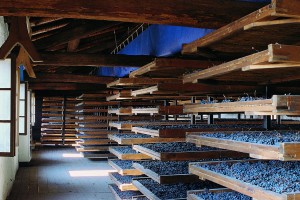
But despite technological embraces, other aspects of production remain quite traditional such as the use of wood mats on which to dry the Amarone-bound grapes. For this purpose, Masi prefers bamboo, the spherical surface of which reduces the contact between the mats and the grape skins and ensures good air flow. Whereas some producers have shifted away from this traditional approach

This delicate balance between tradition and modern practices further comes into play when controlling the environment in the drying facilities. When possible, the room’s temperature and humidity are regulated naturally, with vents opened and closed to create the ideal conditions for drying. However, when necessary, a computer takes over to provide the ideal climatic parameters. Designed by the Masi Technical Group in the 1990s, this complex system is referred to as NASA (Natural Appassimento Super Assisted).

In neighboring Friuli, Boscaini has brought the appassimento procedure to bear on the Verduzzo grape. Harvested rather late to achieve full ripeness, the grapes are then dried on racks for three weeks to concentrate the fruit and permit evaporation of the water content. These raisined grapes are fermented  on their own before being briefly aged in barriques. They are then blended with Pinot Grigio, which has been picked much earlier to retain its acidity and fermented in stainless steel. When brought together, the result is Masianco, a complex wine with full body, depth and richness.

Conversely, the appassimento process is eschewed when producing Bonacosta, a Valpolicella Classico DOC made from Corvina, Rondinella and Molinara. Intended to be a fruity, young red wine, the simple production process, using non-dried grapes, retains this freshness.

Building in complexity among their Venetian reds, is Masi’s Campofiorin. Initially created in 1964, this wine had previously been called a ripasso, but Boscaini feels that this term has become corrupted and opts instead to label it as a Rosso del Veronese IGT and refers to it instead as a Supervenetian.  Instead of conducting a more common technique of using the wine equivalent of an old tea bag, Masi dries grapes specifically for inclusion in the Campfiorin. Regardless of its name or label, the wine falls somewhere in between the fruity character of the Bonacosta and the big, Baroque style of an Amarone.

Masi also produces several different Amarone wines, including its entry-level, Costasera and Costaserva Riserva, as well as several different single-vineyard wines. However, the single-vineyard wines are only produced in excellent vintages, when conditions are right not only during harvest, but also once the grapes have been picked.

Farther afield, Boscaini’s imprint can be found in Argentina, where Masi launched a partnership with Norton in 1995. Here, Corvina grapes receive the same royal, dried-grape treatment and are then blended with Malbec. Appropriately named Passo Doble, this is a decidedly unusual and modern wine.  All dried up? Maybe. But, all washed up? Never! Mister Amarone strikes again!
Grand Cru Grapevine: ‘Tis the Season to Think Pink (April 2013)

CONSO-090827-4

Image courtesy of the CIVP


With indictments accusing Puxatawny Phil of fraud being filed across the country, it’s clear that everyone is ready for spring. Whether it’s cabin fever, a thorough dislike of cold weather and snow or simply a desire to wear short-sleeves and sandals, the lure of warmer weather tantalizes us all. And, small, but simple, signs – sightings of ramps and fiddlehead ferns at the market, robins heard overhead or crocuses blooming on the lawn – provide a glimmer of hope that perhaps spring has finally arrived.

Although Alfred Lord Tennyson noted that “In the spring, a young man’s fancy lightly turns to thoughts of love,” a wine lover’s fancy might turn to thoughts of lighter wines, with the many shades of rosé serving as a further reminder of the change of seasons, a pink lining to the dark cloud that has been winter. Thus, we happily turn our attention to the rosés of Provence this month.

We hope that you will feel lighter in your heart with a spring in your step as we usher in this time of renewal and collectively “think pink.”

Drink wisely and well,

Tracy Ellen Kamens, Ed.D., DWS, CWE
CEO: Chief Education Officer

and

Jared Michael Skolnick
COO: Cork Opening Officer


‘Tis the Season to Think Pink

Admittedly, rose-hued wines can be enjoyed all year round, but the palest blush of these pink wines heralded the near arrival of spring in New York as producers from Provence strutted their wines for press and trade in early March. Moreover, the message was made clear – thinking pink is no longer a fad. With nine years of growth in the U.S. market, rosé is one of the U.S.’s fastest growing wine categories in retail sales. While rosé wines hail from all over the wine world,  France is the number one producer of rosé wine worldwide and Provence accounts for forty percent of all the French quality-level rosé wine production. In fact, the majority of Provence’s production (nearly 88 percent) is allocated to making rosé wines.

Blessed with near perfect, Mediterranean climate conditions, Provence prides itself on being the birthplace of all French wine. In fact, winemaking in the region dates to 600 BCE, representing a total of twenty-six centuries of wine production in France. Although the regional area is the IGP de Méditerranée, most Provencal wine is produced at the AOC-level with lovely dry rosés made principally from Mourvèdre, Grenache and Cinsaut. Tibouren, Carignan and Cabernet Sauvignon also complement these blends.

The 65,000 acres dedicated to rosé production are centered in three appellations: Côtes de Provence, which has three sub-appellations, and is the largest at 73 percent of overall production; Coteaux d’Aix-en-Provence, which comprises an additional 17 percent of production; and Coteaux Varois en Provence, which accounts for the remaining 10 percent.

Almost all of these wines are produced using temperature-controlled, stainless steel fermentation with an emphasis on maintaining vibrant acidity and fresh fruit aromas and flavors. These dry style rosés are exceptionally food-friendly, pairing well with a broad range of cuisines as well as being easily enjoyed on its own.


Les Vins Bréban L’Opale de la Presqu’ile de Saint Tropez 2012, Côtes de Provence, France, $14.00 This wine brings together 50% Grenache, 30% Carignan and 20% Cinsault. It was meatier and fleshier than some of the other wines I sampled that day with berry and peach notes. Nicely structured with slight grip and a hint of citrus pith, the wine has long length.

Mas de Cadenet Arbaude Rose 2012, Côtes de Provence, France, $15.00 Established by the Négrel family, Mas de Cadenet celebrates its 200th anniversary this year, with the 7th generation now at the helm. The family’s estate, named for a shrub in the juniper family, is situated near Aix-en-Provence. The Arbaude cuvée is a blend of 70% Syrah, 15% Carignan and 15% Cabernet Sauvignon and displays fleshy, melon aromas and flavors with vibrant acidity, slight citrus pith and minerality on the elegant palate.

Maison Saint Aix AIX 2012, Coteaux d’Aix-en-Provence, France, $20.00 With its very attractive, graphic label, this wine caught my eye across the room. After tasting it, it won over my palate as well. A blend of Grenache, Cinsault, Syrah and Counoise, this wine offers up fresh, ripe berry fruit character on both the nose and palate. A slight minerality is evident on the palate, culminating in long length.

Château Coussin 2012, Côtes de Provence Sainte-Victoire, France, $25.00 Produced by the Sumerire family, which traces its heritage in the area back to the 13th century, this wine is a blend of Grenache (70%), Cinsault (20%) and Syrah (10%). It has a beautifully floral nose with delicate fruit on the palate, which is joined by a hint of minerality in the finish. I also had the opportunity to taste the 2011 vintage of this wine, which showed some complexity in its year of development with darker fruit character than the 2012.

Château d’Esclans 2012, Côtes de Provence, France, $35.00 Well-known for its Whispering Angel rosé, Caves d’Esclans produces several other rosé wines including this one, which is a blend of Grenache, Rolle, Syrah, Tibouren and Cinsault. With some of the wine spending time in neutral oak barrels and undergoing bâtonnage (lees stirring), this wine takes on some complexity and structure, but still displays hallmark floral, melon and berry aromas.

Grand Cru Grapevine: Recanati Wines, In Search of a Few Good Grapes (March 2013)

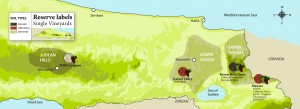
Recanati Vineyards MapThink Bordeaux and the Cabernet Sauvignon and Merlot varieties naturally spring to mind, while thoughts of Burgundy immediately recall Pinot Noir and Chardonnay. But when it comes to Israeli wines, no specific grape variety comes to mind. Recanati’s winemaker, Gil Shatsberg, agrees. Moreover, he knows that the last thing that the world needs is another Merlot or Chardonnay. Yes, he does produce wines from these two (and other) grape varieties, but, since 2008, Gil has been working to more clearly define Israeli wines.

Shatsberg’s quest coincided with his arrival at Recanati. Launched in 2000, Recanati is owned by Lenny Recanati, an Israeli businessman with a passion for collecting wine. Originally from Saloniki, the Recanati family then lived in Italy for centuries before moving to Israel in 1933. With this Italian heritage, Lenny’s parents made wine from grapes grown in the backyard when he was a child, nurturing his love of wine. They winery initially produced 200,000 bottles and currently has an annual production of 83,000 cases, with 80% devoted to reds and 20% to whites.

Today, Shatsberg is looking to make wines that work well in Israel, beginning with the country’s Mediterranean climate and ending with the diversity of Israeli cuisine. Consequently, his search has led him to plant Mediterranean grape varieties such as Viognier, Petite Sirah and Grenache. Similarly, he has found existing vineyards that meet the same criteria such as a dry-farmed vineyard with 30 year old Carignan vines in the Judea Hills. Overall, he aims for elegant wines without high alcohol levels and that are meant to be drunk young, choosing to pick early, macerate for only a short period of time and ferment at cool temperatures.

Although many of the newer plantings have not yet come online, the winery is producing high quality wines from the usual suspects and has started its focus on Mediterranean blends. And, unlike the kosher wines from childhood memory, these certified kosher wines are an absolute pleasure to drink!

WINE TASTING NOTES

Recanati Sauvignon Blanc 2011, Shomron, Israel, $15.00
Sourced from grapes grown in the Upper Galilee, this wine delivers aromas of tropical fruit, pineapple and slight floral notes. It is dry, with medium+ acidity, rich and ripe fruit (especially pineapple), slight spice, and a round, full body, culminating in medium to long length.

Recanati Special Reserve White 2010, Galilee, Israel, $53.00
Produced from a vineyard selection of the winery’s top vines, harvested at limited yields, this wine is a blend of 50% Chardonnay, 25% Viognier and 25% Sauvignon Blanc. Fermented in barrels with sur lie/bâtonnage aging, Shatsberg looks to Burgundy as his winemaking inspiration for this wine. The result is notes of honey, oak, pineapple, spice and orange with a dry palate of medium+ acidity and full body. Flavors of pineapple, tropical fruit, orange/tangerine, floral and a hint of peach are joined by slight spice and toothpick character in the finish.

Recanati Cabernet Sauvignon 2011, Galilee, Israel, $17.00
Although these grapes are planted at a lower elevation than many other Recanati vineyards, this wine is still lively on the palate despite its big, bold fruit profile. The pronounced nose of blackberry and plum gives way to spices – cinnamon and anise. Dry on the palate with medium+ acidity and soft tannins, juicy fruit dominates the wine’s flavor profile.

Recanati Petite Sirah-Zinfandel Reserve 2011, Galilee, Israel, $26.00
A blend of 95% Petite Sirah, accented with 5% Zinfandel, Gil notes that it is important to green harvest (remove unripe grapes early on in the season) the Petite Sirah, which is capable of high yields, in order to permit the grapes to fully ripen. Intense floral, red fruit and spice aromas greet the nose. The dry palate has medium+ acidity and medium+ tannins with ripe, but balanced, red and black fruit character and long length.

Recanati Wild Carignan Reserve 2011, Judea Hills, Israel, $50.00
Produced from 100% Carignan grapes, this wine is sourced from an old vineyard near the kibbutz where Gil grew up and spends six to eight months aging in barrel. The nose offers up aromas of black fruit, blueberry, slight oak and cinnamon/spice. The dry palate has medium+ acidity along with notes of vanilla and black and bramble fruit. Despite a slight rusticity to this wine with its dusty tannins, it is very nicely structured and complex.

Grand Cru Grapevine: Laisser Les Bons Temps Rouler, An Introduction to Brazilian Wines (February 2013)

Home to the biggest carnival celebration worldwide (and thought of as the benchmark for all others), Brazil knows how to party! But, when it comes to libations, Brazil has been much more known for its cachaça than for its wine. In fact, although Brazil is the largest country in South America in terms of land mass, it only ranks third in terms of wine production, well behind Argentina and Chile. Previously, its wine was rarely seen outside the country mostly because the quality was not up to world standards and domestic demand was sufficient to account for most of the production. However, as in many emerging wine markets, times are changing and Brazilian wine has seen significant improvement. Moreover, Brazilian wine producers are beginning to share their wines with the world, with several of these wines now available in the U.S.

As a wine producing country, Brazil faces several challenges. Since only the southernmost part of Brazil extends into the temperate latitudes suitable for grapegrowing, nearly all of the production is centered here. But, despite being more moderate than the rest of Brazil, the region is still hot and humid given its proximity to the equator. Interestingly, this geographic position means that the vines can go through two complete growing cycles, permitting two harvests annually. To combat the humidity, the majority of the vineyards are planted with native American and French-American hybrid varieties, which are much more mildew resistant. Yet, most of the international varieties are grown as well, along with Moscato, Glera (the grape used to produce Italy’s Prosecco) and Pinotage. And, the reliance on these grapes is increasing.

Much of the Brazilian wine renaissance has taken place in southeastern Brazil, which accounts for most of Brazil’s vineyard land. This larger area can be divided into five distinct regions: Serra Gaúcha, Campanha, Serra do Sudeste, Campos de Cima da Serra, and Planalto Catarinense. A sixth region, Vale do São Francisco, is located in the northeast of Brazil. Within Serra Gaúcha is the country’s only official Denominazione di Origem (DO): Vale dos Vinhedos. While Vale dos Vinhedos originally gained recognition in 2001 as an Indication of Origin (IO), which was recognized by European Union in 2007, the valley was granted the higher status of DO in 2011. Wines holding this classification must comply with more specific regulations regarding the production of grapes and winemaking. Chief among the regulations, only vitis vinifera (European) grape varieties are permitted, with Merlot and Chardonnay being specified as the flagship grapes and requiring 85 percent minimums for varietal labeling of these wines. In addition to single variety wines, red blends are produced as are sparkling wines in both the Tank and Traditional Methods. As Brazil’s wine industry continues its upward trajectory, let’s raise a glass and let the good times roll.

TASTING NOTES

Vinicola Aurora Carnaval Moscato White Espumante NV, Serra Gaúcha, Brazil, $13.00 A Charmat Method sparkling wine produced from Moscato Bianco and Moscato Giallo grapes, this wine offers up floral and peach aromas. On the palate, it is off-dry, nicely balanced by acidity, with white flowers and juicy, ripe peach flavors; simple, but balanced and refreshing.

Vinicola Aurora Carnaval Moscato Pink Espumante NV, Serra Gaúcha, Brazil, $13.00
From the same producer and grape variety, this wine is produced similarly to the Moscato White, but it is medium salmon in color with red flowers and red fruit aromas. Strawberry and cherry flavors co-mingle on the off-dry palate, which is slightly sweeter than the Moscato White, yet finishes very cleanly.

Basso Monte Paschoal Virtus Moscato 2011, Serra Gaúcha, Brazil, $16.00 Like many South Americans, the Basso family came from Italy in the late 1800s and established their current facility in 1940. Exhibiting classic Muscat aromas of floral/jasmine, Asian pear, peach and a hint of grapiness, this wine is a pleasant surprise given its dry and medium-bodied palate with sufficiently vibrant acidity. Very refreshing and easily paired with a variety of cuisine.

Salton Talento 2007, Serra Gaúcha, Brazil, $26.00
The Salton Winery was the first Brazilian winery to celebrate its 100th anniversary and is presently run by the third generation of the family. The Talento is a blend of 60% Cabernet Sauvignon, 30% Merlot and 10% Tannat, which has been aged for 12 months in French oak barrels. Meaty, red fruit and slight spice aromas greet the nose, joined by herbal and coffee notes on the dry, medium-to-full bodied palate.

Salton Desejo 2007, Serra Gaúcha, Brazil, $26.00
Salton’s Desejo is produced from 100% Merlot, which has been aged in oak barrels (50% French; 50% American oak) for 12 months. The wine has aromas of dried herbs, cut grass and black cherry, all of which persist on the full-bodied palate, coupled with anise and spice.

Lidio Carraro Grande Vindima Quorum 2009, Vale dos Vinhedos, Brazil, $65.00
Produced only in the best years, the Grande Vindima 2006 is a blend of 40% Merlot, 25% Cabernet Sauvignon, 20% Tannat and 15% Cabernet Franc, with no time spent in wood. The nose is dominated by cinnamon, red fruit and sage, while floral and minty notes present on the palate, culminating in long length.

Grand Cru Grapevine: Through Rose-colored Glasses (January 2013)

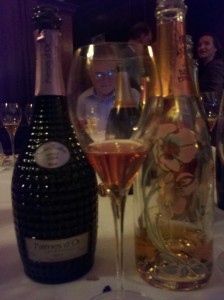
2012-12-05_14-20-58_380In keeping with an optimistic spirit, Rosé Champagne is the perfect wine to kick off the new year! As Ed McCarthy exclaimed at the Wine Media Guild’s annual Champagne luncheon in December, “Rosé Champagne is ‘in’!” Its success has been a bit surprising to everyone, including the Champenois, given that Rosé Champagne was considered an afterthought only 12 years ago. Now, it makes up 8% of the market and is on the rise. This continued trajectory is equally surprising considering that it is more expensive than regular (non-rosé) Champagne. But, it is also more intensive and, at least according to Ed, “Everybody loves it!” Whether this latter statement is fact or hyperbole, what is true is that Rosé Champagne has a fuller body than regular Champagne, due to the increased ratio of Pinot Noir grapes and is extremely food friendly.

As Champagne, Rosé Champagnes are produced using the Méthode Champenoise, referred to as the Traditional Method for similar wines produced elsewhere. These wines spend considerable time aging in contact with dead yeast cells that give the wines their yeasty, leesy, bready aromas and flavors. In addition, Rosé Champagnes also have fruitier aromas and flavors that are derived from the heavier reliance on Pinot Noir and the deliberate creation of color. While Pinot Noir is a component of most Champagnes —the obvious exception being the blanc de blancs (white from whites) style—Champagne producers are careful to avoid extracting color from the grapes’ skins. However, when creating a Rosé Champagne, the focus shifts and some color attainment is permitted. Such color may be produced through the saignée method (as is often used for still rosé wines), or by creating a cuvée that includes red wine in the blend to produce a pinkish base wine. However, red wine may be blended in at the end with the dosage instead to avoid potential browning during the lees aging period. Regardless of when it occurs, sparkling wine production is the only time that adding red wine to a white wine is acceptable in creating a rosé-style wine.

The wines featured in this month’s newsletter are some of my favorites from the December lunch at which we tasted a total of 15 wines. As noted, these are pricey wines, but, thankfully, many of my preferred wines were on the lower end of the spectrum. 

TASTING NOTES

Ayala Brut Rosé NV, $48-54.00
We’ve featured Ayala, the sister brand of Bollinger, before, but as it is always continues to perform well in comparative tastings it is worth featuring again. With rich fruit aromas of floral and ripe strawberry and slight yeasty notes, this wine was elegant on the palate with a delicate mousse.

Alfred Gratien Brut Rosé NV, $62-75.00
At the luncheon, Ed noted that he was very impressed with this wine, as was I. It displayed a very yeasty character on the nose with melon aromas and flavors. It was dry with very high acidity, finishing quite cleanly on the palate.

Bruno Paillard Brut Rosé Premier Cuvée NV, $70-75.00
As a rosé, this wine is very pale, dislaying an onion skin color. On the nose, it has yeast, slight floral and strawberry aromas, similar to, but more subtle than those found on the Ayala. Its palate was very pretty with extremely dry palate, high acidity and floral and strawberry flavors.

Henriot Brut Rosé NV, $58-62.00
Henriot has a long history as a Champagne house, but has been less known in the U.S. Offering a light and elegant style, this wine has raspberry, yeasty and slight toast aromas giving way to riper fruit on the front palate, with the toasty notes lingering in the finish.

Moët & Chandon Brut Rosé 2002, $80.00
From the highly regarded 2002 vintage, this is a big, yet austere wine that still needs some time to evolve to truly shine, although it was showing beautifully already. Toast and biscuit aromas dominate the nose, along with a slightly oxidative note. The dry palate is lean with yeast, toast and fresh berry flavors.

Perrier-Jouët Cuvée Belle Epoque Rosé 2004, $300.00
Admittedly a big splurge, this is a wine I frequently drawn to even in blind tastings and, in Ed’s words, it is the “epitome of elegance,” likely due to high proportion of Chardonnay. Yeast and strawberries greet the nose and persist on the dry palate where they are rich and concentrated, culminating in long length.

Through Rose-colored Glasses: Grand Cru Grapevine (Jan 2013)

2012-12-05_14-20-58_380In keeping with an optimistic spirit, Rosé Champagne is the perfect wine to kick off the new year! As Ed McCarthy exclaimed at the Wine Media Guild’s annual Champagne luncheon in December, “Rosé Champagne is ‘in’!” Its success has been a bit surprising to everyone, including the Champenois, given that Rosé Champagne was considered an afterthought only 12 years ago. Now, it makes up 8% of the market and is on the rise. This continued trajectory is equally surprising considering that it is more expensive than regular (non-rosé) Champagne. But, it is also more intensive and, at least according to Ed, “Everybody loves it!” Whether this latter statement is fact or hyperbole, what is true is that Rosé Champagne has a fuller body than regular Champagne, due to the increased ratio of Pinot Noir grapes and is extremely food friendly.

As Champagne, Rosé Champagnes are produced using the Méthode Champenoise, referred to as the Traditional Method for similar wines produced elsewhere. These wines spend considerable time aging in contact with dead yeast cells that give the wines their yeasty, leesy, bready aromas and flavors. In addition, Rosé Champagnes also have fruitier aromas and flavors that are derived from the heavier reliance on Pinot Noir and the deliberate creation of color. While Pinot Noir is a component of most Champagnes —the obvious exception being the blanc de blancs (white from whites) style—Champagne producers are careful to avoid extracting color from the grapes’ skins. However, when creating a Rosé Champagne, the focus shifts and some color attainment is permitted. Such color may be produced through the saignée method (as is often used for still rosé wines), or by creating a cuvée that includes red wine in the blend to produce a pinkish base wine. However, red wine may be blended in at the end with the dosage instead to avoid potential browning during the lees aging period. Regardless of when it occurs, sparkling wine production is the only time that adding red wine to a white wine is acceptable in creating a rosé-style wine.

The wines featured in this month’s newsletter are some of my favorites from the December lunch at which we tasted a total of 15 wines. As noted, these are pricey wines, but, thankfully, many of my preferred wines were on the lower end of the spectrum.

TASTING NOTES

Ayala Brut Rosé NV, $48-54.00
We’ve featured Ayala, the sister brand of Bollinger, before, but as it is always continues to perform well in comparative tastings it is worth featuring again. With rich fruit aromas of floral and ripe strawberry and slight yeasty notes, this wine was elegant on the palate with a delicate mousse.

Alfred Gratien Brut Rosé NV, $62-75.00
At the luncheon, Ed noted that he was very impressed with this wine, as was I. It displayed a very yeasty character on the nose with melon aromas and flavors. It was dry with very high acidity, finishing quite cleanly on the palate.

Bruno Paillard Brut Rosé Premier Cuvée NV, $70-75.00
As a rosé, this wine is very pale, dislaying an onion skin color. On the nose, it has yeast, slight floral and strawberry aromas, similar to, but more subtle than those found on the Ayala. Its palate was very pretty with extremely dry palate, high acidity and floral and strawberry flavors.

Henriot Brut Rosé NV, $58-62.00
Henriot has a long history as a Champagne house, but has been less known in the U.S. Offering a light and elegant style, this wine has raspberry, yeasty and slight toast aromas giving way to riper fruit on the front palate, with the toasty notes lingering in the finish.

Moët & Chandon Brut Rosé 2002, $80.00
From the highly regarded 2002 vintage, this is a big, yet austere wine that still needs some time to evolve to truly shine, although it was showing beautifully already. Toast and biscuit aromas dominate the nose, along with a slightly oxidative note. The dry palate is lean with yeast, toast and fresh berry flavors.

Perrier-Jouët Cuvée Belle Epoque Rosé 2004, $300.00
Admittedly a big splurge, this is a wine I frequently drawn to even in blind tastings and, in Ed’s words, it is the “epitome of elegance,” likely due to high proportion of Chardonnay. Yeast and strawberries greet the nose and persist on the dry palate where they are rich and concentrated, culminating in long length.

Felice: Happiness in a bottle

felice_famiglia
When I was first invited to taste the new wines from Fattoria Sardi Giustiniani with co-owner Jacopo Giustiniani at his wine bar, Felice 83, I politely declined. I had no time or interest to schlep all the way across town. Plus, private label wines? Who cared? I buy Stop & Shop’s private label groceries all the time, but certainly don’t need to taste test them. Thanks, but no thanks!

However, when the press agent invited me to meet with Jacopo privately during a much quieter week, I decided she’d earned points for persistence and said yes. Additionally, having just enrolled in Italian classes, I had the misguided notion that I could practice my limited language skills with him.

Arriving at Felice 64, Jacopo’s other Upper East Side location (a third location opened in the Financial District in September), my first thought was that the wine bar itself was really nice. Jacopo later pointed out design details – such as demijohns used as lighting fixtures and the marble-topped bar –that had been inspired by his native Tuscany, further adding to the charm and overall ambiance. My second thought was that I had been crazy to think that I could conduct the meeting in anything other than English.

Getting down to the business at hand, the handsome and charming Jacopo proceeded to share his story with me (perhaps if the initial invitation had included his photo I may not have been so quick to turn it down?). Ten years ago, Jacopo’s grandfather, Sebastiano, passed away, leaving the family vineyards located in Lucca to Jacopo’s father. While the land has been in his family for 200 years, it had never been a true business…until now. Jacopo’s father, an engineer like Sebastiano, didn’t have the time or interest to do much with the vineyards, but, at age 22, just starting out in his career, Jacopo knew he wanted to be an entrepreneur. Fondly remembering visits to his grandfather and seeing him having fun on the tractor and in the cellar, Jacopo saw the vineyards as an exciting challenge. After earning his master’s degree, Jacopo completed an internship at Antinori . His younger brother, Matteo, only 18 at the time of Sebastiano’s death, eventually pursued formal training in oenology, studying first in Florence and then in Bordeaux, serves as the winemaker.

This joint focus on Italy and France carries through to the vineyard. Conquered by Napolean in 1805, Lucca was given to his sister, Elisa Bonaparte Baciocchi, to administer. As a principality of France, Syrah, Sauvignon Blanc and others were planted in Lucca back in the 1800s. Thus, while the Super Tuscan movement adopted many of the French varieties back in the 1960s and 1970s, the Lucca area (and its Colline Lucchesi DOC) has long embraced red and white French grapes.

Today, in this same tradition, the Giustiniani lands are planted to both French and Italian grapes, with the latter varieties including Vermentino and Sangiovese. Jacopo was quick to point out that the local Vermentino differs from the clone found in Sardegna and produces wines with much more minerality. Situated in northwest Tuscany, the vineyards are only a few kilometers from the sea and thus benefit from its cooling influence. This, coupled with a good shift in day to night temperatures, keeps the wines fresh.

The family’s philosophy, as espoused by Jacopo, is that wine is meant to go with food and in this regard, their wines have good acidity, concentrated fruit flavors and some complexity, but do not overpower the palate (or the plate). In addition, both grape and oak tannins are carefully controlled. As Jacopo joked, “I want to drink, not chew, my wine.”

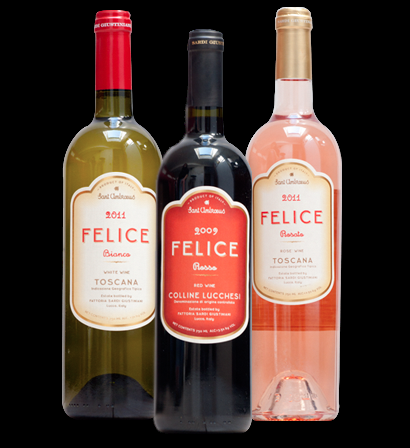
In total, there are seven wines currently available in the Fattoria Sardi Giustininiani portfolio, along with three Felice-labeled wines (bianco, rosato and rosso ). (NB: Both rosés are out of stock until the next vintage.)

Tasting through the portfolio, I was extremely impressed with the wines. Along with the aforementioned minerality, the Vermentino 2011 had nice citrus notes along with an almost briny character and bracing acidity; a perfect foil for shellfish.  The Sauvignon Blanc 2011 (the first vintage of this wine) is more Bordeaux than Marlborough, with citrus, herbal, slight oak and good structure due to the six months it spent in used barrels. While showing nicely now, Jacopo and I agreed that the wine will continue to develop in bottle over the next several months.  Meanwhile, the Felice Bianco 2011, a blend of Chardonnay and Grechetto, offered rich tropical fruit and vanilla. Yet, despite its ripeness and full body, the wine was still fresh and well balanced.

Reds include the Villa Sardi Rosso 2010, which brings together Sangiovese, Merlot and Moscato Nero. This refreshing red is deceptive in that it has a certain earthy depth to it in spite of its lighter body and dominant cherry, strawberry and floral notes. The Fattoria Sardi Rosso 2010 is a blend of Syrah and Colorino, with a drop of Sangiovese. With firm tannins, earth, meat and black cherry flavors, this is a decidedly savory styled wine. Like its counterpart, the Felice Rosso 2009 is a bit fruitier than the others, with ripe cherry and plum notes taking precedence over the secondary notes. But, again, this wine has an approachable style without being dumbed down or losing its elegance. Finally, the Fattoria Sardi “Sebastiano” 2008, named in honor of grandpa, is primarily Merlot (80%) and was aged in oak barrels for 18 months, followed by 12 months in bottle, prior to its release. It is showing some development with well-integrated oak characteristics, coupled with plum, black cherry, cedar and spice. It is richly layered with silky tannins and long length and could certainly be laid down for a few years.

Beyond their availability at the Felice franchise, given Jacopo’s ties to Sant Ambroeus (he is the Wine Director and his uncle is the owner) as well as to Casa Lever (another family project), these wines are also on these restaurants’ lists. A handful of other restaurants (Marea, Locanda Verde, Felidia, Maialino and Otto) carry them, too.  On the retail front, look for the wines at De-Vino Wine Boutique (although its website doesn’t currently have any available) and Italian Wine Merchants (which has the Sebastiano Merlot for $36.99).

The case of/for German Rieslings

Our Thanksgiving dinner table overflowed with bounty; weighed down with more food than we possibly needed, we were also truly blessed by the family and friends who sat around it. With the diversity of deliciousness that lay before us, I felt that Riesling – and especially German Riesling – would be the perfect accompaniment to our meal.

Due to Riesling’s generally high acidity and wide range of styles from bone dry to lusciously sweet, it is extremely versatile at the table. Consequently, I decided it would be fun to open up not just one or two Riesling to pair with our Thanksgiving dinner this year, but ten different bottles. So it was that I found myself staring down ten, numbered glasses an hour or so before the feast.

My husband did the honors of preparing the set-up and since neither of us was fully acquainted with these wines, we determined that the best approach was to line them up from highest alcohol (and presumably the driest) to lowest alcohol (and likely the sweetest). If we’d had any wines of Auslese-level or higher this wouldn’t have worked quite as well, but since our selection included Kabinett and Spatlese only, we felt it was reasonably safe way to proceed. And, to our pleasant surprise, there were only two tweaks I felt were needed when I actually sat down to taste the samples.

Of further interest, the wines in question ranged in price from a low of $11.00 to a high of $67.00, with an average of $30.00/bottle. This price divergence was the primary impetus for tasting the wines blind, but, of course, removing all preconceived notions (not just that of price) enabled a more unbiased evaluation.

Unfortunately, the size of our dining table, already encumbered with multiple platters of food, didn’t permit us to have all ten bottles of wine on hand. However, we did bring two bottles to the table at a time and let guests fill their glasses as they preferred, replacing empty bottles as necessary.

Interestingly, while well-liked and well-regarded, the most expensive wine wasn’t the immediate favorite and didn’t necessarily stand out among the “crowd.” Additionally, the sweeter, but balanced, styles were more preferred than the drier ones.

The wines are listed in the order in which they were tasted:

1. Kesselstatt Josephshofer Riesling GG 2010, Mosel, Germany, $67.00
Pronounced nose with honey, tropical fruit, lychee; Dry with high acidity, citrus, spice and zest; extremely long length. Well structured and balanced; lean and nervy with some complexity.

2. Baron K Riesling Kabinett 2011, Rheingau, Germany, $18.00
Floral, lime and lime zest aromas; Off-dry with citrus, peach and floral on the palate; medium+ to long length. Well made and classic.

3. Undone Dry Riesling 2011, Rheinhessen, Germany, $11.00
Slight petrol notes, floral and nectarine; bone dry with medium+ acidity; citrus, pith, mineral and some nectarine.

4. Johannishof Charta Riesling 2011, Rheingau, Germany, $25.00
Slight spice with citrus and citrus peel, some floral aromas; Dry with high acidity, peach, citrus, petrol and honey; Angular with good complexity.

5. Joh. Jos. Prum Riesling Kabinett 2011, Mosel, Germany, $24.00
Quince, lychee, petrol and minerality; Off-dry almost medium sweet, with peach, tropical fruit and mineral; Rich and tropical.

6. Schloss Saarsteiner Riesling Kabinett 2010, Mosel, Germany, $27.00
Limited nose with petrol and citrus, but opening up on the off-dry palate with citrus, petrol, spice and honey, culminating in long length; One of my favorites.

7. Schloss Saarstein Riesling Spatlese 2011, Mosel, Germany, $38.00
Citrus, citrus zest, floral and a hint of minerality; Off-dry, but on the sweeter side of off-dry, citrus, floral and mineral.

8. Maximin Grunhauser Abtsberg Riesling Spatlese 2010, Mosel, Germany, $38.00
Quince, spice, honey; Off-dry with spice, honey and quince; Exotic and luscious.

9. Graff Graacher Himmelreich Riesling Spatlese 2011, Mosel, Germany, $17.00
Shy nose displaying floral and peach notes; Medium-sweet palate with floral, peach and pineapple; Balanced by the acidity despite the sweetness level.

10. Graff Graacher Himmelreich Riesling Spatlese 2010, Mosel, Germany, $17.00
Petrol and floral aromas; Off-dry with rich quince, honey, floral, petrol, citrus zest and very long length; Nicely balanced and complex.


Of course, ten wines was more than enough for our party of five, but should you wish to make a full case of it, here are two more wines to add to your list (tasted on separate occasions):

11. Liebfrauenstift Dry Riesling 2011, Rheinhessen, Germany, $19.00
Structured, dry, fresh, ripe lime and peach, mineral. Long length; Fabulous!

12. Baron zu Knyphausen Erbacher Michelmark Riesling Erste Lage 2009, Rheingau, Germany, $57.00
Displaying floral, citrus and tangerine aromas on the nose, the dry palate offered piercing acidity with rich, ripe flavors of peach, tangerine, citrus pith, lime zest, floral and minerality, finishing with a very long length. Truly amazing.

Grand Cru Grapevine: California Wines with a French Pedigree (December 2012)

Frenchman Bernard Portet first visited California on a fact-finding mission back in the late 1960s and then returned in 1971 to help launch Clos du Val. After a few months in the Napa Valley, he suggested that his wife come join him as he expected to stay longer than originally planned – perhaps through harvest 1972. Thankfully, she accepted the invitation since he never left, serving not only as co-founder, but also as the company’s full-time winemaker for nearly 40 years. And, for almost four decades, Bernard helped to establish Clos du Val as a highly regarded name in the wine industry.

As the ninth generation of his family to be in the wine business, Bernard brought a lot of knowledge with him from France, which he applied to his new venture. For example, at the time, there was no concept of terroir. Winery managers, not winemakers, bought grapes from a myriad of growers, a practice which has significantly changed. But, Bernard recognized the unique qualities of the Stag’s Leap District prompting him and his partner, John Goelet, to purchase 178 acres and plant the estate’s first vineyards.

Also of note, while most California producers were focused on single variety wines – Cabernet Sauvignon or Merlot – the Bordeaux-bred Bernard saw the benefit of blends. Consequently, the wine he produced was a combination of Merlot and Cabernet Sauvignon, creating, in Bernard’s words, “a more complete wine.”

Almost immediately, Clos du Val’s quality was recognized. Chosen by Steven Spurrier as one of six California Cabernet Sauvignons to be included in the 1976 Judgment of Paris, the wine placed eighth overall. Ten years later, it took the top place in the French Culinary Institute Wine Tasting, a rematch of the original event. European in style, Clos du Val was quickly embraced by the east coast as one of the first California wines to be sold there.

But, in 2009, Bernard decided it was to retire and said good bye to the venerable brand he helped to create. But, as with Bernard’s previous best laid plans, somehow retirement didn’t stick. Today, Bernard is at the helm of another new venture – Heritance Wines. The moniker – a merger of “heritage” and “inheritance” – is Bernard’s way of conveying his sense of gratitude and all that he learned from his father and forefathers.

The year 2012 marked Bernard’s fortieth vintage in the Napa Valley and, not surprisingly, a lot has happened in forty years. But, while Heritance’s wines differ from those of Clos du Val, Bernard brings his same winemaking philosophy to this project. Although, at a recent lunch, when asked for specific pairing suggestions on what would go well with his wines, he replied, “Good company,” it is clear that he “…want[s] to make wine that goes well with food.” Toward this goal, Bernard blends across lots and grape varieties to arrive at the finished product. He adds that as the flavors of the food go away, the flavors of the wine should take over on the palate; wines with a soft entry and a fleshy element.

And, most importantly, the new wines truly reflect Bernard’s approach. Remaining steadfast to Bernard’s roots, Heritance, of course, produces a Cabernet Sauvignon. The tasting notes for the 2008 and 2010 are included below, but when both Cabernet wines were tasted alongside the inaugural Clos du Val (1972), the pedigree of the wines was unmistakable. While the aged wine understandably offered up the developed characteristics of a 40-year-old wine, its structural elements were clearly evident in the two modern-day wines. It was almost as if the 2008 and 2010 were looking in a mirror at their future selves – uncanny and especially heartwarming, as it gave us hope that these were wines that would age equally gracefully.


TASTING NOTES

Heritance Sauvignon Blanc 2010, Napa Valley, CA, $24.00
With 9% Semillon blended into the wine giving it a depth and roundness on the palate, the 2010 is decidedly Bordeaux in style. Melon, citrus and slight pith with medium+ acidity.

Heritance Sauvignon Blanc 2011, Napa Valley, CA, $24.00
For the cooler 2011 vintage, Bernard dispensed with the Semillon and, instead, blended in 12% Rousanne, providing more floral character and tropical fruit than the Sauvignon Blanc would have had on its own. High acid, citrus; nervy and more austere than the 2010.

Heritance Stanly Ranch Pinot Noir 2011, Carneros, CA, $45.00 (300 cases produced)
Bernard acknowledges that Pinot Noir can be pushed in the vineyard, almost to the point of becoming Grenache, so is cautious about harvest parameters when working with growers and carefully sources his fruit, blending lots when necessary. Cherries bursting out of the glass with a slight herbal character, which becomes more prominent when enjoyed with food.

Heritance Cabernet Sauvignon 2008, Napa Valley, CA, $36.00
Blended with 8% Merlot, this wine was showing moderate acidity (it was a relatively warm year) and some development, with the primary black fruit aromas and flavors having faded a bit.

Heritance Cabernet Sauvignon 2010, Napa Valley, CA, $36.00
The 2010 (a cooler year) includes 4% Merlot and 2% Petit Verdot, and displayed brighter acidity, smokey notes and lush blackberry fruit, but was extremely balanced despite its ripe character.

Clos du Val Cabernet Sauvignon 1972, Napa Valley, CA ($6.00 upon release in 1974)
A blend of 80% Cabernet Sauvignon and 20% Merlot, this wine offered up beautiful complexity. Dried red and black fruit, balsamic and spice notes were joined by truffles, sage and a silkiness on the palate.

Celebrating the post-harvest season with Beaujolais Nouveau, Beaujolais Crus and Macari’s Early Wine

Beaujolais Nouveau Day has come and gone. This annual semi-holiday celebrates the new release of a wine produced extremely quickly after harvest and I like it for that reason alone. Making wine is a lengthy process that starts not at harvest, but much earlier – from the first swell of buds on the vine. Accordingly, being able to literally taste the fruits of such labor only a few months post-harvest is a wonderful opportunity to rejoice.

While a variety of Nouveau events were held as usual this year, I only attended the Compagnons du Beaujolais Beaujolais Crus tasting. Equally festive, the Compagnons du Beaujolais had donned their official regalia, complete with tastevins hung around their necks, having ushered in the Nouveau wine earlier in the day.

But, now, it was time to taste the more serious Gamay. It was a pleasure to taste through the various crus (best village sites) including Brouilly, Julienas, Morgon and Fleurie as well as being able to compare different vintages –2009, 2010 and 2011. The wines showed quite nicely and I found a few that I particularly liked such as the Morgon Cuvée les Roches 2011 from Château du Chatelard, although I didn’t take any formal notes.

In a similar vein, there are a few other wineries that choose to produce a wine that hits the market soon after harvest. Macari Vineyards’ Early Wine falls into this category. Produced from 100% Chardonnay, the grapes for the 2012 vintage were picked on August 29 and quickly pressed and fermented with the wine finding its way into bottle on October 22. With its November 1 release, I received the wine about two weeks before Nouveau Day.

I chose to open my bottle on the day before the Nouveau celebrations (Beaujolais Nouveau Eve?) as a way to kick off the celebratory spirit of these wines. Showing pronounced floral, peach and tropical fruit notes, the wine was slightly off-dry with balanced acidity and flavors of pineapple, floral and a slight hint of spice. Despite its fall arrival, the Early Wine can be enjoyed year round, especially during the summer (if there’s any left by then – only 422 cases were made).