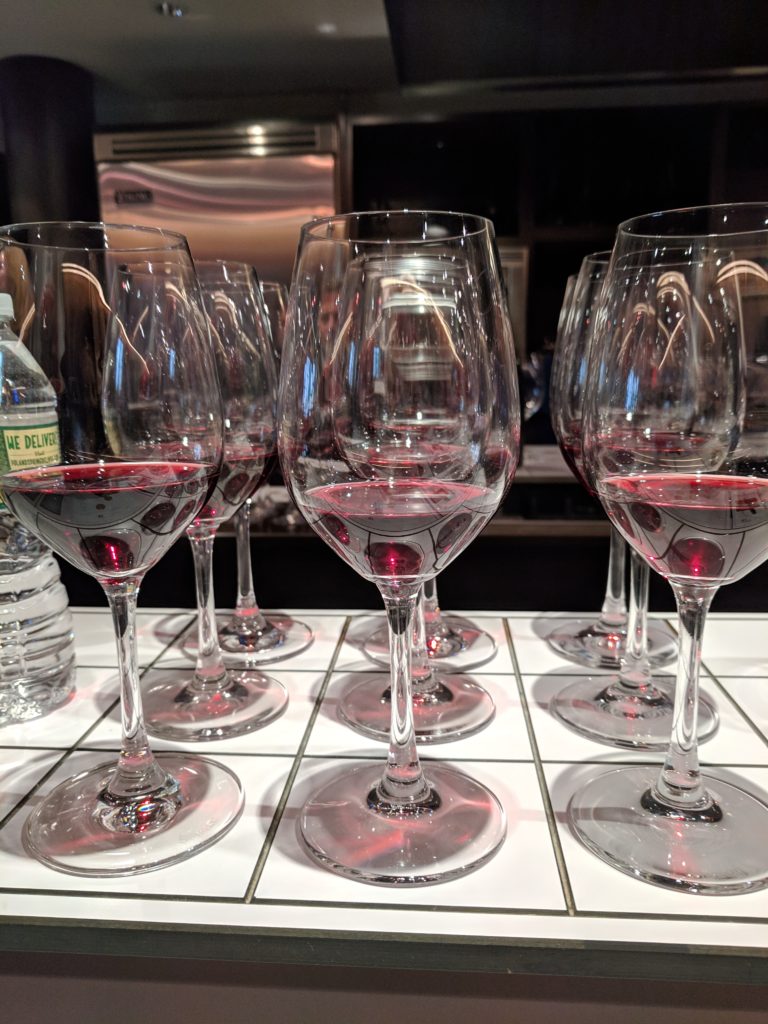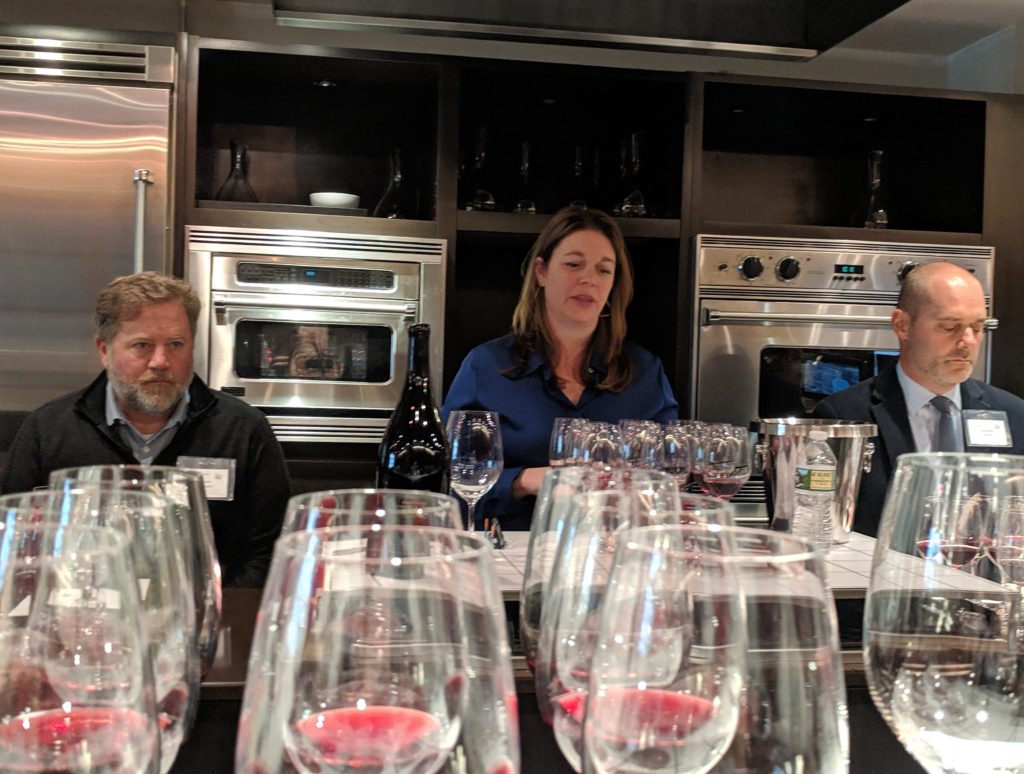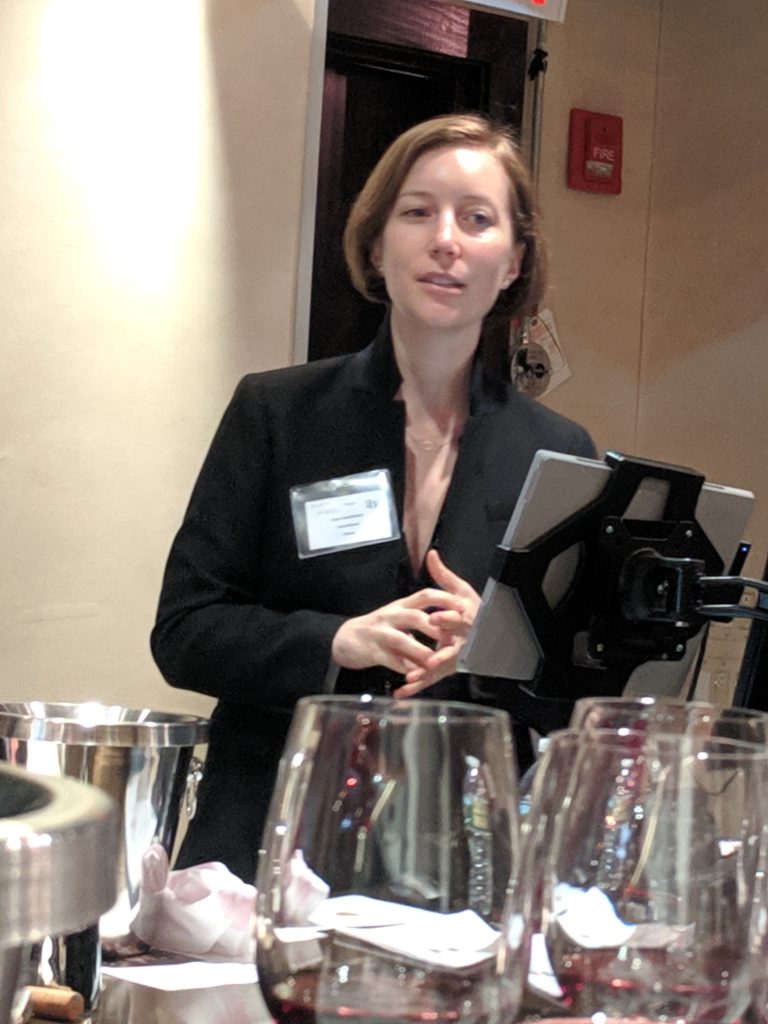
The next wave of Vinho Verde makes its way from Monção e Melgaço

While Americans heralded their historic founding on July 4th, the Portuguese celebrated similarly on June 10th — Portugal Day, which commemorates Portugal’s history and culture. The country’s poet, Luís de Camões, who died on June 10, 1580, was highly regarded for his epic poem praising and recording the accomplishments of the Portuguese Empire, and is now forever linked to this holiday.

Although Portugal Day is generally only observed in Portugal, this year, two wonderful wine events provided a great way to hail Portugal’s vinous culture: Esporão Day and a luncheon featuring wines from Vinho Verde’s Monção e Melgaço subregion. And, after tasting through glass after glass, it is evident that Portugal has reason to rejoice these days!
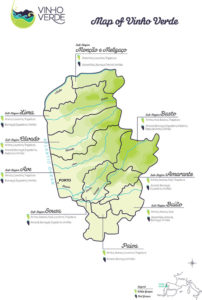
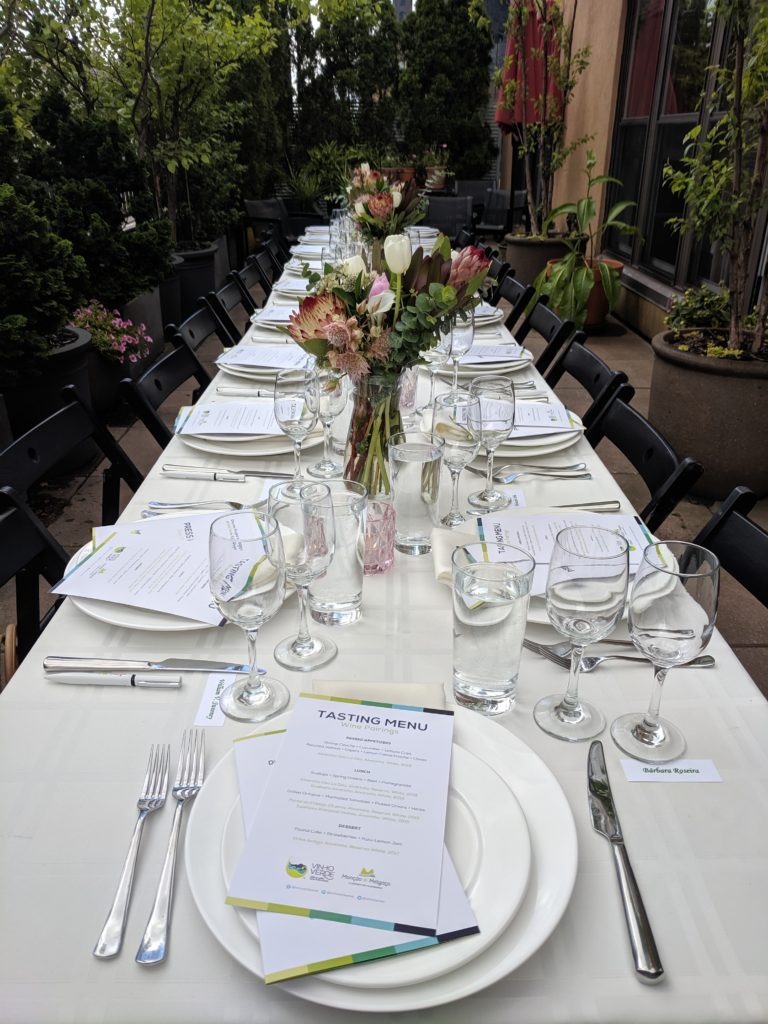
Situated in Portugal’s northwest corner, abutting Spain, the Vinho Verde region is one of the oldest in the country. This wine growing area was demarcated in 1908 and is dominated by a maritime climate thanks to its proximity to the Atlantic Ocean. While many people are more familiar with Vinho Verde as a whole, the recent lunch provided a more in-depth look at one of Vinho Verde’s subregions: Monção e Melgaço.

Of the nine subregions, Monção e Melgaço has garnered one of the top reputations for its wine and features a unique microclimate due to its location at the northernmost point of the Vinho Verde region. Here, because the mountain chain cuts off access to the ocean, there is less marine influence, resulting in hotter and drier summers than in the other subregions. Monção e Melgaço also boasts granitic soils that further influence the wines.

Although several grape varieties are grown in Monção e Melgaço, it is most prized for its Alvarinho (grown and known in Spain as Albarino). The variety was thought to have been introduced to Vinho Verde by the Cluny monks in the 12th century and has become one of Portugal’s highly respected white grapes.

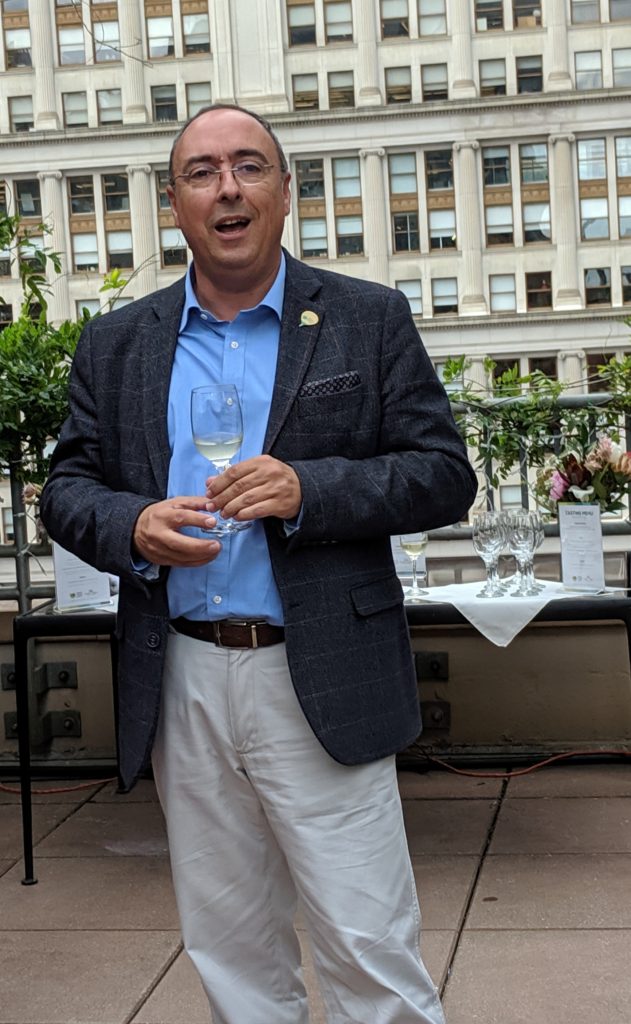
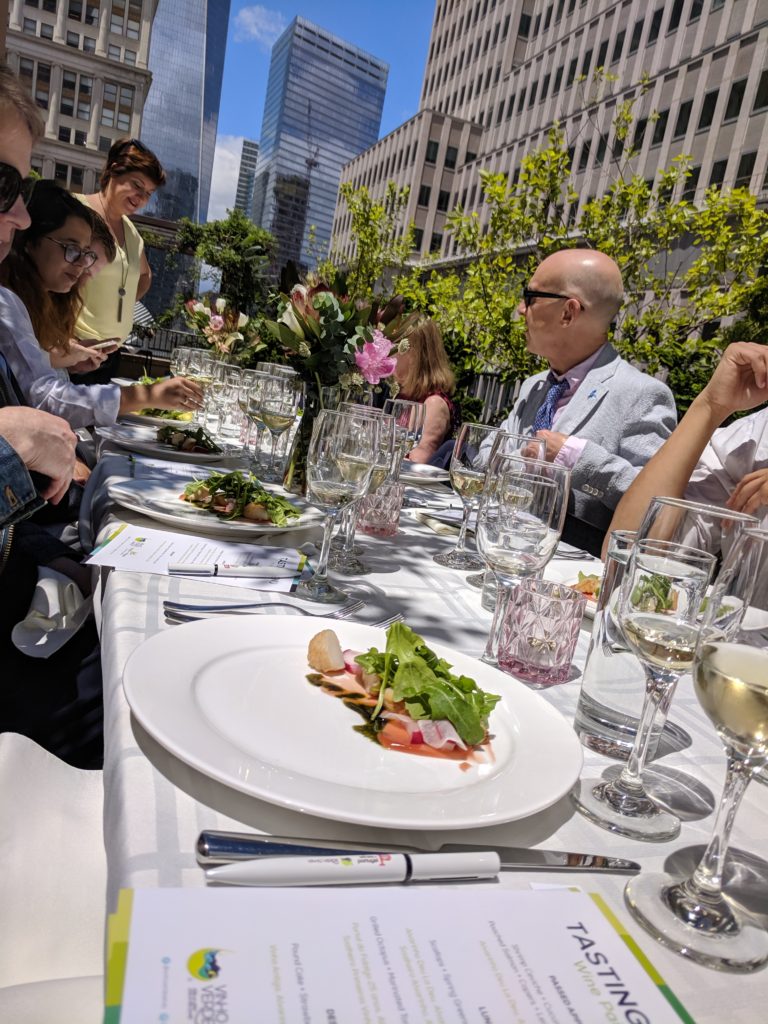
There were three producers represented at the lunch: the family-owned winery, Soalheiro; Provam, which was established in 1992 by 10 winegrowers; and Adega Cooperativa e Regional de Moncao, which is 60 years old. As we tasted through a selection of their wines, we had the opportunity to explore their quality and caliber.

Overall, they possess more structure and complexity compared with more generic Vinho Verde wines. And, in fact, the consortium and producers confirmed that the trend has been to craft wines with more body, structure and complexity. To this end, some of the producers are utilizing barrel fermentation, oak aging and/or batonnage (lees stirring) in pursuit of adding depth and structure.
TASTING NOTES
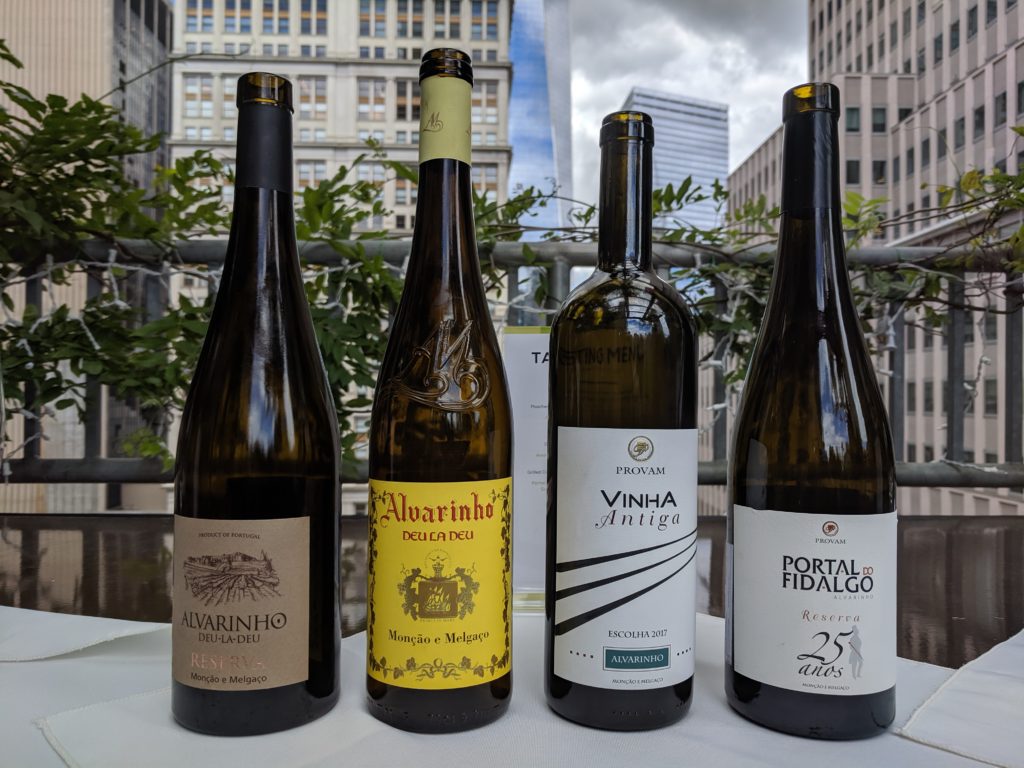
The Adega Cooperativa Alvarinho Deu La Deu 2018 is a fresh and fruit-forward wine with vibrant acidity and lots of citrus notes. It was a great aperitif to accompany the passed appetizers: shrimp ceviche and cucumber and lettuce cups and poached salmon and capers.

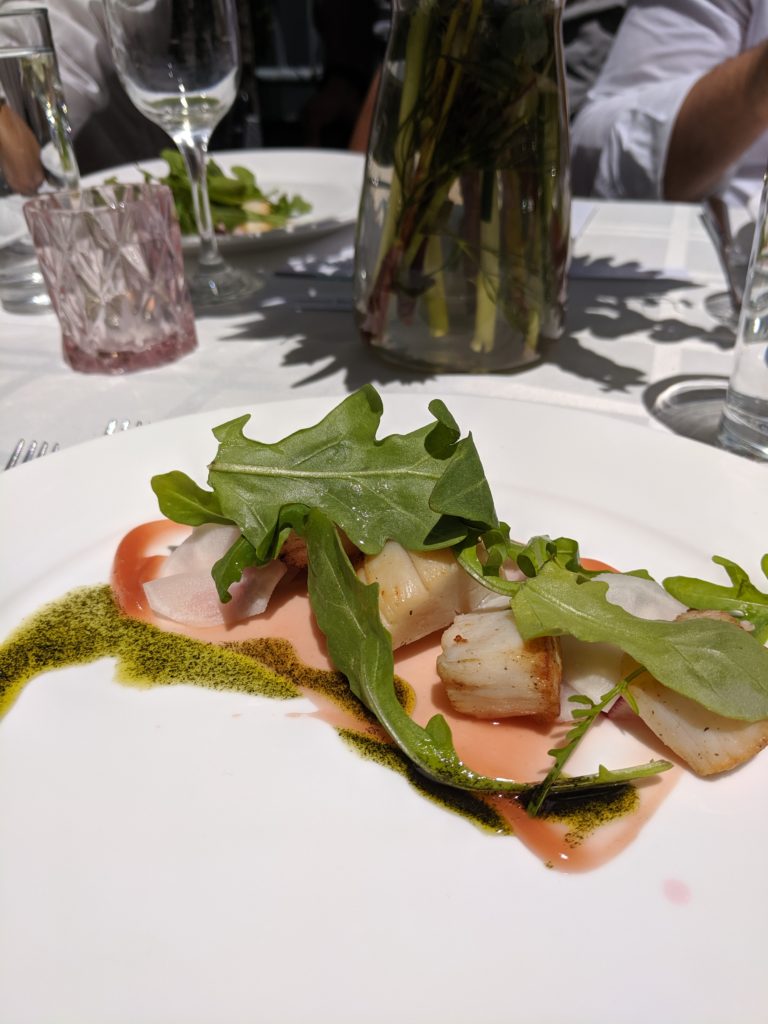
Once seated, we were served a beautiful dish of scallops and spring greens garnished with beet and pomegranate. This was paired with the Adega Cooperativa Alvarinho Deu La Deu Reserva 2015, which offered up lovely freshness, aromas of apricot and pear, with a rich and round, medium+-bodied palate, culminating in long length. In addition, the Soalheiro Alvarinho 2018 provided a classic style with tropical fruit, nice depth and concentration, with flavors of pear, spice and apricot.

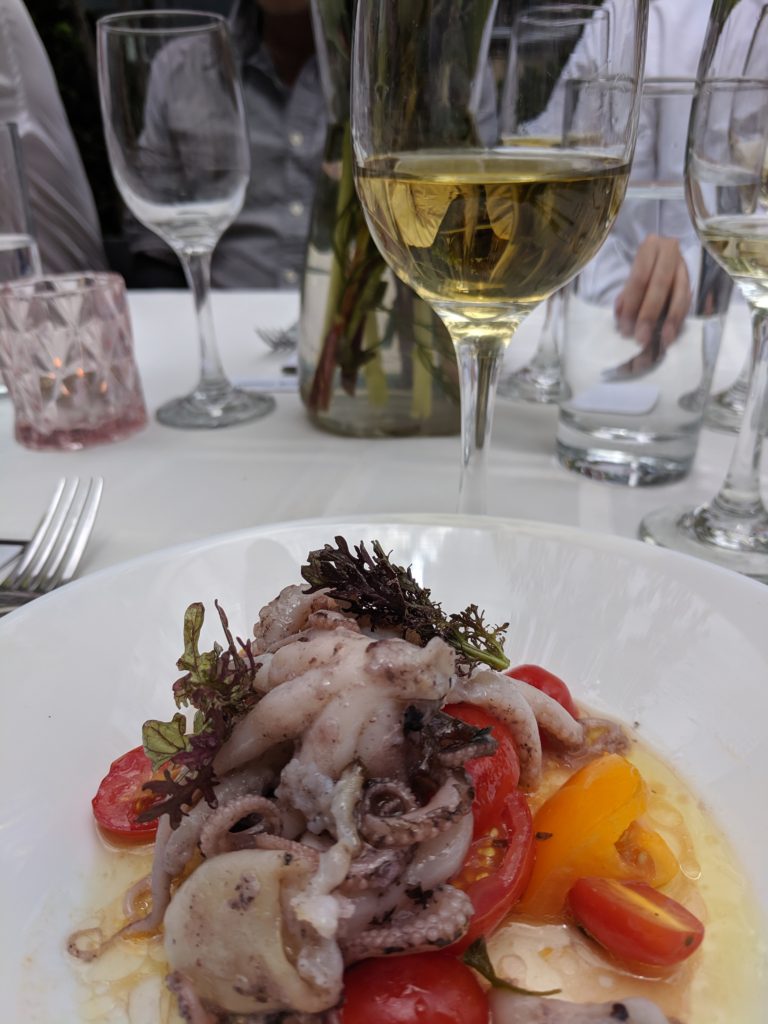
The main course of grilled octopus, marinated tomatoes, pickled onions and herbs was outstanding and a terrific match for the two wines. First up was the Soalheiro Primeiras Vinhas 2018, which was one of the first wines produced by this company. They age 15% of the wine in oak for added roundness. It displayed bright acidity, with slight tropical fruit and tangerine notes, along with medium body and long length. It was rounder and more food friendly than the other Soalheiro wine.

Next, we tasted the Provam Portal do Fidalgo 25 Anos Reserva 2015, which is made from old vines and had been fermented and aged in oak. The resulting wine showed lovely oak and honey on the nose, with medium+ acidity, a fuller body, very integrated oak and slight citrus notes on the dry palate, along with long length.

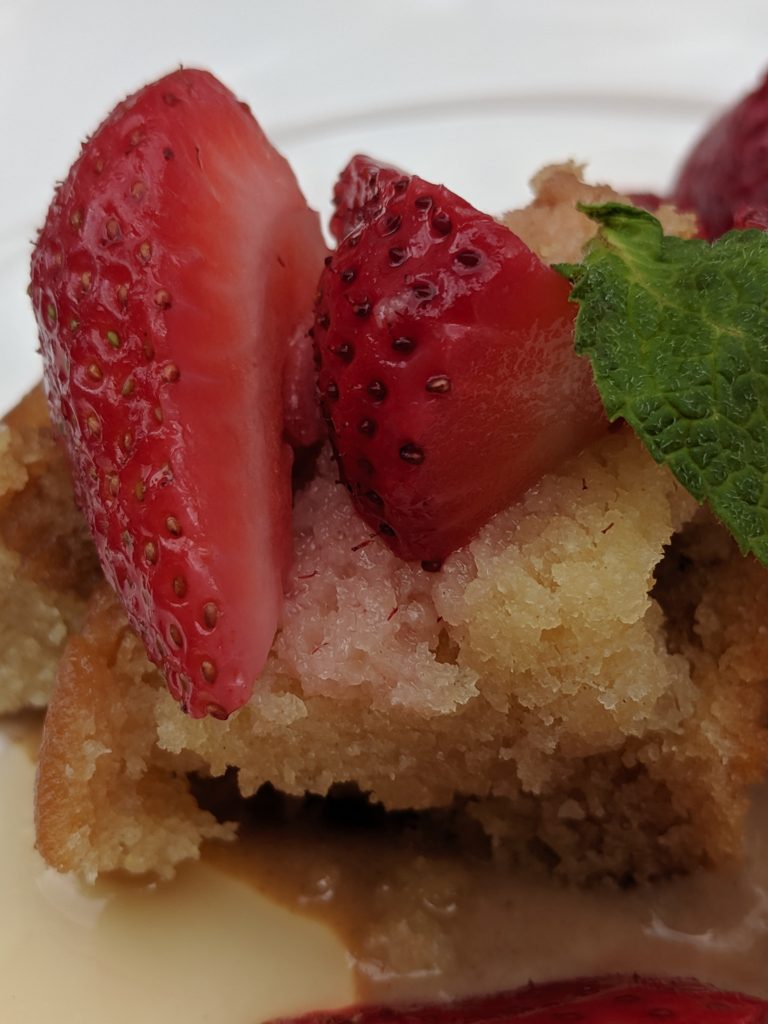
Finally, a dessert of pound cake, strawberries and a yuzu-lemon jam delighted the palate, served alongside the Provam Vinha Antiga Reserva 2017, with its fresh, bright acidity, citrus, apricot and minerality, with medium body and long length. It was an unexpected, yet perfect, pairing.
Esporão Day, in praise of Portugal and its wines

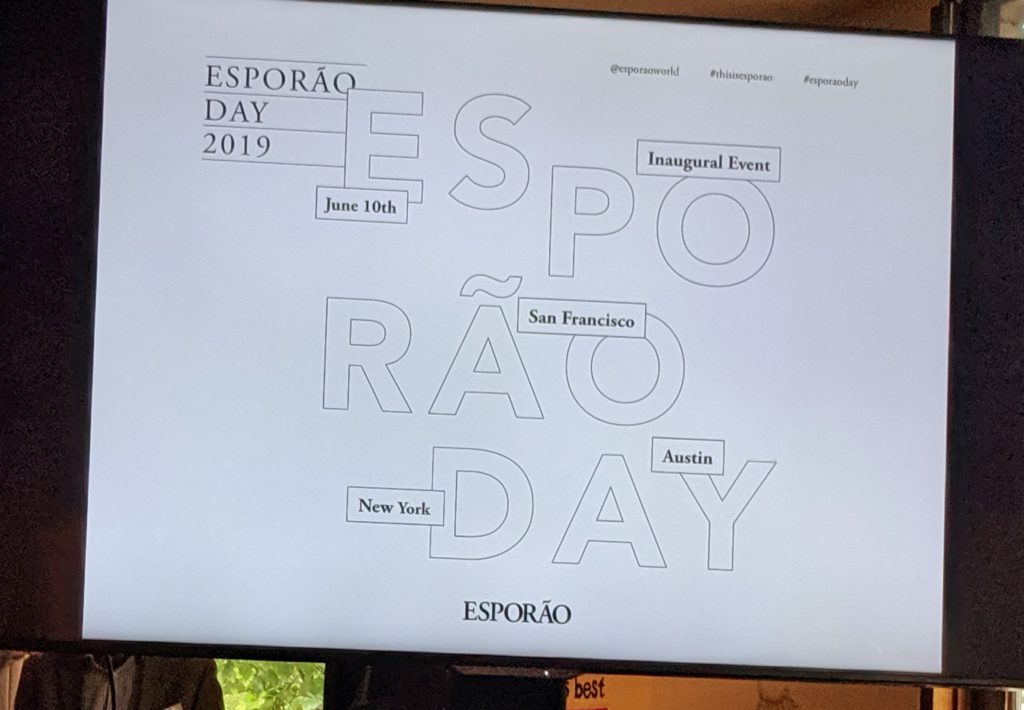
While Americans observed their historic founding on July 4th, the Portuguese celebrated similarly last month. In particular, June 10 marked the occasion of Portugal Day, a celebration of Portugal’s history and culture, first championed by the country’s poet Luís de Camões. Camões, who died on June 10, 1580, was highly regarded for his epic poem praising and recording the accomplishments of the Portuguese Empire, forever linking him to this holiday.

Although Portugal Day is generally only acknowledged at home (in Portugal), this year, two wonderful wine events provided a great way to hail Portugal’s vinous culture: Esporão Day and a luncheon featuring wines from Vinho Verde’s Monção and Melgaço subregion. And, after tasting through glass after glass, it is evident that Portugal has reason to rejoice these days!

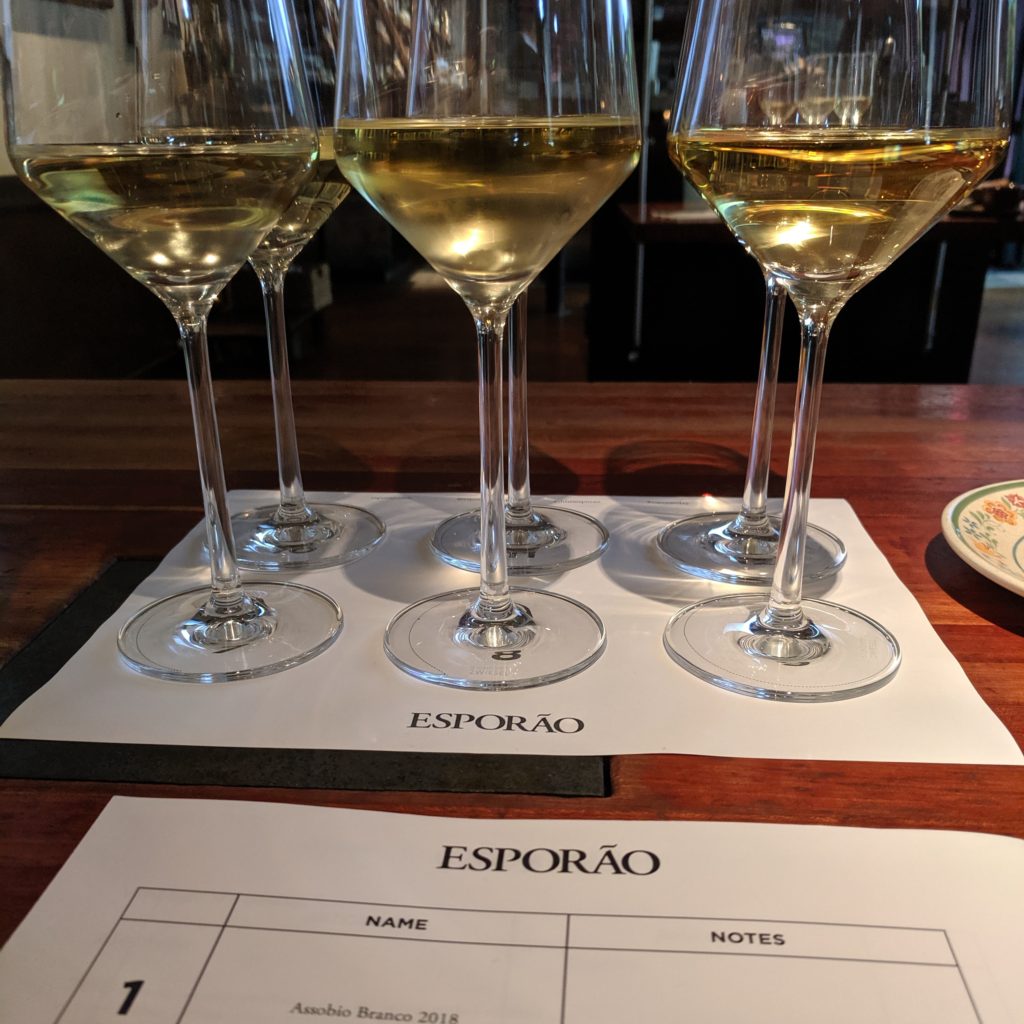
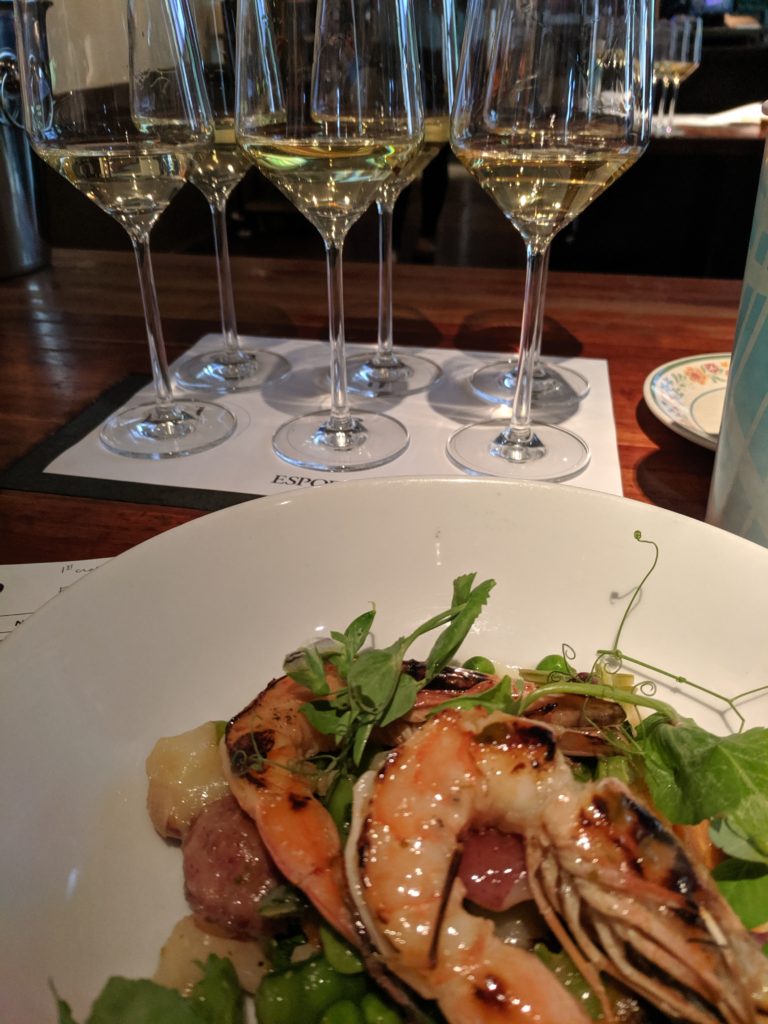
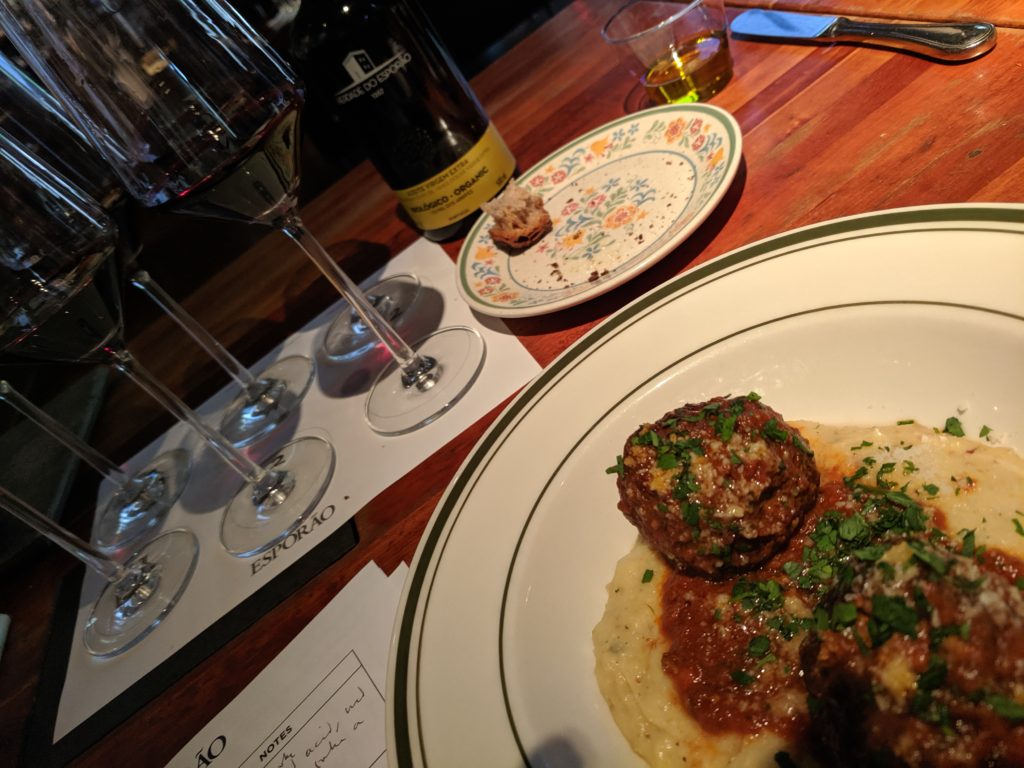
The fictitious, yet no less delicious, “Esporão Day,” was hosted in New York by Master Sommelier, Alex LaPratt, and included a guided tasting of six whites and six reds, expertly paired with two savory courses prepared by Hearth Restaurant in the East Village. The whites were accompanied by head-on prawns with spring vegetable ragu, butter and white wine, while the reds were served alongside beef and ricotta meatballs with “cacio e pepe” polenta.

At the center of the event was Portuguese wine brand Esporão. Established in 1973 with the aim of producing fine wine in the Alentejo region, its first foray into the industry was with the acquisition of the Herdade do Esporão estate. With 750 years of history, this storied land is home to three historical monuments – tower, arch and a chapel – as well as cork oak forests and 1710 acres of vineyards, olive groves and fruit orchards. The vineyards are planted to 40 different grape varieties and there are four different types of olives grown. The cellars were built in 1987, with separate facilities for red and white production.

After achieving success in the Alentejo, Esporão set its sights on the Douro, purchasing the Quinta dos Murcas estate in 2008. Another historic property, Quinta dos Murcas has been growing grapes since 1714, with 383 acres spread over 8 diverse terroirs. In 1947, the estate was the first to be planted vertically, with high density to stabilitze the soil against erosion on the steep (42 degree) incline.

Both estates emphasize sustainability practices and a dedication to organic farming. In this regard, Esporão hopes to be fully organically certified by 2021.

Today, the company is presently comprised of the two wine labels, olive oil production and, since 2018, the addition of a brewery, Sovina, which was the first craft beer in Portugal when founded in 2008.

Esporao’s chief winemaker, David Baverstock, is originally from Adelaide, Australia and has been with the company since 1992. He was joined in his efforts in 2016 by colleague Sandra Alves who oversees the red wines. Meanwhile, in the Douro, wine production is directed by Jose Luis Moreira da Silva.

TASTING NOTES
WHITES
*Assobio Branco 2018 – Named for the word whistle due to the sound that the wind makes as it travels through this 2300-foot-elevation vineyard, the wine offers up aromas of floral and peach. The palate is dry, with concentrated fruit flavors, medium acidity, medium+ body and long length.

Monte Velho Branco 2018 – Produced with 50% estate and 50% purchased fruit, this wine features citrus, grapefruit and pith notes, and, while dry, there is a hint of ripeness on the attack; medium+ acidity, long length.

Esporão Verdelho Branco 2017 – With Verdelho being the 6th most planted grape in Alentejo, this grape has become much more well known. This wine displays smoke, richness and nuttiness on the full-bodied palate with medium acidity and long length.

*Esporão Colheita Branco 2018 – A beautiful wine with lovely freshness, salinity, medium+ body, flavors of pear and spice, culminating in long length.

Esporão Reserva Branco 2017 – This barrel-fermented, white blend shows spice, oak, bruised apple and nuts, along with its full body and long length.

*Esporão Private Selection Branco 2016 – Bringing together 95% Semillon and 5% field blend, sourced from a clay soil vineyard, this wine has a gorgeous nose, showing some slight development with hints of smoke, lees and oak. Full-bodied with long length, the oak lingers in finish of this very textural wine.

REDS
*Assobio Tinto 2011 – This medium-bodied red offers up aromas of berries and smoke. It is fresh with lively acidity on the palate and can take a chill, making it an excellent choice for warmer weather.

*Esporão Colheita Tinto 2017 – With a dark and brooding nose, this wine delivers more red fruit on the palate, with slight oak, medium- tannins, bright acidity and long length.

Quinta dos Murcas Minas Tinto 2017 – Intense aromas of bramble fruit, dried herbs, and a hint of oak greet the nose, with these flavors persisting on the palate and culminating in long length.

Quinta dos Murcas Reserva  Tinto 2012 – This wine spends one year in barrel and four years in bottle before its release. It displays notes of oak, smoke, black fruit, and meatiness. The palate is intense and concentrated with black fruit, granite/ mineral, firm tannins, full body and long length.

Esporão Reserva Tinto 2011 – This powerful, yet restrained, wine was first produced in 1985 and sports attractive artwork on the label each year. The nose and palate feature red and black fruit, well integrated oak, firm tannins, full body and long length.

*Esporão Private Selection Tinto 2011 – A pronounced nose of black and blue fruit, gives way to vanilla, oak, iron and meatiness on the dry, full-bodied palate along with very firm tannins and long length.

*Denotes my favorite wines of the tasting.

Getting schooled on L’Ecole 41’s top terroirs and the Walla Walla Valley

Ensconced in an old schoolhouse from which it takes its name, L’Ecole 41 was Walla Walla’s third winery and is at the epicenter of Washington wine. The family-owned winery was established in 1983 by Jean and Baker Ferguson, two Walla Walla natives who started growing grapes and making wine as a retirement project. Five years later, their daughter, Megan, and son-in-law, Marty Club, came back to the valley to take over what had become a fledgling business. Today, the pioneering winery has become widely recognized for producing beautiful wines.

L’Ecole 41’s makes wines from the larger Columbia Valley, but its higher end wines, crafted from top vineyards in the triangular-shaped Walla Walla Valley, truly speak to the terroir of this region. Situated in the southeastern corner of Washington State, Walla Walla provides a high desert climate, with rainfall limited to the winter months. Thanks to the hot, dry conditions, red wines account for 95% of the local production. Yet, in spite of the daily heat, the elevation and large diurnal shift result in a bright, natural acidity that has become a hallmark of all Washington wines. And, the sandy soils mean that the vines don’t need to be grafted onto American rootstocks.

I first became aware of the wines of L’Ecole 41 when I tasted their Semillon at the Society of Wine Educators’ conference back in 2005. But, given the time that had passed and my lack of knowledge of their highly regarded reds, I was intrigued when I received an invitation to taste through several terroir-focused flights.

With 36 years of winemaking experience, L’Ecole 41 now takes a uniform approach to each vintage. Accordingly, they follow the same vineyard and winemaking practices from year to year, which permits the terroir to show through even more than if they were to adapt to each growing season.

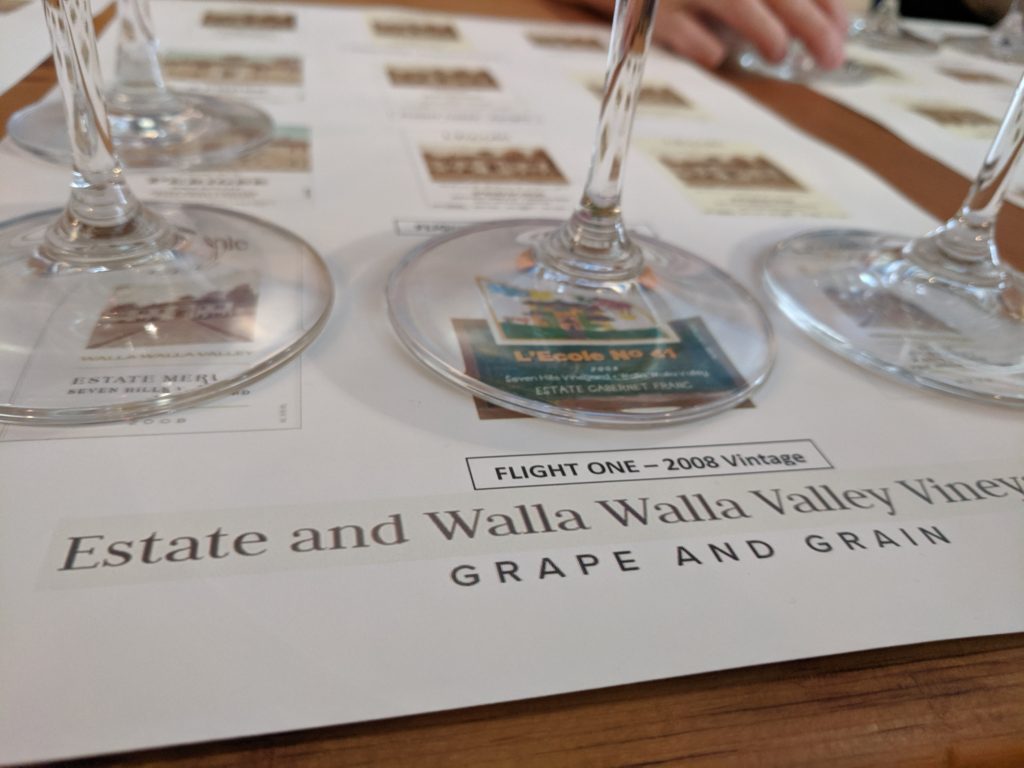
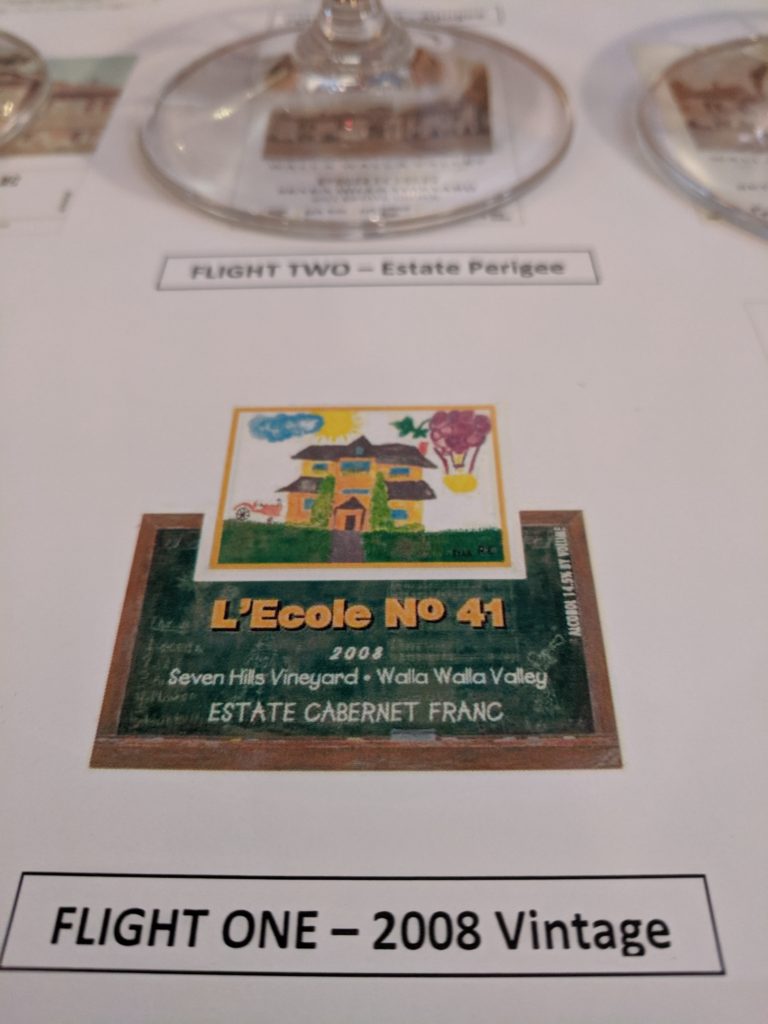
Our first flight focused on the Seven Hills Vineyard, one of L’Ecole 41’s estate vineyards situated in the southern perimeter of the valley. The 128-acre vineyard is comprised of wind blown loess (talc) soils, with vines grown on the North-facing slope due to the high heat. Jointly owned with several other wineries, it is planted to Bordeaux varieties and Syrah. This initial introduction featured Merlot, Cabernet Franc and Cabernet Sauvignon, all from the cool, 2008 vintage.

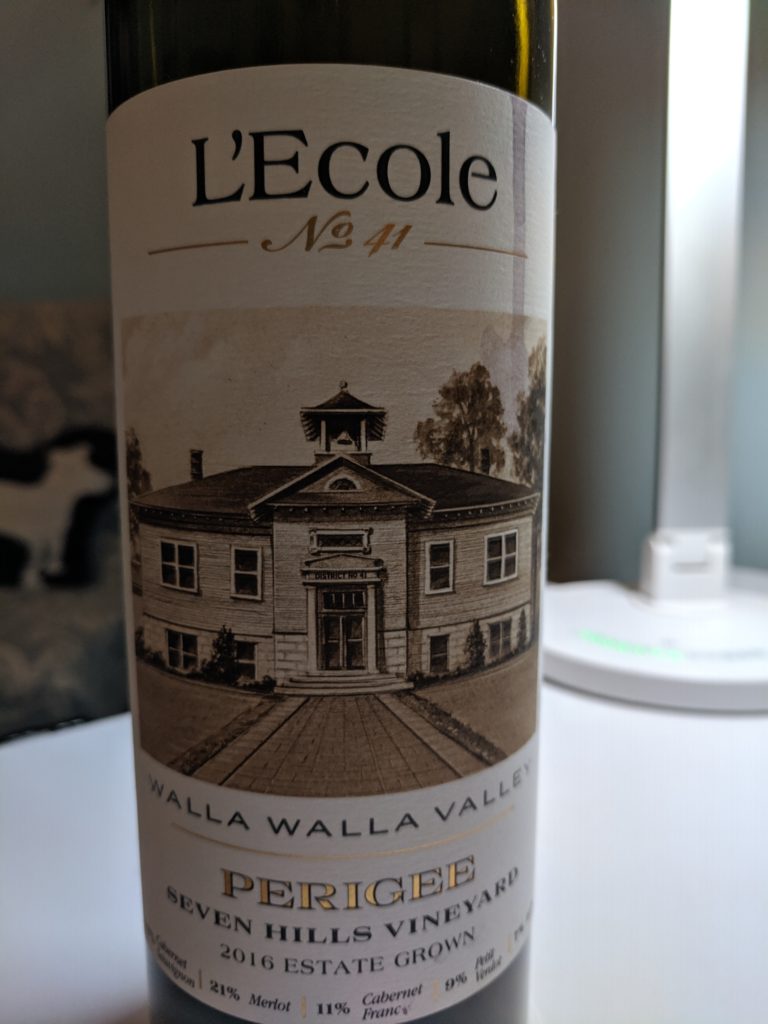
We next turned our attention to Perigee, a Cab-driven, Bordeaux blend, also sourced from the Seven Hills Vineyard. We tasted through three different vintages varying from the cool 2006 and the even cooler 2011 to the warm 2016. Despite vintage variation, all of these wines displayed a meatiness, along with dried herbs and robust concentration. Not surprisingly, 2006 showed some development with more tertiary aromas and flavors while the 2011 was the most tart and the 2016 offered up riper fruit notes.

The third flight featured Apogee, a single vineyard, Bordeax-blend wine, produced from grapes from the Pepper Bridge Vineyard. L’Ecole 41 was the first winery to make wine from this vineyard, which is on the floor of the valley, on the alluvial flood silts from the previous ice age. Since the 2011 vintage was too cool to produce this wine, we tasted the 2006, 2010 and 2016 vintages.

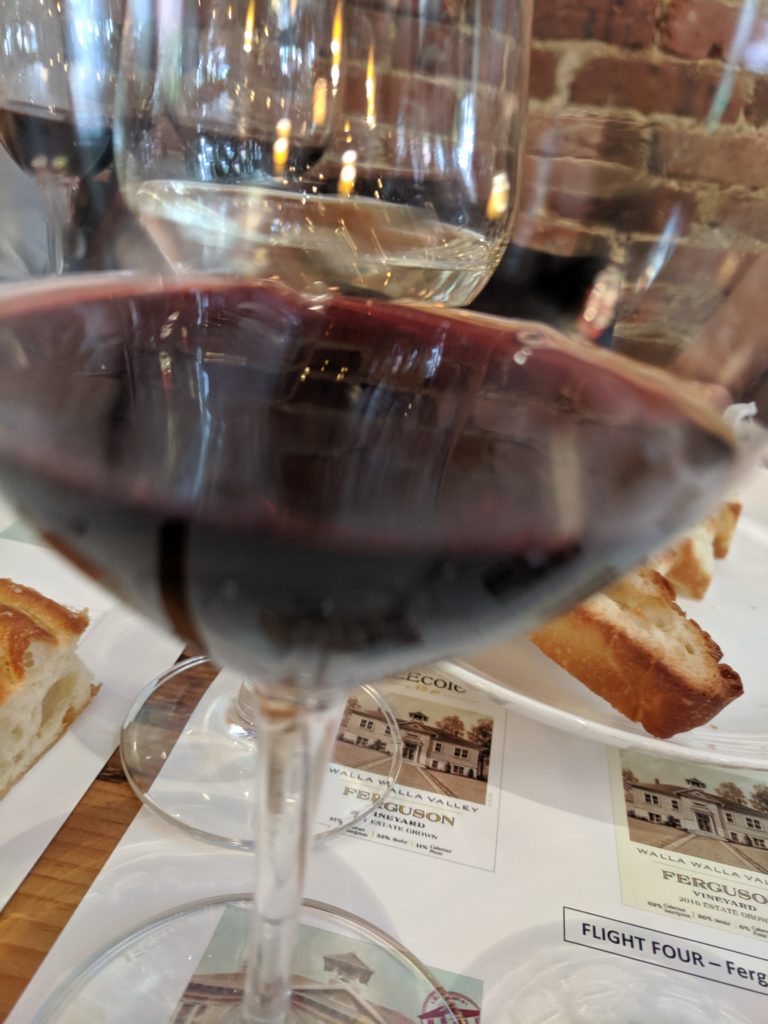
Last, but not least, we tasted through wines from the Estate-based Ferguson Vineyard. Found at the top of the crest, at 1400 feet in elevation, Ferguson is home to one of the most volcanic soils in Washington. The vineyard’s 18 inches of wind-blown loess sit on top of a two-mile- deep layer of fractured basalt, remaining from ancient lava flows. With its super windy and super sunny conditions, the 42-acre vineyard was planted in 2008-09 to Bordeaux varieties. In addition to producing Ferguson, the vineyard is also occasionally used to make a pure varietal wine.

We tasted Ferguson 2011 (its first vintage) as well as the Ferguson 2016, as well as a very powerful Cabernet Sauvignon 2014 from this vineyard. The latter was very structured, with firm tannins, dark, black fruit and bright acidity, while the more youthful Ferguson was even fresher, with more red notes; neither was overly dense or extracted, nor was the limited production (300 cases) Cabernet Sauvignon.

At price points ranging from $37 for the Estate Merlot wines to $65 for the Estate Ferguson, these are definitely premium wines. However, they over-deliver in terms of their quality and provide excellent value for such age-worthy, well-made wines that will delight your palate.

Zinfandel, of thee I sing

As we mark the Fourth of July this year, celebrations abound from barbecues and pool parties to fireworks that proudly proclaim our freedom. In this celebratory spirit, we can look to the Zinfandel grape as the quintessential grape variety with which to fill our glasses and raise a toast this holiday.

Descended from a Croatian grape, Zinfandel first arrived on America’s shores in 1829, eventually making its way to California by 1852 and becoming the most popular variety by 1878 during the state’s first wine boom. [For the full history, see the Zinfandel Advocates and Producers’ website.] Accordingly, Zinfandel holds dual personae. As David Amadia, president of Ridge Vineyards recently noted, it is considered to be California’s native grape, but given its European heritage, it is actually an immigrant story and an illustration of the American Dream. Surviving both phylloxera and Prohibition, Zinfandel continues to be widely grown and known throughout California.

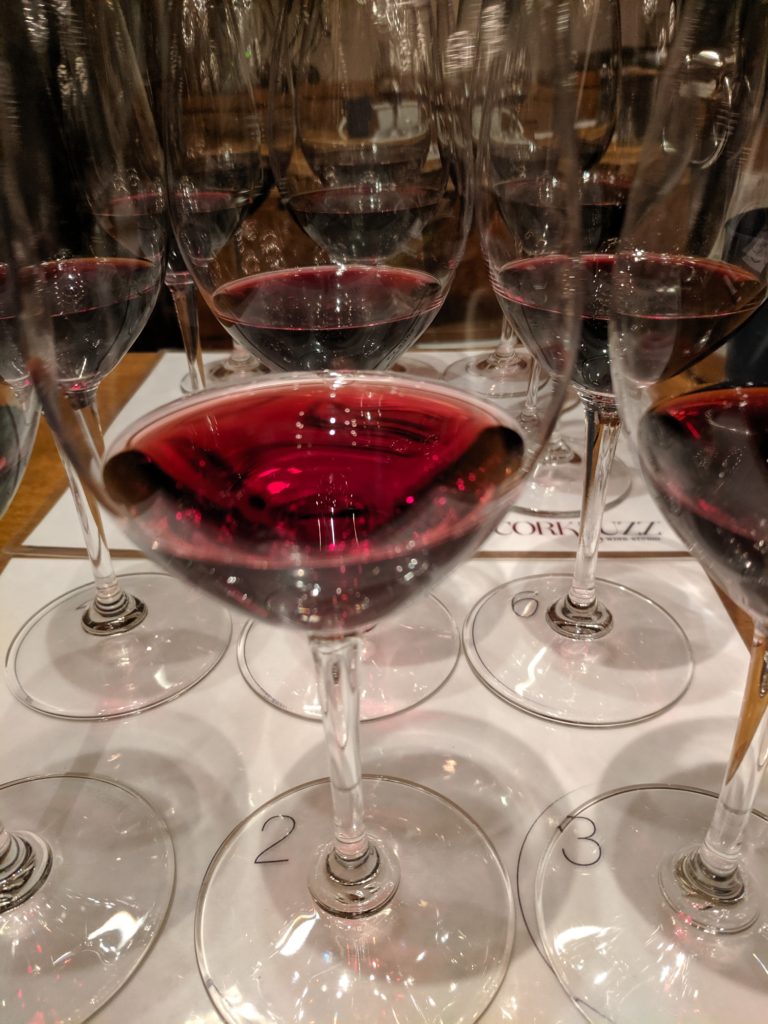
While for some, Zinfandel is an also-ran variety, to many, it is under-appreciated high performer that deserves more recognition than it gets. In this regard, Master Sommelier, Laura Maniac Fiorvanti, proprietor of Corkbuzz Wine Studio, recently moderated a panel of Zin producers, which provided a perfect opportunity to showcase the caliber of these wines and their diversity. She kicked off the discussion wearing her heart on her sleeve, admitting that Zinfandel is her favorite grape due to its versatility. In particular, Fiorvanti spoke about the food friendly nature of Zinfandel to pair with braises, tomato-based dishes and stews, thanks to its sweet and sour tastes and elegance.

Despite her fervor, Amadia acknowledged that Zinfandel is a prince, not a king, among wines, in terms of its international reputation, but underscored the beauty of this grape to deliver delicious, age-worthy wines. He added that the trick to producing such high quality wines is determining where it performs the best. Previously at Ridge, they used to make Zinfandel wine from 100 different sites, but the winery has now whittled it down to the best vineyards, with an emphasis on old vines.

Highlighting the flexibility mentioned by Fiorvanti, Berryessa Gap Vineyards’ winemaker, Nicole Salengo, discussed the elegant and restrained side of Zinfandel. Given her pursuit of lively acidity levels, her Zinfandel grapes are the first to be harvested and she is not adverse to including under-ripe grapes in the fermentation, but she does remove the raisined ones. Her two vintages (2016 and 2017) of Zins from The Coble Ranch displayed light body, light color and bright acidity, resulting in an almost Pinot Noir-style wine.

As with Pinot Noir, Zinfandel varies widely based on the site it is grown on. Moreover, Zinfandel changes as you get closer to (or further from) the ocean. In this way, it speaks to the terroir with varying notes of spice, earthiness and acidity. In general, it is a grape (and ultimately a wine) with moderate tannins, that provides a smooth, seamless texture for the fruit and spice to show through. However, it was admitted that the grape is notorious for creeping up in sugar during the fermentation process, if alcohol levels aren’t carefully managed.

Hailing from two, old vineyards only two miles apart, Ridge’s contribution to the tasting offered up fuller-bodied wines, with darker fruit. These pre-prohibition vineyards (Geyserville from 1885 and Lytton Springs from 1901 and 1910) displayed two distinct wines; the former was more herbaceous with notes of cherry, while the latter showed spice, earth and blackberry. Amadia attributes their unique characteristics to the different soil types within each vineyard. Additionally, these vineyards also include Petit Sirah, Carignan and up to 18 other varieties planted alongside the Zinfandel vines, which he believes is the key to the quality of these resulting, magical wines.

Similarly, Kim Stare Wallace, president and owner of Dry Creek Vineyard, reiterated the need for balance in these wines as well as the need to preserve old vine Zinfandel. To this end, they have implemented a Heritage Clone Propagation technique, permitting the winery to continue to grow older clones of the grape in newer vineyards. Their Beeson Ranch Vineyard was planted in the 1890s. Her Wallace Ranch and Beeson Ranch Zinfandels were dense, rich and well structured, yet still elegant and refined.

Closing out the conversation, it was mentioned that, as a mid-season ripener, Zinfandel is less impacted by vintage variation. Rather, as Aaron Piotter, winemaker for Gallo Wines, explained, stylistically, it often depends on when you pick within a given growing season. Gallo’s two entries were the Louis Martini Gnarly Old Vines Monte Rosso 2016 from Sonoma and the recently launched Bear Flag Sonoma County Vineyard 2016. The Monte Rosso, grown on high elevation, volcanic red soil, was quite floral on the nose, with power, concentration and velvet texture on the palate and flavors of blueberry, spice, fig and date. Meanwhile, the Bear Flag was less stylized, but no less rich, with generous fruit, berries, oak, cocoa and good tannins.

By the end of the tasting and discussion, it was evident that Zinfandel delivers a wonderful range of styles, providing a wealth of options for any wine lover. Further, as “America’s Heritage Grape,” it is important to preserve this important viticultural legacy for the future.

[NB: Participants also had the opportunity to taste wines from Seghesio Family Vineyards, Leonard Wine Company, Peachy Canyon Winery and Cline Cellars.]

Summer Sippers: 2019 Edition

With Memorial Day weekend in the rear-view mirror and the Summer Solstice upon us, we know that it’s safe to wear white and drink rosé (although admittedly you can drink pink any time of year!).

Jokes aside, it’s the perfect time of year to turn our attention to whites and consider lighter reds, along with the requisite rosés, as we get behind the grill or head to the park for a picnic. As such, we want food-friendly, fun and festive wines that will be a welcome addition to the party. Here are just a few ideas to get you in the mood for Summer 2019!

WHITE WINES
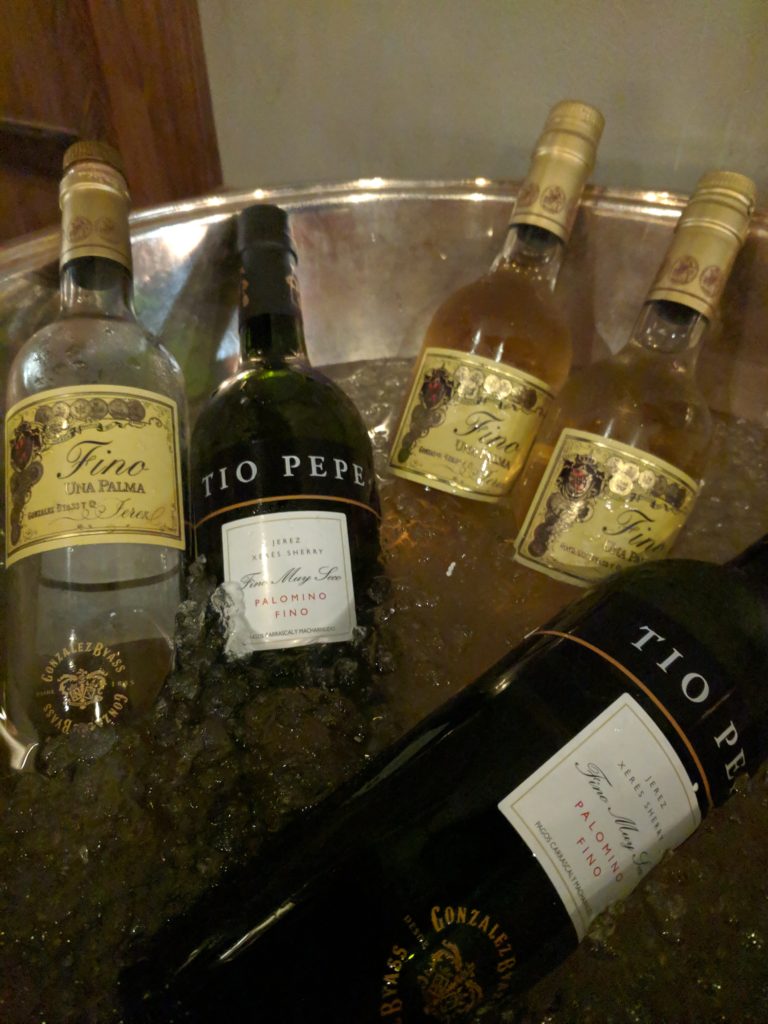
Gonzalez Byass Tio Pepe Palomino Fino NV, Jerez, Spain, $20.00
Produced from 100% Palomino grapes, this wine is fresh, with slight yeasty and light nutty notes on both the nose and palate, culminating in long length. It is a great aperitif as well as a partner with salty, savory dishes.

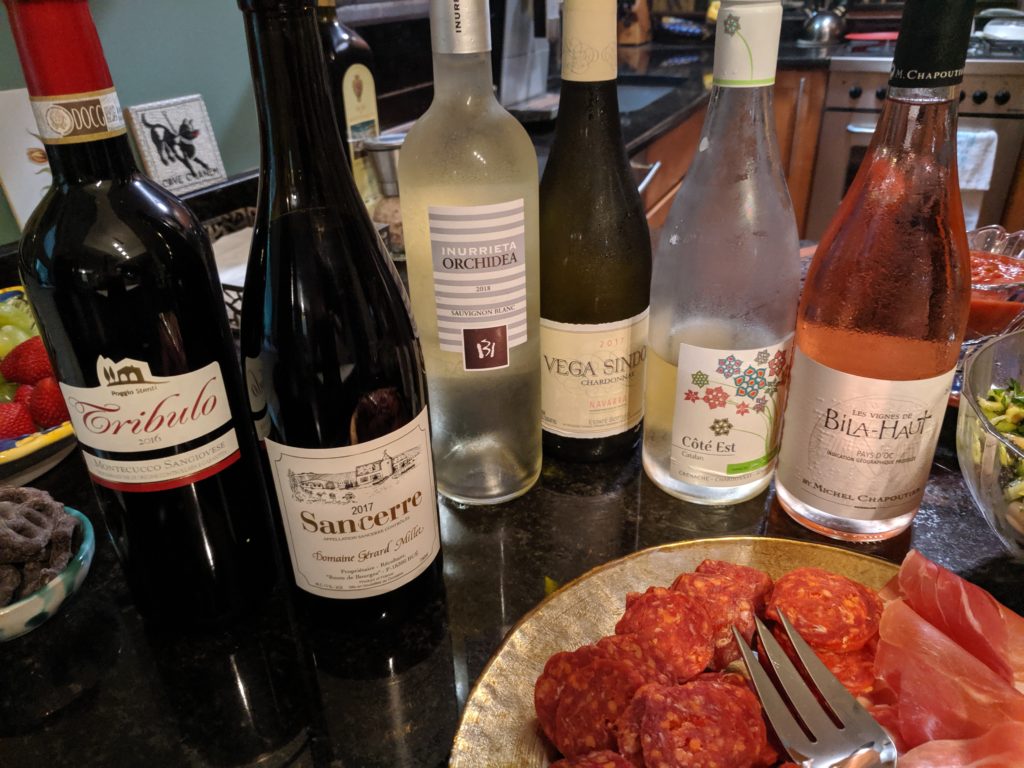
Bodega Inurrieta Orchidea 2018, Navarra, Spain, $12.00
This Sauvignon Blanc offers up a pronounced nose of slight herbs, pink grapefruit, tropical fruit. It is dry with medium+ acidity, ripe citrus flavors with a hint of pith in the undercurrent, pineapple, medium+ body and long length.

Elk Cove Vineyards Pinot Gris Estate 2017, Willamette Valley (OR), USA, $19.00
This wine is beautifully aromatic, with concentrated aromas of floral, pear, and spice, along with a dry palate with medium acidity, ripe fruit and long length.

Ponzi Aurora Chardonnay 2016, Willamette Valley (OR) USA, $65.00
Barrel fermented and aged in barrel for 20 months, this wine is slightly woody with notes of vanilla and spice. Its full-bodied palate displays freshness, good fruit and acidity, with notes of apple and melon, good texture and salinity before culminating in long length.

ROSE WINES
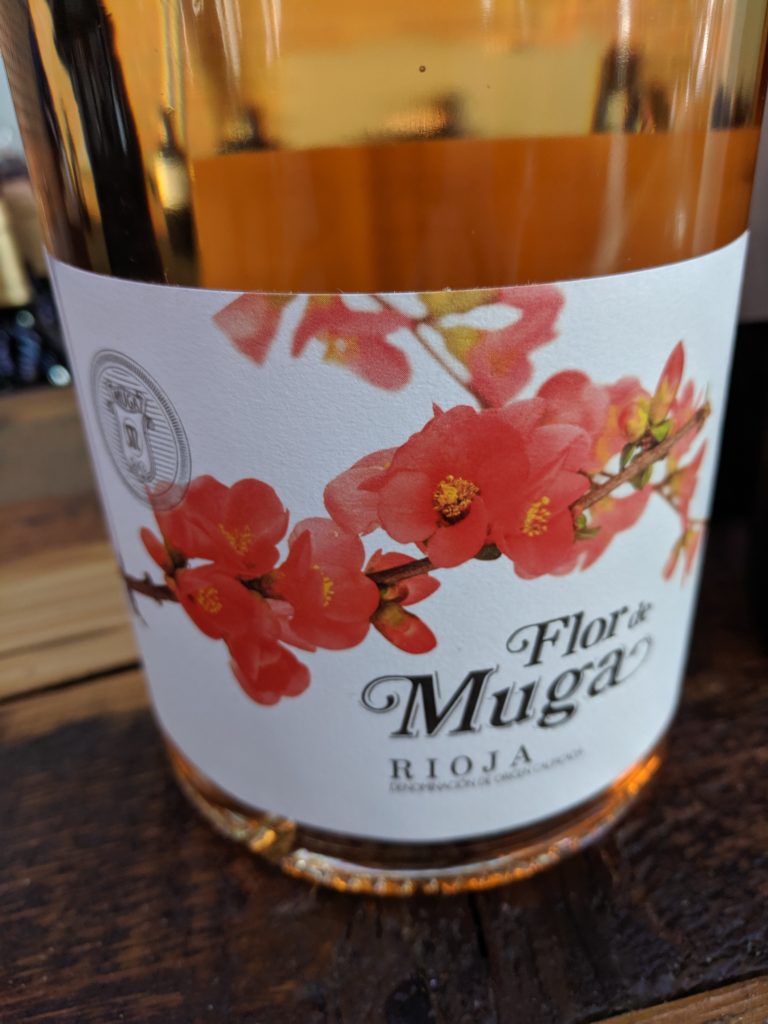
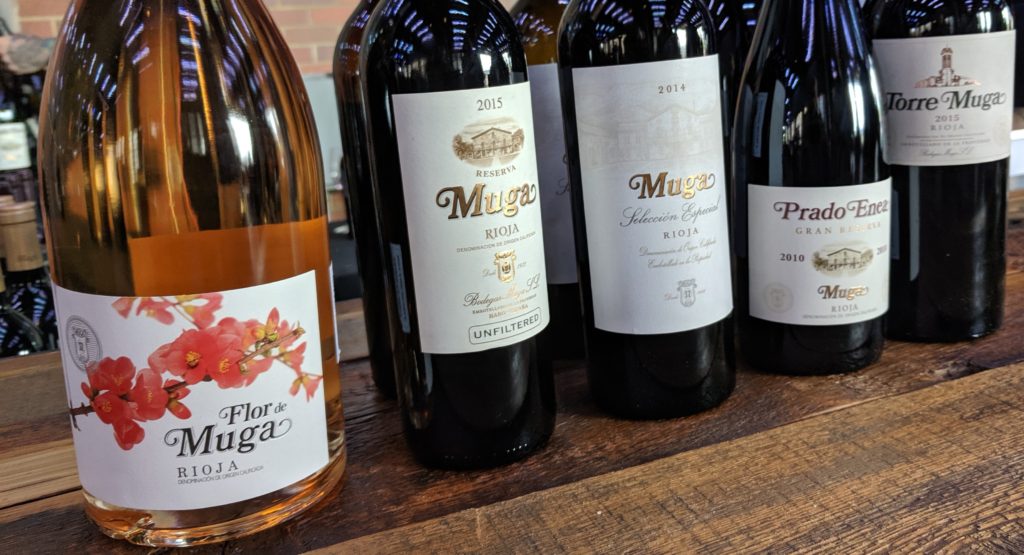
Muga, Flor de Muga Rosé 2017 Rioja, Spain, $24.00
Produced from 100% Garnacha, this pink-hued wine is both delicious and refreshing, with good berries fruit.

M. Chapoutier Domaine de Bila-Haut “Les Vignes” 2018, Pays d’Oc Rosé, France, $15.00
This estate was purchased by Michel Chapoutier in 1999 and, while this wine previously featured a small percentage of Syrah, this is the first vintage in which it has been phased out completely. It is now a blend of 60% Grenache and 40% Cinsualt, displaying notes of strawberry, cotton candy, slight herbs and watermelon on the nose and dry palate, coupled with bright acidity and long length.

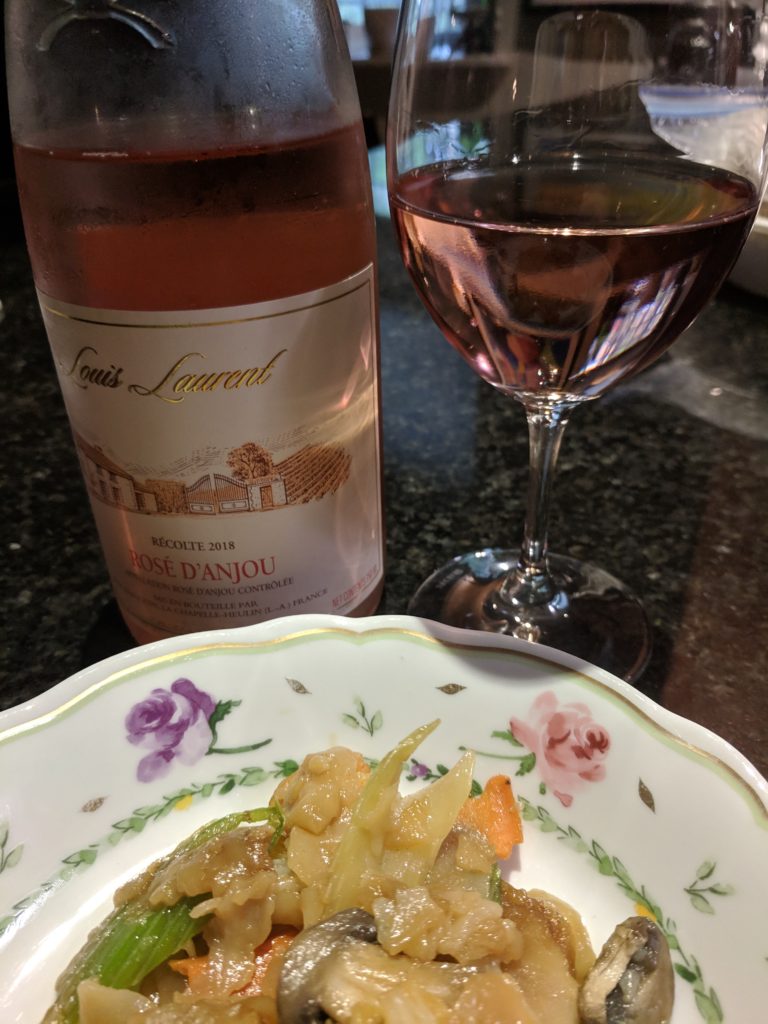
Louis Laurent Rosé d’Anjou 2018, Loire Valley, France, $13.00
Pale salmon in color, this wine is slightly off-dry, with aromas and flavors of floral, ripe berries, honey and cotton candy, with medium body and long length. The hint of sweetness is a good counterpoint to spicy foods.

Sokol Blosser Estate Rosé of Pinot Noir 2018, Dundee Hills (OR), USA, $25.00
This wine has been made since Sokol Blosser’s early days, but has gone through numerous name changes including Bouquet of Rose and Vin Gris of Pinot Noir. Aromas of peach, spice and strawberry greet the nose and are joined by spice and pepper on the dry, fresh, palate, along with good structure.

RED WINES
Domaine Gerard Millet Sancerre Rouge 2017, Loire Valley, France, $26.00
This wine offers up notes of smoke, herbs and dark cherry on the nose, with a dry palate, flavors of cherry and herbaceousness, bright acidity, medium body and long length.

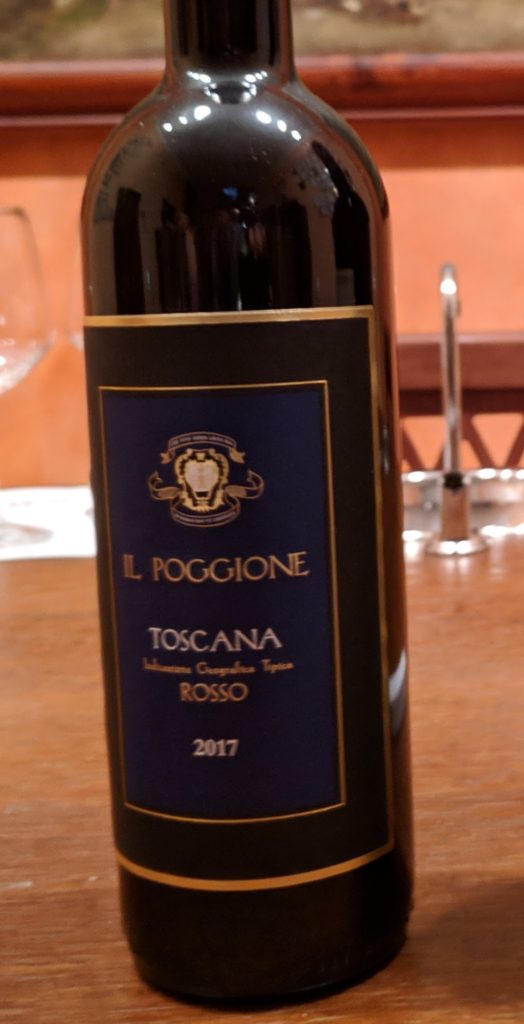
Il Poggione Rosso di Toscana 2017, Tuscany, Italy, $19.00
This blend of Sangiovese, Cabernet Sauvignon and Merlot displays aromas of dark red fruit, a hint of herbs and coffee, while the dry, medium+-bodied palate shows firm, ripe textural tannins, with bright acidity, fresh red, explosive fruit and long length. The wine can take a chill, making it a great option for a summer red!

Basile Cartacanta 2015 Montecucco Sangiovese, Tuscany, Italy, $23.00
Bringing together 80% Sangiovese with 10% Merlot and 10% Ciligiolo, this wine was aged for 12 months in French oak, then spent 18 months in bottle. With a lovely nose
of black cherry, slight herbs, oak and vanilla, it has a dry palate with ripe, juicy cherries, medium tannins with a grainy texture, medium+ body and long length.

Poggio Stenti Tribulo 2016, Montecucco Sangiovese, Tuscany, Italy, $24.00
Produced from 100% Sangiovese, this wine was aged for 18 months in French oak. It has an expressive nose of dried cherries, dried herbs and oak, with a dry palate, medium+ acidity, medium+ tannins, medium+ body, flavors of tart cherry and herbs and very long length.


Rioja’s Railway Wines: Holding Out for a Haro (Station)

We all know the three most important rules of real estate: Location, Location, Location! And, while it’s true of real estate, it is also true in the wine world – the best wines are made in the best locations. Of course, what makes a great real estate location isn’t always the same as what makes a great vineyard location, but they also share a key trait: access to transportation. Case in point, the brandies of Cognac are far more well-known than those of Armagnac, thanks to the relative ease of getting Cognac to market via waterways as opposed to the arduous, overland journey required for Armagnac. So, you can imagine the profound influence that the Haro Railway Station had on the wines of Rioja.

Haro itself dates back to the 10th century and has long been associated with viticulture. Considered to be the heart of the Rioja region, Tempranillo-based wines have been produced here for centuries. But, it was the twin impact of the regional railway and the influence of the Bordelais, who had traveled to Spain in the wake of the phylloxera crisis, made it possible for Rioja to receive recognition on the world stage.

Prior to train travel, the wines would be transported more than 100 km via mules and carts.  But, once the Haro Station was built, Haro was one of the first cities in Spain to have a modern railway connecting it, not only elsewhere in Spain, but with France. Several wineries set up near the station to make it easier to get their wines into the market, creating the Haro Station District. Additionally, as French investors and Bordeaux producers came to the region, they realized that the Rioja wines needed time to age to become great, thereby further shaping the way these wines were made.

A recent Masterclass, Rioja Railway Wine Experience, led by Pedro Ballesteros, MW, traced this defining history and underscored the importance of innovation, technology and tradition in the production of these wines. Now, five decades later, the wineries situated in the Haro district are still focused on tradition, innovation and technology as they seek to maintain their reputations and overcome the challenges that lie ahead.

Specifically, they are seeking to improve quality and combat issues associated with climate change, particularly in identifying grapes that ripen later to maintain the requisite acidity. In response to these issues, they are investing time, talent and money into research and development and have also spent considerable resources on high tech tools such as optical sorters.

Participants at the Masterclass had the opportunity to taste some older wines from the assembled wineries, providing a benchmark of what classic, older Rioja wines taste like. They also were given the chance to taste wines that reflect the innovations currently being made.

Bodegas Bilbainas
With more than a century of history behind it, Bodegas Bilbainas was founded in 1901 by Santiago de Ugarte. It boasts large underground cellars and 250 hectares of vineyards. Its Vina Pomal brand first appeared in 1904.

Vina Pomal Gran Reserva 1978
They produce their wines in a Burgundian style and it was an absolute treat to taste this classic, aged Rioja. Pale garnet in color, the nose offered up dried rose and dried plum, while the dry palate displayed medium acidity, tart, dried strawberry, a hint of dried floral, dried herbs and long length.

Bodgeas Bilbainas Vina Pomal Vinos Singulares Graciano 2015
Their innovative entry reflects their emphasis on Graciano and its ability to provide bright acidity to its Riojas as the climate continues to heat up. The 2015 vintage was a great one. Notes of spice, white pepper, smoke, vanilla, hint of herbs/dried herbs, black cherry, very fresh, good acidity, firm tannins and long length.

La Rioja Alta SA
Founded in 1890 by five families, their descendants are all still involved in the winery to this day. La Rioja Alta’s 460 hectares of vineyards are situated within La Rioja with an emphasis on the Tempranillo grape. The winery maintains its own cooperage, using American oak. They have also made significant investment in research and development, including the purchase of an optical grape sorter.

La Rioja Alta Gran Reserva 890 1981
A blend of 95% Tempranillo, 5% Graciano and Mazuelo, this wine was medium garnet in color with more concentration and a more intense nose than the 1978. Aromas of dried cherry, faint floral greeted the nose. The palate was dry with a slightly sweet fruit note of dried plum, slight tannic grip and long length. This was my favorite of the aged wines of the flight.

La Rioja Alta Garnacha de la Finca La Pedriza 2017
While not a commercial release, this wine offered a look at La Rioja Alta’s quality commitment to viticulture and its focus on Garnarcha as a way to maintain good acidity levels in its wines. The nose showed lots of bright, red cherry fruit, with some floral notes, both of which persistent on the dry, light+-bodied palate. It had zippy, bright acidity and culminated in long length.

Bodegas Roda
The new kid on the block, Roda was established in 1987 by Mario Rotllant and his wife, Carmen Daurella, whose vision was to create a modern-style wine that would serve as a hallmark for the region. Taking the first two letters of each of their last names Ro (Rotllant) and da (Daurella), Roda was born. Today, the winery works with a total of 120 hectares, 70 of which are estate owned and an additional 50 that are managed by contract growers. All of the vines are bush trained and dry farmed, with minimal intervention.

Bodegas Roda Roda I 2004
From the excellent 2004 vintage, this wine displayed notes of smoke, black fruit, vanilla, ripe fruit, with a dry palate with firm tannins, flavors of strawberry, black cherry and other dark red fruit.

Bodegas Roda Roda 107 2010
As part of their innovative efforts, Roda has identified 552 individual clones of Tempranillo, choosing 20 of them for propagation in search of the best Tempranillo. They have planted these various biotypes in pursuit of determining which ones will be the best for the future. This wine was a beautiful expression of a Tempranillo-focused Rioja, showing lots of rich, ripe strawberry and black cherry, with slight oak and vanilla, culminating in long length.

Muga
Founded in 1932 by Isaac Muga and Aurora Cano, the wines of Muga were initially made in an underground cellar until they set up their own winery in 1968. It is currently a family-run winery. Muga also has an on-site cooperage and is the only winery in Spain making all its vats and barrels. They practice traditional winemaking, including fining with egg whites.

Bodegas Muga Prado Enea Gran Reserva 1994
Offering up a faint nose of red fruit and floral notes, the dry palate displayed flavors of strawberry, plum, slight dried fruit, a slightly grainy texture due to the tannins, finishing with long length.

Bodegas Muga Prado Enea Gran Reserva 2010
Hailing from one of the best Rioja vintages, this wine is the result of Muga’s quality control using an optical sorter in selecting which fruit does (or doesn’t) go into the finished wine. An intense nose of herbs, floral and black cherry fruit, the palate offered up firm tannins, lovely dark fruit, oak and slight vanilla with long length. It is a beautiful wine with lots of potential; they suggested holding it until 2035.

Gomez Cruzado
Founded in 1886, Gomez Cruzado is presently a boutique winery with 250,000 bottles produced annually and is the smallest of the Haro Station District wineries. It is run by David Gonzales and Juan Antonio Leza. Its vineyards are comprised of old bush trained vines and the wines undergo long aging periods before release.

Bodegas Gomez Cruzado Honorable 2014
Showing herbal aromas coupled with dark fruit, this wine was fresh, with nice lingering cherries, herbs and cocoa, and long length.

Bodegas Gomez Cruzado Montes Obarenes 2015
A white Rioja, this wine is a blend of Viura and white Tempranillo grapes. The majority of the wine (80%) was fermented and aged on its fine lees in new French oak barrel, with the remainder in concrete tank. It was full-bodied, with good acidity, citrus, oak and vanilla, along with long length.

NB: For those interested, a more detailed account of this history is available online.


Ferzo sets sail with new wines in the U.S. market

Co-ops often get a bad rap, but good producers are good producers whether they are a private company or a group of local growers banding together. In this case, Codice Citra wines are made from the estate-grown fruit from a collaboration of family-owned vineyards within the Chieti province of Italy’s Abruzzo region. With some families owning just two acres, it makes more sense to pool resources for costly expenses such as fermentation tanks and other winery equipment.

The cooperative was founded in 1973 and focuses on local grapes such as the well-known Montepulciano d’Abruzzo and Trebbiano d’Abruzzo to more esoteric varieties. The Codice Citra portfolio includes four ranges of wines (Citra, Caroso, Las Vitae and Ferzo), the latter of which is now making its debut into the U.S. market.

Specifically, the Ferzo name refers to “patches of fabric stitched together to create a sail,” and symbolizes the piecing together of numerous plots of vineyards, within the southern part of the Abruzzo region.

Among the Ferzo line, there are three whites produced from indigenous varieties, namely: Pecorino, Cococcioloa and Passerina. These three wines are all fermented in stainless steel, ensuring that the wines are fresh and fruit forward without any oak influence. A rosato (aka rose) and a Montepulciano d’Abuzzo round out the range.

Most recently, with its emphasis on Abruzzo’s viticultural history and a strong commitment to high quality wine, Codice Citra has brought on winemaker, Ricardo Cotarella as executive enologist and partnered with Leonardo LoCascio Selections, as its exclusive U.S. importer.

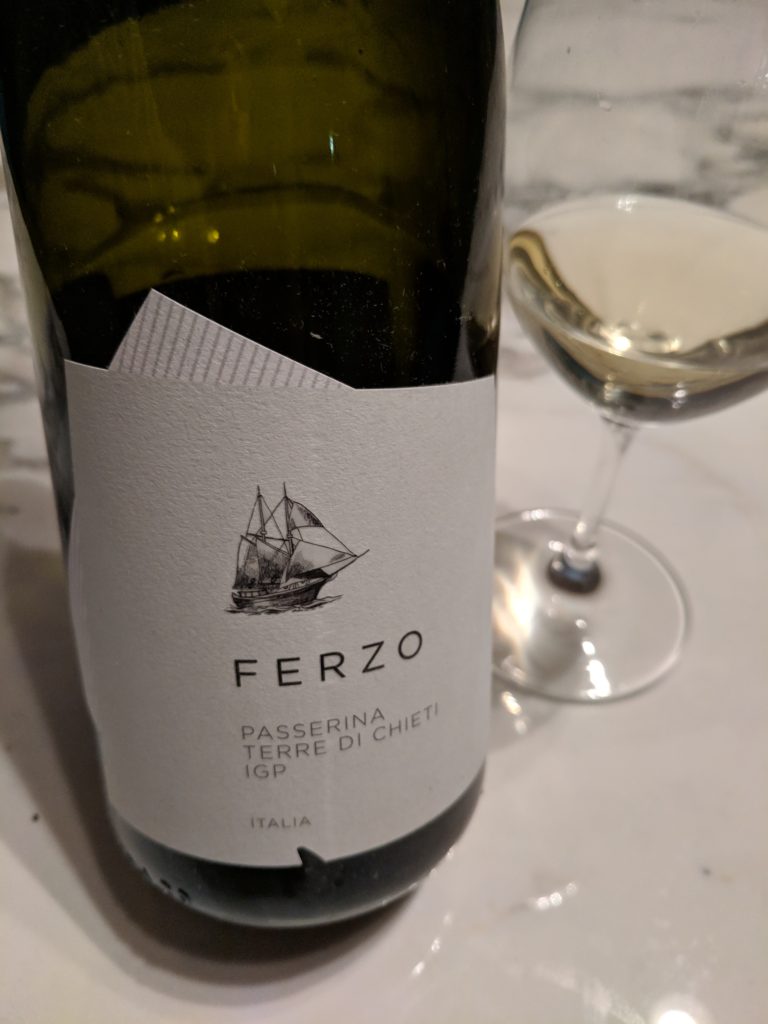
Ferzo Passerina 2017, Terre di Chieti IGT, Abruzzo, Italy, $26.00
The ancient variety of Passerina is not well known, but is on the path to rediscovery, given recent interest in the grape in Abuzzo, Umbria and Le Marche (where it is produced within the Offida DOCG). This wine has a beautiful floral and fruity nose, with flavors of white flowers, juicy pineapple, pear and tropical fruit. On the palate, it offers up bright acidity, medium body and long length.

Ferzo Pecorino 2017, Terre di Chieti IGT, Abruzzo, Italy, $26.00
Almonds, minerality and hint of pear greet the nose. On the palate, this wine is dry, with medium+ acidity, medium+ body and is quite angular. Flavors of nuts and minerals dominate, giving the wine weight and depth, before culminating in long length.

Ferzo Cococciola 2017, Terre di Chieti IGT, Abruzzo, Italy, $26.00
The Cococciola grape is cultivated in both Abruzzo and Puglia and is frequently compared to Sauvignon Blanc. This wine offered up more fruit character than the Pecorino, with more pronounced pear and citrus, a hint of waxiness on the palate and just a slight note of nuttiness. It displays nice body, good depth and long length.

Ramon Bilbao reinvents Rioja, yet stays true to tradition

The familiar adage is “If it ain’t broke, don’t fix it,” but when the Zamora family purchased the Ramon Bilbao company in 1999, they had other plans. Admittedly, they didn’t break what was working, but they did choose to expand the way that the company thought about its Riojas.

Originally founded by the Bilbao family, the Ramon Bilbao winery has been making wine in the heart of Rioja, since 1924. Situated in Haro, within the Rioja Alta subzone, the estate’s 180 hectares of vineyards are influenced by both the Cantabrian Mountains and an Atlantic Ocean climate influence, bringing fresh, dry winds and keeping humidity at bay. Here, sandy, yellow-colored soils are favored for their high calcareous content, which is good for retaining acidity in Tempranillo, the key variety in Rioja. And, thanks to careful manual harvesting, vines are able to live a long time, with 50-90-year-old Tempranillo vines being a common occurrence.

Upon making its purchase, Zamora brought in a new winemaker, Rodolfo Bastida, a locally born and bred Spaniard who had been making wine elsewhere before landing at Ramon Bilbao. Among his first tasks in his new role was to make a Rioja that was a radical departure from tradition. Specifically, Bastida crafted a Rioja that was aged, not in traditional American oak, but rather, in French oak.

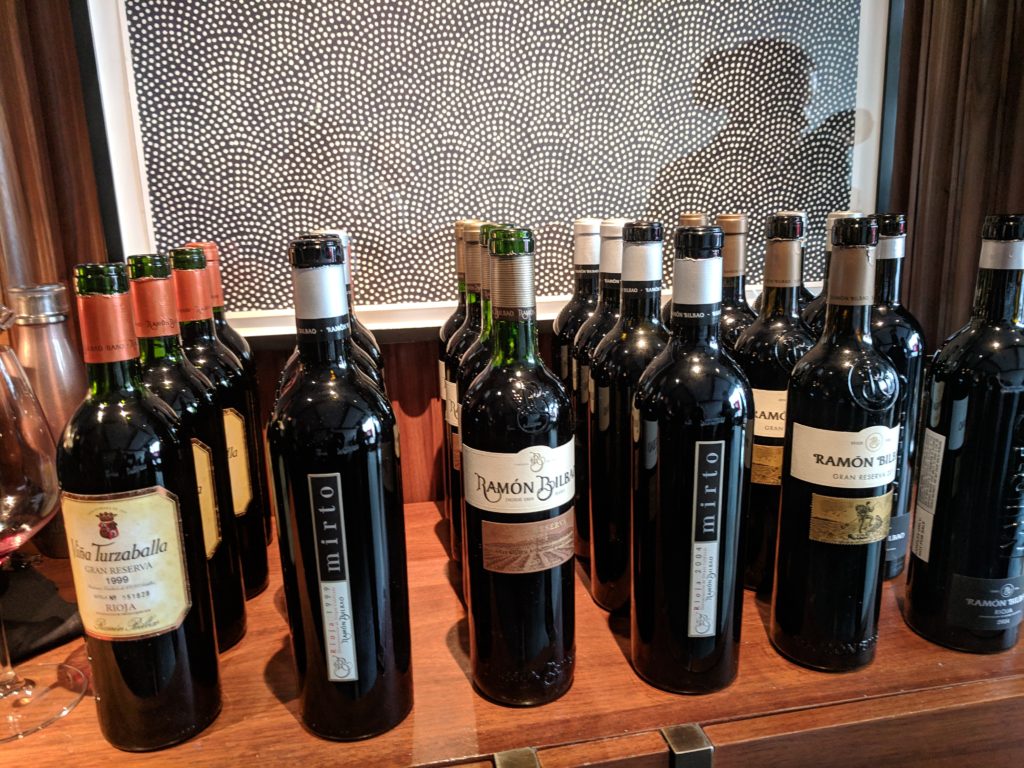
The thought process was to create a more modern, yet still true to its heritage, wine. Thus, Mirto was born! Named for a local bush that grows wild in the area, when the Mirto bush looks healthy, it indicates that the vintage will be a good one. Not surprisingly, Mirto (the wine) is only made in great vintages (in other words, when its namesake looks especially healthy!). Produced since 1999, the Mirto style has been a more structured wine, which is both fresh and elegant, driven more by fruit than oak influence.

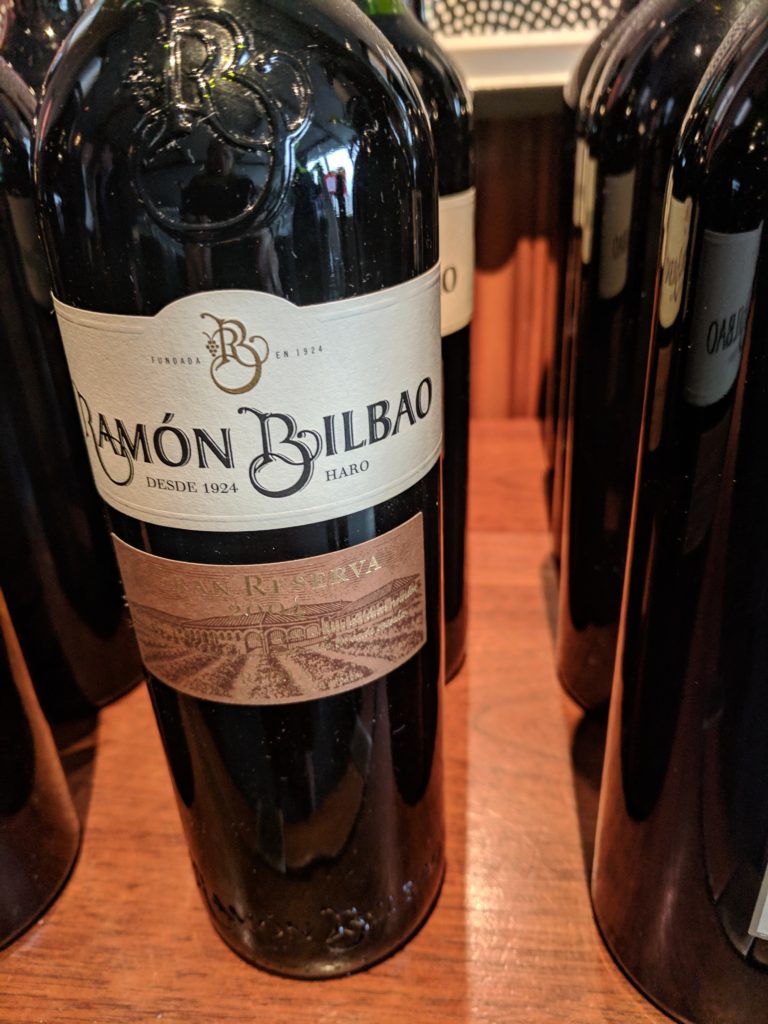
Of course, as noted, there was no reason to completely abandon the tried and true traditional Rioja, so Bastida continues to produce a Gran Reserva Rioja under the Ramon Bilbao brand name, which follows a more traditional production. In this regard, the Ramon Bilbao wine is aged for a longer period of time (36 months) in American oak. Meanwhile, the Mirto generally spends only 24 months in French oak, utilizing a combination of barrels from different coopers. Bastida admits that it is a fun process to create two separate styles of Rioja.

Among the other changes that Zamora has made has been a new-found focus on altitude and one on terroir. Specifically, in 2012 they turned their attention to exploring altitude and new vineyard areas to combat climate change. In this regard, their vineyards are located at 600 to 700 meters above sea level, which might not be excessively high, but compared to other areas in Spain, it is. Then, in 2014, the winery became more terroir driven as they sought out better parcels, which is a departure for a wine that is traditionally a blend of areas.

During a special tasting for press and trade, participants had the opportunity to compare and contrast the traditional Ramon Bilbao Gran Reserva with the more modern Mirto. It was an exciting and illuminating experience to explore these two different styles of wine, both of which reflect the true nature of Rioja wine.


TASTING NOTES
Vina Turzaballa* Gran Reserva 1999
Produced from 100% Tempranillo and aged for 40 months in American oak, this is a typically classic, aged Rioja. It showed some bricking in the glass and some development on the nose, with notes of dried floral and dried fruit. On the palate, it was dry, with high acidity, nice evolution, faded fruit on palate, culminating in long length. It was my favorite wine of the tasting.
*This wine is no longer produced and has been replaced with the Ramon Bilbao Gran Reserva

Mirto 1999
Also made from 100% Tempranillo, but aged for only 24 months in French oak, in comparison, this wine was almost youthful. There was much less evidence of age in both its color and on the nose. Aromas and flavors of strawberry and plum dominated the nicely structured palate, which offered up good acidity and long length.

Ramon Bilbao Gran Reserva 2004
A blend of 90% Tempranillo, 7% Mazuelo and 3% Graciano, this wine was aged for 36 months in American oak. It displayed aromas of strawberry, vanilla, oak, slight floral, which persisted on the dry palate. Medium+ acidity, medium body, flavors of spice and leather, with long length.

Mirto 2004
This 100% Tempranillo wine spent 24 months in French oak. It was brighter with fresher, yet darker (more black than red) fruit, showing some complexity and, in general, a more structured palate. It was my favorite of the Mirtos.

Ramon Bilbao Gran Reserva 2011
Bringing together 90% Tempranillo, 65 Graciano and 4% Mazuelo, this wine spent 26 months in American oak. It had a pronounced nose of strawberry and cherry aromas. The dry palate was dominated by nice spice notes and firm tannins, and long length.

Mirto 2014
Made from 100% Tempranillo and aged for 19 months in French oak, this wine offered up very firm tannins and needs time to age. Dry, with bright acidity, angular, cherry, black cherry, long length.

These latter two wines need time to develop in bottle and soften their tannins.

Oregon’s OG Wines

Sure, Oregon wines are fashionable now, but back in the 1970s, no one was planting grapes in the Willamette Valley. The area was filled with peach trees, walnuts and blackberries, as many of the vineyard block names at Sokol Blosser can attest. But, in the early part of that decade, three brave families ventured into the region with the deep conviction that this was a very special place in which to make great wine.

These self-dubbed “Oregon Originals” – the Ponzi, Campbell and Sokol Blosser families – arrived relatively concurrently in a variety of vehicles ready to hit the ground running, with their kids: Luisa, Anna Maria, Adam (and his siblings), Alex and Allison in tow.

As pioneers clearing the land and putting their faith in Pinot Noir, the three families would get together on a regular basis, sharing ideas and finding community with one another. Similarly, the children grew up as friends and remain so to this day.

Back then, it was not chichi for your family to own a vineyard and the kids were often ridiculed by their peers and their parents called drunkards. Today, these “kids” are all grown up and have taken over the leadership of their family’s wineries, representing the second generation of Oregon wine producers. Their wineries remain committed to Pinot Noir and are still family owned.

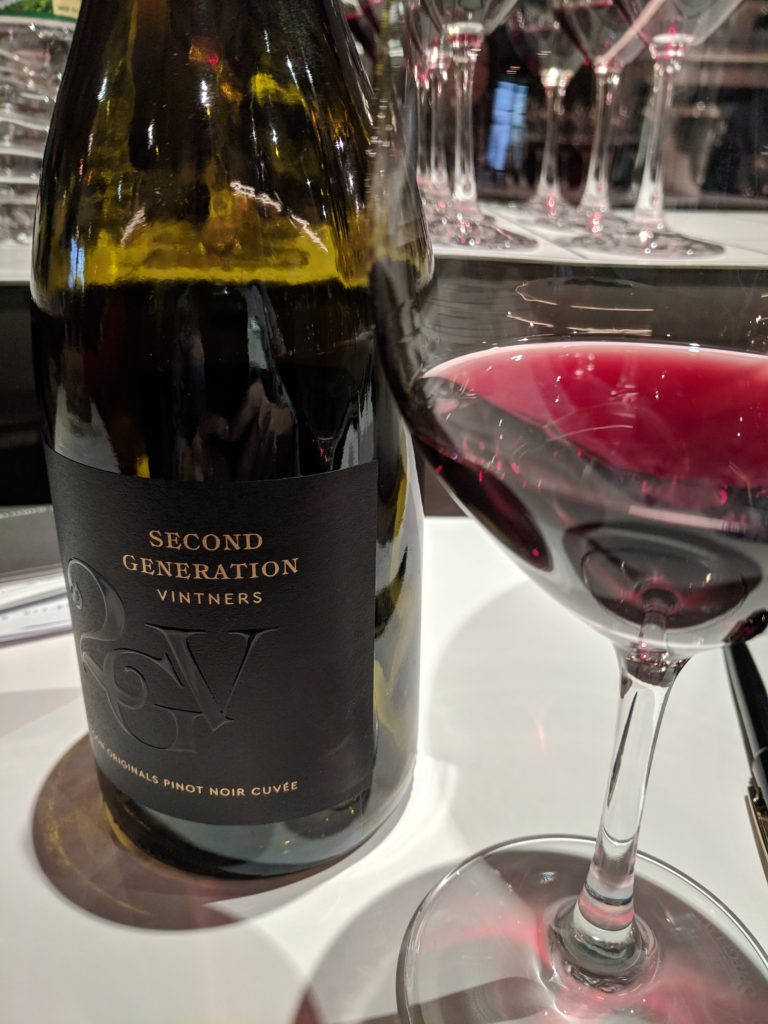
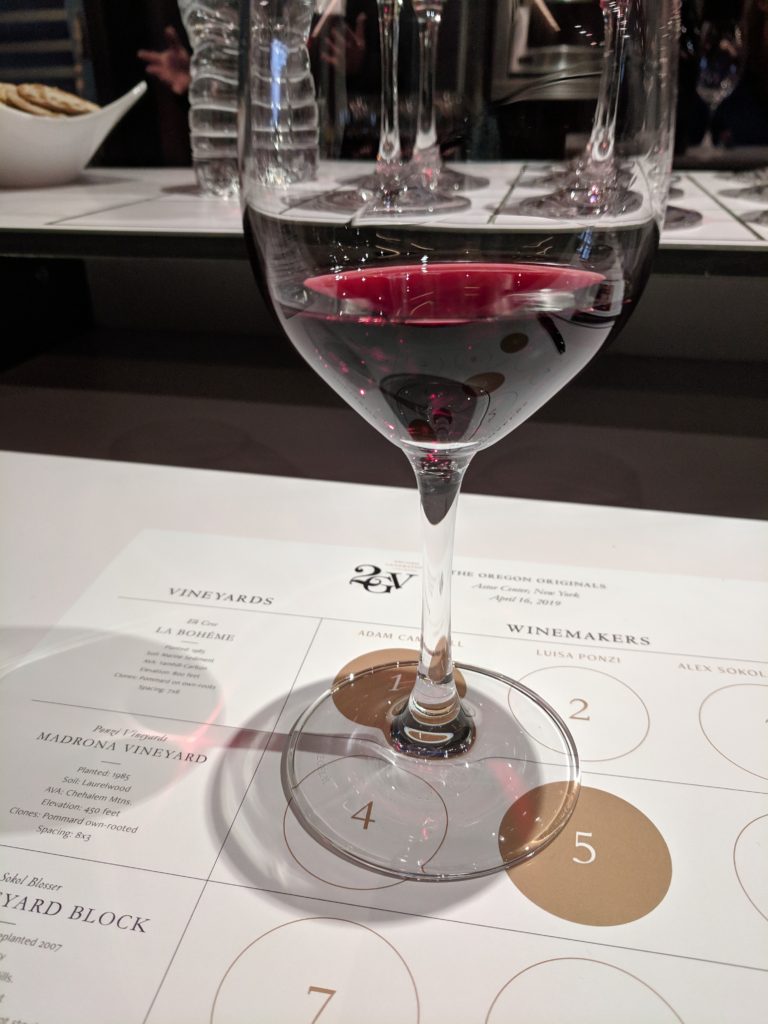
Similarly, they are all equally committed to being stewards of the land and the community and feel that it is important to work together. With this overarching philosophy, the three wineries, led by winemakers Luisa Ponzi (Ponzi VIneyards), Adam Campbell (Elk Cove) and Alex Sokol Blosser (Sokol Blosser), recently came together to collaborate on a special cuvée. Each winery contributed fruit from a single block of Pinot Noir, with each winemaker ultimately making three separate wines from the three different parcels of fruit. These nine wines then served as the components for the final blend.

Members of the press and trade were invited to a special seminar to taste through these components in a true demonstration of “land versus hand.” Interestingly, the overwhelming consensus among the winemakers was that the best wines were those that had been produced using one’s own fruit, underscoring the importance of really understanding the grapes to create great wine. Not surprisingly, the finished wine, 2017 2GV Pinot Noir Cuvée, focused heavily on these three components.

As a limited production wine (350 cases), 2GV was crafted primarily as a charitable effort, but is available online for purchase by the bottle, from the Ponzi Vineyards website.


NB: Purchase does not entail being a member of Ponzi’s wine club, and as I understand it, provided an adult is on hand to sign for and accept receipt, Ponzi can ship direct to consumers anywhere within the U.S.

Hess’s Lions Head Luxury Collection, taming lions and tannins

A few weeks ago, I was about to run out the door to a wine event when I noticed a torn wrapper on the floor. Upon further investigation, I realized that our dog had gotten hold of an unopened chocolate bar and had proceeded to enjoy the taboo treat. Since chocolate is poisonous to canines, I immediately rushed her to the vet who took care of her right away. Thankfully, she has since made a full recovery.

Needless to say, it was a stressful day and that night I very much wanted a glass of wine – a good glass of wine – because life is too short. And, somehow between managing clients and caring for the dog, I felt a bit like I was herding cats.

Or, perhaps, as I reached for the bottle of wine… a lion tamer? I had previously tasted the Hess Collection wines at a luncheon last year and had been quite impressed. Thus, when the opportunity to taste two new releases came up, I pounced (OK, I’m done with the feline puns, I promise).

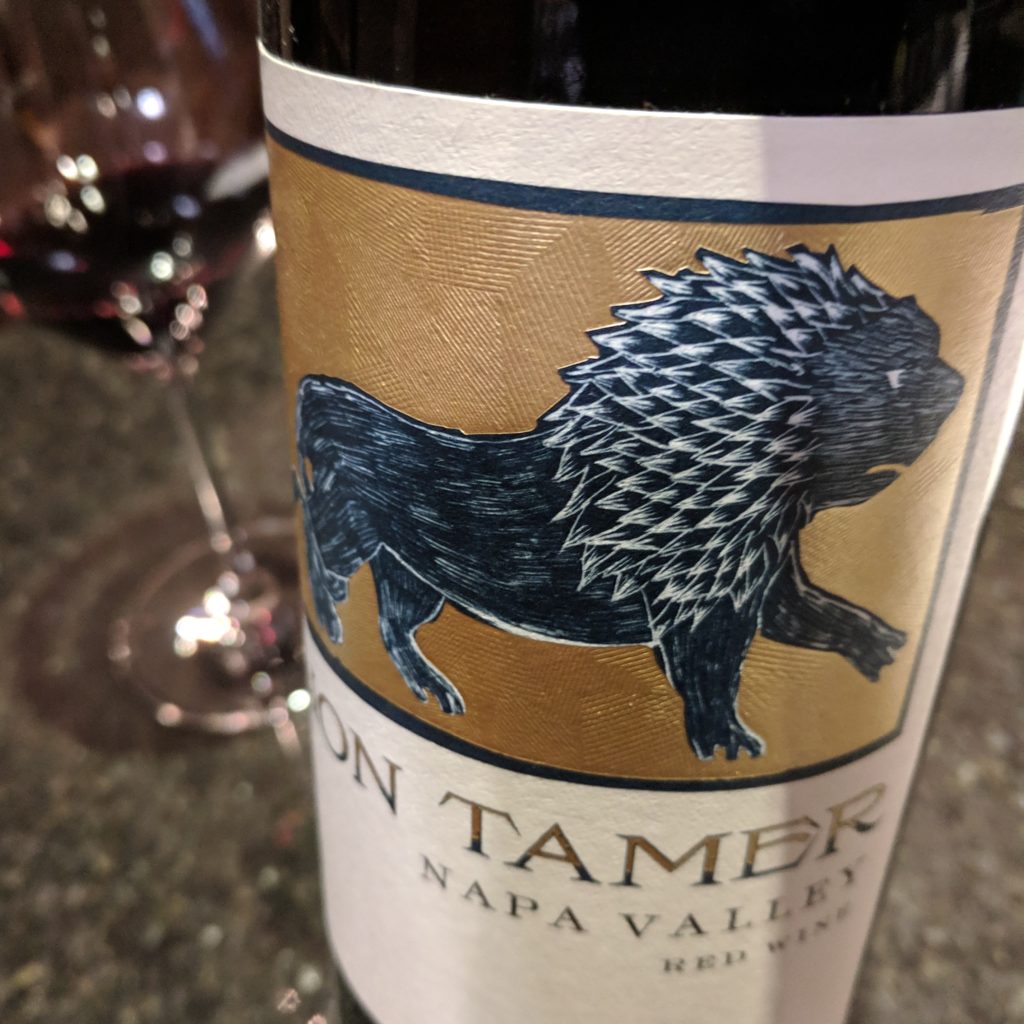
In any case, the lion has long been associated with the Hess family whose crest proudly features a byzantine-style lion and the animal has always adorned the family’s alcoholic pursuits. It previously graced the labels of the family’s beer business and was then adopted for the winery. More recently, it has been adapted and designed for the label of the “Lion Tamer,” which launched last year and more strongly recalls the history of the original Hess crest.

Not surprisingly, the Hess family motto is “Live Each Day with the Heart and Courage of The Lion.” The lion’s Latin name, Panthera Leo, gives rise to the winery’s newest addition to the Lions Head Luxury Collection. This collection represents the most recent development at Hess, currently under the direction of Donald Hess’ son-in-law Tim Persson, and wife, Sabrina.

Hess Collection Panthera Chardonnay 2016. Russian River Valley, USA, $45.00
This launch release is produced from 100% Chardonnay and was aged in 35% new French oak for 15 months. Slight buttery notes, a hint of oak and vanilla and apple greet the nose. On the palate, the wine is dry, concentrated, rich and ripe, with apple, pear, nuts and butter/creamy flavors. It is medium+-bodied, with medium acidity, good balanced, elegance and long length.

Hess Collection “Lion Tamer” Red Blend 2016, Napa Valley, USA, $45.00
A changing blend, the latest release brings together 40% Malbec, 27%  Zinfandel, 21% Petite Sirah, 8% Cabernet Sauvignon, 2% Mourvèdre, 1% Petite Verdot, 1% Merlot, which has been aged in 40% new French oak for 22 months. Aromas of plum, blackberries, blueberries and vanilla, give way to a full-bodied, dry, rich and ripe palate, with concentrated fruit of mulberry, bright, juicy acidity, ripe tannins and long length.