Grand Cru Grape Vine: Happy Mutter’s Day (May 2011)

Happy Mutter’s Day! The word Mutter is German for mother and, with Mother’s Day on May 8th, and our focus on Germany this month, we’re sending you a bilingual greeting.

This month, Jared and Tracy will once again participate in TasteCamp East. The 2011 itinerary includes visits to the Niagara wine regions on both the Canadian and American sides. Then, in June, Tracy will travel to the Kingdom of Navarra in Spain’s Basque region where she will taste the wines and cuisine.

Public classes begin June 25th when we’ll kickoff the season with a wine class and concert. This special evening will feature a wine class on Australian wine, followed by a concert and story-telling by Australian folksinger, Susanna Carman, as part of her U.S. tour. Enjoy wines and cheeses as you listen to Susanna sing and share her tales of living Down Under.

Other special events for the season include a wine and chocolate tasting with Roxanne Browning of Exotic Chocolate Tasting (July 17), and a class on Napa Valley Cabernet Sauvignon, with high end wines such as Diamond Creek and Far Niente (August 14). Visit our website to sign up for these and all other classes.

Drink wisely and well,

Tracy Ellen Kamens, Ed.D., DWS, CWE
CEO: Chief Education Officer

and

Jared Michael Skolnick
COO: Cork Opening Officer

Happy Mutter’s Day: The Wines of Germany
A young engineer accompanied his boss on a business trip to Germany in the 1970s. One evening at dinner, their German hosts were keen to show off the quality of their wines and selected a special bottle from the restaurant’s wine list. The red wine was presented to the boss for tasting, with all eyes anxiously awaiting his reaction. The gentleman raised the glass to his lips, took a sip and declared, with his face revealing displeasure, “It’s too sweet!”

Whether true or not, for a long time, many people attributed all German wines with being too sweet. However, at least these days, the reality is that Germany produces a wide range of high quality wines from bone dry to lusciously sweet, so there are wines to suit a variety of palates and occasions. Germany’s association with sweet wines stems from its focus on the ripeness levels in its grapes. While we generally say that grapevines grow between 30-50o north and south of the equator, vineyards in Germany can be found as far north as the 52nd parallel. Given the northerly locale, reaching full grape ripeness is no easy task. Without the steep (often 45o), south-east facing slopes along the Rhine River and its tributaries, grapegrowing would not be possible in this area. As a result of this slope and orientation, the sun’s rays hit the water and reflect back onto the grapes, permitting them to reach full maturity. Consequently, such ripeness is prized and, much of the German classification is based upon ripeness/sugar levels at harvest.

This ripeness classification, whose designation is restricted to Germany’s quality wine category  – Qualitatswein mit Pradikat (Quality wine with attributes), starts from the least ripe, Kabinett, followed by Spatlese, Auslese, Beerenauslese and Trockenbeerenauslese, in ascending order of ripeness. You can expect wines of Auslese level and above to be noticeably sweet, but Kabinett and Spatlese wines may be dry or off-dry (slightly sweet). One clue is to look at the alcohol level; a lower level (10% and under) will generally suggest a sweeter wine since not all of the sugar was converted into alcohol. Another is to look for the word Trocken, which is German for dry, or the terms Classic and Selection, both of which indicate dry-style wines. Those with a little sweetness will pair brilliantly with Asian or other spicy cuisine as well as fatty poultry dishes. Auslese level and sweeter wines are best saved for dessert or as accompaniment to blue cheeses, but while they do retain high levels of residual sugar, they are beautifully balanced with high acidity. This is particularly true of German Rieslings.

And, as a final note, Germany is not a one-grape wonder. In fact, Riesling’s spiritual home is also home to Pinot Noir, Gewurztraminer and a myriad of other Germanic grape varieties.

Wine Tasting Notes

Bernhard Huber, Alte Reben Spatburgunder Trocken  2007, Baden, Germany, $75.00
From the southernmost and warmest region (Baden), this wine is produced from old vines (20-40 years of age) and presented a complex nose of wet leaves, vegetal notes and cherries. These flavors continued on the dry palate with vibrant acidity, low tannins and an extremely long finish. In a word, stunning!

Grafen Neipperg, Lemberger Trocken, 2008, Württenberg, Germany, $22.00
This estate is owned by Count (Graf) Neipperg and is located in the Württenberg region which is predominantly (70%) planted to red grapes, cherry, clove and vanilla greeted the nose . The dry palate had medium+ acidity, light tannins with flavors of bitter cherry, cloves and vanilla.

Johannishof, Charta Riesling, 2008, Rheingau, Germany, $22.00
Johannishof is owned by the Eser family, which has a winemaking history dating from 1685. This wine showed aromas of spice, floral, pineapple and peach. Dry with just a hint of ripeness, this wine has high acidity and concentrated fruit flavors of pineapple and tropical fruit, along with floral notes, all of which remain throughout the wine’s long length.

Liebfrauenstift Riesling Trocken 2009, Rheinhessen, Germany, $22.00
Originally cultivated by Capuchin monks, Peter Joseph Vlackenberg purchased a stake in the property in 1808, with his family currently owning 90% of the site. With citrus and stone aromas on the nose, this wine is dry with piercing acidity. Citrus, pith, stone and slight spice linger on the palate with long length.

Schloss Saarstein, Pinot Blanc, 2008, Mosel, Germany, $15.00
This estate is located on slate soils overlooking the Saar River. A refreshing wine, with good fruit concentration, this wine displayed floral, pear and melon notes on the nose. These notes were joined by some minerality and a hint of spice on the slightly off-dry palate with medium+ length.
Tasting Note Round-Up

Sometimes, okay, often, I find that I have fallen behind on tasting various samples and subsequently publishing my notes. Accordingly, here is a round up of wines tasted in the past 18 months, with apologies to the sample senders for the delay.

Andeluna Cellars Celebración Reserve 2006, Tupungato, Argentina, $20.00
60% Cabernet Sauvignon, 40% Merlot; 14.8% abv
The first vintage release of this wine, it is created as a Bordeaux-style wine, emulating the Left Bank in terms of the blend, but produced in a distinctly Argentine wine style.
Aromas: Blackberry, blackcherry, vanilla and cedar
Flavors: Very ripe fruit – blackberry, vanilla, cedar, slight spice
Structure: Medium+ acidity; ripe tannins; high alcohol; medium+ length
Conclusion: Very fruit forward, but with some complexity. The alcohol was slightly hot, but otherwise, the wine was balanced.

Folie à Deux Chardonnay 2009, Napa Valley, CA, $18.00
Winemaking: Just over 50% was fermented in small oak barrels. Post-fermentation, the wine was aged in French & American oak for six months.
Aromas: Butterscotch, vanilla, apple and peach
Flavors: Apple, nectarine, vanilla, spice, butterscotch and wood undercurrent
Structure: Medium+ acidity, full-bodied, medium+ alcohol, medium length
While the oak treatment is noticeable, it is well-integrated and wine shows some complexity.

Foppiano Sauvignon Blanc 2009, Russian River Valley, CA, $18.00
Winemaking: Stainless steel fermentation
Aromas: Tropical fruit and slight grassy note
Flavors: Lush fruit – peach, grapefruit, pineapple
Structure: Dry with medium+ acidity, medium+ body, slight heat and long length

Foppiano Rosé 2009, Russian River Valley, CA, $15.00
55% Petite Sirah and 45% Pinot Noir
12 hours of skin contact, then bled off (saignée method); 6 months aging in neutral French oak barrels
Aromas: berry, floral and blossom
Flavors: Herbal and strawberry
Structure: Bone dry, medium+ acidity and high alcohol
A clean and crisp wine with nice fruit concentration, but slightly hot (not surprising given the 14.2% abv).

Make Mine a Malbec

The Wine Media Guild hosted Jean-Lous Carbonnier, representative of the International Malbec Association and Ricardo Giadorou of Argentina’s Dolium Winery at its November lunch. Featuring a tasting of Argentine and Cahors Malbecs, attendees had the opportunity to taste and compare these wines.

The Malbec grape originated in France and is currently grown in Bordeaux, the Loire Valley and Cahors. Wines from France’s Cahors region must be produced from a minimum of 70% Malbec, but Merlot and Tannat may also be a part of the blend. Most domains are modest in size, averaging 37 acres. The AOC was established in 1971, which helped to stimulate a rebirth of the area’s vineyards.

Despite Malbec’s association with France, it is planted in much greater numbers in Argentina, having arrives in the 1880s. The Dolium Winery is based in the cru of Lucan de Cuyo and is a gravity flow winery having been built underground. Fifteen percent of the winery’s 200,000 hectares are devoted to Malbec. Ricardo explained that in Argentina’s climate, Malbec was an extremely versatile grape, capable of producing concentrated wines. Compared to their Cahors counterparts, the Argentine Malbecs possess softer and sweeter tannins.

During the tasting, most people agreed that the Argentine Malbecs were much more fruit forward with black fruit and ripe tannins. Conversely, the Cahors wines were denser with tighter tannins and less fruit. A number of the Cahors showed notes of wet leaves and tar. A last minute addition to the tasting were three wines from Viu Manent’s Chilean properties. These wines seemed to be a cross between the Argentine and Cahors styles, with a certain elegance to their meaty and black and red fruit notes. The lone rose, which was from Dolium, was dry, yet fruity, with floral, berries and slight grapefruit pith note in the undercurrent, was a refreshing change to what was otherwise a line up of all red wines.

In addition, I had occasion to blind taste two Argentine Malbecs at home.

Redwood Creek Malbec 2009, Mendoza, Argentina
The wine had aromas of spice, black and bramble fruit and vanilla, with blackberry, blueberry, spice and oak on the palate. It had good acidity, with medium+ body, medium tannins, medium alcohol and medium+ length.

Layer Cake Malbec 2008, Mendoza, Argentina
This wine displayed smoke, oak, blackfruits, and faint notes of meat and mint on the nose, which persisted on the palate with a slightly jammy character to the fruit. A full-bodied wine, it had soft tannins. The length was medium+ in duration, but the high alcohol left a burn at the back of the palate in the finish.

The Redwood Creek wine showed brighter fruit and a more balanced alcohol, while the Layer Cake was more concentrated with riper, jammy bramble fruit.


Can California wine age?

Can California wine age? The answer was a resounding “Yes!” when members of the Wine Media Guild had the luxury of tasting through several older vintages of wine from a number of California’s centenary wineries.

The wineries represented at the tasting included Charles Krug, Simi, Schramsberg Vineyards, Wente Vineyards, Buena Vista, Beaulieu and Gundlach Bundschu, with both newer vintages and library wines on hand to taste.

Most surprising was a 1935 Simi Cabernet Sauvignon, which, while not fresh, was still quite drinkable. A second treasure unearthed from Simi’s cellars was a 1935 Tokay dessert wine. Tasters seemed equally pleased with the 1966 Charles Krug Vintage Selection Cabernet Sauvignon.

Guest speaker, Peter Mondavi, whose grandparents purchased the winery in 1943, was on hand to provide some history and answer questions.

But, as the event wore on, many wondered if the recent vintages would fare as well as those of yesteryear, with a particular focus on alcohol levels. The Krug Vintage Selection Cabernet Sauvignon 1966 had only 12% abv compared to the 15% abv of the 2008 vintage of the same wine.

Peter explained that pre-1980, many of the vines were virused, which effected the plants’ ability to conduct photosynthesis. As a result, sugar accumulation was slow, but physiological ripeness (tannins and other phenolic compounds) was sound. Accordingly, these wines were produced at an average of 12% alcohol by volume.

In contrast, current California vines are extremely healthy and very efficient at producing sugars and at a fast rate. Consequently, these vines have high alcohol levels (14% and upwards). Moreover, with the rapid sugar development, the natural acidity levels are lower than in the past. With their high alcohol, coupled with lower acidity, it was surmised that today’s wines will not be as longlived. Of course, only time will tell.

The Circle of Life

From year to year, winemakers get the opportunity to begin again and make a new wine from a new harvest. Each vintage sharing some of the same elements as the one before, yet making its own mark on the world.

The newest vintage of wines from Bordeaux’s Right Bank (Rive Droite) was premiered at a Le Cercle Rive Droite tasting in March. Accordingly, barrel samples from 2010 were on offer from chateau in Pomerol, St. –Emilion and other Right Bank appellations.

Baronne Guichard owns three separate properties, each with a unique terroir – Chateau Vray Croix de Gay in Pomoerol with gravely soils; Chateau Siaurac in Lalande de Pomerol with clays and gravels; and Chateau Le Prieure in St.-Emilion with soils of limestone and clay. Accordingly, the ability to do a mini-vertical and mini-horizontal tasting presented itself.

Proprietor Paul Goldschmidt describes the Chateau Le Prieure wine as being feminine and notes that the slopes are south-facing. The 2010 was very mineral in character with herbal notes (which Paul qualified as “Herbs de Provence, but under the shade”) and red fruit. The 2008 was similarly herbal with red fruit, but the minerality wasn’t present.

Paul characterizes the wines from Chateau Siaurac as being more masculine and explained that its appellation is known as the “poor man’s Pomerol” due to its lower price. The 2010 was intense with a concentrated nose of blackcherry, while the 2008 had mellowed and showed more red than black fruit.

The sample of Chateau Vray Croix de Gay has a slightly different make-up than its brethren, featuring more Merlot (90% vs. 80%) and thus less Cabernet Franc. The 2010 was concentrated with floral aromas while the palate had firm, tight tannins, blackcherry, some spice and long length. Similarly, the 2008 was rich, lush and ripe, but with the flavors and structure more closely knitted together with time.

Notes from Napa

A venture from the folks at Folie à Deux, Napa Cellars produces a full range of the usual suspects and prides itself on producing consistent wines from vintage to vintage, by sourcing fruit from quality vineyards throughout the Napa Valley. The winemaker is Joe Shirley.

Napa Cellars, Cabernet Sauvignon 2007, $26.00
Winemaking: 18 months of aging, predominantly in French oak, 55% of which was new.
Aromas: Red and black fruit, pepper, oak and mint
Flavors: Juicy fruit notes of blackberry, oak and eucalyptus
Structure: Medium acidity; medium, ripe tannins; medium+ length

Napa Cellars Sauvignon Blanc 2009, Napa Valley, CA, $18.00
Aromas: Pronounced herbal and citrus
Flavors: Lemon, lemon meringue, slight herbal
Structure: High acidity, medium+ length
A very nice wine.

Napa Cellars Chardonnay 2009, Napa Valley, CA, $22.00
Aromas: Apple, toast, smoke, slight melon
Flavors: Toast, apple, melon, smoke, caramel in finish
Structure: Medium+ acidity, medium+ body, medium+ alchohol, medium length

Napa Cellars Mount Veeder Chardonnay 2009, Napa Valley, CA, $32.00
Aromas: Oak, nuts, bruised apple
Flavors: Oak, apple, nuts
Structure: Medium+ acidity, full-bodied, medium- alcohol, long length

The Mt. Veeder wine was tasted with the regular Chardonnay. It was deeper in color and I found it to be more balanced in its use of oak. It also had a longer length.

Napa Cellars Dyer Vineyard Syrah 2007, Napa Valley, CA, $28.00
Aromas: Smokey, blackcherry, vanilla, hint of leather
Flavors: Blackcherry, vanilla, smoke and leather
Structure: Medium+ acidity, full-bodied, high alcohol, medium length
Powerful wine with concentrated fruit and nice acidity, but a bit hot.

Napa Cellars Zinfandel 2007, Napa Valley, CA, $22.00
Winemaking: 88% Zinfandel, 12% Petite Sirah; Aged 18 months in French & American oak (40% new)
Formal notes not taken, but the wine was very balanced and concentrated with bramble fruit and spice. It paired well with an Ecuadorian chocolate with banana and cayenne pepper.

Que Syrah, Shiraz and Shiraz

A trio of Syrahs crossed by table this fall (9/22/2010), providing me with the opportunity to explore the similarities and differences among wines from Australia and South Africa.

90+ Cellars Lot 4: Shiraz Viognier 2007, McLaren Vale, Australia, $17.00
92% Shiraz, 8% Viogner; Co-fermented and aged for 14 months in new French oak.
Co-fermented as is done with Côte-Rôtie, this wine displayed aromas of medium+ intensity that included blueberry black cherry, oak, earth and dried herbs. Of the three wines, it had the deepest nose. On the palate, it was full-bodied with medium+/high tannins, medium acidity and flavors of blackberry, cherry, oak, earth and spice, culminating in medium+ length. Overall, the wine showed good fruit concentration along with complexity and elegance.

Rudi Schultz Syrah 2007, Stellenbosch, South Africa, $30.00
100% Syrah; Aged for 20 months in French oak barrels (30% new; 70% second and third fill).
Winemaker and proprietor Rudi Schultz was prompted to go into winemaking after tasting great Northern Rhone wines. Thus, it is no surprise that his wines are crafted in a similar style. Notes of blackberry, earth, rubber, leafyness and meatiness were present on the nose, which was the most savory of the three wines. Another full-bodied wine with medium+ tannins, the palate showed blackberry, blueberry, leather, rubber and meatiness, all of which lingered in the wine’s long length. Overall, the wine was both powerful and aromatic.

Xavier Flouret Waroo Shiraz 2009. Pemberton – Western Australia, $18.00
100% Shiraz; Aged for 8 months in oak barrels (75% French, 25% American oak).
From the cooler area of Western Australia, this wine had blackcherry, vanilla, floral and dried/jammy fruit aromas. Similarly full-bodied to the others, this wine provided medium+ acidity and medium tannins on the palate. Its flavors included blackcherry, herbaceousness, leather, and a tart cherry note in the undercurrent. An earthiness remained throughout the wine’s long length. This wine  had the brightest acidity of the three, most likely due to its origins in a cooler climate.

This was an interesting exercise, showing the influence (and confluence) of grape variety, climate and production on the finished wine.

Flights of whites

In preparation for my AWS Wine Judging Training Program exam, which was held in early November 2010, I spent the summer blind tasting through different flights of wine. It was both a challenge to see which wines I could identify by either the grape variety or the appellation as well as to determine how several wines tasted in comparison to one another. NB: Tasting notes appear below the description of the two blind tasting exercises.

Flight 1: June 5, 2010
This flight included four white wines (all samples).
While I knew the identity of the four wines, I did not know which wine was in which glass. I sat down, began to taste and take notes and made some initial observations. The first glass showed notes of citrus, stone and a hint of butter, which repeated on the palate. The aromas in the second glass were quite pronounced and I detected citrus (specifically, pink grapefruit) and minerality on the nose and the palate. I suspected that this might be the New Zealand Sauvignon Blanc, but as I hadn’t tasted through all four wines yet, I wanted to reserve final judgement until the end. I was glad that I did because the very next glass made it evident that I would have been wrong. Yes, glass # 2 was very concentrated with its citrus notes, but glass #3 had unmistakable herbaceous notes of green pepper. The fourth glass exhibited notes of oak and other barrel-derived aromas and flavors (cinnamon and toasted nuts). Knowing that there was a California Chardonnay in the mix, I attributed this wine, with its oak influence, to be the Chardonnay. Wrong again! Unbeknownst to me, one of the Rueda wines had been produced in a wooded style. The wine was not a Chardonnay, but rather a Verdejo. All in all, it was a very educational experience, helping me to see how my methology was working even if I sometimes arrived at the wrong conclusion. In any case, the wines were all quite enjoyable.

Flight 2: July 24, 2010
This flight included four white wines (all samples).
Again, the identity of the four white wines (all samples) were known to me, but the order in which I tasted them was a mystery. We had another houseful of guests, so they were also invited to participate. They declined the rigor of blind tasting, but enjoyed tasting a few different wines separately. With a pair of Rueda wines and a pair of Gruner Veltliners, I was curious as to whether I would be able to determine which two wines were produced from the same grape variety, even if I wasn’t sure which grape variety that was. The first glass had melon and citrus notes, while the second glass was more complex with earth and herbal aromas and flavors. Glass #3 was again aromatically citrus with lemon and lime, but also showing some minerality. It seemed more similar to glass #1 than to glass #2. The fourth glass offered earth and citrus on the nose and palate and appeared to be showing some development, while the other three glasses were all youthful. While I wasn’t sure if glass #4 was a Verdejo or Gruner Veltliner, I was fairly certain it was the same as glass #2. Upon revealing the wines’ identities, I had correctly identified the pairs, even though I had been unsure as to the actual grape variety.

TASTING NOTES

Flight 1
-Bodega Matarromera Emina Verdejo 2009, Rueda, Spain, $9.00
100% Verdejo; Stainless steel fermentation.
Medium+ aromas of pink grapefruit. Dry, medium acidity, medium body, grapefruit, mineral, pith; good concentration, long length.

-Bodega Matarromera Seleccion Personal Carlos Moro Emina Verdejo 2008, Rueda, Spain, $36.00
100% Verdejo; Fermented and aged for four months in French oak barrels.
Medium notes of toasted nuts, green apple, cinnamon. Dry, medium acidity, full body, apple, pear and an undercurrent of wood/toothpick, nuts; long length.

-Bouchaine Estate Chardonnay 2008, Napa Valley and Carneros (CA), USA, $25.00
100% Chardonnay; 70% barrel-fermented and aged (1-4 year old wood); 30% fermented and aged in stainless steel.
Medium aromas of citrus, stone and a hint of butter. Dry, medium acidity, medium+ body, citrus, stone, pith and medium+ alcohol; long length.

-90+ Cellars Lot 2 Sauvignon Blanc 2009, Marlborough, NZ, $12.00
100% Sauvignon Blanc; Stainless steel fermented.
Medium+ herbal and citrus notes. Dry, medium+ acidity, medium body, citrus, pepper, green pepper; long length.

Flight 2
-Javier Sanz Villa Narcisa, Rueda, Spain, $16.50
100% Verdejo; Stainless steel fermentation.
Medium aromas of melon and grapefruit. Dry, medium+ acidity, melon, citrus, pith; medium length.

-Laurent V SINGING Gruner Veltliner 2009, Niederösterreich, Austria, $15.00
100% Gruner Veltliner; Stainless steel fermentation.
Earth and citrus aromas. Dry, medium+ acidity, lime, pith, herbal flavors; medium+ length.

-Laurenz V CHARMING Gruner Veltliner 2006, Kamptal, Austria, $27.00
100% Gruner Veltliner; Stainless steel fermentation.
Aromas of grapefruit and showing some development with notes of damp earth. Dry, medium acidity, earth, melon and grapefruit; medium+ length.
This was our favorite Gruner Veltliner of the flight.

-Pagos del Rey Analivia Verdejo, $11.00
100% Verdejo; Stainless steel fermentation.
Medium notes of lemon, lime, minerality. Dry, medium+/high acidity, lime, minerality; long length.
This was our favorite Verdejo of the flight.

Grand Cru Grapevine: Talking Turkey (November 2010)

We don’t know about you, but we find it hard to believe that November has arrived with Thanksgiving just around the corner (wasn’t it just July?).

Fortunately, we had a wonderful October, which included a fabulous trip to Italy’s Campania region, with visits to Mastroberardino and Feudi di San Gregorio. We’ll share additional details in a future newsletter.

This month finds Tracy presenting two sessions (Italian Sparklers and South African Wines) at the American Wine Society’s annual conference, while Jared finished up our public North Fork schedule this weekend with our From Mystery to Mastery class. But don’t despair; you can contact us for private classes and events year round at your place or ours.

As you prepare for the holiday, we hope you have a lot to be thankful for and wish you a very Happy and healthy Thanksgiving!

Drink wisely and well,

Tracy Ellen Kamens, Ed.D., DWS, CWE
CEO: Chief Education Officer 

       and 

Jared Michael Skolnick
COO: Cork Opening Officer 


Talking Turkey

While turkey (the poultry) may grace your table soon enough, you may not have thought about setting your table with wines from Turkey (the country). Yet, there are some wonderful wines being produced there that are worth checking out.

Kavaklidere was Turkey’s first privately-owned, wine producer when it was established in 1929 in Ankara. Today, Kavaklidere is Turkey’s largest producer and the only one to import its wines to the U.S. (at least for now). Despite its size, Kavaklidere is considered to be the best producer in Turkey. Some of this can be attributed to a decision that the company made in 1993, a watershed moment that winemaker, Ali Basman, points to when Kavaklidere “decided to increase the quality” of its wines through improved technology and viticulture. As a result, the company has made significant investments to plant new vineyards and build new winery facilities, planting 170 ha at their Côtes d’Avanos Vineyard in central Anatoila that year. In 2005, an additional 200 ha site was identified in Pendore due to its tufa and volcanic soil, good diurnal variation and 3,000′ plateau.

Since 2008, Kavaklidere has partnered with famed enologist Stéphane Derenoncourt to focus on creating quality wines with Turkish grape varieties. Current plantings include 550 ha, which consist of indigenous varieties along with international varieties such as Sauvignon Blanc, Chardonnay, Cabernet Sauvignon, Merlot, Syrah and Carignan. The company also maintains three winery facilities located throughout the country. Kavaklidere produces two grape juices as well as 43 wines, which range from still to sparkling and fortified and dry to sweet, with 20% of its products exported to foreign markets. With such a diversity of wines (although admittedly not all are imported to the U.S.), you are sure to find one that you’d happily serve with this year’s turkey. 

Wine Tasting Notes


Egeo Rose 2009, Aegean/Denizli and Pendore, Turkey
A blend of Cal Karasi (60%), Syrah (25%) and Grenache (15%), this wine was macerated for a brief period, producing a bright, pink hue and aromas of strawberry and floral notes. It is dry on the palate with vibrant acidity, showing strawberry with an herbal undercurrent.Cote d’Avanos Sauvignon Blanc 2006, Cappodocia, Turkey
This wine has a pronounced nose of lemon, lemon pepper and minerality. On the palate, it is dry with medium+ acidity and notes of lemon, stone and slight yeastiness, the latter a result of the15 months the wine spent aging on the lees (spent yeast cells). 

Pendore Okuzgozu 2008, Elazig, Turkey
Produced from 100% of the indigenous Okozgoku, this wine spends 12 months in French oak barrels. It is floral with red fruits such as raspberry, with moderate tannins, medium body and an undercurrent of bitter chocolate. 

Prestige Kalecik Karasi 2005, Ankara, Turkey
With its herbaceous and vegetal aromas, medium+ acidity and notes of bright red fruit, this wine, produced from 100% Kalecki Karasi, seemed to be most similar to Pinot Noir, but its full body pointed to its true identity. 

Beaujolais Nouveau 2010 arrives with Molly Sims, Franck Duboeuf and Peter Deutsch

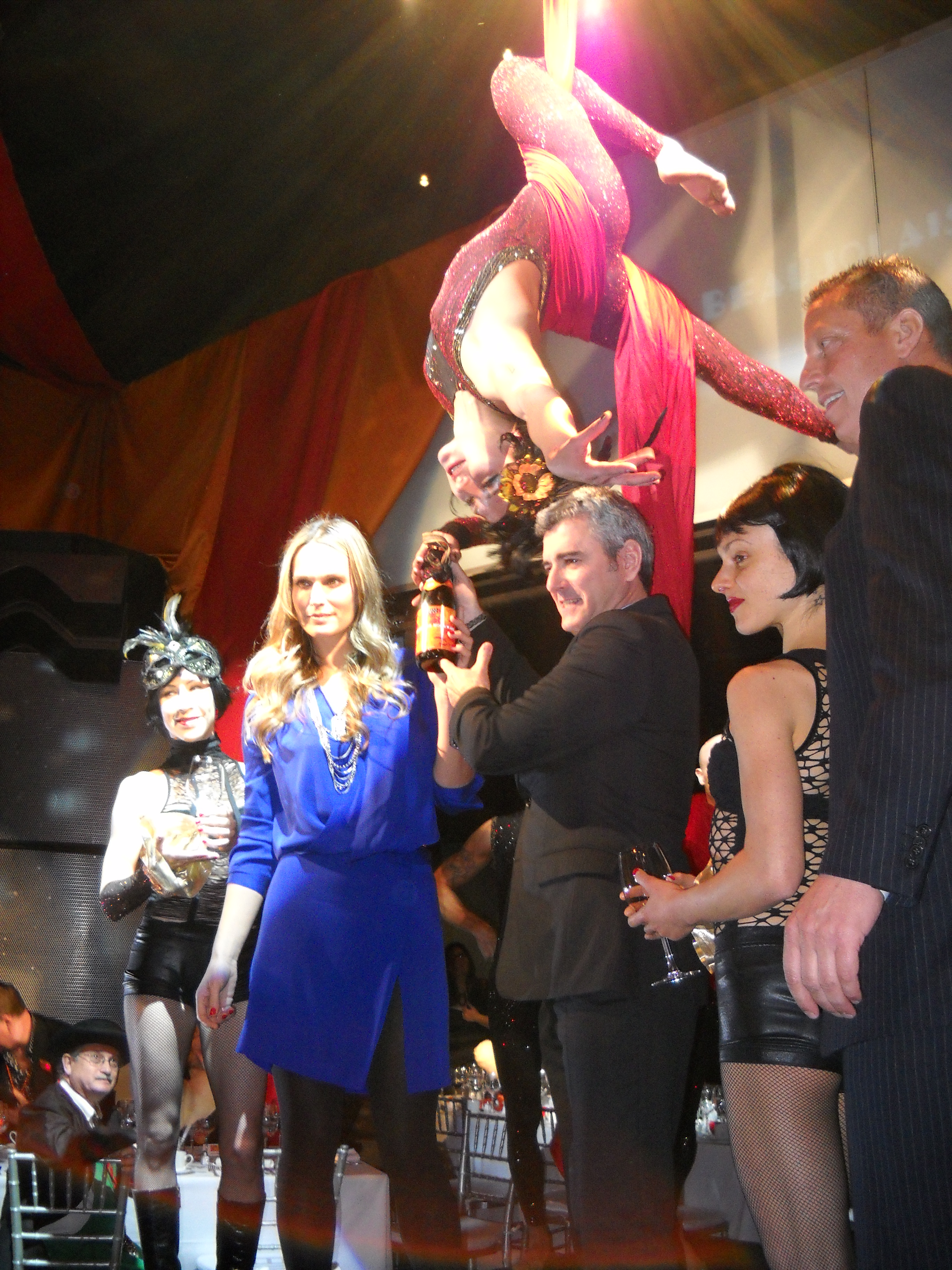
Molly Sims, Franck Duboeuf and Peter Deutsch welcome the Georges Duboeuf Beaujolais Nouveau 2010...cirque style.

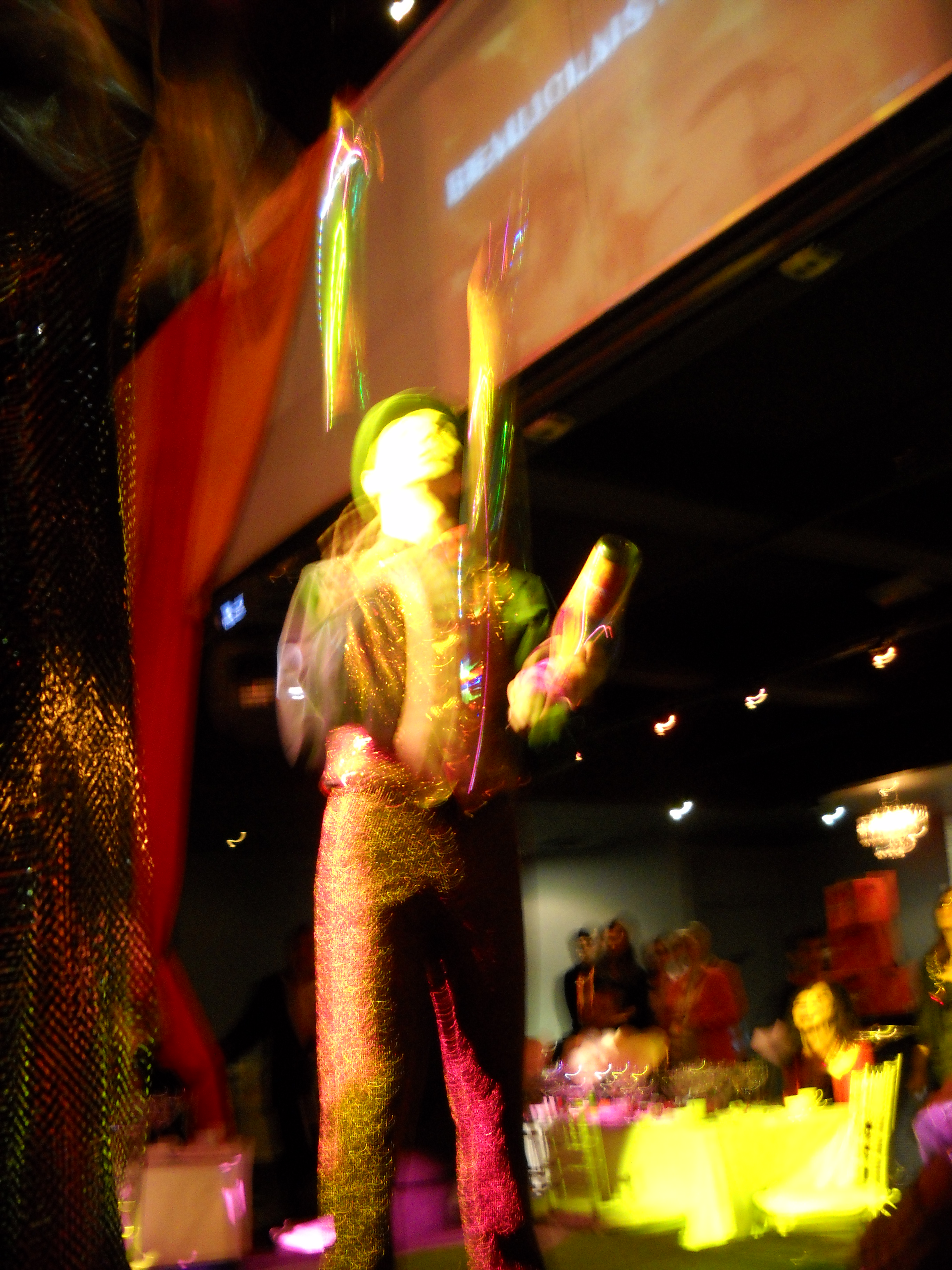
Like clockwork, the Beuajolais Nouveau arrived on the third Thursday of November, attended by a circus-style celebration for the 2010 harvest. Actress, model and jewelry designer, Molly Sims, was on hand to toast the first glass from Georges Duboeuf, with George’s son, Franck, serving as Master of Ceremonies under the big top at District 36. The luncheon, prepared by chef Marc Murphy (of Landmarc and now also Benchmarc catering), was accompanied by the Beaujolais Nouveau 2010 and the Morgon Jean Descombes 2009. Other Beaujolais crus were available at the self-pour bar during the initial reception. Overhead, attendees were treated to aerialists dangling from silks, while jugglers, magicians and contortionists dazzled at eye-level.

Beaujolais, whether Nouveau or not, is a wine made in the southernmost part of Burgundy from the Gamay grape. While Gamay is not most people’s favorite grape variety — often associated with prejorative aromas of bubble gum and banana, this year’s wine showed none of these characteristics and was simply pleasing with its ripe cherry fruit and soft tannins. And, it went nicely with the meal.

As a wine, Beaujolais Nouveau has both its share of proponents and detractors, but for me, it is more about the symbolism than the wine itself. Here we are in November, only a few weeks after the harvest and we have much to be thankful for and much to celebrate. Along comes Beaujolais Nouveau, ready to honor the year’s work. Most wines are still preparing for the party (and may take years to do so as they dress in layers of oak, vanilla and toast), but Beaujolais Nouveau and other wines produced in a nouveau-style are not only fully dressed, they are prepared to dance until dawn.

No, it is not a wine on which to meditate, but sometimes all you need is a simple glass of wine, good food and good friends in order to sit back and enjoy the good life. Salut!

Juggler at Beaujolais Nouveau celebration.