Grand Cru Grapevine: From Potatoes to Parker Points (July 2010)

 We hope you enjoyed the holiday weekend and are having a great summer!

We continue to be busy, but have no complaints. In late June, Tracy participated in a video shoot for a segment of Wine Portfolio, an online television show that airs on CNBC. The segment focused on Wine Shopping in New York City, with stops at Sherry-Lehmann, Bottle Rocket and Chelsea Wine Vault. Host Jody Ness and the entire crew were a pleasure to work with. The episode won’t air for several months, but we’ll keep you posted when we have more details.

This month, Tracy was asked to serve as the judge for a special event celebrating Caymus’ Conundrum, which was paired with a range of take-out cuisine in search of the best match. This wine is a “proprietarily secretive blend of California white grapes”, drawing from Sauvignon Blanc, Muscat Canelli, Chardonnay and Viognier, and a combination of stainless steel and barrel fermentation that results in an unusual, but wonderful wine. 

Later this month, Tracy will present “Born in the USA: American Sparklers” at the Society of Wine Educators’ annual conference in Washington, D.C.

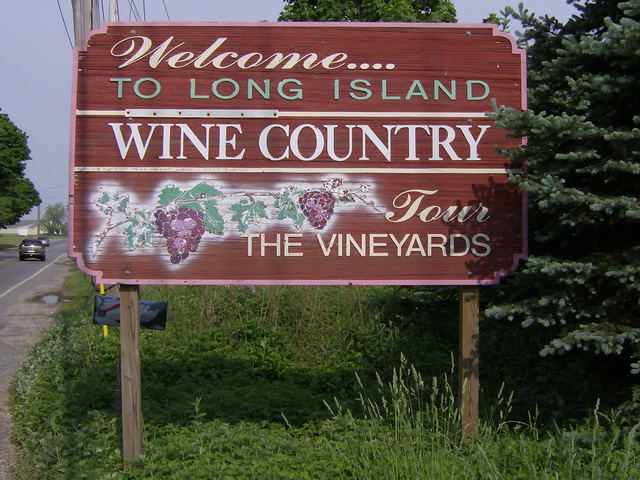
And, back at home, we invite you to save the date for the first HARVEST Wine Auction & Celebration of Long Island’s East End, September 24-25, 2010. Grand Cru Classes will offer its “From Mystery to Mastery” class (Saturday, September 25, 11:00 AM -1:00 PM) through the event’s Wine Salon, as part of this two-day extravaganza, which culminates in a Grand Tasting and Gala Dinner at Wolffer Vineyards.

Many of our readers are familiar with the East End and understand what there is to celebrate, but for those that are less familiar, we share some of the history and current state of affairs of the East End with you this month.  Drink wisely and well,
Tracy Ellen Kamens, Ed.D., DWS, CWE
CEO: Chief Education Officer
       and
Jared Michael Skolnick
COO: Cork Opening Officer  


From Potatoes to Parker Points
Agriculture has long been a feature of the North Fork, with the potato industry achieving prominence, along with cauliflower and other crops. But, times have changed. Today, the potato fields have given way to vineyards and vacationers. 

With the first vineyard planted in 1973 by a young, starry-eyed couple fresh out of Harvard, the first seeds (or rather vines) of the Long Island wine region were sown. That couple, Louisa and Alex Hargrave, were true pioneers, bringing vision and bravado to their newly purchased farm. Much like the early English settlers that preceded them, Alex and Louisa came to the task with limited knowledge, but unlimited passion and drive, pushing them to succeed where others were sure they would fail. Before long, they were joined in their efforts by other adventurous souls, all of whom were in love with wine. As time flew by, a fledgling wine region was born, eventually becoming an internationally recognized producer of quality wine.

The region now garners consistent coverage in the New York Times with Howard Goldberg’s bi-weekly column. Howard’s colleague, Eric Asimov, has lauded Long Island’s efforts in his own columns with increasing frequency, for both current and vintage wines. Additional publicity has been accomplished with big spreads in Wine Spectator and other glossy magazines, giving greater credibility to the region. Building on their accomplishments, the return visit of Robert Parker’s Wine Advocate, long considered to be among the most influential (albeit controversial) wine publications, proved to be a boon with all wines scoring a minimum of 84 and 23 wines earning scores of 90 or above (the highest score was 92). Across the pond, Decanter magazine has recognized the region with profiles of wineries and medals awarded to Long Island wines.Today, the Long Island wine region is home to 60 vineyards and 51 wine producers (35 of which are open to the public) and has garnered repeated praise in both consumer and trade publications. Moreover, the bucolic region has retained much of its rural charm, making it a true escape from the hustle and bustle of New York City, located only two hours away.

The wineries welcome visitors to their tasting rooms, each of which has its own special atmosphere. Guests can generally taste through a flight of wines for a small fee or can often choose to buy wine by the glass to enjoy in the wonderful surroundings. Of course, wine by the bottle and case is available for sale as well. Nearly year-round, but particularly during season (Memorial Day through Thanksgiving), the wineries play host to a wide variety of activities from jazz musicians and blue grass bands to dog shows, comedy festivals and other special events.

>Learn more about the region’s wineries through the Long Island Wine Council’s website.

Tasting Notes

Brooklyn Oenology Viognier 2007, North Fork of Long Island (NY), USA, $18.00
Owner and winemaker Allie Shaper is also the new face behind the wines at Comtesse Therese. Aromas of melon and spice give way to a dry palate with ripe tropical fruit and melon notes.

Shinn Estate, Estate Coalescence 2009, North Fork of Long Island (NY), USA, $14.00
Restaurateurs turned wine producers, David Page and Barbara Shinn produce elegant wines that are extremely food-friendly. A blend of Chardonnay, Sauvignon Blanc, Merlot Blanc and Riesling, this wine has a pronounced nose with a dry palate, showing grassy notes with citrus and a hint of floral and spice.

Corey Creek Vineyards Domaines CC Rosé 2007, North Fork of Long Island (NY), USA, $18.00
Corey Creek, a sister property to Bedell Cellars, has always been known for its rosé. Bright berry aromas greet the nose;in the mouth, it is dry with fruity, fresh berries that persist on the palate.

Jason’s Vineyard Merlot 2000, North Fork of Long Island (NY), USA, $14.95
A second generation winemaker on the North Fork, Jason is the son of Dr. Damianos, owner of Pindar and Duck Walk Vineyards. At 10 years old, this wine has an aged bouquet of dried fruit and flowers. It is dry, with medium+ acidity, dried berries and cherries, spice and oak. 

Castello di Borghese, Merlot 2005, North Fork of Long Island (NY), USA, $20.00
The original Hargrave vineyard and winery was sold to Prince Marco and Princess Ann Marie Borghese in 1999 where they continue the legacy started in 1973. This wine shows notes of meat and fruit on the nose with black cherry, plum, oak and meat flavors that linger throughout the long length.

Madeira: Perhaps a true desert island wine

Courtesy Vinho Madeira - IVBAM


OK, yes, I wrote about desert island wines previously, but what if you were truly stranded on a desert island? You certainly wouldn’t have temperature-controlled wine storage available to you and eventually your wines would spoil in the heat. But what about a wine that was designed to withstand the heat and would even continue to improve on the voyage to said desert island? Madeira — a wine created to survive the long sea voyage from Europe to the New World– would be the perfect wine for such circumstances. 

Madeira is a volcanic island off the coast of Portugal and is the home of Madeira wine. Here, Tinta Negra Mole, Sercial, Verdelho, Bual and Malmsey (aka Malvasia) are grown on the steep slopes of the island. All, but the Tinta Negra, are white grape varieties.  The wine itself owes its taste and character to its fortification (through the addition of a neutral grape-based spirit similar to Port or Sherry) and its prolonged exposure to the heat. The fortification interrupts the fermentation process and, depending upon when it occurs, generally prevents some of the sugar from being converted into alcohol, thereby creating a wine with some sweetness. 

Four styles of wine — dry, semi-dry, semi-sweet and sweet — are produced, corresponding to the grape variety used. Sercial is the driest style, followed by Verdelho and Bual, with Malmsey being the sweetest. However, despite being labeled as “sweet”, these wines are drier than you might think and can actually pair nicely with savory foods, such as cheeses, wild game and nuts, as well as, if not better than, desserts. 

After the fortification, the wine is subjected to high temperatures in either a heated, concrete vat (an estufa) for several months or through prolonged storage in oak casks in naturally warm rooms (canteiros) over several years, recreating the conditions found when the wine was shipped over lengthy distances. Given the slow and steady process, the Canteiro method is considered to be of higher quality and thus generally reserved for the Sercial, Verdelho, Bual and Malmsey grapes, while Tinta Negra Mole are most often heated in Estufagem. A minimum of 85% of the grapes must be from the named grape variety if it is stated on the label. 

With its ability to withstand the heat, Madeira would do well in the sans-refrigerator environment of the desert island. For those of us on Manhattan island (hot right now, but fortunately, not under desert conditions) as well as elsewhere in the United States, Madeira is a perfect wine to enjoy now. And, as some of my colleague, Rebecca Chapa, has pointed out, it is timely too, as George Washington toasted the first Independence Day back in 1776 with a glass of Madeira. 

A June tasting, sponsored by the Madeira Wine, Embroidery and Handcraft Institute (IVBAM), showcased some of the top Madeira producers, including Blandy’s, Broadbent, Henriques & Henriques, Justino’s, Pereira d’Oliveira and Vinhos Barbeito. Here are a few tasting notes from that event: 

Henriques & Henriques 10 Years Old Verdelho, Portugal
Dating back to 1850, Henriques & Henriques is the largest independent producer and shipper of Madeira. Medium mahoghany in color with aromas of honey, burnt orange and oxidation, this wine is off-dry with rich flavors of orange peel, honey and raisin that linger in its long length.  

Vinhos Berbeito Historic Series Malmsey New York Special Reserve, Portugal
Established in 1946 by Mario Barbeito, this Madeira producer has a shorter history than many other firms, but has created an historic series based on the styles of wine preferred by various colonial cities. Colonial New Yorkers preferred a richer style of wine compared to their colleagues in Charleston and Savannah, with coffee, toffee and raisin notes on the nose and medium-sweet palate, culminating in long length. 

Broadbent Madeira Malmsey 10 Years Old, Portugal
Bartholemew Broadbent imports Madeira wines under his own label. This sweet wine has aromas of burnt sugar, oxidation and dried oranges, with flavors of spice, dried fruits and dried herbs on the palate. 

D’Oliveira Reserve Sercial 1969, Portugal
A small producer, Pereira d’Oliveira is known for its large stocks of old and rare wines. This older vintage is still showing some color with notes of burnt sugar and honey. It is dry with oxidized notes, honey and spice on the palate. 

Blandy’s Madeira Vintage Bual 1968, Portugal
Blandy’s was named for a soldier who landed on Madeira in 1808 and eventually settled on the island as a general trader in 1811.  This vintage wine is pale in color, but still shows hues of mahoghany. The nose is rich and deep with notes of caramel and burnt sugar. On the palate, it is medium-sweet, with a hint of oxidation, caramel, burnt orange and treacle flavors that persist.

Greek wines embraced by NYC and its wine stores

It used to be that one had to venture to Queens’ Greek neighborhood to find a decent selection of wines from Greece and similar countries. These wines were sold almost expressly for ex-patriots who wanted a taste of wine from the old country in their new homeland. However, Greek wines have become more visible in the wine world, due to the increased focus on quality and influx of new, young winemakers.

In northern Greece, up and coming winemakers Evripidis Katsaros from Katsaros Estate; Thrassos Giantsidis from Estate Gerovassiliou; and Annegret Stamos from Biblia Chora are establishing high quality reputations both at home and broad. Their dry and windy area produces mostly whites, but, beautiful red wines are also being made.

With training in Bordeaux, Giantsidis has applied French winemaking techniques to indigenous grape varieties, while Katsaros has experience in Burgundy. Annegret is originally from Germany, bringing yet another unique perspective to the region. Wines produced in this region have good acidity, but less so than the same grape, such as Assyrtiko, grown in Santorini. While import markets clambor for Greek varieties, the local market wants the diversity of international varieties as well, which accounts for the use of both in these wines. The importer advised that these wines may be found at Acker Merrall & Condit, among other outlets in New York City. For more information on these wineries, visit Cava Spiliadis.

As further evidence of the increased interest in Greek wines, Chelsea Wine Vault has just announced the addition of a new Greek wine section. Their recent newsletter highlighted a number of wines including a nice range of affordable reds and whites. The store has not yet added “Greece” to its search by region function, but it is likely an oversight soon to be corrected. Chelsea Wine Vault will host a Greek wine class on July 13, 2010 from 6:30 – 8:00 PM at the store. Tickets are $45/ person and may be purchased online.
75 Ninth Avenue, at 16th Street, New York, NY

In addition, Picada y Vino  will offer a free tasting this weekend of a Greek wine and a Lebanese wine: Saturday, June 26, 2010 from 4:00 – 7:00PM. Wines include Greece’s Domaine Tselepos Mantinia Moschofilero 2008 (a white produced from 100% Moschofilero) and Lebanon’s Château Kefraya Les Bretèches (a red blend of Cinsault (70%), Cabernet Sauvignon (10%), Syrah (5%), Grenache (5%), Tempranillo (5%), Carignan (3%) and Mourvèdre (2%). These two featured wines will be 10% off, all day. 327 Fifth Avenue, Brooklyn, NY, 11215

White & Red from the Med

I’ve been travelling around the Mediterranean lately, all without leaving home. Recent wine events took me from Israel and Turkey to Greece. While these aren’t the first places that come to mind when thinking about wine-producing countries, they each have a long history of viticulture and vinification and I was impressed with both the producers I met and the wines I tasted.

I kicked off the tour at a seminar debuting ROM from Israel. This wine is a joint project between Yarden’s winemaker Victor Schoenfeld and Zelma Long. Zelma was initially brought in to help with viticultural issues, but as she and Victor got to know each other better, a wine collaboration seemed to be a natural progression. This new wine is a blend of Cabernet Sauvignon, Merlot and Syrah. Participants at the event had the opportunity to first taste through barrel samples of the individual wines, which truly illustrated how the three grapes come together to create a much greater whole. We next tasted three different vintages of the wine — 2006, 2007, and 2008, which highlighted the evolution of the wine in bottle. With limited production and its association with Zelma Long, this wine is likely to achieve a strong following.

Skipping across town instead of across the sea, I dined at Le Cirque with producers from Kavaklidere, Turkey’s largest winery, along with Mehmet Yorukoglu, president of House of Burgundy, the winery’s importer. Showcasing both indigenous and international varieties, the wines included a nice, crisp rose (Egeo Rose 2009) produced from Cal Karasi, Syrah and Grenache, with whites featuring Sauvignon Blanc, Narince and Chardonnay and reds made from Kalecik Karasi, Okuzgozu and Bogazkere. Working with French oenologist, Stephen Derencourt, the winery has seen significant growth and, more importantly, a signficant focus on quality, over the past several years. The wines were impressive, with a nice range of aromas and flavors distinguishing each wine.

The final stop on my tour was northern Greece with lunch at Marea with Evripidis Katsaros from Katsaros Estate; Thrassos Giantsidis, export manager from Estate Gerovassiliou; and Annegret Stamos, export manager from Biblia Chora. This dry and windy area produces mostly whites, but, over lunch, attendees tasted a wide range of both white and red wines. With training in Bordeaux, Gerovassiliou’s winemaker Evangelos Gerovassiliou has applied French winemaking techniques to indigenous grape varieties; similarly Katsaros has experience in Burgundy. Wines produced in this region have good acidity, but less so than the same grape, such as Assyrtiko, grown in Santorini. While import markets clambor for Greek varieties, the local market wants the diversity of international varieties as well, which accounts for the use of both in these wines.

TasteCamp East 2010 – A view from the vines

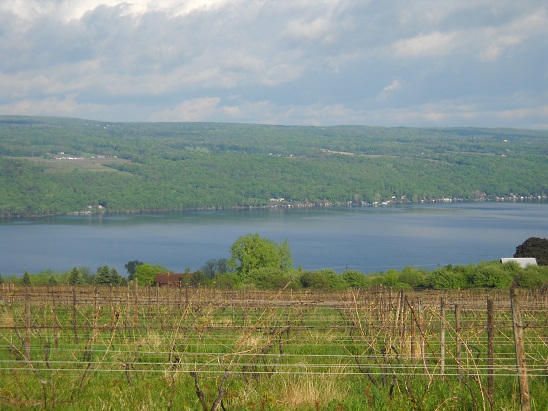
Argetsinger Vineyard on Seneca Lake, Finger Lakes wine region

I spent this past weekend at TasteCamp East, which turned out to be a great event and a nice return “home” for me.

This was our first full participation in TasteCamp East since last year’s event was held on Long Island and, as residents of the region, felt that it would be duplicative to attend the various tastings. However, we did host the Saturday night dinner, which permitted us to meet most of the participants.

When we learned that the 2010 TasteCamp East would be held in the Finger Lakes, we were excited to be visiting all of the wineries. I attended Cornell University in Ithaca, NY, which is located within the Finger Lakes wine region, but had not really explored the region.  My sole exploration took place during Senior Week when I took a half-day wine tour offered by the College, which took us to Taylor and Bully Hill.

I credit these initial winery visits with whetting my appetite for wine at that time in my life and, in fact, found myself hosting a wine party that following summer. Each guest was asked to bring a bottle of wine, which I supplemented with a visit to our local wine store. I felt like a kid in a candy store, not knowing what anything was, but excited to be picking up a wide range of wines to expand my knowledge and palate. Even my mother was caught up in the wine frenzy that summer, foresaking White Zinfandel in favor of Pinot Grigio. And, with that, the world of wine was suddenly open…

Fast forward to this weekend’s festivities, which found us visiting wineries along Keuka, Seneca and Cayuga Lakes and tasting wines produced from vinifera and hybrid grape varieties. As an additional backdrop to the weekend, the Wine Century Club, an organization that lauds the diversity in grapes, celebrated its birthday on Friday, May 7. I was very impressed with the majority of the wines tasted and enjoyed the opportunity to meet a number of the winemakers, winery owners and vineyard managers, along with other winery employees.

While the focus was on wine, I met several people connected to Cornellover the course of the weekend and was pleased to hear of the positive impact that Cornell has had on the industry, both through the advice given by the Experimental Station in Geneva as well as its graduates, most of whom pre-dated the formal Viticultural program. My alumni pride, coupled with nostalgia for the area, prompted a brief  campus visit on the way out on Sunday evening, where I stood “far above Cayuga’s waters” remembering the day I first fell in love with Cornell.

Grand Cru Grapevine: The Magic of Monterey (May 2010)

May finds us busy as a bee with Spring in full swing and Mother’s Day just around the corner. And, in a few weeks, the official launch to the Summer 2010 season, Memorial Day Weekend, will be upon us.

On May 18, Tracy will begin her 5-week Italian wine class at NYU’s School of Continuing & Professional Studies (Register through NYU now). Then, on May 20, she’ll head up to Poughkeepsie to present on the Long Island wine region for the It Was a Good Year tasting group. Next, it’s back to the North Fork on May 21 for a class presented in partnership with the Town of Riverhead’s Department of Recreation.

Finally, we invite you to join us From Vine to Wine as we kick-off our public schedule with our first class scheduled for Saturday, May 29, 2010 at 11:00 AM and a second class set for Sunday, May 30, 2010 at 1:00 PM (Mad about Merlot). 

On Thursday prior to the holiday, Hampton Jitney riders may find a Grand Cru Classes gift certificate at their seat, but you already have the inside track as a loyal reader of the Grand Cru Grapevine. Accordingly, we are pleased to extend the same offer to you – take 20% off a private event scheduled in 2010 or buy one ticket to a public class, get one free.

While you are waiting to head out to the Hamptons or the North Fork, you can sneak off to California’s Central Coast for a virtual visit of its vineyards with this month’s focus on “The Magic of Monterey.”

Drink wisely and well,

Tracy Ellen Kamens, Ed.D., DWS, CWE

CEO: Chief Education Officer

and

Jared Michael Skolnick

COO: Cork Opening Officer

———————————————

THE MAGIC of MONTEREY

Like many places in California, Monterey is a magical place. Known as the salad bowl of the U.S., the county is home to numerous farms and driving along the highway one is privy to signs announcing, “Now growing…lettuce (or some other produce)”.

We had the great pleasure of visiting Monterey in 2007 when we attended the SWE annual conference being held there. Arriving at San Jose airport (which is a much cheaper flight than flying directly to Monterey’s regional one), we picked up our rental car and got ready to hit the road south. To truly put us in the California spirit, we had splurged on a convertible and, as soon as we were settled into the car, the top came down. Our options included the interior highway U.S. 101 or the coastal U.S. 1 (aptly named the Pacific Coast Highway). We chose the latter and proceeded to drive accordingly. While in the San Jose vicinity, the thermometer in car read 89oF and the breeze felt great flowing through our hair. This was soon to change in a surprising way.

Upon reaching U.S. 1, we drove south toward our destination and watched the temperature drop precipitously. By the time we were at our destination, it was 65oF. Quite a difference! The drive itself is only about an hour, so what accounts for the vastly different climates? Mountains. And, not only mountains, but their orientation to the Pacific Ocean. The Central Valley of California is shielded from the cold Humboldt Current off the Pacific Ocean due to the (mountain range) that runs north-south or, in other words, parallel to the coast. These mountains insulate the interior from this cooling influence and keep the temperatures high. Conversely, the coast is open to the current and significantly alters the temperature.

Moreover, when you actually get to Monterey, there is a gap in the mountains where they begin to run east-west or perpendicular, rather than parallel, to the ocean. This mountainous orientation plays a big role in the Monterey wine region, with the warmer air at the south-western end of the valley creating a vacuum that pulls the cooler ocean air downstream. Accordingly, the area of Santa Lucia Highlands is hospitable to cool-climate grape varieties, namely Pinot Noir and Chardonnay, but also Riesling and Pinot Grigio. Temperatures range from 65oF-75oF with minimal temperature shifts and a long hang time-harvest is often as late as November. The warmer areas of southern Monterey and the Hames Valley are home to Cabernet Sauvignon and Rhone varietals respectively, which are able to ripen sufficiently given the higher temperatures found there.

Jerry Lohr of J. Lohr Vineyards noticed this unique terroir, particularly in the Arroyo Seco area, back in the 1970s and is among the pioneers in the region. More recently, others have recognized the potential and have established their own vineyards and wineries. Single-vineyard wines are particularly prized with a number of small, named vineyards earning stellar reputations. Gary’s, Talbott, [look up info]. Of course, wines from the wider Monterey County appellation are also produced and can be quite excellent as well. All in all, there are a wide range of microclimates, more than 55 varieties grown and ideal growing conditions to create balanced wines, resulting in true magic in a glass.

TASTING NOTES

Loredona Wine Cellars, Riesling 2007, Monterey, CA, $12.00
This wine shows lime, floral and peach blossom aromas. On the palate, it is slightly off-dry with vibrant acidity and flavors of peach, lime and floral notes, culminating in its long length. 10,000 cases produced.

Wente, Riva Ranch Chardonnay 2008, Arroyo Seco, CA, $20.00
In the 1930s, Wente was the first producer to label a wine as Chardonnay; today, Karl Wente is the fourth generation of his family to run the winery. This wine was barrel fermented and then aged for eight months in a combination of French, American, Eastern European and neutral oak. Aromas of spice, apple peel and a slight note of butter greet the nose. It is dry, with medium-full body and medium acidity. The palate offers up apple and well-integrated oak flavors of butterscotch, spice and an undercurrent of toothpick, finishing with long length.

Carmel Road, Pinot Noir 2007, Monterey County,CA, $16.50
This wine spent nine months in 98% French oak, 21% of which was new and 2% in American oak, 100% of which was new. Displaying raspberry, smoke and herbal aromas, this wine is dry with good acidity and low tannins. Notes of raspberry, cherry and smoke persist throughout its long length.

Lucienne Vineyards, Doctor’s Vineyard Pinot Noir 2007, Santa Lucia Highlands, CA, $35.00
Showing nice complexity, this wine has aromas of earth, herbal, raspberry and floral notes. Barrel aged for 14 months prior to bottling, its dry palate is very fruity with raspberry and herbal notes, coupled with an earthy undercurrent and balanced with bright acidity and long length.

Galante Red Rose Hill Vineyard Cabernet Sauvignon 2007, Carmel Valley, CA, $35.00
Jack Galante, owner and winemaker, is the grandson of the founding mayor of Carmel. Aromas of blackberry, slight oak and slight eucalyptus dominate the nose. The dry, full-bodied palate shows balanced acidity and ripe tannins with notes of blackberry, oak and smoke.
A Tale of Two Lunches

I woke up on a Monday morning in March with a reasonable agenda — an Italian wine tasting followed by a portfolio tasting. Thus, once I dragged myself out of bed (Mondays are the worst and rainy Mondays are even more horrible), I presumed that I would attend the two events, head home and get some work done in the afternoon (but, we all know about the best laid plans…).

I left our apartment at 10:00 AM to ensure a prompt arrival at the International Culinary Center (formerly known as the French Culinary Institute), which resulted in my being the first to arrive. The weather caused many attendees to be late and necessitated a late start to the event. However, after the delay, the event hit the ground running. It was a small, but dedicated group there to learn from both Adolfo Folonari of Ruffino and Cesare Casella of Salumeria Rosi on the theme of terroir.

Adolfo shared a brief history of Ruffino, noting that the company has been family owned for over 130 years, having been founded by two cousins. Adolfo’s family acquired the company in 1913, continuing the founders’ legacy and now maintains seven estates in the Tuscany region.  He then presented four wines — three of which were Chianti appellations and one Brunello di Montalcino. The wines were very good and showed the diversity within the Ruffino portfolio from the fresh and fruity Ruffino Chianti Superiore DOCG 2008 ($12.99 SRP) to the more complex Ruffino Riserva Ducale Chianti Classico DOCG 2006 ($24.99 SRP) and the modern Ruffino Santedame Chianti Classico Riserva DOCG 2006 ($33.00 SRP).

Participants then had an opportunity to taste the wines again, this time paired with salumi (cured meats), presented by Cesare, who wore a red chef’s coat, with a sprig of rosemary taking the place of a pocket-square. The pairings were well-received, but of greater interest to me, was learning about the effect of terroir on this type of cuisine. For example, Cesare explained that in Alto Adige, the climate is too cold to salt cure the meat and consequently, they use a cold smoke instead. Similarly, in Calabria, smoking is used because it is too hot to use salt curing. In addition, the breed of pig also differs from region to region, affecting the final product.

We then moved from the formal presentation to the luncheon where guests enjoyed three additional salumi and four other Ruffino wines. We were particularly impressed with the Ruffino Lumina Pinot Grigio Venezia Giulia IGT 2009 ($9.99 SRP), which had vibrant acidity and good fruit concentration, from Ruffino’s property in Collio (Alto Adige). After the salumi were cleared, the menu included beans and tuna as well as short ribs with mushroom risotto, followed by vanilla panna cotta. We were seated at round tables and played a sort of musical chairs, with each table getting a chance to chat with Adolfo and Cesare for one course of the meal, as they made their way around the room.

During lunch, I received a phone call from the PR Coordinator at W.J. Deutsch, letting me know about an event that was taking place as she spoke. It sounded interesting, plus I had yet to get to the venue, sd26, so I switched gears and headed over to meet with Stefano Massa of Villa Massa.

I arrived at sd26 and was warmly greeted by Barbara Scalera, but, as I had been unable to find the restroom before departing ICC, I explained that I needed to first go to the Ladies’ Room before she and Stephano could have my undivided attention. The damp weather had wreaked havoc on my hair, but fortunately, I didn’t scare my hosts. I did my best to make myself presentable and was then led to a private dining room upstairs.

I was seated next to Stefano who promptly launched into a story about his journey into Limoncello. He noted that he and his brother, Sergio, were pioneers in crafting quality Limoncello of Sorrento. Stefano’s family had been producing Limoncello at home for family consumption, the recipe for which had been passed down for generations. Their guests really enjoyed their Limoncello and Stefano and Sergio saw an opportunity to produce the liqueur on a commercial basis. Most importantly, they are committed to maintaining the terroir and consequently only use natural ingredients, most notably the Sorrento Oval Lemon, which has had its own Protected Geographical Indication (PGI) since 2000.

About three-quarters of the way into his monologue, food was served, but the first order of business was to taste the Limoncello. Stefano first served it to me cold and then at room temperature. I was advised to first smell the liqueur before taking some onto my tongue and slurping in some air, in a similar fashion as one tastes wine. The fresh lemon aromas were obvious and even more so with the room temperature specimen.

Risotto was the dish of the day, making a second appearance, this time with scallops that had been marinated in the Villa Massa Limoncello. The second course was veal testina, which I didn’t particularly enjoy (the recipe calls for 1 veal head), but the dessert course was lovely. The Italian pastry, Baba, had been prepared with the Limoncello in place of the more traditional rum and was accompanied by a refreshing Limoncello sorbet. I also liked the use of the Limoncello in two cocktails I was served — the first being a blend of Limoncello and tonic water (I actually really like tonic water, so this was a nice “twist” for me). The second cocktail was a modified Mimosa, with Limoncello standing in for orange juice, resulting in a less sweet version of this popular brunch drink.

At a time when it seems that every spirit producer (and some wine producers) is trying to show the versatility of its product by using it as an ingredient, in cocktails or both, I found the Villa Massa Limoncello to be one of the more successful in this arena.

Having now eaten two lunches in a single day, I thanked my hosts and departed the restaurant. Unfortunately, it was now 4:30 PM and I would not have time to make it to the Dreyfus Ashby portfolio tasting as it ended at 5:00 PM and it would take at least that much time to travel to Ardesia Wine Bar, where it was being held. As I said, the best laid plans…, but of course, it was a great (if not fattening) day of tasting.

Grand Cru Grapevine: Where the Streets Have No Name (April 2010)

Has spring sprung? Writing in mid-March, it certainly feels like it. After a brutal winter, we are itching to get out on the road again and breathe in the fresh air of wine country. A vicarious visit awaits you in our newsletter this month as we explore the numerically-named routes found within the wine regions of Napa, the North Fork, Paso Robles and Santa Barbara. 

Less vicariously, we invite you to hit the road, Jack (or Jill), and head east for our fun and festive wine and chocolate pairing event, held in conjunction with our next-door-neighbor, Macari Vineyards, and Chokola’j. Learn about Sex, Wine & Chocolate when Tracy will jointly present with relationship coach and sex educator, Marcia Baczynski and Susan Kennedy, co-founder of Chokola’j. Join us April 24, 2010 (this is a date change from what was previously announced) from 3:00-5:00 PM; $45.00/person. Kindly RSVP to Kimberly Grimmer at Macari via e-mail or phone (631-298-0100). 

If a trip out east is too far to go, you can catch Tracy in her NYU class, Italian Wines–From North to South, on five consecutive Tuesdays from 6:45-8:45 PM, beginning May 18. Register through NYU now. 

We are also thrilled to announce the launch of Tracy’s new website: It’s a Winederful Life, where she will endeavor to share her tales of “living la vida vino.” 

Drink wisely and well, 

Tracy Ellen Kamens, Ed.D., DWS, CWE 

CEO: Chief Education Officer 

and 

Jared Michael Skolnick 

COO: Cork Opening Officer 

———————————— 

WHERE THE STREETS HAVE NO NAME 

Given that wine regions don’t start out as full-blown wine regions, the touristy wine trails that eventually spring up frequently don’t have idyllic, wine-themed names for the roads and routes that bring visitors from tasting room to tasting room. Rather, the main drag that winds its way past winery after winery is more often like the U2 song – a place “where the streets have no name,” bearing instead the number of the local highway or route. 

While you might have been advised to ‘get your kicks on Route 66,’ those visiting the Napa Valley will be best off if they stick to the parallel wine trails along Route 29 and the Silverado Trail. The former is considered to be the more bustling and trafficked than the latter, but both are home to wonderful wineries lining the roads from Carneros to Calistoga. The highway of Route 29 has lent its “no name” to Vineyard 29, which released its first vintage in 1992. In 2000, Vineyard 29 was acquired by Chuck and Anne McMinn, who subsequently expanded the single vineyard into a full-scale winery, known primarily for its Cabernet Sauvignons. 

Across the country on the North Fork of Long Island, the two parallel roads are Route 25 (aka Main Road) and Route 48 (aka as both “the North Road” and Sound Avenue). Here, the climate is dramatically different – maritime vs. Mediterranean, but the wine trail has also served as inspiration for the eponymously named Vineyard 48. Originally Bidwell Vineyards, Vineyard 48 took on its new name in 2005 when the Sicilian-born, Rose Pipia purchased the property. Over the past 5 years, significant investments in the vineyard and winery have been made and today, the winery is known for its well-crafted wines. 

Back in California, visitors to Paso Robles should travel along Route 46, which meanders past many of the wineries located in Paso Robles West, and then, after crossing Highway 101, takes you along the east side of the region. On the west side of town, the vineyards and winery of Tablas Creek Vineyard are located a little over 8 miles north of Route 46. Founded by the Perrin family of Château de Beaucastel in France’s Chateauneuf-du-Pape and wine importer, Robert Haas, Tablas Creek creates Rhone-style wines – both single varietal and blends – following organic viticultural practices. 

Still further south, California’s Santa Barbara County is home to a diverse wine region spanning from the Santa Maria Valley to Santa Barbara proper. With its unique microclimate, wineries nestled in the Santa Rita Hills specialize in the Burgundian varieties of Pinot Noir and Chardonnay and are found along Highway 246. Here, vineyard manager and winemaker, Wes Hagen tends to the vines grown at Clos Pepe, adhering to sustaintable agricultural methods, including the use of a flock of sheep to assist with weeding. 


TASTING NOTES 


Clos Pepe, Vigneron Select Pinot Noir 2007, Santa Rita Hills, CA, $54.00
Although an appointment is required, it is well worth the effort to travel to this unique property. Wes will greet you himself, providing you with a personal tour of the vineyards, followed by a tasting in his parents’ beautiful home. On the nose, this wine has aromas of cherry, berry, dust and slight oak. Medium-bodied, with vibrant acidity, the wine shows flavors of strawberry, vanilla and a hint of oak, along with minerality in the long finish.

Road 31, Pinot Noir 2006, Napa Valley, CA, $38.00
Owner and winemaker Kent Fortner’s parents both grew up on family farms in rural Kansas, not far from Road 31, a route he has traversed in his 1966 Ford pick-up truck too many times to count. With cranberry, floral and herbal aromas, this medium-bodied wine is dry with medium acidity and bright fruit flavors of raspberry, cranberry and a hint of baking spice.

Tablas Creek Vineyard, Cote de Tablas Blanc 2008, Paso Robles, CA, $25.00
This blend of 42% Viognier, 26% Roussanne, 21% Marsanne and 11% Grenache Blanc is pressed and fermented in stainless steel to preserve the fresh fruit flavors of the wine. Floral and citrus aromas are joined on the palate by minerality, spice and tropical fruit flavors that persist throughout the wine’s long length.

Vineyard 29, CRU Cabernet Sauvignon 2007, Napa Valley, CA, $54.00
With grapes sourced from throughout the Napa Valley, the Cru Cabernet Sauvignon was aged in French oak for 18 months, 50% of which was new oak. Aromas of red and black fruits and floral notes greet the nose, while ripe blackberry, spice, smoke, oak enliven the palate, culminating in medium+ length.

Vineyard 29, Estate Cabernet Franc 2007, Napa Valley, CA, $140.00
The Cabernet Franc grapes for this wine hail from the original property, planted in 2000, and, while initially planted to be blended in with the Cabernet Sauvignon, were found to produce a wonderful wine all on their own. The 2007 saw 20 months in French oak, 90% of which was new, with 146 cases produced. Black fruit, oak and herbal aromas are found on both the nose and palate, along with a hint of spice and noticeable, but ripe, tannins. 


From here to Burgundy

Residents from the town of Dijon, France arrived in NYC in early March, ready to celebrate a special art exhibit, “The Mourners: Medieval Tomb Sculptures from the Court of Burgundy”, at the Metropolitan Museum of Art, bringing many rare works of art from Dijon with them. This event was the catapult for a week’s long set of events all focused on some aspect of the Dijon culture. The key in the crown was the exhibit’s launch on March 2, 2010. However, members of the wine trade had a wonderful opportunity to get in on the action at a Must’taste wine event held at the French Consulate on Fifth Avenue.

At the tasting, I was asked by a colleague as to whether or not I knew if the building had previously been a private residential home and would I have liked to live there? I told her that while I didn’t know that to be the case with any certainly, given its location on upper Fifth Avenue, I would not be surprised if it had previously been someone’s home. And yes, presuming that if I could afford to have the house, I would be equally wealthy enough to take care of it – cleaning staff , etc. – then yes, I would be thrilled to live there. I looked up at the gilded work around the doors and windows and greatly admired the interesting angular ceiling shape. Yes, I thought, it would be an amazing place to live and an especially great place to entertain.

Shifting my attention back onto wine, I had the opportunity to taste a variety of Burgundian wines, grouped by producer. Well-known producer Domaine Faiveley showed two whites and three reds, while Domaine Humbert had two wines and Domaine Gallois presented three very different red wines, providing a glimpse of terroir and vintage among their selections. In general, the wines showed quite nicely, but a few were better than others and a few clearly needed more time to come into their own.

Diana, of Fraiche PR and Communications, the firm which had put together the event, graciously invited me to a party later that evening, a culmination of the week’s festivities with art, food, music and, of course, more wine. The French Consul Embassy, just a few blocks north, was equally lovely a setting, with lots of details to notice and take in. A painting from the exhibit hung on one wall and a group of French musicians played some great music, while chefs from Dijon prepared local delicacies for the guests to enjoy.

Despite having two+ hours in which to find a “date” I had come up empty and made the decision to attend the event alone. It was a slightly awkward event to attend solo, given that I already have difficulty talking to strangers (I guess I must have learned that lesson a bit too well from my mother) along with the fact that many of the guests were native French speakers and my French is essentially non-existent. However, I made due and enjoyed re-tasting the Domaine Gallois Gevery-Chambertin 2007.

Among other food, I tasted a small panini, which was smooth and earthy. After I had had about two or three (or maybe more, I lost count) of these delicious snacks, I inquired about what type of mushroom had been used to make the panini. The response from the chef indicated that I hadn’t a clue about cuisine – it wasn’t mushroom at all –I had been eating escargots the whole time! While I do like escargots, I now didn’t trust my palate since it couldn’t distinguish mushrooms from snails and thus switched to dessert. But, no sooner had I eaten a chocolate/berry item than a waiter brought foie gras around on a silver tray. I couldn’t resist reaching for one, but must admit that foie gras placed in one’s mouth directly after eating chocolate was less than appetizing. The lobster bisque that followed was more palatable coming after the foie gras. At this point, I switched to the white Burgundy being served (can’t remember which producer or vintage) to cut through the rich, fatty foods and re-tried the Maille mustards.

Lovingly named for this beautiful place, the first Dijon mustard on offer was a blend with Chablis wine – it had good acidity and some sharp spice. The second mustard was produced with cinnamon and chocolate, which threw me for a loop. Mustard and chocolate were not in my vocabulary together, but after tasting this mustard, I was impressed. The chocolate came through, but the sweetness didn’t, similar to a Mexican mole sauce. I was asked by a fellow guest for a wine pairing suggestion for the mustards and thought the chocolate-infused mustard had enough richness for a bold, red wine – perhaps the Village-level red Burgundy I had drunk earlier or maybe even a fuller-bodied wine such as a Bordeaux? Either way, the mustard would make a nice marinade for chicken, duck or lamb.

I was now quite sated from the food and wine, so I headed out onto Fifth Avenue and made my way home. I had been transported to France, if only for a few hours, but it had been a wonderful journey.

Grand Cru Grapevine: The Warmth of Chile (March 2010)

I hope this issue of our Grand Cru Grapevine finds you and your loved ones well.

When I first starting drafting this month’s newsletter back in mid-February, I was thinking about the warmth of Chile amidst the cold weather of New York. However, Chile is now foremost in our minds in the wake of the huge earthquake which hit only days ago. Initial reports from the region indicate that while some of the wineries have sustained damage, the loss seems to be predominantly restricted to material loss rather than loss of life. Many of the wineries have no water or electricity, so the available news is limited at this time. Coming at the beginning of harvest, the wineries will have a long road ahead of them as they struggle to regain power, rebuild facilities and refocus their attention on picking grapes and making wine.

For information on upcoming events with Grand Cru Classes, please check out our website. In the meantime, our thoughts and prayers go out to the Chilean people and we wish them a complete recovery from this disaster. The full ramifications remain to be seen, but perhaps you might pick up a bottle of Chilean wine this month in a show of support (NB: The American Red Cross has noted that there are not any major fundraising efforts being conducted for Chile at this time).

Drink wisely and well,
Tracy Ellen Kamens, Ed.D., DWS, CWE
CEO: Chief Education Officer
and
Jared Michael Skolnick
COO: Cork Opening Officer

The Warmth of Chile

It may still be winter here in the Northern hemisphere, but it is only just shifting to autumn in Chile. Accordingly, the warmth of summer still permeates the air and provides a virtual respite from our own cold weather. Blessed with an abundance of natural resources, Chile offers an ideal climate for viticulture and is cementing its reputation as a world wine region. Today, Chile is #5 in wine exports worldwide and, while the majority of wines are in the value category, a few premium wines are also receiving recognition.

Although it is predominantly Mediterranean in climate, Chile possesses a variety of climates due to the length of the country. In fact, if it were overlaid over North America, it would run from north of Montreal to the top of South America. Stretched along the Pacific Ocean, Chile enjoys the influence from the Humboldt current, which cools the air and moderates the temperature. On its other side, the Andes Mountains provide a steady supply of water for irrigation from the snow melt high atop the mountain ranges, which is necessary since most rainfall occurs during the winter months.

Chile’s viticulture stems from its French heritage, with grapes imported from France prior to the phylloxera epidemic. And, with its sandy soils, in which the phylloxera louse can’t live, it remains phylloxera-free. Not surprisingly, the grapes that dominate the landscape are Cabernet Sauvignon, Pais, Merlot, Carmenere, Chardonnay, Sauvignon Blanc and Syrah. Carmenere is unique to Chile having been brought there from Bordeaux about 80 years ago to add color, tannin and acid to wines made from Pais. Prior to 1994, it was mistaken for Merlot in the vineyard, but Professor Boursiquot discovered that Carmenere was not a clone of Merlot. It is now recognized as its own variety with unique attributes. As the latest grape to be picked, it requires a lengthy season to reach full maturity. Therefore, it is not well-suited to Bordeaux, but in the right areas, it can produce great wines in Chile, which are redolent of red fruits, spices and berries, with softer tannins than Cabernet Sauvignon, but good color. These wines are medium-bodied, with flavors of cherry, smoke, spice and earth, and are best drunk young.

Among the many wine regions in Chile, the Maule Valley is the largest. It does not benefit from maritime influence, but has good diurnal variation (reaching highs of 85oF during the day and lows of 45o-50oF at night) and dry farming (no irrigation) is the norm, creating rich, ripe wines. The Aconcagua Valley produced the first vintage in Chile – as early as 1551 – and is responsible for a lot of Chile’s current production. The Casablanca Valley is known for its cool climate white wines, while the up-and-coming area of Limari is hotter and drier, resulting in wines with more complexity and structure on palate. Wines from San Antonio and its three subregions, including Leyda, offer minerality and complexity due to the granitic soils and very breezy climate. Meanwhile, the southerly Bio Bio region contains a cold valley suitable for cool climate varieties and a wind which dries the fruit and delays maturity. This slow ripening preserves the fresh fruit and acidity and makes it a perfect place for growing Pinot Noir.

Tasting Notes

Amayna Sauvignon Blanc 2008, San Antonio Valley/Leyda, Chile, $21.00
This wine is produced in 100% stainless steel, with six months of lees ageing and no malo-lactic fermentation. Medium+ aromas of lemon candy, floral and pear pervade the nose. On the palate, it is slightly off-dry with rich fruit flavors of pear, lemon candy, and floral, finishing dry with a mineral undercurrent.

Bodegas y Vinedos, O Fournier Centauri, Red Blend 2007, Maule Valley, Chile, $25.00
Produced from 65-100 year old vines, this wine is a blend of 40% Cabernet Sauvignon, 30% Merlot and 30% Carignan. It is opaque ruby in color with aromas of floral, eucalyptus and black fruit. Dry, with medium+ tannins, medium acidity and full body, notes of blackberry, mint and pepper remain throughout the medium+ length.

Casas Patronales, Carmenere Reserva 2008, Maule Valley, Chile, $10.00
A step up from their entry-level wine, the Reserva has a dry palate with medium body and acidity. Its flavors of spice, red fruits, raspberry and a slight hint of earth are typical of the Carmenere variety from which it is made.

Veranda Pinot Noir Oda 2007, Bio Bio Valley, Chile, $27.00
This Pinot Noir is aged in new oak barrels for 14-16 months. Its nose contains notes of candied raspberry, herbal and floral. A dry wine, with medium acidity and medium body, raspberry and herbal flavors persist on the palate.

Vina El Aromo Private Reserve Chardonnay 2009, Maule Valley, Chile, $10.00
This winery has been operating in the Maule Valley since 1926 and has shifted its attention away from bulk wines and onto up-market production. On the nose, pronounced aromas of apples, nuts and oak dominate. The palate is dry and full-bodied, with apple, oak and a hint of spice.