Buena Vista Winery unveils new Wine Tool Museum

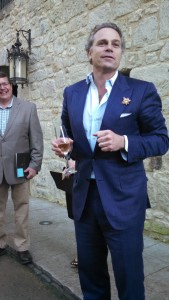
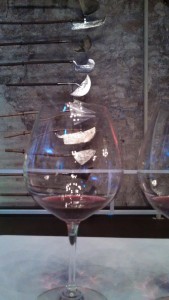
2015-02-16 17.03.39Sharp edges glisten in the spotlight, looking more like an executioner’s axe than something wielded by an enologist. But, these blades actually belong to a collection of pomace cutters, used for removing grape skins from the press.

Indeed, getting from grape to glass takes a series of labor-intensive, time-consuming tasks. Just as diverse and varied are the specialized tools used in each step along the way. From planting vines and harvesting grapes to crafting oak barrels, each instrument has a distinct purpose, propelling the process forward.

Though technology has evolved with time, these implements still hold interest and fascination as well as provide a glimpse back into the past. A unique look at these historic devices will be made public at the equally historic Buena Vista Winery in Somona, CA when it unveils its Wine Tool Museum on March 24, 2015.

Established in 1857 by Agoston Haraszthy, Buena Vista Winery is among the oldest wineries in the U.S. Haraszthy was a true pioneer in the wine industry, leading the way for the use of European varieties and (then) modern methods in the vineyard and winery. After much exploration throughout California (including a stint as San Diego’s first elected sheriff), he was among the first to recognize the potential of Carneros (the southern sub-AVA that spans both Napa and Sonoma), where he chose to locate his Buena Vista Vinicultural Society.

Unfortunately, Haraszthy’s legacy languished first under Prohibition and then under a revolving door of ownership. However, in 2011, the estate was purchased by Jean-Charles Boisset, whose Boisset Collection of wineries also spans Napa and Sonoma as well as Europe.

Boisset was intent on restoring glory to the storied winery and has since invested 2015-02-16 15.38.18heavily in the infrastructure. Most notably, the original land-marked cellar building received a full renovation, including a state-of-the-art reinforcement of its walls to protect against earthquakes. While certainly not planned, the seismic retrofit passed its August 2014 test with flying colors; the building didn’t sustain any damage at all!

With the interior renovations now completed, the ground floor serves as home to Jean Charles’ Bubble Lounge, a place to enjoy a range of sparkling wines produced by Buena Vista and several other Boisset properties.

Display cases line the walls of the stairwell and show off a beautiful collection of decanters, setting the stage for the exhibit to come. Upon arrival on the third floor, visitors will be greeted by a 20 minute video presentation guiding them through exhibit and introducing them to the tools, their respective functions and the history of Buena Vista.

The unique opportunity to visually experience the tools of the trade will provide tasters with a deeper understanding of how wine is made and perhaps a greater appreciation for those who toil to make it.

Drink Wisely and Well – Holiday issue

Rediscovering Sicily and discovering Prezi

Italy 2013-05-08_247I’ve just returned from the American Wine Society‘s annual conference where I presented a session on Sicilian wines. As you may know, I had the wonderful opportunity to visit this amazing Italian region back in May. So, it was with great pleasure that I shared my experiences with seminar participants.

While I presented them with a lot of information about the region’s history, culture and commercial development, my main goal was to reinforce two main points:
-The Sicilian wine industry has made dramatic improvement in the quality of its wines;
and, perhaps more importantly,
-Sicilian wines are enjoyable to drink.

Beyond that, everything else they took away with them was gravy (mmm… gravy, thank goodness Thanksgiving is around the corner 😉 ).

In fact, since this was a group of wine enthusiasts, I wanted my session to seem more like a travelogue than a traditional lecture. Accordingly, I made sure to include many personal stories from my trip to capture the audience’s attention and imagination.

These same stories have been immortalized in an article I wrote earlier this year. If you haven’t already seen it, you can take a look here.

Of course, as an educator, I was also mindful to weave in facts about the region and its wines, having done considerable research on the new Sicilia DOC and Sicily’s indigenous grape varieties.

Aside from storytelling, I also implemented a new tool, Prezi, to introduce movement and perspective into my presentation. If you are not familiar with Prezi, it’s as if PowerPoint and Flash had a love child (okay – so I don’t know why these two software programs would have an affair, but just pretend they did).

This was my first foray into using this tool, so there is room for improvement, but I think it was a good first effort. What do you think? You can check out my actual presentation online.

What are your favorite ways for presenting about wine (or other topics)? Do you have any signature moves or methods to your madness? Tell me what works in the comments below!

Alsace does it again: Food-friendly French wines

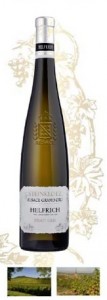
HelfrichIn yet another stellar example of how well Alsatian wines pair with food, we ordered nearly one of everything on the French-Asian menu at Rouge & Blanc and let the forks fly.

Admittedly, some pairings were preferred over others, but nothing clashed and almost all worked reasonably well. We also appreciated how the luscious fruit and slightly off-dry palate of the Pinot Gris and Gewurztraminer provided a nice counterpoint to the spiciness of some of the dishes.

The following menu items, pulled from the restaurant’s website, should provide some indication as to the varied nature of our meal and, consequently, the flexibility of the wines.

  •  Duck Egg Pissaladière, Caramelized Shallot, Reading Raclette
  •  Cured Arctic Char, Smoked Pickles, Mustard Vinaigrette, Crostini
  •  Grilled Pork Belly, Charred Vietnamese Corn, Market Relish
  •  Glazed Lamb Ribs, Sesame, Cucumber Herb Salad
  •  Hanoi Fried Chicken, Lemongrass Aioli, Summer Pickles

The occasion for our little game was a visit from Anne-Laure Helfrich, the third generation of her family at work in the family business. Established in 1934, Helfrich winery produces a full range of Alsatian whites from the sparkling Cremant d’Alsace to Grand Cru designated wines and several in between.

While I haven’t yet been to Alsace, it remains one of my favorite French wine regions. Its distinct varietal wines are easy to understand and generally easy on the wallet, even at classified levels – nothing we tasted topped $19.99.

Starting with the Cremant d’Alsace ($19.99), produced from 100% Pinot Blanc, it served as a terrific aperitif as we got to know Anne-Laure and our fellow diners, with just the right balance of citrus fruit and yeasty/ toasty notes stemming from its Traditional Method production.

We next opened up the still Pinot Blanc 2012 ($14.99), which, as Anne-Laure explained, can be found in everyone’s fridge in Alsace, due to its overall food-friendly nature and easy drinkability. The Helfrich Pinot Blanc did not disappoint in this regard, displaying smoke, pear and almond notes on both the nose and palate.

The Riesling 2012 ($14.99) was full of orange blossom and tangerine aromas, with refreshing acidity, citrus and pith on the dry palate. The Pinot Gris 2012 ($14.99) was similarly citrus in character, but was slightly off-dry, with almond and spice. The Gewurztraminer 2012 ($14.99) was classic with floral and tropical fruit and only a hint of residual sugar.

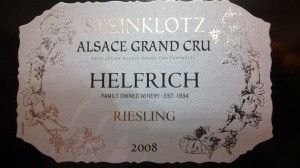
2013-10-10 19.47.48The Grand Cru wines hail from the famed Steinklotz Vineyard, which boasts of being the oldest documented vineyard in Alsace as recorded in 589. Located at the northern end of the region, near Strasbourg, the vineyard is quite steep with chalky soils.

These wines, all priced at $19.99, showed more complexity and depth than their non-Grand Cru counterparts. The Riesling Grand Cru 2011 was steely, with intense minerality, lime/citrus notes and long length, while the Pinot Gris Grand Cru 2011 was lush with rich tropical fruit, smoke and floral notes. The richness and concentration of this latter wine offered a perfect example of how a white wine could not only stand up, but pair well with smoky, sweet ribs and salty, spicy pork belly.

All in all, it was a wonderful meal, punctuated with well-made wines and great company.

Inaugural Issue of Drink Wisely & Well: All About Bordeaux issue

Discovering Sicily: A Mediterranean Jewel in Italy’s Crown

2013-05-11 08.39.15In May 2013, I had the precious opportunity to spend a week visiting the beautiful island of Sicily, exploring its land, meeting its people and tasting its wonderful wines. This is my story.

I  stood in line at the Palermo airport, crying. Not loud wails, just silent tears rolling down my face. But, as it was my seventh visit to Italy, the intense emotion was as surprising to me as it was to anyone else who might have noticed. I felt a deep loss as I prepared to leave Sicily. In less than a week this region had somehow wrapped itself around my heart and refused to let go. I wanted to attribute this visit’s difference to my slightly improved Italian language skills, but I knew that this didn’t do it justice. There was something else – something that permitted conversations to by-pass small talk and dive right in to what really mattered; getting to know one another and feeling safe to share. I had become attached to the spirit of the island, with its fusion of Arabic, Spanish, Norse and Italian heritage, and to the spirit of the people who inhabit it.  I took a deep breath, blinked back the tears and boarded my plane knowing that I had been given a wonderful gift…

[Read the full story as a PDF: Discovering Sicily]

Sicily – a part of Italy and yet it stands apart both literally and figuratively. As an island situated off the coast of Italy’s toe (Calabria), the region is physically separate, requiring a flight or ferry to get to or from there. But, beyond geography, Sicily remains steadfast to its traditions and culture. My new friend, Federico Mammoli, of Firriato winery’s export department and originally from Rome, told me that when he first arrived on the island, he only understood about thirty percent of what people said to him, despite the fact that, of course, they all speak the same language.

As far as wine is concerned, agriculture is a big component of the economy and grapes have been cultivated here for centuries. Nearly everywhere one looks, there are vines and Sicily is responsible for an immense amount of Italian wines. Like the rest of southern Italy, the key word here was quantity, with quality a mere afterthought for many producers.

But that, to a large extent, is ancient history. Sure, Sicily still produces cheap and cheerful wines, most regions these days do, but while my formal exploration of Sicilian wine was admittedly confined to a handful of wineries, I was extremely impressed with what I found. There was complexity, depth and structure that I didn’t expect, revealing the significant quality and continued potential of Sicilian wines. And, throughout each winery visit, I was enamored not only by the wines, but also by the people and their passion and warmth. I felt so welcomed in a way that felt much differently than any other press trip that I didn’t want to leave… Hence, the tears at the airport.

One Fish, Two Fish, Red Fish…

Island Capers

Reserve in a reserve

True Cooperation

Valley of the Temples and Nectar of the Gods

Crazy with a fox (and Germans)

Recommended Wines

Discovering Sicily: One Fish, Two Fish, Red Fish…

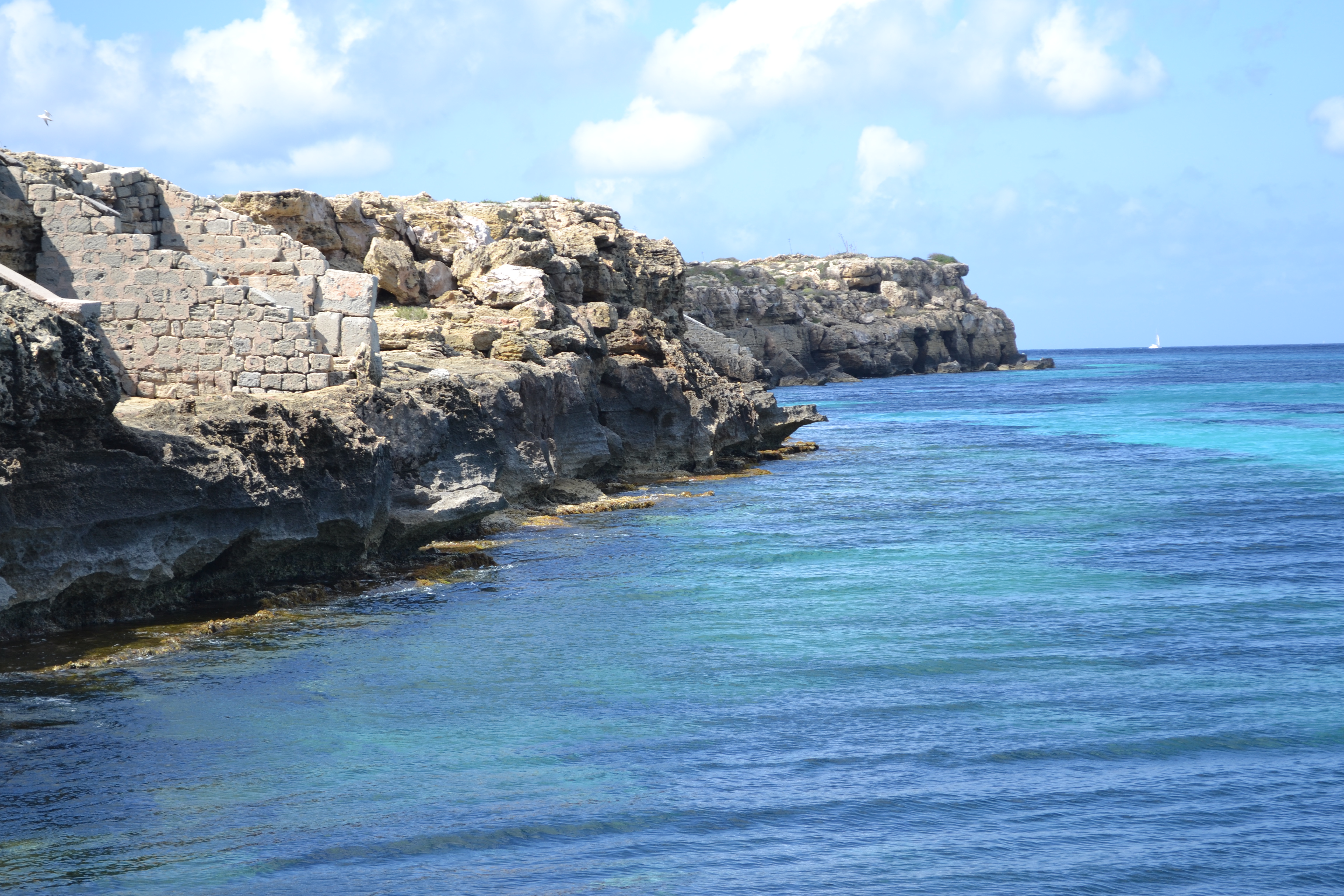
Kamens Favignana Tufa Quarry BeachesEarlier in the week, it was a beach scene like any other as the smell of fresh fish and salt water permeated. The sky had clouded over, the not-quite-summer air had turned cool and towel-wrapped children waited with their parents for the ferry back to the mainland. Only, this wasn’t Sag Harbor or Block Island; instead, we were on Favignana in the Egadi Islands, 45 minutes from Trapani, Sicily – an island off the coast of an island.

The island’s history dates to prehistoric times, but the only visible historic remnants date to medieval times when Swabians constructed the Castle of Santa Caterina at the top of the island’s only hill, from a pre-existing tower originally built by the Saracens.

Alternately called La Farfalla (the butterfly) due its shape, Favignana is named for the Favonio, a local westerly wind, which made its presence known, as I was shown around Firriato’s latest project. The Trapani-based winery was first established in the 1980s by Salvatore Di Gaetano, who is now joined by his wife, Vinzia, in running the family business, but while Firriato’s 320 hectares of vineyards are spread out over six Sicilian estates, it was the five hectares planted six years ago on Favignana that they were most excited about sharing with me. This selection of vines is the first and only vineyard to be planted on the island in 50 years.

Although Favignana is known for its twin industries of tuna and tufa, today’s islanders rely on tourism to make their livelihood. Yet, while the island is hospitable to tourists, it is less so to vines. The tufa-sand soils provide their own challenges, while the namesake wind necessitates that vines are bush trained using the alberello (little tree) method. At only several inches off the ground, the obvious need for hand-harvesting prompted me to commiserate with the vineyard crew, sensing the back-breaking work required (I certainly wasn’t inspired to volunteer).

Similarly, bamboo fencing tempers the wind and reduces the effect of salt water, which would otherwise burn the vines’ tender leaves. Their agronomist, Giovanni Manzo, advised that Zibibbo – a local clone of Moscato d’Alessandria (Muscat d’Alexandria) – is among the more resistant plants, which explains why these were planted closest to the sea.

But, despite these obstacles, the island’s climate also has a favorable impact. A high diurnal shift helps grapes develop good acidity and perfume. Meanwhile, the wind minimizes humidity, and subsequently, mildew, so much so that the operation is almost entirely organic.

Focused on indigenous varieties, the vineyard is planted to Cataratto, Grillo, Zibibbo, Perricone, and Nero d’Avola, with grapes shipped back to Trapani for production since its size doesn’t warrant the construction of a winery on Favignana. But, while these wines are currently labeled as IGP Sicilia, Firriato hopes to create a new Favignana-based DOC for them and will submit an application after the third vintage (2013) in keeping with legal restrictions.Kamens Favignana Alberello

After my vineyard orientation, Federico and Giovanni took me to lunch. But, before I had my fill of locally-caught, tonno rosso (blue fin tuna), swordfish and other wonderful seafood, all of which was simply prepared and delicious, we tasted through the Firriato wines, including two produced from the vines I had just seen.

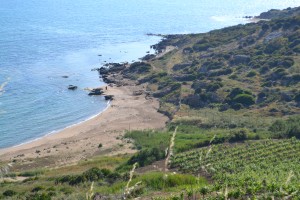
In typical Sicilian style, we capped off the meal with a cannoli dessert and then indulged in some coffee to keep us awake. Post-lunch, the taxi driver did double duty as both driver and tour guide, having lived on the island his entire life. He showed us around, noting various points of interest and historical buildings. We stopped at an abandoned quarry that now functions as makeshift seaside cabanas and plays host to beach bathers. I was struck at the brilliance and clarity of the blue water below. Then, we climbed back in the car and headed to the port, the bright sun fading just as we arrived and joined the families as we all waited in earnest for the next boat.

Discovering Sicily: Island Capers

Kamens Pantelleria Damusso The next day, fighting off jetlag and a general lack of sleep, I struggled out of bed early (5:30 AM) to meet Laura Ellwanger from Donnafugata’s Public Relations department. That morning, Laura and I flew further afield (closer to Africa than to Italy) to another Sicilian island – Pantelleria, joined on our early morning flight by the daily newspapers. But, while the news may arrive a bit late, this sybaritic slice of paradise has long attracted the well-heeled with their well-endowed pocketbooks – including Armani who arrives each summer via private yacht – in stark contrast to Favignana’s laid-back tourists.

Also unlike Favignana, Pantelleria has a more continuous vinous history. Here, vines commonly average 40-50 years old, with a few remaining ungrafted vines thought to be over 100 years old as I saw at Donnafugata’s vineyards. Initially arriving on Pantelleria in 1989, Donnafugata now owns vineyards in 12 districts on the island, totaling close to 70 hectares (170 acres).

In addition to vines, the island is also known for its capers and, since I had never seen a caper bush, Laura made sure to take me to a caper garden, which was a treat to see. Interestingly, in terms of cuisine, this is not an island of fisherman, as Pantelleria’s rocky coastline makes it challenging to easily put boats in and out of the water. Consequently, fresh fish is less abundant here. However, rabbits are quite plentiful and often find their way onto the menu.

Home to even fiercer winds, Pantelleria’s Arabic -derived name means “Daughter of the Wind,” and its vines are also alberello trained. This practice has been adapted to olive and citrus trees on the island, with dwarf-like orchards dotting the landscape.

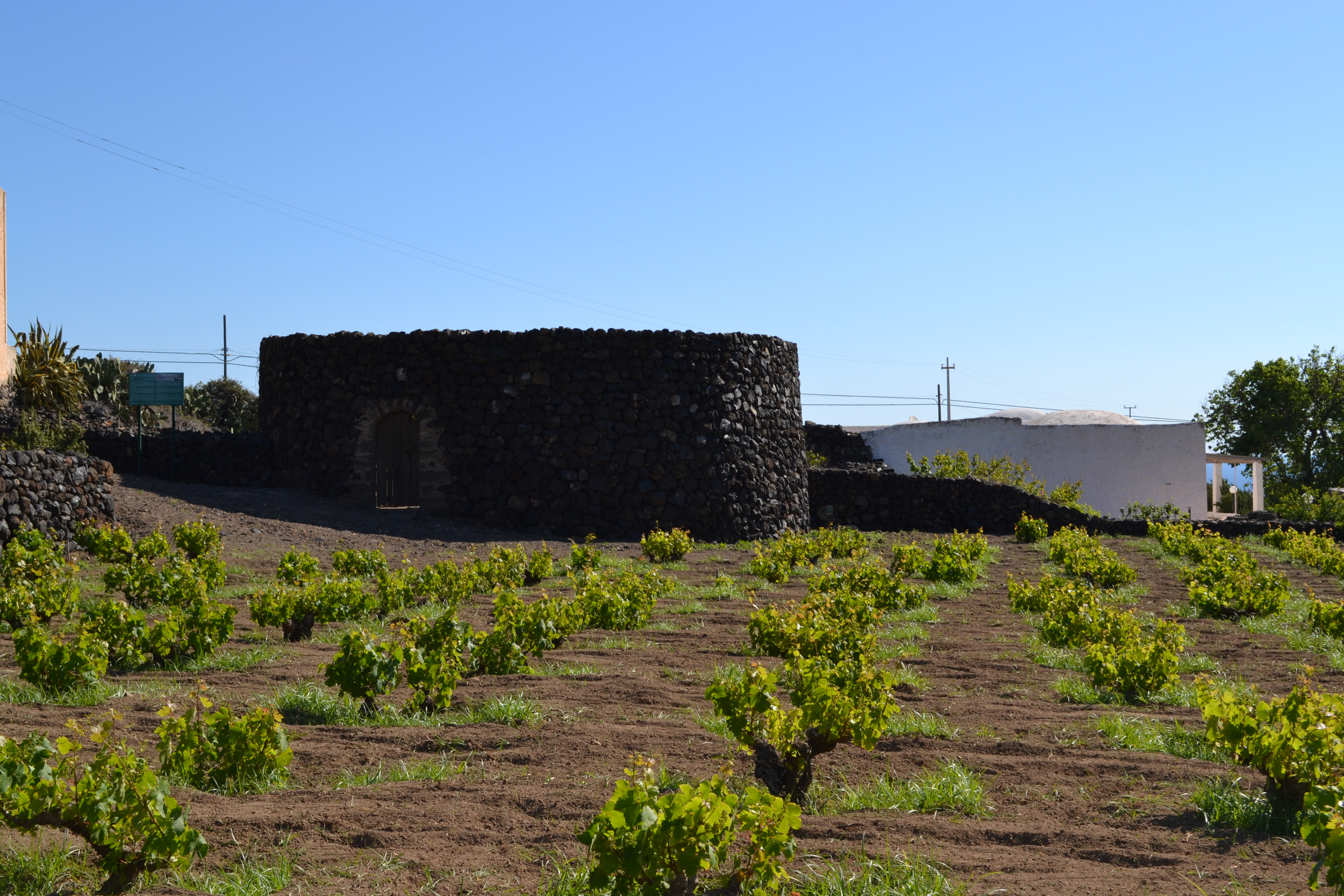
Another feature of the landscape are walls made from dark, volcanic stones that line the narrow roadways, define property borders and undoubtedly gave rise to the island’s nickname as the Black Pearl of the Mediterranean. The stacked stones revealed a patchwork of plots, stemming from very fragmented land ownership, and some seemed to have been abandoned given the overgrown vegetation, possibly due to their exceedingly small size.
Kamens Pantelleria Pantesco GardenBut beyond their proprietary function, these walls protect the grapes from the whipping winds and reduce erosion while their composition of pumice and lava release much-needed humidity during the heat of the day. These same stones were used to build a Pantellerian Garden, the oldest evidence of which date to 3000 B.C.E. As they do in the vineyard, the stones of these circular enclosures give off sufficient moisture to sustain a centrally-planted orange tree despite the limited rainfall and lack of irrigation. Such gardens are a mark of wealth and prestige, but also hold the promise as to how such technology might be adapted in other rain-starved climates, which is why the winery has donated its garden to the National Trust for Italy (F.A.I.) and collaborated on a study with the University of Milan.

The garden is situated in Khamma where Donnafugata maintains a winery, necessary since production of its Ben Ryé, with its prestigious Passito di Pantelleria DOP, must be completed entirely on the island. The labor-intensive harvest is quite protracted spanning six weeks from beginning to end as different plots become ripe and ready for harvest in turn. Selected grapes are dried on mats in the sun and wind for three to four weeks, during which time they lose moisture and increase intensity and sugar levels. Others are picked a month later and pressed immediately, with the dried grapes destemmed by hand and then added to the this fermenting must in batches, resulting in a luscious dessert wine with sufficient freshness. Yields are extremely low at 1.6-2.4 tons per acre (4.0-6.0 tons per hectare).

The winery’s other prized Zibibbo grapes are vinified on the island to produce Kabir, a Moscato di Pantelleria DOP, while the younger grapes are sent to Marsala to make  Lighea, a dry and refreshing wine that carries the IGP Terre Siciliane designation.

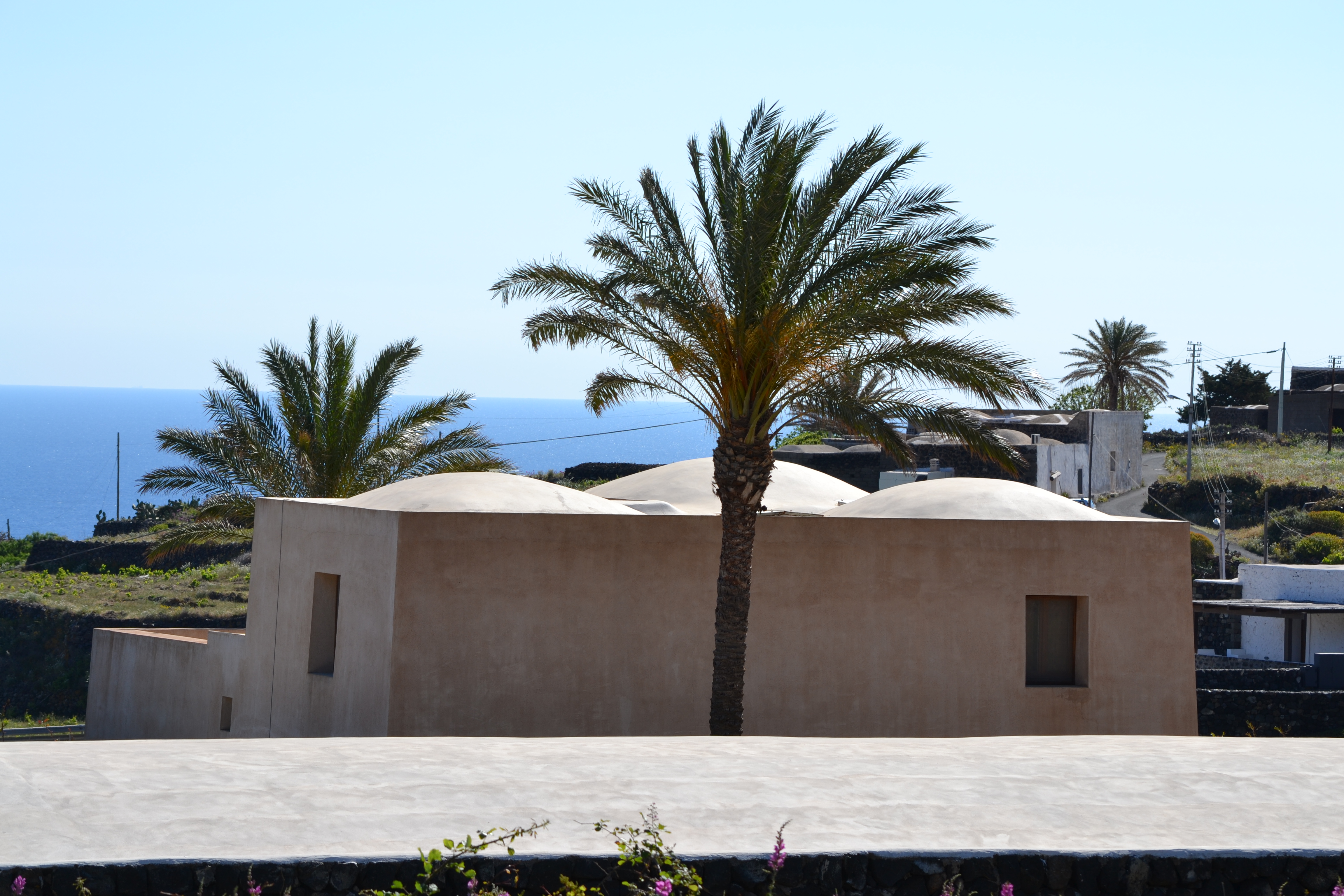
Tasting this latter wine at Khamma, I fantasized about enjoying it on the deck of a dammuso, a Pantellerian traditional white-domed house, while on holiday, but alas, it was once again time to return to the mainland.

But, the Rallo family, which owns Donnafugata, is known for much more than its award winning Ben Ryé Passito di Pantelleria and has been in the wine industry for much longer than their time on Pantelleria. As early as 1851, the family first produced the Italian fortified wine, Marsala, where their winery is located. But, as the reputation of Marsala waned (as did much of its quality), Giacomo and Gabriella Rallo looked for other ways to better show off the potential of the Sicilian island. Taking a new approach, they chose to plant international grape varieties on the family’s estate in Contessa Entellina and launched the Donnafugata wine brand, borrowing the name from Giuseppe Tomasi di Lampedusa’s book, Il Gattopardo (The Leopard), which takes place on Sicily.

During my visit, I had the pleasure of dining with both of Giacomo and Gabriella’s children — Josè and Antonio. One night, Antonio shared some of the family history with me, noting that one of the initial challenges was to teach the vineyard workers how to grow vines for the production of quality wine when they had been conditioned to grow solely for quantity. To solve this problem, the workers were given an opportunity to taste the wines side by side so that they would see what the impact of quality vineyard practices would have on the finished wine.

Once Donnafugata’s reputation with international varieties was established, the family turned its attention to local grapes. Today, the company grows 49 different varieties and is working on another project with the University of Milan to identify the best clones among the indigenous Sicilian varieties such as Cataratto.

The concerted effort and continued emphasis on quality is significant in its impact. In 1994, only 20% of all wine produced in Sicily was bottled in the region – the rest left in bulk. Today, 70% of wine produced within the region is bottled as Sicilian wine. But, Antonio was quick to point out that such progress is the result of many small families working together. Recognizing their shared interest and common goals, a formal group was created in 1998 with an eye toward crafting quality and changing the image of Sicilian wine.
Discovering Sicily: Reserve in a reserve

Italy 2013-05-08_207Another such family is the Sala family, whose winery, Tenuta Gorghi Tondi, is headed by sisters Annamaria and Clara. The two young women are relatively new to the wine industry, but can draw on the knowledge and experience of their father and grandfather, both of whom devoted their careers to wine. They sisters split the business duties among them and have brought in a winemaker to assist with production.

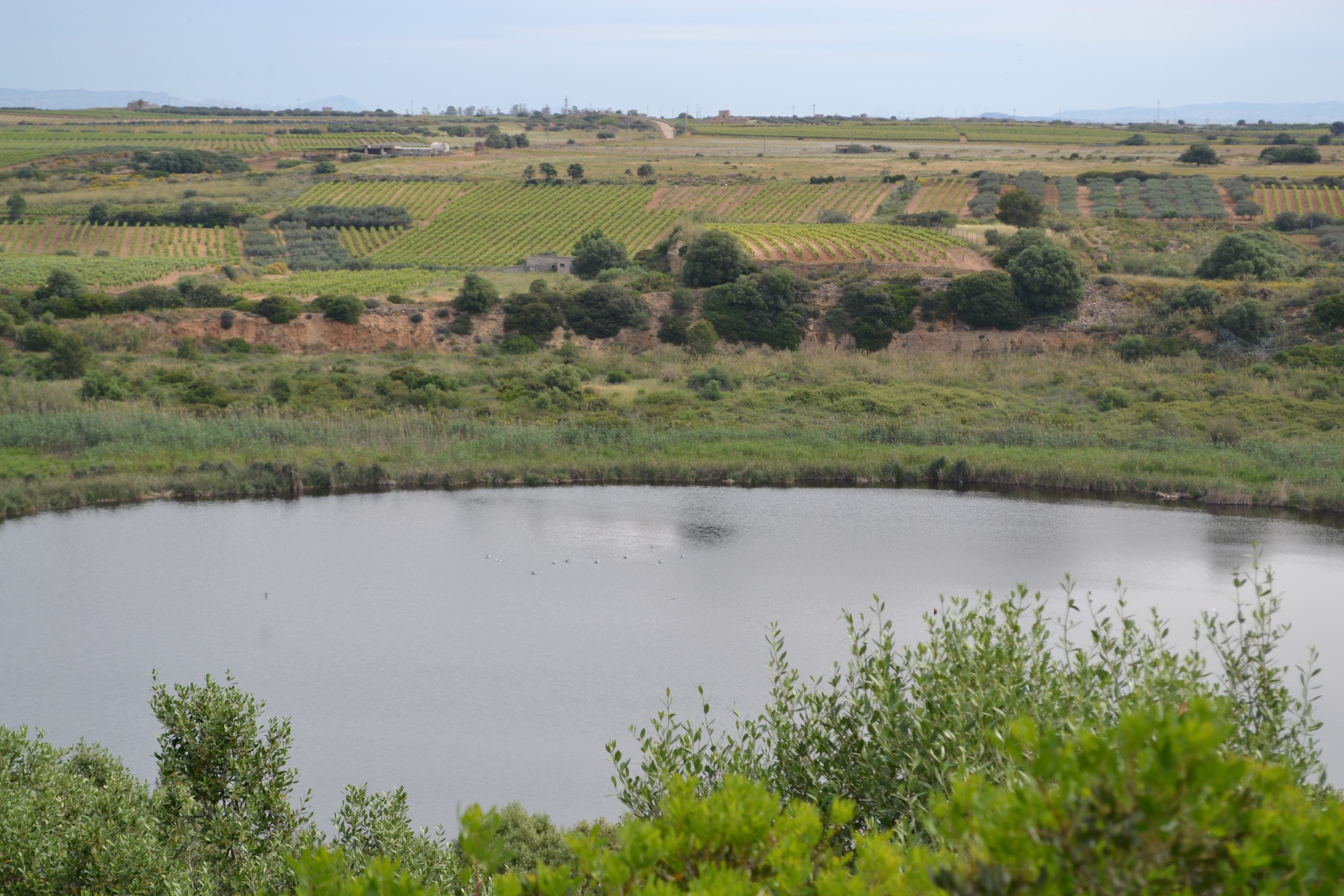
While many wineries boast stunning views, Gorghi Tondi has a particularly lovely one given its location within a natural preserve. Situated approximately 30 minutes south of Marsala in the Mazara del Vallo area, the 130 hectares of land were purchased by Annamaria and Clara Sala’s great-grandfather and were originally part of Prince Saporito’s hunting reserve. Thankfully, the land (along with its two karstic lakes, Lake Preola and Gorghi Tondi) was recognized in 1998 as a WWF Natural Reserve. Home to such vegetation as olive trees, dwarf palms and wild orchids, the reserve is equally attractive to herons, swamp hawks, mallards and other species, adding to the uniqueness of the place.

The winery itself was built in 2000 in the center of this agricultural area, with the first vintage produced in 2005. Now, nearly a decade later, Gorghi Tondi has a diverse portfolio, drawing inspiration from the Arabic culture (Rajah), general location (Meridiano 12) and proximity to the reserve (Coste a Preola as well as Sorante, which means a bird about to take flight) in naming its wines.

The range and quality of the wines was impressive, especially with the top wines, which they refer to as their Cru-level wines. However, it was their embrace of the Grillo grape variety in all its glory and many guises that really caught my attention. This cousin to Sauvignon Blanc makes its first Gorghi Tondi appearance in their Palmarès Spumante Brut; a second in the winery’s entry-level wine (not tasted); a third in the Coste a Preola Bianco, its premium label; and then again in Kheirè, among its Cru-level wines. A final appearance is the Grillo d’Oro, a botrytis-affected dessert wine. All whites (not just those produced with Grillo), with the exception of the Grillo d’Oro, are produced solely in stainless steel.

After a comprehensive tour and tasting, my hosts, Annamaria and Sal Romano (Export Manager) treated me to a snack. It was light by Italian standards, but quite a spread nonetheless. According to my agenda, I was due to have lunch at my next visit, so I tried to hold back on what I piled onto my plate, but with the tempting breads, olives, tapenades and pastas, it was difficult to resist. Plus, I welcomed the opportunity to sop up some of the alcohol I had just ingested. I was suitably rewarded as everything was as tasty as it looked, but was saved from going back for seconds, when my ride appeared, ready to whisk me away to Menfi.

Discovering Sicily: True Cooperation

Italy 2013-05-08_231If Sicilian wines are still being incorrectly identified as emphasizing quantity over quality, another anachronism is that production by cooperatives automatically means poorly made wines. But, with MandraRossa’s intensive adaptation of technology and careful attention to every last detail, it’s clear that striving for quality isn’t restricted to family-owned wineries.

When I arrived at MadraRossa’s Casa Natoli, it was bustling with activity and after the relative quiet of being on my own since Monday morning, I was a bit flustered. But, after introductions were made by MandraRossa’s Brand Ambassador, Maria Isolina Catanese, I soon discovered how much I had actually been craving a full conversation in English. And, as my fellow guests were a group of restaurant managers from London, it wasn’t just English, it was English-English.

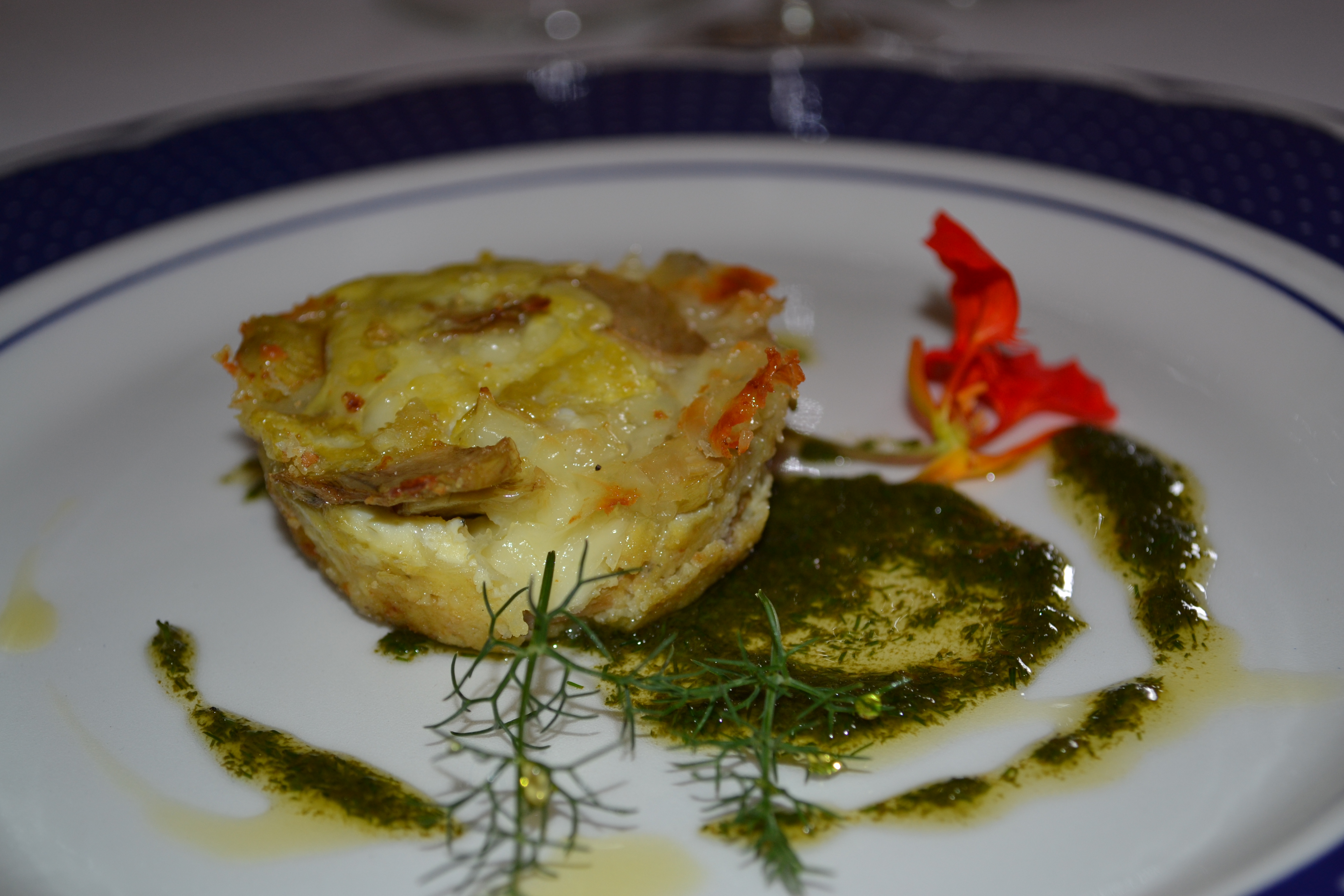
Built in 1830, Casa Natoli features the architecture of a typical country house and serves as home to MandraRossa’s cooking school. Ensconced in the Slow Food movement, the Kitchen Brigade at Casa Natoli prepared a multi-course meal featuring not just one, but several dishes comprising different varieties of artichokes (there’s more than one type of artichoke, who knew?), an especially bold move given that artichokes are often considered to be among the most challenging to pair with wine. Fortunately, the Fiano poured with lunch was indeed an excellent match.

After lunch, I was treated to a more formal presentation of the MandraRossa wines with a tasting out in the garden with the winemaker. The wines were quite lovely and the setting was simply heavenly. Then, the agronomist showed me their territory and provided additional details about their operations. Suddenly, we were back to speaking Italian, with the occasional translation from his more English-savvy colleague, when my requests for slower speech or repeated sentences proved insufficient to follow his meaning.

Italy 2013-05-08_247Named for the local district, MandraRossa was founded in 1958 and is part of Cantine Settesoli, which manages the largest single vineyard area in the whole of Europe. However, only the top 10% of Settesoli’s production goes into MandraRossa wines. Today, the cooperative has 88 members, who farm a total of 7,000 hectares. Among the most planted varieties are Chardonnay and Syrah, followed by Nero d’Avola.

The agronomist was keen to let me know how important it was to understand one’s terroir, explaining that they have spent significant time and effort to determine which varieties grows best where and then planting accordingly. In a further focus on quality, growers are advised by the agronomist when to harvest their vines and with which parameters to select their grapes. Moreover, harvesters are monitored by GPS, keeping careful tabs on what is going on within the region. Upon arrival at the winery (the cooperative maintains three), grapes are classified as A, B or C, depending on the quality of the crop, which consequently impacts the price paid to the grower.

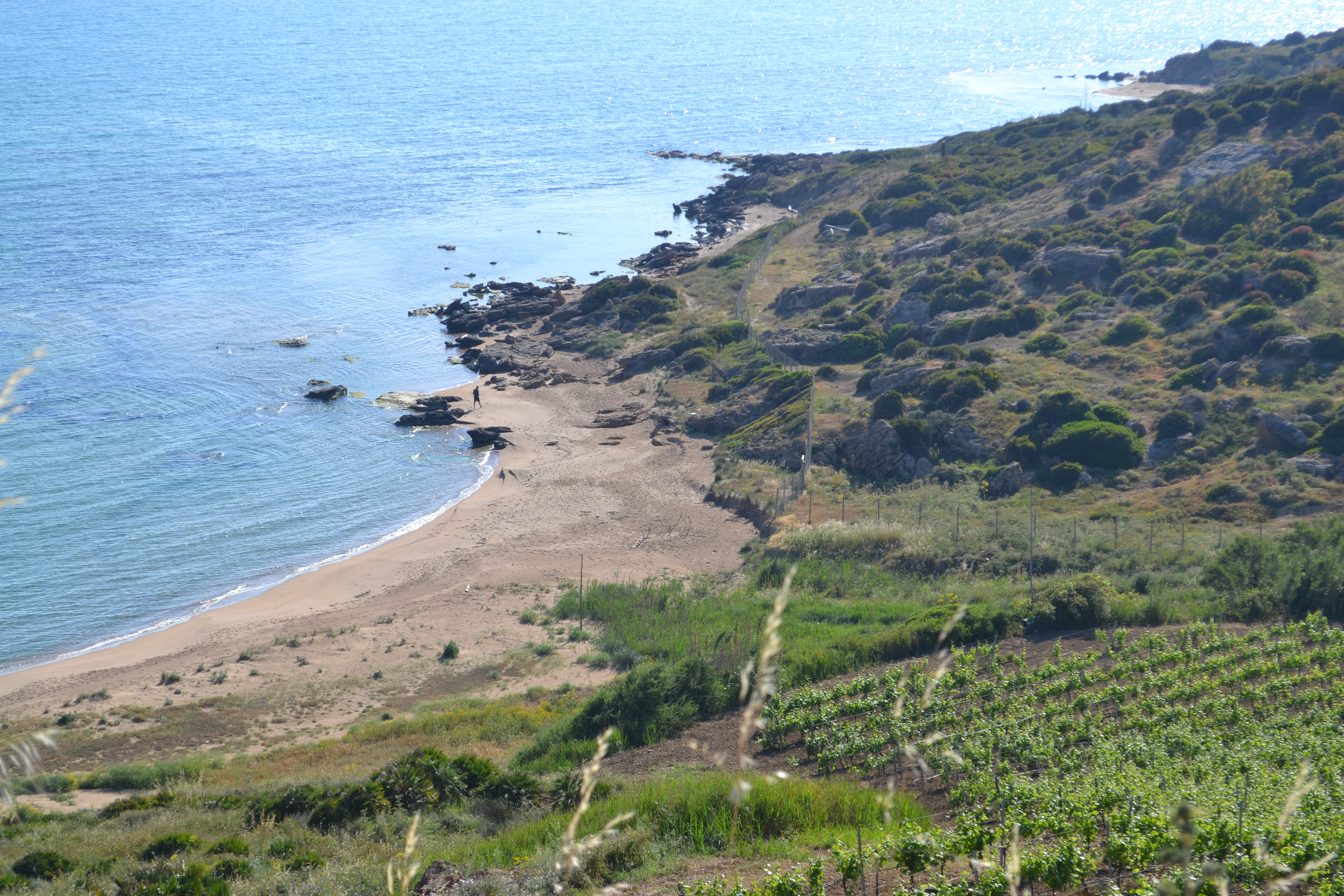
Once the tour was over and I checked into the hotel, it was time for dinner. The Brits and I all climbed into a van and were taken to a seaside restaurant where we kicked off the evening with an aperitif on the beach, just as the sun began to set. We were joined by a local dog (who likely belonged to the restaurant) and I somehow managed to step (barefoot) on a bumblebee (yes, ouch!), but the view was too stunning to worry about the pain for long.

Dinner itself was an exquisite array of fresh seafood, including raw gamberi (shrimp) that were so sweet, it was like eating candy. The Brits were a rowdy bunch to put it mildly, freely admitting to having been literally under the table the night before at Planeta’s La Foresteria. Thankfully, they were more subdued that night (perhaps too tired out from the night before?), although one woman proceeded to regale us with stories of her battle with Nutella addiction (she was joking, at least I hoped she was joking). And, when sorbet was served at the end of the meal, they were all anxious to convert them to sgroppinos (a slushy cocktail). The waiter was only too happy to oblige, bringing the entire bottle of vodka to the table and letting us pour at will. I declined the first round, but gave in on the second (if you can’t beat ‘em…and all that).