Looking at the world through rosé-colored glasses

2015-mathilde-rose-backMy family and I visited Provence back in 2001. We didn’t know a lot about wine at the time; we just knew that we liked it.

On our first night in Provence, we stumbled across a lovely little restaurant with outdoor dining and knew that we had to join in the fun. We requested a table, sat down and gave the server our simple request: we want what the table next to us is having! A short while later our table was filled with incredible-looking, large grilled shrimp and glasses of rosé wine.

I don’t remember the name of that restaurant or even which town it was in, nor do I have any idea who produced that rosé, but that evening remains perfectly etched in our minds – a rosé moment! It is precisely for such moments that Mathilde Chapoutier crafted her wine (although admittedly, she hopes you will remember that she made it).

Accordingly, I don’t think she took much offense, if any, when I spent more time catching up with my colleague as we gorged on towers of seafood and several bottles of her wine on a summer Friday, rather than peppering her with questions about her background and winemaking philosophy. We were creating yet another rosé memory.

When your last name is so synonymous with wine, it is challenging to stay away from the wine industry. Mathilde Chapoutier tried it for a while, contemplating a career as a shooter (after many years as a successful competitor), but the 24-year old eventually gave in and joined the family business.

Today, as a member of the 8th generation of her family to make wine, she serves as Chief of Strategy and Business Development, a position, which has been quite rewarding. However, she was drawn to the idea of creating something uniquely hers – she wanted to make her own wine.

Her approach has been to create a wine that would appeal to her friends and other similar-minded folks who are afraid of wine or find it elitist. Overall, she wanted, “something simple, elegant and easy to drink.” She has succeeded in spades.

Although her family had previously produced what she refers to as food rosés – such as the hearty, deep pink Tavels – her father, Michel Chapoutier, was decidedly not a fan of Provençal rosé. In his opinion, there really weren’t many good ones in the market.

But, Mathilde was determined to prove him wrong and fought for this project despite his objections, eventually finding the Grand Ferrage estate, situated in the foothills of the Saint-Victoire Mountain. For her first vintage (2014), she purchased the juice, ultimately fermenting and blending the wine to her exacting standards.

Dad saw how receptive everyone was to the wine and relaxed his view. For her next vintage, she purchased the entire domaine, giving her full autonomy over the grapes and harvest as well as production. The wine is now available in the U.S. and ready for you to create your own rosé moments.

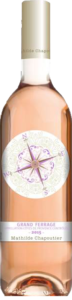
Mathilde Chapoutier Grand Ferrage Rosé 2015, Côtes de Provence, France, $24.99 (SRP)

untitledVery light in color, thanks to only a few hours of skin contact, this wine offers up floral and citrus aromas, with a dry and delicate palate with peach and floral notes, culminating in long length.

Loveblock Wines pair perfectly with Grand Banks’ summer fare

Erica Crawford visited New York last week to share her story and her new collection of wines. To sum it up, first she fell in love with a man, then she fell in love with a vineyard with a view.

Originally from South Africa, Erica met Kim Crawford, fell in love and moved to New Zealand. The duo established their eponymous winery, with an initial investment of $20,000, which went on to achieve wide acclaim. The Crawfords later sold the winery to Vincor in 2003, which was ultimately acquired by Constellation Brands.

Although the sale was a boon to their financial fortunes, it also meant that they had to stay out of the winemaking game for a period of time and are prohibited from using their name on any new ventures.

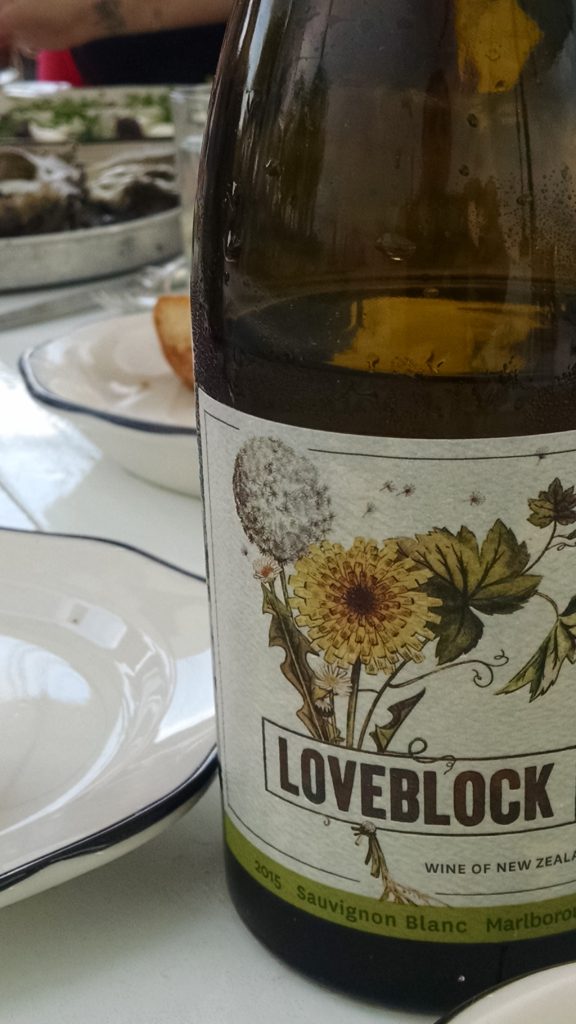
Now, they are back in business with a new brand: Loveblock Wines. Having fallen in love with the view, Erica appropriately named the vineyards Loveblock. They are situated within the Awatere Valley of New Zealand’s Marlborough region and are planted to Sauvignon Blanc and Pinot Gris. The couple also produce a Pinot Noir from fruit grown in Central Otago’s Bendigo Loop Road.

While not all of their land is certified organic (Loveblock Farm’s anchor Estate Vineyard is), they are committed to sustainable winegrowing, seeking to limit their use of chemicals and using ethics to guide their decisions throughout their processes. Their use of a dandelion on the label reflects their philosophy and dedication to this approach.

Tasting these wines at Grand Banks, a boat-based bar, docked off Manhattan’s Pier 25, it was evident that these are well-made wines that were the perfect pairing with the summer-centric selection of oysters, scallop ceviche, French fries and lobster rolls.

Sauvignon Blanc – fresh, unctuous, citrus and herbal, long length

Pinot Gris – bright acidity and notes of citrus and pear, nicely textured

Pinot Noir – nice earth and cherry fruit

Drinking Wisely and Well: Return to Roussillon

http://issuu.com/tracyellenkamens/docs/drink_wisely_and_well_return_to_rou?e=9398511/35346933

Domaine Katsaros and Ricossa offer up modern wines for modern times

Although the world of wine has a long and storied history, two recent events – dinner with Evripidis Katsaros of Domaine Katsaros and lunch with Andrea Marazia of Ricossa winery – underscored the ever-evolving nature of the industry.

Domaine Katsaros, modernity in ancient Greece
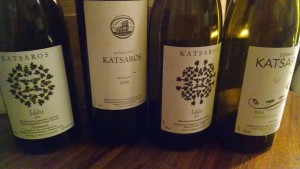
KatsarosThinking about Greece, images of the Acropolis and other ancient temples might spring to mind –  crumbling pillars as a testament to a bygone civilization. But, despite this legacy of antiquity, there is a very modern bent to the winemaking currently taking place in Greece and Italy.

Instead of meeting Katsaros’ winemaker at a Greek establishment, the invitation promised pizza at Marta, the resident restaurant at the Martha Washington Hotel. Part of Danny Meyer’s empire (aka Union Square Hospitality Group), Marta is known for its wood-burning ovens, which turn out beautiful thin-crust pizzas and tempting grilled meats.

But, before the food was served, the journalists were given the opportunity to blind taste two wines and guess which one was the Katsaros 2015 Xinomavro barrel sample and which… was a Barolo. Like Nebbiolo — the grape responsible for Barolo (among others) — Xinomavro needs a lengthy time to fully ripen and has similarly high acidity and firm tannins. Evripidis further described Xinomavro wines as showing aromas of black fruit, rose petals, olive and tomato.

Interestingly, while the blind comparison didn’t seem to stump the participants, it did illustrate the shared characteristics of the two varieties. Yet, in the end, the Barolo’s significantly more tannic structure and less overt fruit aromas gave itself away. Meanwhile, despite its youth, the Xinomavro was rather enjoyable with its pronounced floral nose, brighter acidity and softer tannins.

For many of the guests, this was a first introduction to both Xinomavro and to Domaine Katsaros. The Domaine got its start in the early 1980s, when Evripidis’ father, Dr. Dimitrios Katsaros, purchased a small estate on the slopes of Mount Olympus. The property was initially intended as a family vacation home, but the area beckoned to him and soon he was buying additional land and planting grapevines on the 2500-foot elevation plots.

At the time, technical information on Greek grapes was non-existent, so Dimitrios looked to a grape with a proven track record: Cabernet Sauvignon. The Cabernet was followed by Merlot, which was originally intended solely as a blending partner for the estate blend. However, they quickly discovered that the grapes were of significant quality to be crafted into a single variety Merlot.

In the early days, Dimitrios made wine only for friends and family, but, by 1985, the winery became official, coinciding with Evripidis’ childhood and adolescence. Having spent his summers watching his father build up the estate, it was a natural fit for him to study bio-chemistry at Bordeaux University, followed by a degree in Viticulture and Oenology from Burgundy University.

Consequently, Evripidis knows his way around French grapes and his contribution in this regard has been the addition of Chardonnay, thanks to his belief that they would get good results from this variety. While many areas of Greece would be too hot for a grape that thrives in Burgundy’s cool climate, the northerly position of Domaine Katsaros’ provides a suitable home with a latitude and weather akin to that of Tuscany. In true French fashion, the Chardonnay is aged in French oak for several months, although Evripidis, who took over as head winemaker in 2008, admits that he prefers less wood than his father, especially in white wines.

However, despite the heavy reliance on French varieties, a subtle shift seems to be taking place, with a new interest in indigenous grapes, as evidenced by the planting of Xinomavro grapes in 2010. And, soon, they will add Robola Kefalonia, a white grape that originated on the island of Cephalonia.

Today, the family-owned winery is still the only one within Thessally’s PGI Krania, and maintains its dedication to using only estate grown fruit even though the vineyards are dispersed among 21 separate parcels. In recognition of their good stewardship of the land, the vineyards received organic certification in 1998.

Overall, the wines were very well made and showed off Evripidis’ skill as a French-trained winemaker. In this regard, although the Xinomavro/Barolo comparison was quite fun, it would be equally fascinating to taste his Merlot beside a glass of Right Bank Bordeaux.

Unfortunately, not only do people really like the Domaine Katsaros’ wines, but they (or at least the grapes that go into them) are a big hit with wild boars; nearly all of the 2014 crop was eaten by the pigs. Thus, it was with some sense of poetic justice that we eagerly devoured the meat-heavy Macellaio pizza (Sopressata, Guanciale, Pork Sausage, Mozzarella and Grana Padano) and the grilled pork loin with the wines. Thankfully, the boar were less destructive in 2015, ensuring that there will be more wine to go around for this latest vintage.

Ricossa wine, co-opting old traditions to create new trends
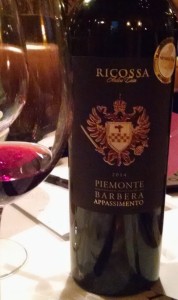
RicossaAlthough not nearly as ancient as ancient Greece, winemaking in Italy’s Piedmont region – home to the aforementioned Nebbiolo and hence, Barolo – dates back several centuries. Here, traditional winemaking has primarily centered on producing powerful, long-lived reds that take decades to reach their full potential. And, it seemed that such traditions were firmly entrenched.

But, even here, things are shifting. For one, classic wine styles have been evolving since the 1980s as a decidedly different view of Barolo winemaking came to the fore, splitting producers into one of two camps — Traditionalist vs. Modernist.

More recently, in another blending of old and new, the region has co-opted the age-old tradition of drying grapes in service of a new, modern style of Barbera. The newly minted Barbera Appassimento DOC owes a debt of gratitude to Ricossa Winery, which was the brainchild behind the creation of this wine.

The company, part of the MGM Mondo del Vino group, felt that there was something missing from the Piedmontese winescape – wines made in the appasimento style – and specifically targeted the Barbera grape as the beneficiary of this process. And, after only a year of discussions with the Consorzio, this new wine was approved as of the 2014 vintage.

The appasimento style is most closely associated with Italy’s Veneto region – think Amarone della Valpolicella, but, essentially, these wines are produced from grapes that are dried in humidity-controlled, ventilated room, thereby reducing water content and concentrating aromas and flavors in the grape.

Moreover, the specific rules for the Barbera Appassimento DOC are vastly different than those of Amarone. Of note, the drying process for this new wine is limited to four to six weeks, a much shorter time frame than the four months required for Amarone production. Further, there is no wood aging permitted compared to the minimum two years of oak aging for Amarone.

Yet, despite the obvious comparison to the Veneto, the true intent was to express the Barbera grape in a alternate way rather than mimic Amarone, as evidenced by the resulting style of wine. The group was pleasantly surprised at how fresh and light the wine was, finding it to be a great expression of the grape with softer acidity and fuller body than more traditional Barbera wines. Lunch guests also tasted Ricossa’s Gavi as well as its Barbaresco 2011 and Barolo Riserva 2008, which provided a broader introduction to the winery’s portfolio.
Velenosi: Wines of Poise and Passion

VelenosiWhen I was first invited to meet with Angela Velenosi, owner of Velenosi Winery in Le Marche, I was intrigued by her name. Having studied Italian, the word velenosi struck an immediate cord; we had read stories in class about a character named Valentino Valentini who had first gone on a walk through the forest collecting mushrooms and making a tasty risotto with them. Unfortunately, as the tale went, “Ma…spesso i funghi sono velenosi” – but…often mushrooms are poisonous – so Valentino was brought to the Emergency Room. After leaving the hospital a few days later, our dear friend Valentino was treated to a dinner of oysters, but, as was pointed out: “Ma…spesso le ostriche sono velenose” (but…often oysters are poisonous), so Valentino was again rushed off for emergency care.

After meeting Angela Velenosi in person, I am pleased to note that, while Valentino Valentini was quite unlucky, Angela has had a much better track record with her life. This poised and passionate Italian woman has been the driving force behind her family’s wine label, which she founded in 1984 with then husband, Ercole, when she was only 20 years old. The two saw the opportunity, had a good relationship with the local wine community and, perhaps most importantly, a passion for wine. Angela admits that she had very limited knowledge and experience, but clearly had an abundance of conviction, confidence and courage.

Thirty-plus years later, it is evident that her gamble and dedication has paid off. An award winning winery (listed among Wine Spectator’s top 100 wineries in both 2012 and 2013), Velenosi is firmly established in the region today and is the second largest, family-owned estate, with 100 hectares planted in the south of the region and another 48 hectares located closer to the sea in the province of Ancona.

This same fearlessness seems to pervade everything she does. During dinner she revealed that she has run a total of 11 marathons – three of them in New York. Unfortunately, her knees have kept her from continuing this particular passion, but while, marathons are not a part of her life anymore she is still extremely active.

In addition to being a staunch supporter for her own brand, Angela is equally heartfelt about the region and currently serves as President of the Consorzio di Tutela Vini Piceni, a post she has held since 2014.

Admittedly, among Italian wines, at least in the U.S., Le Marche is much less well known, but this region, situated along Italy’s Eastern coast along the Adriatic Sea, has a lengthy history. The only plural among Italy’s 20 regions, Le Marche got its name in 1105 when three border regions were joined by the Roman Emperor Henry IV. (And, perhaps it’s a bit like New York City’s The Bronx in that it is the only region to possess an article.) Within Le Marche, the town of Ascoli dates back to 1000 BCE and was established by the Piceni tribe of warriors. It pre-dates the Romans’ rise to prominence and was known for its iron works and jewels.

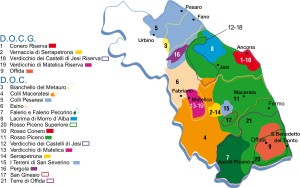
Today, Le Marche is home to 5 DOCGs and 16 DOCs, featuring a diverse range of climates, depending upon topography and distance from the coast. The area features various hills and mountains; there are no flat lands to be found. The relatively small region is primarily known for its crisp, refreshing whites and its Montepulciano-based reds. Although Sangiovese features heavily in many of Le Marche’s wines, the Sangiovese in the Le Marche is a different clone than that found in Tuscany. Consequently, these wines share more similarity to those produced in Abruzzo than in Tuscany.

Velenosi produces 20 different wines, from a combination of indigenous varieties (such as Pecorino, Passerina, Verdicchio, Montepulciano, Sangiovese and Lacrima) and international grapes. In general, Angela likes wines that are both ready to drink, but also have good aging potential, a philosophy she applies to all of the wines she produces. With this mind, many of her wines are bottled in dark, heavy glass to keep the light out during the lengthy aging process. Additionally, Angela looks for clarity and purity in all of her wines. As a result, Angela’s wines are anything but poisonous. – they are elegant, well made expressions of the Le Marche terroir.

Eight of the Velenosi wines are exported to the U.S., covering a range of styles and providing an excellent introduction to the wines of Le Marche!

TASTING NOTES
Passerina Brut NV, Marche, Italy
A Charmat Method sparkling wine produced from 100% Passerina grapes, this slightly off-dry sparkler presents light aromas of peach and pear on the nose and palate. It has nice acidity, with a lovely mousse, finishing cleanly and pairing well with food.

Pecorino Villa Angela Falerio DOC Pecorino 2014, Marche, Italy
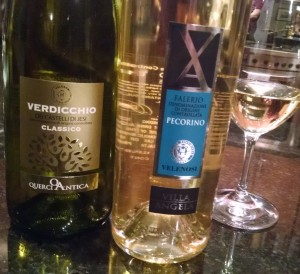
Named for the tradition of grazing sheep in the mountains, this variety stems from the Italian word pecora, which translates as sheep. The wine has notes of anise, citrus and apple on the nose. The light to medium-bodied palate offers up savory, herbal and vegetal flavors with high acidity and a slight, textural grip.

Verdicchio Querciantica Verdicchio dei Castelli di Jesi DOC Classico 2014, Marche, Italy
This wine has fresh fruit aromas of peach and almond and is more fruit-forward than the Pecorino, although it is still dry and balanced. There is bright acidity on the medium to full-bodied palate, with flavors of pear, peach and almond.

Lacrima Querciantica Lacrima di Morro d’Alba DOC 2014, Marche, Italy
An aromatic red variety, Lacrima has thins skins, resulting in a lighter-bodied red, with little to no tannins. The grape’s freshness is deliberately preserved through the use of stainless steel and no wood contact. This wine expresses its fresh raspberry, cherry and plum fruit so vibrantly with bright acidity and beautiful balance.

Brecciarolo Rosso Piceno DOC Superiore 2013, Marche, Italy
Falling within the Rosso Piceno DOC rules, the specific blend is up to the producer, with this wine being a blend of 70% Montepulciano/ 30% Sangiovese, aged in older oak for 10-12 months. The heavy reliance on Montepulciano produces a stronger, darker wine than other Rosso Piceno wines.

Ludi, Offida DOCG Rosso 2011, Marche, Italy
One of Angela’s top wines, Ludi was first produced in 1998, named for the Latin root for play – ludo – a reminder that wine is meant to be enjoyed. It is a blend of 50% Montepulciano, 30% Cabernet Sauvignon and 20% Merlot, which is aged in new French oak for 24 months. This wine offers up ripe, yet elegant, black fruit with cedar, vanilla and a hint of anise, with finely grained tannins and long length.

Roggio del Filare 2010, Rosso Piceno DOC Superiore, Marche, Italy
Velenosi’s flagship is the Roggio del Filare, literally “fire in the vineyard,” whose name stems from a poem by the Italian poet Carducci, recalling the way that the sun looks on the vines as it sets in the vineyards. This 70% Montepulciano – 30% Sangiovese blend is produced from 50+ year old vines with a long maceration on the skins and then aged in new French oak for 18 months. It is intense, powerful and structured, with beautiful, concentrated black fruit, wood and minerality on the full-bodied palate with very long length.

Visciole Selezione Cherry Wine NV, Marche, Italy
This fresh and delicate dessert wine is produced from a combination of fully-fermented Lacrima grapes to which a wild cherry syrup, known as visciole, is added, causing a second fermentation and ultimately resulting in a wine with remaining sweetness. Redolent of ripe cherries on the nose and palate, the wine is nicely balanced, with enough sugar to marry well with dessert without being cloying.

Marche

The DOCGs and DOCs of Le Marche

Rose dreaming on a winter’s day

IMG_20160215_155342120_HDR

Certainly, a bottle of bubbly makes any occasion special – an instant upgrade from blah to ta-dah! It can brighten days and elevate moods as evidenced on a recent vacation.

Specifically, on said vacation, we were asked to wait in the restaurant’s lounge while they found us a table for dinner. About 15 minutes later, the manager brought over two complimentary glasses of Cava for us, immediately ensuring happy guests, made even happier when we were ushered to the best table in the house only a short while later.

And, every evening at 6:00 PM, the St. Regis Bahia Beach continues the tradition of sabering a bottle of sparkling wine to mark the transition from day to night, as the sun sinks below the horizon and the coqui frogs begin their song.

Moreover, if looking at the world through rose-colored glasses brings a change in attitude, just imagine what a glass of pink-hued, sparkling wine can do for you in the middle of a dreary winter!

Thinking pink, a recent tasting brought together a beautiful range of salmons, pinks and pale reds, all bursting with bubbles and imbuing the day with beauty and brightness.

Thankfully, while a winter vacation might be just a dream, enjoying a glass of sparkling rosé wine just requires an easy trip to your local retailer. Here are a few options to get you in the mood.

IMG_20160215_153637131

Mionetto Prestige Gran Rosé (SRP: $14.00)
While not technically a Prosecco, since it is both a rosé and a blend of Raboso and Lagrein, this wine hails from the same area where Prosecco is produced. Medium salmon in color, this fresh and fruity wine offered up berry, floral and cotton candy aromas, with a slightly off-dry palate (fittingly, since it is labeled Extra Dry).

Mionetto Luxury Cuvée Sergio Rosé (SRP: $19.00)
Much darker hued than its fellow rosé from Mionetto, this deep pink wine displayed aromas of roses, cherries and strawberries on the nose, all of which persisted on the off-dry palate.

Ruffino Sparkling Rosé (SRP: $15.00)
Ruffino is a well known Tuscan producer, but they have begun to branch out to other Italian regions and recently released this sparkling wine made from the Glera grape of Prosecco fame. It has a pronounced nose of floral and red fruit (raspberry and strawberry) notes, joined by a hint of cotton candy on the slightly off-dry palate.

Cavas Hill 1877 Rosado Cava (SRP: $13.00)
A blend of Garnacha and Monastrell, this Traditional Method sparkler hails from Spain and was deep salmon in color.  Notes of ripe, dark berries and a hint of earthiness dominate both the nose and palate.

Alfred Gratien Brut Classique Rosé Champagne (SRP: $65.00)
Light and ethereal, this pale hued rosé Champagne presented classic yeasty, bready/brioche notes with a touch of strawberry and minerality on the brightly acidic palate, culminating in long length.

Drinking Wisely and Well: Sangiovese Spoken Here

http://issuu.com/tracyellenkamens/docs/drink_wisely_and_well_-_sangiovese_/1

Miner Family Winery: The Cool Miners’ Water

Miner
With their name proudly displayed on every bottle of wine they produce, the Miner family has made a name for themselves in Napa Valley wine. Founder Dave Miner initially launched his career in the software industry, following in the footsteps of his uncle, Robert Miner, who was among the co-founders of Oracle Corporation.

Dave continued to pursue his uncle’s passions when he took over as President of Oakville Ranch Vineyards, which Robert had established in 1989. While Oakville Ranch continues to remain in the hands of Robert’s widow, Mary Miner, Dave went on to found his own winery, Miner Family Winery in 1996, after meeting his future wife, Emily, who served as Tasting Room Manager at Oakville.

Ten years later, Dave and Emily’s efforts were duly rewarded when Miner Family Winery was honored as a Top 100 “Winery of the Year” by Wine & Spirits Magazine.

The Miner Family wines were initially crafted at a custom crush facility, but, by 1997, the pair had hired Gary Brookman on as winemaker and spent the following two years buying a building, excavating caves and releasing their first wine. In 2008, the winery was able to become energy-independent, running exclusively on self-generated solar power.

Interestingly, while they have spent considerable time and effort focused on their facility, the fruit for their wines is generally sourced from other people’s vineyards, some of which, like Hyde, Stagecoach and Garys’ Vineyard, have become extremely well known.

A wide range of wines are produced, including those from Bordeaux, Burgundy and Rhone varieties. In a fitting tribute to uncle Robert, the winery’s flagship Bordeaux-style blend, Oracle, was launched in 2004. Today, Miner Family Winery wines continue to earn critical acclaim and have been served at several White House dinners. Yet, the wines remain reasonably priced and accessible.

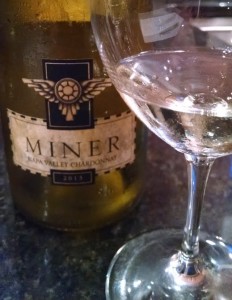
Miner Family Winery Chardonnay 2013, Napa Valley (CA), US, $30.00
As a high quality, well-made wine, this is an oaked Chardonnay for the haters out there. Aromas of apples, spice and pear greet the nose and persist on the dry palate; overall, it is really enjoyable with complexity and elegance.

Miner Family Winery Wild Yeast Chardonnay 2011, Napa Valley (CA), US, $50.00 Produced with only indigenous yeast cultures, this wine offers up yeasty, nutty characteristics on both the nose and palate. Despite spending 16 months in 70% new French barrels, it is well balanced with integrated oak, showing slight development and culminating in long length.

Miner Family Winery Garys’ Vineyard Pinot Noir 2012, Santa Lucia Highlands (CA), US, $60.00
Beautiful aromas of floral, cherries and a hint of herbs are displayed on the nose while rich, concentrated, ripe cherry flavors are joined by wet leaves and a kiss of oak on the palate.

Miner Family Winery Stagecoach Vineyard Cabernet Sauvignon 2012, Napa Valley (CA), US, $75.00
From the Krupp Family’s famed Stagecoach Vineyard, this wine is redolent of red and black fruits, coupled with spice notes.  The full-bodied palate delivers firm tannins, with rich blackberry and spice along with long length.

Versatile Vermentino: Rolle with it!

IMG_20151207_133046568[2]Stuck in a rut? Instead of reaching for the same-old grape varieties, why not try a versatile Vermentino? This Mediterranean grape offers up unoaked, fresh fruit flavors with bright acidity. Masquerading under a myriad of synonyms, the grape is also known as Rolle (France’s Provence and Corsica), Favorita (Piedmont) and Pigato (Liguria).

Vermentino is also widely planted in Tuscany and is the main white variety found in Montecucco and the Maremma. These dry, white wines typically display peach and pear fruit aromas with an occasional floral or spice note.

However, Vermentino probably shines brightest on the island of Sardinia where it has earned the highest designation for quality wine: Vermentino di Gallura DOCG. It was here that the vines were initially introduced to the island from Corsica in the early 1800s. Situated on the northeast of the island, Gallura’s name translates as an area located on high ground due to its elevation. The spot is also prized for its granite soils, which provide a mineral character to the wines, while the proximity to the sea adds a note of salinity.

One of the leading wineries in the area is Vigne Surrau, which produces 300,000 bottles annually. Although they also produce wines from Cannonau and Carignano, 60% of the winery’s production is dedicated to white wines, especially from Vermentino. In this regard, they make a range of styles from the variety, including dry, sweet and sparkling. Like the people on the island (Sardinia is known for being among the top five places in the world where people live the longest), these Vermentinos have great longevity. They can easily age for 5 to 7 years due the granitic soils, and, while they lose some of their freshness similar to aged Riesling, they retain their beautiful structural elements and evolve in the bottle.

VDSC_0052al delle Rose Litorale Vermentino 2014, Maremma Toscana DOC, Italy
With 10% Sauvignon Blanc in the blend, this wine displays a nice richness on the palate with pear and lanolin, along with fresh acidity.

La Mora Vermentino 2014, Maremma Toscana DOC, Italy Very floral nose joined by flavors of peach and pear on the round palate.

Moris Farms Vermentino 2014, IGT Toscana, Italy
Tropical in style with intense peach fruit, floral and spice notes on the nose and palate.

Massi di Mandorlaia Vermentino 2014, IGT Costa Toscana, Italy Aromas of peach, pear and mineral persist on the fresh palate with good acidity and long length.

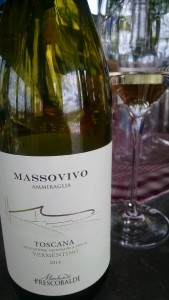
2015-09-24 13.06.33Marchesi de Frescobaldi Massovivo Ammiraglia Vermentino 2014 IGP Toscana, Italy
Having spent time on the lees, this elegant wine has a lovely waxy texture along with pear and peach flavors, culminating in long length.

Ribusieri Vermentino Chiaranotte 2014, Montecucco DOC, Italy
This wine shows ripe peach fruit with lanolin and spice, along with medium acidity.

ColleMassari Melacce 2014, Montecucco Vermentino DOC, Italy
A very fresh wine with high acidity and a pleasing palate of mineral, pear and peach notes.

ColleMassari Irisse 2013, Montecucco DOC, Italy
An 85% Vermentino – 15% Grechetto blend that spends ten months aged in large oak vessels, this wine displays aromas and flavors of smoke, citrus and mineral with an angular structure and a hint of spice in the finish.

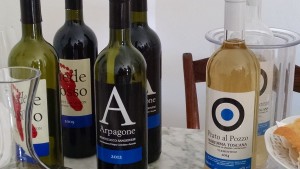
2015-09-26 10.40.21Prato al Pozzo Vermentino 2014, Maremma Toscana DOC, Italy Bright and fresh with high acidity and lots of citrus and pear along with saline and mineral characteristics.

Tenuta I’Impostino Ballo Angelico IGP Toscano Vermentino, Italy There is almost no fruit on this wine; instead, it offers up overt mineral, chalk and salty notes on the rich palate.

Vigne Surrau Branu Vermentino di Gallura DOCG 2014, Sardegna, Italy, $18.00 Pronounced floral aromas give way to ripe peach and pear on the palate with bright acidity, richness and long length.

Vigne Surrau Sciala Vermentino di Gallura DOCG Superiore 2014, Sardegna, Italy, $25.00
Named for the Italian word for “enjoy,” this higher-end version of Vermentino offers a more restrained nose, but with more richness and texture on the medium-full palate thanks to 24 hours of skin contact and five months on the lees, along with distinct salinity and minerality.

Vigne Surrau Sole di Surrau IGT Isola dei Nuraghi Passito di Vermentino 2014, Sardegna, Italy, $N/A
This unctuous dessert wine offers up both fresh and dried apricot notes accompanied by honey and orange peel; it is beautifully balanced with bright acidity.

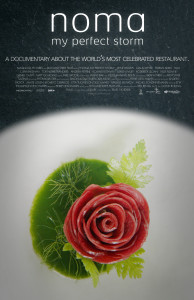
Noma: My Perfect Storm, a film about food, focus and fame

7René Redzepi is not a household name, but for those in the culinary know, he is the bright star behind Copenhagen’s Noma restaurant. A new documentary from Magnolia Pictures, Noma: My Perfect Storm, inspired by Redzepi’s own books on the subject, charts his rise, fall and rise again.

Scoring a reservation at Noma is a feat. Most of us won’t have the opportunity to dine at San Pellegrino’s Best Restaurant in the World (2010, 2011, 2012, 2014), but through this film, we can catch a glimpse of what it might be like to taste through the multi-course meal as imagined and conceived by this food fanatic.

In this regard, Redzepi is credited with creating a new concept — the Nordic kitchen – using Nordic ingredients almost exclusively, an especially daunting task considering that Scandinavia is blanketed by snow five months a year.

As part of developing this concept, he was determined to tell a story with each dish: the story of a place (where the food came from) and time (the season in which it was grown). In essence, the here and now of what is on the plate. With the use of time lapse photography, we are drawn through the seasons of the beautiful Danish landscape, further illustrating Redzepi’s pursuit.

To accomplish his ground-breaking approach (sometime quite literally), Redzepi combed the land for foragers, farmers and fishermen in search of local products, produce and people, many of whom we meet in the film. He claims that ingredients are an alphabet by which to share a new language; the more ingredients one has, the more beautiful the prose.

Beyond taste, Redzepi also explores new techniques such as his experiments with fermentation; fights about thyme vs lemon thyme; and inclusion of live ants in a particular dish. Aided by a head-mounted camera, we watch Redzepi’s creations come to life, accomplished with such tools as paint brush and tweezers to ensure that his vision is realized in its precise level of detail.

But, more than just a pretty picture of food, the film is refreshingly candid, permitting us to see not only the less than glamorous side of five-star dining, but also the darker side of Redzepi. Achieving such a lofty goal at a young age, Redzepi discusses the dangerous side of success. Moreover, it is evident that he takes things very personally and you can feel his frustration as he pushes himself and his team to be even more creative and constantly driven to be the best.

It is also an immigrant story. Born and raised in Macedonia on the family farm, Redzepi comes to Denmark as an outsider, who must overcome racism. Yet, as he advances his new Nordic menu, he is “more Danish than the Danes” as one of the film’s interviewees describes him. He must also overcome the derision of his peers who are less than enthusiastic about his novel menus and taunt him accordingly.

The film is a bit slow at times, but, ultimately, the story pulls you through, as you eagerly await the outcome of the various obstacles that Redzepi faces in his struggle to succeed.

Film from Magnolia Pictures
http://www.magpictures.com/noma/
Available in theaters, on demand, Amazon video and iTunes December 18, 2015.