Domaines Paul Mas: Frogs, ponds and wines that overdeliver

Having visited the southwest of France, I can attest that living in the Languedoc is lovely, but it’s certainly not London or Paris. Thus, it’s not surprising that members of the younger generation would want to leave the family farm and head to the big city. You might say that such folks are looking to swim in a bigger (read urban) pond.

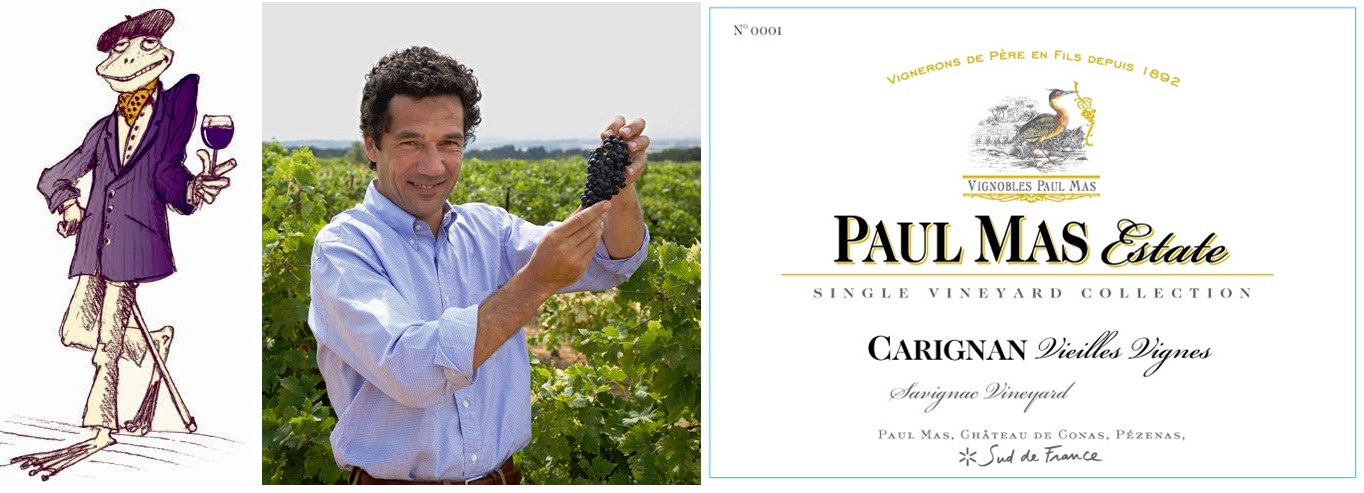
 In this tradition, Jean-Claude Mas pursued a career in the motor industry, living first in the United States and then in Paris, before entering the wine industry. But, Jean-Claude realized the potential of the Languedoc and the native son returned home to breathe new life into this bulk wine region. As the proprietor of Domaines Paul Mas, which includes the Arrogant Frog label, you might say that Jean-Claude is now the big frog swimming in this smaller (more rural) pond.

Although Jean-Claude never studied formally studied agriculture, he recognizes that there are five separate spheres of expertise required to craft world class wine – viticulture, winemaking, blending and aging, bottling and marketing –and makes sure to find the best people in each sphere and then hire them. What seems most interesting is the nearly equal value he places on all five spheres.

A true pioneer in an area where 70% of production is in the hands of co-ops, Jean-Claude shifted the focus away from quantity and instead turned his attention to quality. Moreover, he paid particular attention to what the market wanted. Arriving back in Languedoc in 1996, he saw tremendous worldwide interest in Australia and Chile and emulated, but didn’t imitate, those wines. In 2000, he took over the helm of Domaines Paul Mas, bringing his vision of producing premium wines to the family business.

Part of Jean-Claude’s pursuit led him to developing new ways of growing grapes in the area. He spent considerable time identifying the right terroir and now has eight different estates and produces four different levels of wine from his entry-level to his single estate wines. Beyond his own land, he contracts with 2,000 growers to source the fruit he needs. While he admits that there is a heavily reliance on old practices, Jean-Claude explains that “The growers will change when they know they’ll make money.”

And, while some frogs have noted that “it’s not easy being green,” Jean-Claude has been at the forefront of eco-friendly farming in the area. In this regard, Domaines Paul Mas has restricted its use to certified organic fertilizers and one of the estates, Les Tannes, is solely focused on the production of organically grown grapes.  This same passion and commitment to the environment is brought to his contract growers, who are not only encouraged to adopt such practices, but are also provided with full technical advice.

Jean-Claude also places significant emphasis on creating balanced vines. He doesn’t use just one specific density in planting; rather, he is careful to match vine density with the fertility of the soil. Further, he looks to rootstocks and clones to achieve full ripeness.

For example, the ubiquitous Picpoul has not been highly regarded, but Jean-Claude didn’t fault the variety for its short-comings. Rather, he recognized that the grape is prone to chlorosis and countered this deficiency with better rootstocks and selected better clones. Once harvested, these grapes are fermented at temperatures similar to those used for Sauvignon Blanc and lees contact is included in the winemaking regimen. Consequently, in his words, his Picpoul is not a conventional one – combining the minerality of a Muscadet with tropical notes.

Likening wine style to food style, Jean-Claude acknowledges that a steak cooked rare can be the same quality as one cooked well done, but that it is a simply matter of style. Similarly, he believes that one needs to shape a wine based on one’s preferred style. He extends this analogy into the realm of fashion, speaking of blending and aging in the way that a fashion designer might choose to use silk or wool in his or her designs.

While Jean-Claude joked that, “The style of Languedoc is chaos,” his wines, particularly those from the Paul Mas Estate, were of a singular style – displaying complexity, balance and length. At suggested retail prices ranging from $14.00 to $25.00 (and likely available less expensively), these are wines that significantly over-deliver at this price point. Additionally, the attractive labels give them the appearance of more expensive brands, making them great for hostess gifts or hosting your own party.

Côté Mas St. Hilaire Crémant de Limoux Brut NV, SRP: $16.0
A blend of 60% Chardonnay, 20% Chenin Blanc, 10% Pinot Noir and 10% Mauzac, this sparkling wine offered some slight yeast, along with apple peel and citrus, on the nose and palate. It had a creamy mousse with high acidity and a long, but clean finish. Complex and elegant; stock up for holiday toasts and parties.

Paul Mas Estate Picpoul de Pinet 2011, SRP: $14.00
Wax, white flowers, honey and melon greet the nose. The dry palate has low to medium acidity and is relatively light-bodied, but the wine is rich in flavor – nectarine, honey, minerality, floral and melon persist throughout the long finish. Nicely balanced and a beautiful partner for grilled octopus (among many other dishes, of course).

Paul Mas Estate Carignan Vieilles Vignes 2010, SRP: $14.00
Black fruit dominates the nose and palate, accompanied by a meatiness and earthiness. With rich and concentrated fruit, a slate/mineral character is also present on the dry palate. Fresh fruit and minerality are the hallmarks of this complex wine.

Paul Mas Estate GSM 2010, SRP: $15.00
As its name implies, the GSM is a blend of 35% Grenache, 35% Syrah and 30% Mourvedre, all of which are typical grapes of the region as well as of nearby the Southern Rhone. Showing blueberry and blackberry aromas and flavors, this wine was fruitier than the others, but still decidedly dry. Ripe, silky tannins co-mingled with black and red fruit, and a hint of earth in the long length.

Chateau Paul Mas Clos de Savignanc 2010, SRP: $25.00
A blend of 30% Mourvedre, 40% Syrah and 30% Grenache, the make-up of this wine changes based upon the vintage. Black cherry, smoke, earth, herbal and mint, this wine displayed more secondary characteristics than primary ones. Full-bodied with good acidity, this wine will improve with some bottle age.
Grand Cru Grapevine: France’s Southwest ~ The United Nations in a Glass (November 2012)

Just a proverbial stone’s throw from Bordeaux, the wines of southwest France offer an interesting perspective. Located south of Bordeaux and north of Languedoc, winemaking in this region is not new; it dates to 125 BCE. Yet, while Bordeaux has held fame and fortune for centuries, these smaller appellations cover a vast area, but have been largely ignored…until now.

Despite the area’s relative obscurity, many of France’s heralded grapes are given space in these vineyards. Bordeaux’s key grapes – Cabernet Sauvignon, Cabernet France and Merlot – are joined by the Rhône Valley’s Syrah and Beaujolais’ Gamay. Even more remarkable, these same grapes come together in a single glass, proving that, at least viticulturally, we can all learn to get along.

Meanwhile, other varieties grown in the region are found nowhere else – Petit Manseng, Gros Manseng, Mauzac and Arrufiac are among the top whites, with Fer Servadou, Prunelard and Négrette leading the reds. And the vast diversity is impressive; wines range from dry whites and sweet whites to tannic reds and softer, easy-drinking reds to sparkling wines produced in ancient methods that predate Champagne’s rise to prominence.

Those appellations which might draw some recognition include: Cahors, Madiran, Gaillac and Jurançon (not to be confused with the Jura, located in northeast France). However, names like Marcillac, Brulhois and Fronton are likely known to only to a few die-hard, franco-oenophiles. But, these are all names you should consider getting to know.

Why? Well, for starters, the reputation may not precede them, but the quality is certainly there. And, as the land of gastronomy – foie gras, duck cassoulet and delicious cheeses – you can be sure that these folks know their food and wine, meaning that the wines are extremely food-friendly. Moreover, as already mentioned, there is a wealth of wine styles from which to choose. But, if that’s not enough, perhaps their price tags will convince you. Of the six tasting notes included below, all are under $25.00, most are $12.00 or less and one even has a suggested retail price of $5.00.

So, truly, there is no reason not to embrace these magnanimous wines.

Domaine Tariquet Classic 2011, Côtes de Gasgogne IGP, France, $9.00
45% Ugni Blanc, 35% Colombard, 10% Sauvignon Blanc, 10% Gros Manseng
Family-run since 1912, Domaine Tariquet also produces the local spirit, Armagnac. Melon and citrus aromas greet the nose. Dry with medium+ acidity, this wine shows flavors of apple and melon with a leesy character lingering in the long finish. 

Domaine de la Chanade La Coste Blanche 2011, Gaillac AOP, France, $5.00
80% Loin de l’Oeil, 20% Mauzac
Among the newer producers, Domaine de la Chanade was established in 1997. With citrus and pronounced floral notes, this wine displays piercing acidity on the dry, light-bodied palate, with honey, apple and almond flavors.

Domaine Le Roc Le Roc la Saignée 2011, Fronton AOP, France, $12.00
Located near Toulouse, Domaine Le Roc has created a rosé that can stand up to steak! A blend of Négrette and Syrah, this wine spends four to five months on the lees. It has a red wine nose with black fruit, slight herbs and meat, all of which persist on the palate. Dry with a fruity attack, the medium tannins are especially perceptible on the finish.

Domaine du Moulin Méthode Gaillacoise 2011, Gaillac AOP, France, $18.00
The Hirissou family has been making wine for three centuries. This sparkling wine is produced from 100% Mauzac and offers up yeasty, floral and apple aromas. On the palate, it is slightly off-dry, but finishes very cleanly with yeast and apple flavors and a nice, creamy mousse.

Vignobles Arbeau Château Coutinel Tradition 2009, Fronton AOP, France, $9.00
60% Négrette, 20% Gamay, 10% Syrah, 10% Malbec
Vignobles Arbeau was created in 1878. A fruity nose displays aromas of black berries, floral and herbs. The palate is dry with bright acidity, cherry flavors and ripe, medium tannins.

Plaimont Producteurs Saint Albert 2011, Pacherenc du Vic-Bilh AOP, France, $24.00
Petit Manseng, Gros Manseng, Petit Corbu, Arrufiac (percentages not stated)
Plaimont Producteurs was established when three co-ops came together in 1979. This dessert wine shows notes of peach, yeast and honey on the nose. Its medium sweet palate is decidedly a dessert wine, but, with medium+ to high acidity, it is not cloying. Peaches, honey and yeast all persist on the palate throughout the wine’s long length.

The winery visit that wasn’t: Masottina’s new facility


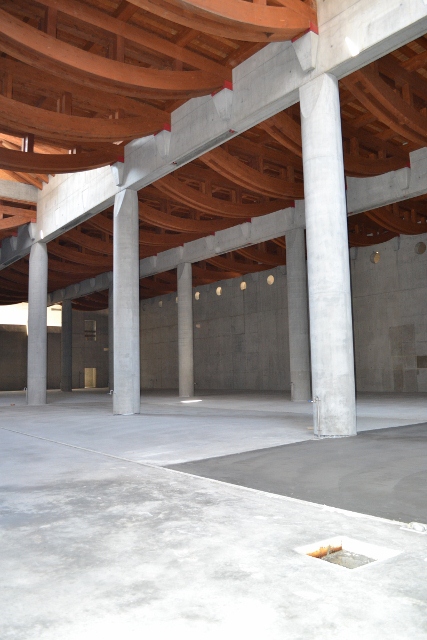
When Stefano invited me to visit Masottina during Vino in Villa last May, I was looking forward to seeing the winery and, as anticipated at any winery visit, I also looked forward to tasting the Masottina wines. Imagine my surprise when the winery turned out to be a construction zone. No, really. It was a full-out construction zone, complete with the need to jump over gaps in the pavement (in my customary high heels and a dress) and stay away from wet concrete. And yet, it turned out to be quite a visit.

Masottina is constructing a state-of-the-art facility that is enormous. The building would have been a bit of a monstrosity, marring the beautiful landscape given its behemoth size, but the winery is actually built into the side of a hill. A big hill. Thus, the underground levels practically disappear.

Gingerly walking down flight after flight, I was given a tour of each floor with Masottina’s Marketing Manager, Federico dal Bianco. In viewing the structure, Masottina appears to be sparing no expense. The concrete floors share space with stunning wood beams overhead, recalling the hull of a graceful ship, while the sheer height of the space, along with the massive support columns, puts one in mind of a church or Greek temple. It was impressive as a work-in-progress; it will be incredible to see completed.

But, despite spending about an hour at the site, plus a brief visit to their nearby vineyards, there was no wine, of course. Fortunately, I had the opportunity to taste through the Masottina wines at the Vino in Villa event later that evening.

While I did enjoy their Conegliano Valdobbiadene Prosecco Superiore wines in both Brut and Extra Dry styles, it was their Rive-designated wine that stole my heart. Rive wines are a new classification that were introduced with the new regulations, which promoted Prosecco Superiore to DOCG status, and indicate wines that are harvested from a single vineyard in one of hte designated zones and at lower yields.

Conegliano Valdobbiadene Prosecco Superiore Extra Dry “Rive di Ogliano” 2011
Aromas of floral, pear and minerality greeted the nose and were repeated on the palate. Not surprisingly, given that it was labeled as Extra Dry, the wine did display a hint of sweetness on the palate, but it was coupled with sufficient acidity to balance the slight residual sugar. This balance remained throughout the wine’s long length.

Beyond Prosecco Superiore, Masottina also produces wines under several other denominations, including the (also newly promoted) Colli di Conegliano DOCG. Thus, when I arrived in Venice a few days later, I was delighted to see the Massotina Colli di Conegliano Bianco on the list at Al Covo. Admittedly, I didn’t take any tasting notes on this blend of Incrocio  Manzoni , Chardonnay, Pinot Blanc, Sauvignon Blanc and Riesling, but, trust me, it was a lovely pairing with my meal.

Ready for reds

Looking for some new wine ideas this fall? Here are few from which to choose from the lighter-bodied Gamay grape to the full-bodied and bold Cabernet Sauvignon.

Gamay in all its glory If all you know about the Gamay grape is Beaujolais Nouveau, you are missing a big part of the story. Not only does Gamay come into its own in the ten designated cru villages of Beaujolais, but some of the wines can be quite complex and capable of aging.

Georges Duboeuf Jean-Ernst Descombes 2011 Morgon, Burgundy, France, $16.00 This wine displays a fruity nose of cherries with some slight mineral character, both of which persist on the palate. It is dry, with medium body, low tannins and good acidity.

Napa Valley big reds The Napa Valley made its reputation on big reds, particularly Cabernet Sauvignon, but Merlot (and others) are well represented. These three represent a nice range of wine styles and price points.

Waterstone Merlot 2008, Napa Valley, CA, $18.00 With medium intense aromas of cherries, plums and herbs, this dry wine has good acidity with a full body and slightly noticeable alcohol. Despite this, the palate was quite elegant showing plum, cocoa, herbs and spice flavors throughout its more than medium length.

Folie à Deux Cabernet Sauvignon 2008, Napa Valley, CA, $24,00 This wine displayed notes of ripe red and black fruit with some spice. On the palate, it was dry, with medium to high acidity, and flavors of earth, red fruit and spice. The tannins were firm, but ripe and the finish was relatively long.

Antica Cabernet Sauvignon 2009, Napa Valley, CA, $55.00 Tasted alongside the Folie à Deux Cab, this wine exhibited much blacker fruit and was more herbal in character with a hint of cocoa. The dry palate offered silky yet firm tannins and long length. Its flavors included rich and ripe blackberry, dried herbs, spice and cocoa.

Lesser-known Names Shine in the Langhe

Italy’s Piedmont region is full of recognizable names – Michele Chiarlo, Aldo Conterno and Bartolo Mascarello to list just a few. But the area has numerous other producers who, while less well known, are also producing high quality wines. Two such visits that reinforced this view were to Gianpiero Marrone and Negro.

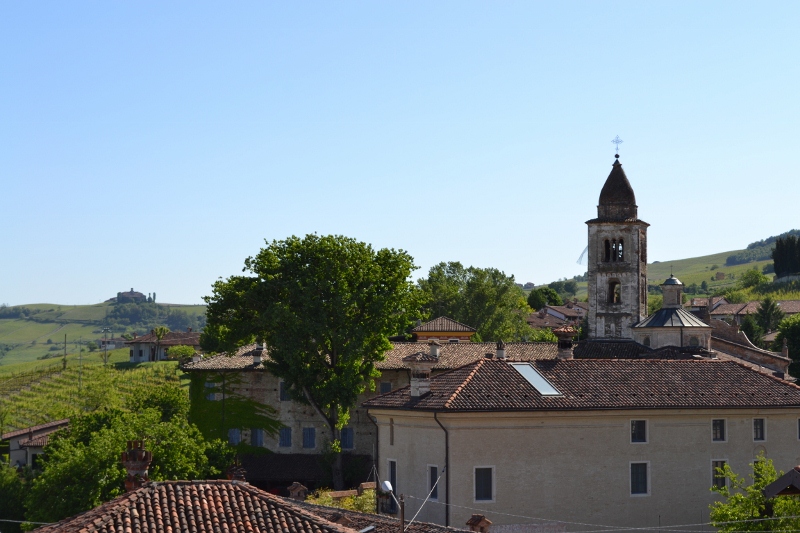
A man blessed with daughters, Giampiero Marrone is at the helm of his family’s winery, with daughters Serena, Denise and Valentina working alongside him. Located in La Morra, the Marrones recently completed a major renovation of their winery building, which has been in the family for four generations.  Standing on the new terrace, the 360° views provide a glimpse of 11 different bell towers, which serve as a beautiful backdrop to tasting the wines.

With 18 hectares (~45 acres) planted, the Marrones produce both red and white wines. Their diverse portfolio (they produce 20 different wines) offers some more unique selections such as Favorita, a grape so named for the Queen’s partiality to this wine. This traditional white grape is found only in the Langhe, but it originated from Vermentino when both Piedmont and Sardinia were under Savoy rule. This wine (2011) is light and fresh, well suited as an aperitif, with floral notes, ripe peach fruit and moderate acidity.

Their Langhe Arneis (another local white grape variety) comes from a vineyard selection called “Tre Fie” (three daughters). Redolent of almond, floral and citrus notes, the 2011 wine is rich and mineral on the palate. A blend of Arneis, Sauvignon Blanc and Chardonnay, the Langhe Suris 2010 is quite tropical in aroma, coupled with citrus, along with full body and vibrant acidity. Rounding out the family’s white wine offerings, its Langhe Chardonnay “Memundis” is barrel fermented and spends 15 months on the lees. The 2010 was nicely structured with integrated oak, apple, mineral and a hint of butter and capable of aging for a few years.

Among its reds, the Marrones produce several blends including Passione from a blend of Barbera and Nebbiolo, and Sancarlo, which brings together Nebbiolo, Barbera and Dolcetto. The former was rich and ripe with bright cherry aromas and flavors and freshness on the palate. The latter displayed a dried, jammy fruit character, with cherry, plum and herbal notes and was quite elegant. Serena explained that they prefer Austrian wood for their barrels, which are water bent, but not charred or smoked, and choose a smaller size to speed the aging process.

Conversely, their Barolo “Pichemej” is aged in traditional, large oak casks. The 2008 was still extremely tight, but exhibited nice floral, cherry and spice aromas and flavors. It needs time in the cellar for the tannins to soften. We closed out the visit with their Barolo Chinato. This is a traditional aromatized wine, flavored with spices, cinchona (quinine), rhubarb roots and gentian, making it equally perfect as a digestif or as an accompaniment to dessert. The medium sweet palate offered spices, cocoa and stewed fruit, yet finished quite cleanly.

Situated to the north of Barolo, the Roero DOCG features Arneis and Nebbiolo. While this denomination hasn’t garnered the attention that Barolo and Barbaresco have attained, the area produces extremely high quality wines, particularly with the whites. Here, the Arneis grape thrives in the marine-fossil rich soils that maintain high acidity in the grapes.

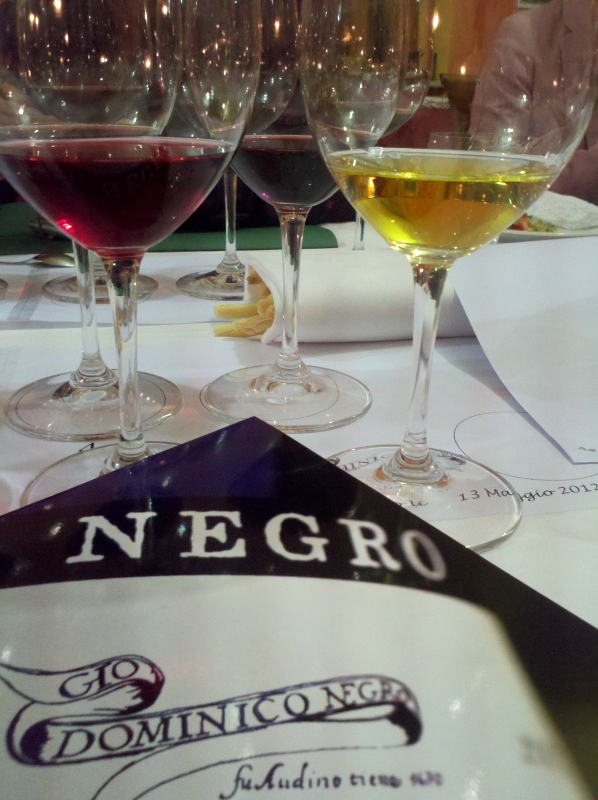
Within Roero, the Negro family has been producing wine for generations. Their Perdaudin estate dates to 1670 as evidenced in the local archives. The current generations include Giovanni and Marisa Negro and their children, Emanuela, Gabriele, Angelo and Giuseppe, making the winery a true family affair. Recognizing the need to sustain the land for future generations, the family has shifted its vineyard cultivation from the use of chemical fertilizers to organic compost.

Championing the aging potential of Arneis, the Negro family presented a vertical tasting of their Arneis wines. The 2001 Roero Arneis 7 Anni proved the point, showing some development, while retaining crisp acidity, minerality and a creamy texture. Surprisingly, the 2007 Roero Arneis “Perdaudin” actually seemed older with its slight oxidative character of nuts and bruised apples.

The Negro’s Roero Sudisfà Riserva provided proof as to the quality of the Roero Rosso (red) wines. These were quite elegant, despite the tannic nature of the wines. The 2004 and 2006 particularly showed well, with the 2004 offering dried flowers, balsamic vinegar and plums on the nose, with dried fruit and meatiness on the palate. Overall, it showed richer, darker fruit than the 2006, which displayed similar floral character, but was joined by brighter strawberry aromas and flavors.

Like the Marrones, the Negros have a significant range of wines. Their two Metodo Classico sparkling wines include the Giovanni Negro Roero Arneis Extra Brut and the Maria Elisa Rosé Brut, produced from Nebbiolo, while the two dessert style wines include Birbet, an off-dry wine made from Brachetto (but unlike Brachetto d’Acqui, this isn’t a sparkling wine), and Passito, a medium sweet wine made from Arneis grapes that have been dried to reduce water content and concentrate flavors.

These two visits reinforced the need to look beyond the usual suspects and to explore the broader world of Piedmont wine.


Grand Cru Grapevine: Portuguese Wines ~ A Fun Lesson in Diversity Awareness (October 2012)

Long known for its high quality fortified wines – namely Port and Madeira – Portugal’s reputation for its non-fortified wines was less than stellar. Thanks to a renewed focus on quality, most notably in the wineries themselves, things are changing. The country now has an expanded repertoire of quality wines, which offer diverse styles at excellent values for today’s consumer.

Part of the secret to Portugal’s success is owed to its range of climates. Despite its small size, the country has three distinct zones, which influence the styles of wine that can be produced. Due to its proximity to the Atlantic Ocean, the coastal part of northern Portugal is lush and green with abundant rainfall. Here, temperatures are moderate and humidity is high. Continuing south along the coast, the climate becomes more Mediterranean, with warmer summers, mild winters, and less precipitation. Meanwhile, a series of mountain ranges in the interior blocks the moderating influence of the ocean and the climate becomes decidedly continental and arid. These inland valleys, especially those close to the Spanish border, feature blistering hot summers and very cold winters, with minimal precipitation.

Along with its diverse climate, Portugal has embraced a wide variety of grapes, choosing to rely on native varieties instead of the more internationally known Cabernet Sauvignon and the like. Instead, grapes such as Castelão and Fernão Pires, essentially found nowhere else, dominate the vineyards. Mostly planted in the south, Castelão can produce red wines with complex, herbaceous character, but can also be vinified in a more easy-drinking style. Fernão Pires, alternately called Maria Gomes, is a very aromatic white grape variety, made into dry and dessert, as well as sparkling, wines.

Red grapes take the lead, with two-thirds of all wine production being red. Aside from the aforementioned Castelão, Portuguese reds frequently feature one or more of the preferred Port varieties. Specifically, Touriga Nacional, capable of producing complex wines with firm structure and black fruit; Touriga Franca, with its floral, blackberry and plum notes; and Tinta Roriz, known elsewhere in as Tempranillo, with red fruit, olive and herbal characteristics. Another variety with significant acreage is the extremely tannic Baga grape, which is often aged in older barrels so as not to add additional tannins, yielding wines with robust wines with plum and tobacco notes, capable of aging for a long time.

White grapes are regionally prominent, especially in the cooler areas in the north and on the islands. In Vinho Verde, Loureiro and Alvarinho (synonymous with Loureira and Albariño in Spain’s Rías Baixas) are the stars. Alvarinho is distinctly tart and mineral in character with peach and citrus aromas and flavors, whereas Loureiro offers less acidity and more richness on the palate. Wines can be produced as single varietal wines or several grapes may be blended together. Compared to Rias Baixas wines, Alvarinho-led Vinho Verde is more petillant, mineral and tart.

Regardless of the varieties used, white (red and rosé versions also exist) Vinho Verde is generally low in alcohol, high in acidity with fresh citrus character. Also grown in the Vinho Verde area, as well as in Lisboa, Arinto is known for high acidity, with moderate alcohol and has to potential to age, especially if aged in oak.

With a wealth of wines from which to choose, Portuguese wines might be the perfect thing to help you break your Chardonnay habit. Because, not only is life too short to drink bad wine; it’s too short to get stuck in a rut.

Aveleda Alvarinho 2011, Vinho Verde, Portugal, $11.00
This is always one of my favorites when tasting a range of Vinho Verdes. While a bit pricier than some others, it delivers with floral, nectarine and citrus aromas and flavors. With its high acidity, dry palate and light body, this is a perfect aperitif wine.

Quinta da Romeira Arinto 2010, Bucelas, Portugal, $11.00
This wine hails from the Bucelas denomination, located close to Lisbon. It has notes of citrus, and yeast on the nose. Another relatively light-bodied wine, the palate has high acidity, along with green apples, grassiness and minerality.

Casa Ermelinda de Freitas Dona Ermelinda Reserva 2010, Palmela, Portugal, $13.00
A blend of Castelao (70%), Touriga Nacional (10%), Trincadeira (10%) and Cabernet Sauvignon (10%), this wine spent 12 months in French oak barrels. It offers red berries, perfume, oak and plum on the nose. Its palate provides vibrant acidity, dusty tannins, as well as minerality and an herbal character.

Herdade de la Malhadinha Nova Aragonês da Peceguina 2009, Alentejo, Portugal, $21.00
Unlike Rioja, which relies on Tempranillo, but usually includes at least one blending partner, this wine is 100% Tempranillo (simply masquerading under its Portuguese pseudonym). Showing ripe and jammy black berries, oak, medium tannins and some minerality, this wine seems more new world than old world, but still has nice balance.

Quinta de Vesuvio Pombal de Vesúvio 2008, Douro, Portugal, $27.00
At 803 acres, Quinta de Vesuvio is one of the largest estates within the Douro Valley. This blend of Touriga Franca (55%), Touriga Nacional (35%) and Tinta Amarela (10%) was aged in barrel for 9 months in French oak. It displays black and bramble fruit aromas along with smoky notes, both of which are repeated on the full-bodied palate, and joined by vibrant acidity.

Grand Cru Grapevine: Memories of Mendocino (September 2012)

Nestled above the Sonoma County border, Mendocino County is a world unto its own. Much less developed than Napa or Sonoma, the county is home to sandy beaches, towering redwood forests, and other natural landscapes, but little else. The picturesque town of Mendocino itself sits along the Pacific Ocean, offering breath-taking views, weather permitting. On a clear day, you can watch waves crash on the rocks below; however, when the fog rolls in, you’re lucky if you can see the ocean at all.

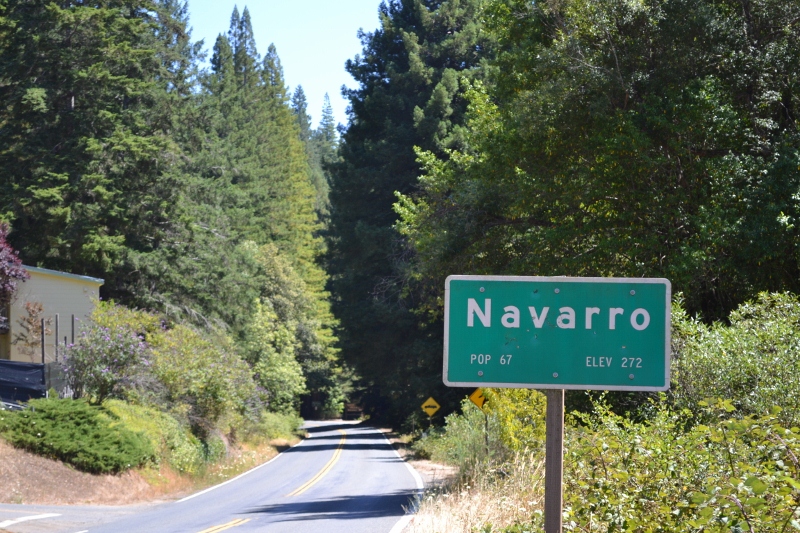
Beyond swimming and hiking, beer and wine tasting figure prominently on tourists’ “to do” lists. Even though grapes are grown throughout the county, with a total of ten American Viticultural Areas (and two pending approval), it is the Anderson Valley that is the most densely populated – with wineries, not people. Arriving from the north, visitors are greeted by the Navarro town limit sign, which announces a whopping population of 67; this is not the place to annoy your neighbor. To the south, the “much bigger” Boonville is home to 700 residents. But, what the area lacks in people, it more than makes up for in hospitality and a stay at the Boonville Hotel is strongly recommended.

Within the valley, the elevation, coupled with the coastal maritime influence, creates ideal conditions for cool climate grape varieties including Pinot Noir, Chardonnay, Gewürztraminer and Riesling. Although Tony Husch is credited with planting the valley’s first Pinot Noir vines in 1971, the Alsatian varieties got their start in 1974, thanks to Ted Bennett and Deborah Cahn of Navarro Vineyards. And, while aromatic whites do well, Pinot Noir is especially prized, with many producers coming from outside the valley to source fruit, such as Copain, Fulcrum and Littorai. Aside from producing highly regarded still wines, Pinot Noir and Chardonnay also find themselves used in the production of Traditional Method sparkling wines. In this regard, Scharffenberger Cellars was founded by John Scharffenberger in 1981, while Roederer Estate, affiliated with Champagne house Louis Roederer, was established in 1982.

Today, the Anderson Valley remains quite small with a scant 2,244 acres planted on 85 properties and a median vineyard size of 12 acres. To put that in perspective, the Napa Valley, which accounts for only 4% of California’s total wine production, has over 45,000 acres of vineyards. Yet, despite the Anderson Valley’s diminutive size, it has developed a big reputation for producing quality wines.

Roederer Estate L’Ermitage 2003, Anderson Valley, CA, $44.00
The top sparker of the estate, also known as a tête de cuvée, L’Ermitage made its debut in 1989 and is only made in the best years. This wine is a blend of 52% Chardonnay and 48% Pinot Noir and spent five years on the lees. It showed floral, yeast and citrus notes on both the nose and palate, culminating in a very long length. 8,332 cases produced 

Navarro Vineyards Pinot Gris 2010, Anderson Valley, CA, $19.00
With a strong emphasis on sustainable farming, the family farm supports a flock of Babydoll sheep, which graze between the vines to keep
down the weed, but are too short to reach the grapes. The wine shows floral, almond and tangerine notes on the nose, all of which persisted on the lush palate. 1,500 cases produced

Handley Cellars Pinot Noir 2009, Anderson Valley, CA, $32.00
Owned by Milla Handley, Handley Cellars celebrates its 30th vintage this year, and while Milla is still the primary winemaker, co-winemaker, Kristen Barnhisel, joined the staff in 2004. This Pinot Noir was redolent of fresh berries and cherries, with earth, slight spice and dried herbs joining on the palate. 1,505 cases produced 

Phillips Hill Estates Pinot Noir Wiley Vineyard 2009, Anderson Valley, CA, $38.00
Phillips Hill Estates was founded by Toby Hill in 2002 when the professionally-trained artist shifted his attention away from the label and into the bottle (although he does design his own labels). Crafting several different vineyard designate Pinot Noirs, the Wiley Vineyard was our favorite with its lighter body, yet still intense cherry aromas and flavors. 380 cases produced

Lula Cellars Zinfandel 2009, Mendocino, CA, $28.00
This relatively new direct to consumer brand – the first wines were launched with the 2008 vintage – is the brainchild of winemaker and owner, Jeff Hansen. With grapes sourced from just south of Ukiah, this wine displayed blueberry, cocoa and raspberry aromas with rich and ripe fruit on the dry palate. 500 cases produced

Parlare Prosecco Superiore

About to embark on my fifth trip to Italy in three years, I felt it was imperative to be able to say more than the five words I had previously memorized to be polite. So, I enrolled in a language class appropriately called the Traveler’s Survival Kit, which focused on important vocabulary such as that needed to ask directions and check into a hotel.

Of course, the most crucial phrase I taught myself was “Sorry, but I have studied to speak Italian for only four weeks,” and practiced it numerous times before I headed out of town. Not surprisingly, I used it in nearly every conversation I had upon my arrival in Italy. With its multiple repetition came fluidity and ease and soon I was sounding very Italian, earning repeated compliments…at least for that one minute.

My survival kit kept me in good stead for most of the trip, especially when coupled with an abbreviated game of charades in an attempt to be understood. Yet, while the majority of folks spoke at least some English, I found myself in a few situations where this was not the case. I generally grasped most of the conversation, but admittedly missed a few phrases and simply nodded along. It’s possible that I may have inadvertently said yes to something I didn’t mean to, but, I am confident that I didn’t receive any marriage proposals along my journey.

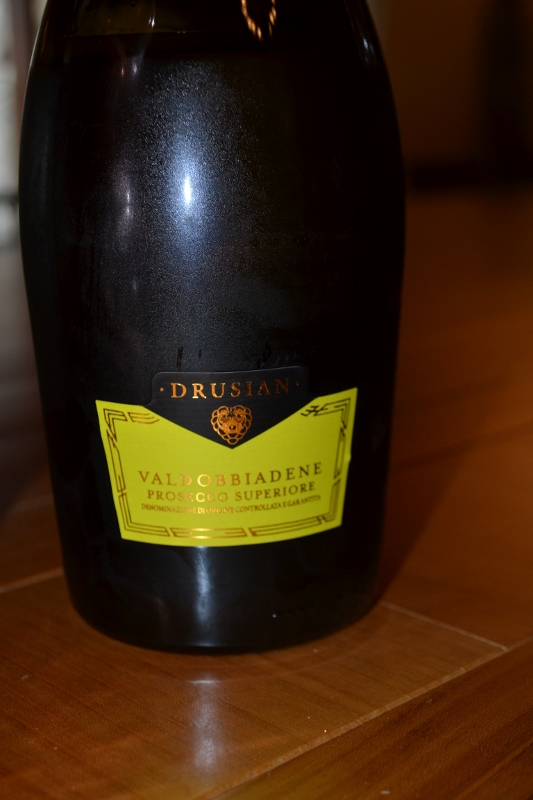
My trip was nearly complete when I had the opportunity to meet with Francesco Drusian, a Prosecco Superiore producer. Francesco met me at the Castello di San Salvatore (the “villa” of the Vino in Villa event) in order to bring me to his winery in Valdobbiadene. We waited for the tram to take us from the castle courtyard to the parking lot and quickly exhausted the few relevant phrases I knew since I was not about to ask Francesco for a hotel room or an order of pasta. Unfortunately, Francesco didn’t speak English at all, so he asked me if I spoke French to which I replied “oui. “

Shortly thereafter, we were in his car headed to the winery—a full 30 minutes away. Possibly the longest 30 minutes of my life. Did I mention that I studied French in junior high and high school (both of which were very far away from the minutes I spent sitting in Francesco’s car)? Shifting gears, my beautiful Italian phrases were replaced with rusty French, jumbled with the occasional Italian word and I now sounded like Sgt. Deux-Deux of the Pink Panther and Friends’ The Inspector cartoons…”Si, I mean, ‘Oui.'”

We finally arrived at the Drusian estate and I (inwardly) breathed a sigh of relief. It wouldn’t be too much longer until we’d be occupied with tasting through the wines and his colleague, Anna Maria, who did speak English, was due to show at any moment.

Pulling the wines from the refrigerator, Francesco apologized for the wines being too cold and so we waited a bit to let them warm up. We eventually began with Prosecco Superiore Brut, which had a very floral nose and is fresh on the palate with ripe peach flavors. His Prosecco Superiore Extra Dry displayed a heady aroma of white flowers and just a hint of sweetness with floral and mineral notes.

By now, Anna Maria had appeared and we made each other’s acquaintance, while continuing with the tasting. The Millisimato 2011 was similarly floral and mineral on both the nose and palate, along with pear. Labeled as Dry, the wine was quite clean and very balanced despite its 20 g/l of residual sugar.

Although among the mid-level tier of Prosecco Superiore producers in terms of overall production size, Drusian is among the largest landholders in the vaunted Cartizze area – Prosecco Superiore’s cru vineyard. As expected, Drusian’s top wine was extremely elegant showing with mineral and pear drop characteristics dominating the palate before culminating in long length.

With the tasting completed, I was given a quick tour of the winery and then we were off to dinner. It turned out that Anna Maria used to work at the winery, but now manages Althe’a, an agriturismo property owned by Francesco. I rode with Anna Maria, which was a much more relaxing trip than the earlier one (simply due to the lack of a language barrier), as we sped toward Colline di Soligo.

The farm is home to a beautifully restored stone house with farm country décor throughout the guest rooms and restaurant. We entered the dining room and were seated immediately (it certainly helps to arrive with the owner). As good hosts, Francesco and Anna Maria were keen to ensure that I enjoyed every course even when they chose to skip it themselves; I was the sole eater of both the pasta course and dessert. And, since they were unwilling to provide guidance on one appetizer over another, I was strong-armed into trying two.

For the main course, Anna Maria and I split a steak courtesy of one of the cattle raised on the farm, which we paired with one of Francesco’s non-Prosecco wines – a red blend from the newly promoted Colli di Conegliano DOCG. I chose Italian cheesecake for the aforementioned dessert, which was served warm on a bed of chocolate sauce and with which Francesco insisted that I try one of the local passito (dried grape) dessert wines.

As the evening faded into night, Francesco excused himself and bid me au revoir and Ciao! as he headed home to his family. I finished my cake, had a few more sips of the Torchiato di Fregona and saw the finish line looming in the distance. But, just then, Anna Maria remembered that they had experimented with making a limoncello flavored with herbs and another glass was brought to the table and filled. I took a few obligatory sips and, at last, it was time to go.

By this point, I was quite tired, but very satiated and, had been reminded that while we may speak different languages, whether English, Italian, French or otherwise, the language of food and wine is universal!

It’s the Yeast We Can Do (Grand Cru Grapevine: July 2012)

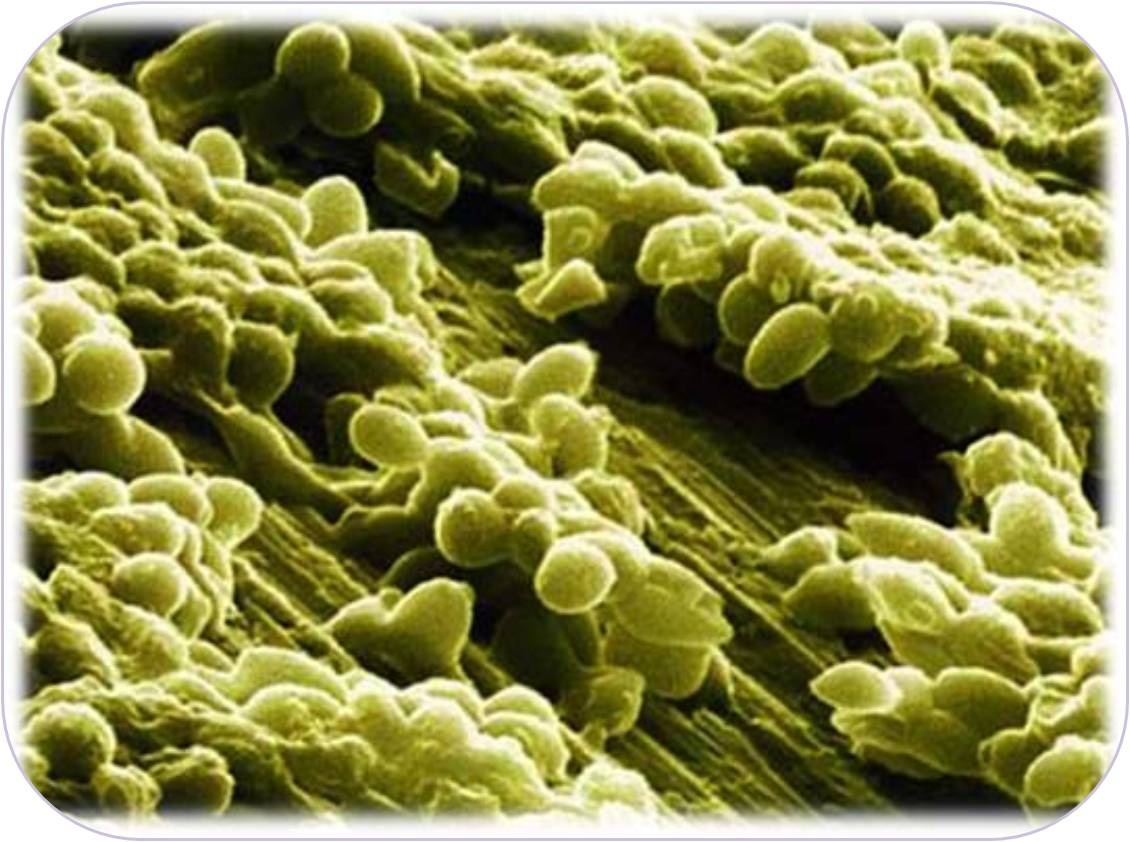
The tiny, single-celled fungi (I’ll spare you the bad joke) known as yeast are responsible for creating wine; without them, it would merely be grape juice. Simply put, the yeast consumes glucose and fructose in grapes, converting the sugars into alcohol and carbon dioxide. The resulting product is much more complex and interesting than if the yeast had not intervened (thanks yeast!). These organisms exist throughout nature and are found on the skins of grapes (not a bad place to hang out if you’re looking for a free lunch), among other places.

Brought together in this manner, the initial discovery of fermented beverages was most likely an accident, but yeast are one of the oldest domesticated organisms (although admittedly not as cute as dogs) with humankind having used it for thousands of years. More recently, the commercial production of yeast has a 100 year old history with today’s winemakers having the luxury of ordering any number of cultured yeast strains from a catalog to achieve their desired effect. In fact, a chart on Winemaker magazine’s website suggests which yeast products are best for which styles of wine.

Yet, despite these modern conveniences, many winemakers are going native. In Canada’s Niagara-on-the-Lake region, Hillebrand Winery gifted us with yellow t-shirts emblazoned in green with the slogan “Take a Walk on the Wild Side” on the front and hailing their Wild Ferment Showcase Chardonnay 2009 and Showcase Sauvignon Blanc 2010 wines on the back. Stateside, the Hamptons-based Channing Daughters has produced its L’Enfant Sauvage Chardonnay, made entirely with native yeast, since 2001, while Janet Myers of Napa’s Franciscan Estate makes the similarly produced Cuvée Sauvage Chardonnay.

Why the emphasis on these minute details? Does it make a difference or is all about the hype? Not only is Myers adamant that it matters, but she continues to make various batches of Chardonnay using both cultured and non-cultured yeast each year, which are then blind-tasted to determine which one is the best. And, every year, she finds that the wine produced with natural yeast wins out. For Shane C. Welch, President and Founder of Sixpoint Craft Ales, the use of natural vs. cultured yeast is the difference between a live performance and a studio album.

But, using wild yeast may not always be the best course of action. Myers admits that in some cases, especially with red wines, the result is less pronounced while further explaining that she finds it produces a different (unwanted) style with Sauvignon Blanc. Accordingly, the extra time and attention necessary to use wild yeast fermentation is limited to her Cuvée Sauvage Chardonnay; all other Franciscan wines are made with cultured yeast. Myers is also quick to point out that she has the benefit of having a microbiologist on staff that can observe, smell and analyze what’s going on and make adjustments as needed. Tracy’s tales of producing L’Enfant Sauvage sound dicier, with some ferments taking almost a full year to complete.

Whether brought on by ambient populations of yeast or those of the cultured variety, the finished products of fermentation – wine, beer, bread – are made all the better for their actions. Accordingly, we have much for which to thank the yeast. If the yeast could talk, they might be heard to respond, “It’s the yeast we can do.”

Channing Daughters L’Enfant Sauvage, The Hamptons, NY, $35.00
Although we have not tasted the recent release of this wine (2009), we hosted a wine dinner featuring the L’Enfant Sauvage from vintages 2001 through 2008. While the older wines did display some oxidative characteristics, this added richness and complexity and confirmed the ageability of these wines. Citrus and apple were the most common aroma and flavor descriptors in my various notes, accompanied by some slight oak and spice, along with good acidity.

Chateau Dereszla Tokaji Dry 2010, Hungary, $15.00
While likely more famous for its sweet and luscious botrytized wines, Tokaji (pronounced to-keye) winemakers also make dry whites. This one is a blend of 85% Furmint, 10% Harslevelu and 5% Muscat, 20% of which has been aged in oak barrels for six months. Notes of apple and canned peaches greet the nose and persist on the medium-bodied palate.

Franciscan Estate Cuvée Sauvage 2009, Carneros, Napa Valley, CA, $40.00
The result of using wild yeast for this wine is worth the effort, with its complexity of aromas of yeast, apple, and wet stone. On the palate, it has vibrant acidity, full body, flavors of yeast, toothpick, apple, and lemon, culminating in long length. Crisp and complex.

Lucien Albrecht Blanc de Blancs Crémant d’Alsace Brut NV, Alsace, France, $20.00
Traditional method sparklers such as France’s Champagne and crémants owe their charm to not just one, but two fermentations, along with lengthy contact between the wine and the dead yeast (aka autolysis). As a blanc de blancs (white from whites), this wine is a blend of 80% Pinot Auxerrois, 10% Pinot Blanc and 10% Chardonnay and shows aromas of yeast and toast, joined by apple peel and ripe citrus on the fresh and elegant palate.

Masi Agricola Bonacosta Valpolicella Classico 2010, Veneto, Italy, $14.00
If you’re craving red wine despite the heat, this light-bodied, low tannin blend of Corvina, Rondinella and Molinara from the foot of the hillside vineyards in the Classico zone just might do the trick. Bursting with vibrant, fresh cherries, it can be enjoyed with a slight chill and paired nicely with oven-roasted Portabella mushrooms and eggplant.

50 Shades of Rosé

The heat is on (some might call it sultry), but there’s no need to get all hot and bothered. Although there’s no prohibition against drinking rosé during the winter months (admittedly ordering rosé in the middle of a snow storm may raise some eyebrows), summer is certainly a perfect time for turning to rose-colored glasses.

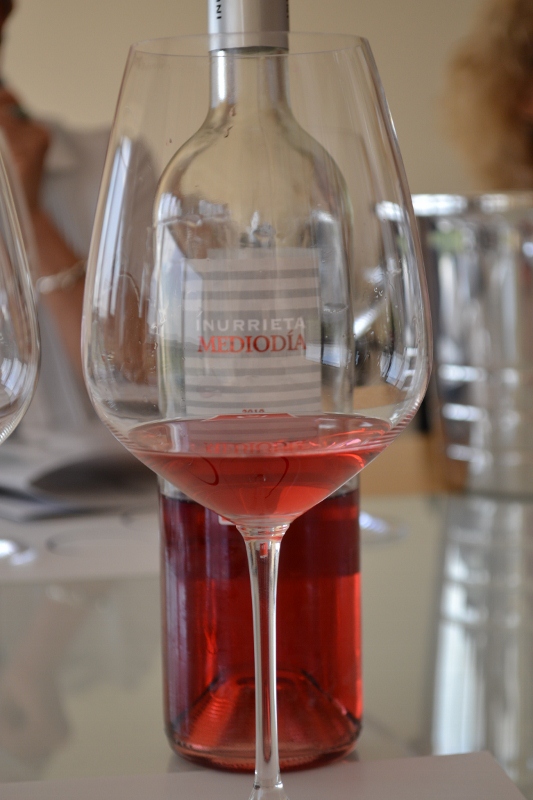
Not quite white and definitely not crimson, these wines are somewhere in between, but offer a wide range of styles. With a grape’s color pigments contained in its skin and not in the pulp, rosé wines are produced primarily from red grapes, but with much more limited contact between the skins and grape juice (think tie-dyeing). Longer macerations and more deeply pigmented grapes will result in wines with deeper, more intense shades of pink (and frequently more body and flavor intensity), while shorter skin contact and paler grape varieties create lighter-bodied rosés with just a blush of color.

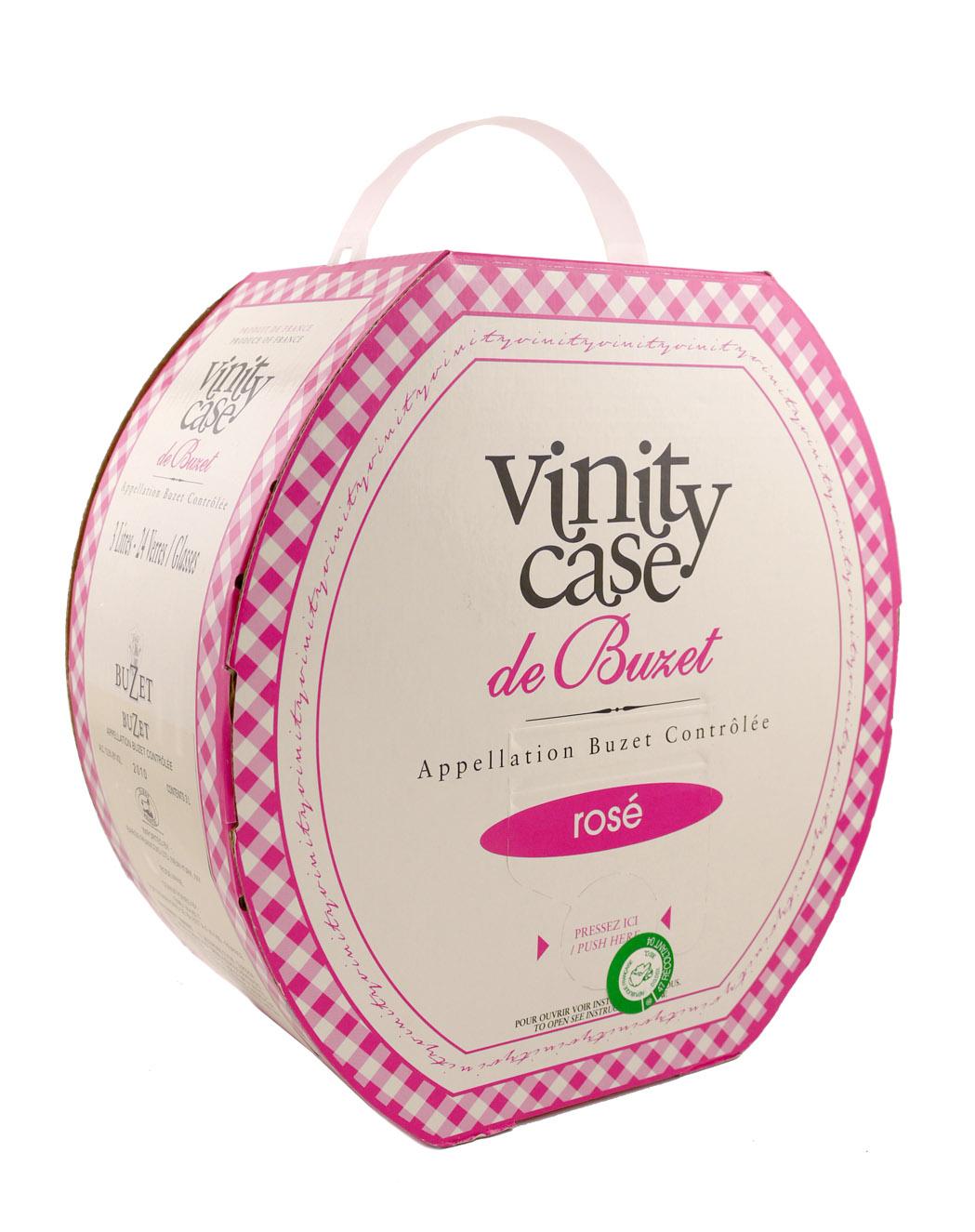
Purse your lips and get ready to enjoy these wonderfully refreshing wines, broadly available at your neighborhood wine shop this time of year. Astor Wines has not just one, but two special sections of rosés in the store – a more general selection of rosés and another limited to those priced at $10.00 and under. A few of their wines are listed as organic. Aside from the usual suspects, an unusually shaped, box wine hailing from southwest France is offered in a “Vinity Case de Buzet.” This Bordeaux-style blend of Cabernet Franc, Cabernet Sauvignon and Merlot, priced at $25.00, is the equivalent of four bottles of wine, but is easily transported to the party.

Uptown, Sherry-Lehmann kicks off summer with Rosé Fridays. Starting June 22, 2012 and running for the next eleven weeks, the store will pour a selection of rosés from 3:00-5:00 pm each Friday afternoon (505 Park Avenue @ 59th Street, New York, NY 10022).

If you can’t unleash your inner goddess at least you can unleash your inner wine lover. In any shade, these wines are definitely delicious!