The great sample debate

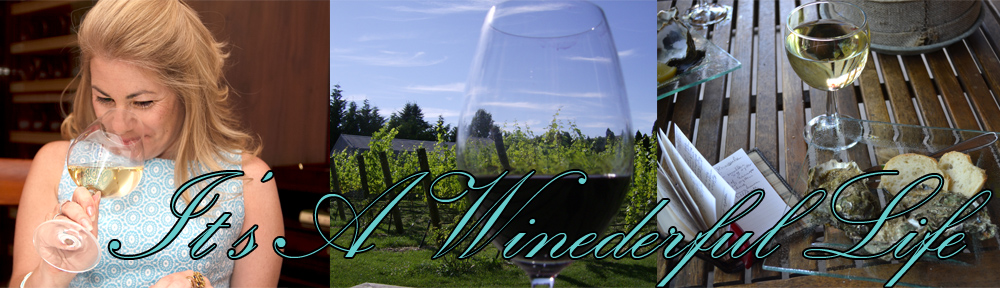
No, I assure you, these were not received as samples (not that I would complain if they were), but I like this photo of mine.

The subject of wine samples seems to be  a hot topic among wine bloggers and other wine writers, especially when it comes to journalistic integrity. Much has already been written on this angle/aspect of the debate elsewhere and, as I am late to the pool party, I won’t attempt to crash it by jumping in at this juncture.

However, an interesting discussion on samples recently presented itself at an event I attended. A public relations representative posed the question of the assembled writers as to their opinon on unsolicited samples.

Some writers noted that they were happy to receive the samples regardless of whether they had been expected or not, while others were less enthused. The PR person had received feedback from a blogger who claimed to dislike receiving unsolicited samples and praised those PR folks who gave him/her the right of refusal before packing up a case and sending it along. Yet, this same person admitted that unsolicited samples received the same care and treatment as solicited ones — being logged and eventually drank (and possibly written about).

Consequently, the PR person was torn between being a good citizen and potentially denying his/her clients possible press or brazenly sending samples — bidden or not — all in the name of PR. Certainly, this is not a major dilemna, but something for those in PR to ponder in the course of their day to day activities.

If there was any consensus, it was that writers want PR people to at least do their homework and understand the writer’s beat. If s/he only writes about bargain wines, don’t send samples of premium wines priced at $50.00 and above. Yes, they are nice to get, but beyond personal consumption, they will not be useful as writing topics. It’s not a new story, but one that is sometimes forgotten in the rush to get samples out the door.

My own opinion is that, in general, I prefer to receive a request prior to getting the samples to ensure that I really do want them and/or that they are of interest to my writing agenda. Yet, I can’t deny that the occasional mystery arrival of wine feels a lot like Christmas or your birthday, but perhaps a bit better — even it its not what you asked for, it always fits.

April Fools arrives early

Photo by: Tracy Ellen Kamens

I had the pleasure of visiting Trefethen Family Vineyards a few years ago when I participated in the Napa Valley Vintners’ Wine Educators Academy. On the first evening, we were given a tour of the winery by Janet Trefethen herself and were then treated to a wonderful welcome dinner under the stars in their courtyard. Trefethen wines, were, of course, served with the meal, as were several others from the region. The common theme was wines that are less associated with Napa Valley, but were of equally high quality. Namely, we tasted rosés, Rieslings, Pinot Grigios and other white wines that were ABC — Anything but Chardonnay. All in all it was a perfect night. 

Given my positive experience with the winery, I was excited when I received a package from Trefethen a few weeks ago. It was addressed to my other personna (NY Wine Shopping Examiner), so I presumed it was a sample intended for my column. Accordingly, I looked forward to tasting it. In fact, I was so eager to open the package, that I broke my usual patten of attending to junk mail and bills ahead of personal correspondence, cards and packages (a habit based upon the adage of eating dinner before dessert). 

I ripped open the box (okay, for those who know me, I carefully undid the packaging) and was thrilled to see a very small wine bottle nestled inside. What a brilliant idea I thought! Writers don’t necessary need to taste an entire bottle to take notes and write about a wine — a tiny bottle, just a taste, would be perfect. Although, with less to spare and share with my colleague/husband, I became a bit possessive of the bottle and began to inspect my newfound treasure. 

Reading the label, I noted that the wine was called Fallow and was from the 2009 vintage. I turned to read the back label, looking for information on the grape varieties contained therein, then burst out laughing. My precious wine bottle was empty — filled not with wine, but air (78% Nitrogen, 21% Oxygen, 1% Argon and Trace elements, according to the enclosed Tech Sheet). The back label stated, “This is pure Trefethen Fallow, bottled to capture the very essence of the Napa Valley; light, delicate and ethereal. The perfect match with April Fool’s dinner.”  

The Tech Sheet also spoke about the time-honored, but less-used, practice of leaving a portion of farm land fallow — empty — to “naturally recover and come back into balance after harvest.” As proponents of sustainable farming practices, Trefethen still maintains the practice of leaving vineyard land fallow when replanting, the results of which can be found in my tiny bottle. 

I was disappointed not to be able to enjoy a taste of a Trefethen wine, but admired their sense of creativity and humor. All joking aside, if you do get a chance to taste a bottle of Trefethen wine, I highly recommend it. 

How’you doing…Luna?

Luna Vineyards Pinot Grigio 2007, Napa Valley, CA

I think this catch phrase is an amalgamtion of a line from Friends (so eloquently recited by Joey) and the name of an internet company that was subsequently purchased by Google, but somehow it has stuck in our household. All of this by way of an introduction to Luna Vineyards in Napa Valley, CA, owned by Mike Moone and George Vare.

Luna Vineyards Pinot Grigio 2007, Napa Valley, CA, $18.00
Winemaking: 95% Pinot Grigio, 5% Chardonnay; 20% fermented in neutral French oak barrels, 30% underwent malolactic fermentation
Aromas: Citrus, floral, hint of stone, slight yeast
Flavors: Orange, citrus zest
Structure: Medium+ acidity, medium-bodied, medium alcohol, medium+ length
Conclusion: Good fruit concentration, with nice aromas, but more limited complexity on the palate.


Luna Vineyards Sangiovese 2007, Napa Valley, CA, $25.00
Winemaking: 90% Sangiovese, 7% Cabernet Sauvignon, 3% Petite Sirah; Aged for 12 months in 25% new French oak barrels.
Aromas: Cherry, oak, spice, tomato leaf
Flavors: Rich, concentrated fruit – cherry, tomato, spice and oak
Structure: Medium-high acidity, medium-bodied, medium alcohol and medium length.
Conclusion: A good quality wine, ready to drink now.


Wine goes primetime

COUGAR TOWN #18, JOSH HOPKINS, COURTENEY COX, CHRISTA MILLER (ABC/ADAM LARKEY)

I admittedly watch way too much television. I wish I could at least defend my bad behavior by claiming to watch documentaries or other educational programming, but I can’t do that. No, truth be told, I watch crap — and lots of it. Case in point, I spent last Wednesday evening watching ABC’s Cougar Town, Courtney Cox’s current sitcom.

The saving grace of last week’s show (and the reason for this post – I promise there is a reason) is that much of it was about wine, which was the first time I could recall wine taking center stage in primetime. The plot centered on Courtney Cox’s character, Jules, and her poor wine drinking habits, i.e. drinking too often and too much. Not expressly stated, but certainly indicated visually, was her equally appalling wine etiquette (or rather the lack of it  — filling the glasses to the very top and slurping from the glass, hands-free). Yes, slurping can be considered appropriate behavior with wine tasting, but in this case it wasn’t.  In addition, Sheryl Crow made an appearance as a wine sales representative. For various reasons, which I will not elaborate, Jules decides to give up wine for a month, but, [spoiler alert] eventually caves in and drinks. As they say, “Everything in moderation…including moderation.”

In any case, it wasn’t that the show was so good, but as noted, it was unusual to see wine given such prominence in a television show’s plot and signals a recognition from the writers of this show, if not the network overall, that wine has finally become an important part of the American culture. We’ll just have to stay tuned to see when and where wine will next appear.

March Madness: Go with Big Reds to cheer on Cornell tonight!

If you have been following the NCAA tournament, aka March Madness, this year, you will have noted that there have been a number of upsets. Admittedly, I don’t really care about basketball, but one of these upsets caught my attention. It is with great alumna pride that I will root for Cornell when they take on Kentucky at the Carrier Dome tonight.

While I won’t be trekking to Syracuse or heading out to a local bar to watch the game, I do plan to celebrate this exciting moment in Cornell’s athletic history with a toast at 10:00 PM when the game starts (technically it starts at 9:57 PM, which makes no sense to me, but in case you plan to watch, I wouldn’t want you to miss a minute or three).

So what to drink on such an occasion? A big red, of course! No puny Pinot Noirs tonight. Instead, I’m going to reach for something big, bold and brash.

Ottimino’s Zinfinity, which I recently drank courtesy of a sample I received, would be a good option. The wine is a blend of 93% Zinfandel, 7% Petite Sirah and spent 20 months in French oak. Its youthful aromas included spice, oak, blueberry and blackberry. The rich, ripe fruit dominated the palate, but was balanced by the acidity, sweet, ripe tannins and flavors of spice, vanilla, oak and smoke.
Ottimino, Zinfinity Zinfandel 2006, Sonoma County, CA (USA), $17.00 SRP

Of course, there are a myriad of other options such as Cabernet Sauvignon, Syrah/Shiraz or Malbec to fit this bill if you choose to go the varietal route, but Amarone, Barolo and Barbaresco would work equally well, should your palate and pocketbook be a bit more sophisticated. Either way, may the best team win and by that I mean, Go Big Red!

Happy Hours at Ardesia

On St. Paddy’s Day, we decided to eschew the typical Irish pub in favor of Ardesia Wine Bar, which is no longer new (it opened back in Fall 2009), but was still new to us.

Ardesia runs a fantastic Happy Hour special, which is actually a joyous two hours (5:00 – 7:00 PM) during which time, five wines (1 sparkling, 2 whites and 2 reds) are available by the glass at $6.00 each. And, these aren’t bargain basement wines or plonk; these are the same wines that magically become worth $9, $10 or $11 per glass when the clock strikes 7:01 PM and include a nice assortment of unusual wines.

On the night in question, the offerings included a sparkling rose from France, a Pedro Ximenez (aka PX) from Chile, Alois Lageder Pinot Bianco from northern Italy, an Il Frappato from Sicily and a Chilean Syrah. The PX was a surprise to me since the grape is most frequently grown in the Sherry region of Spain and used in the production of a dessert wine. Dried out in the sun, the pX grapes become shriveled and concentrated in their sugars, yielding deep, dark, extremely sweet wines. This dry, white PX was very refreshing and a great way to kick off the evening. Perhaps it was just the power of suggestion/connection, but I thought I detected just an undercurent of raisin, which I associate with PX’s from Spain.

My friend Elise selected the Il Frappato, which was light-bodied and fruit-centric, similar in style to a Beaujolais. The Frappato grape is indigenous to Sicily and its fresh and lively fruit was a welcome addition to the warmth of the day. The wine selections not on the Happy Hour special were also interesting and original, with very few wines on offer from the U.S. The sole California Chardonnay is by noted producer Au Bon Climat.

Our appetites were whetted, so we chose to order some light bites as well. The plate of olives ($3.00) was generously filled and the home-made pretzels ($6.00), served with a bechamel/cheese sauce and a spicy mustard (my life keeps coming back to mustard lately), were totally worth the calories. We also enjoyed a chicken liver mousse, topped with an apple sauce, bringing a nice yin-yang balance of acidity from the apples to the richness of the mousse.

For our second glasses of the evening, we shifted to the Syrah, which we also liked. Our server stopped by a few minutes before 7:00 to check in and see if we wanted to get in a final order of $6.00 wine before the price went up, but we declined to indulge in any additional alcohol. Instead, we lingered for quite some time over our nearly depleted dishes and fumes of wine without being rushed or pushed to leave, which we greatly appreciated. We finally chose to depart around 8:00 PM, with a very reasonable tab of $25.00/person.

Before heading out the door, I visited the restroom and noticed that the interior side of the bathroom doors were lined with slate. Previous patrons had left their mark, but I guess the establishment is BYOC — bring your own chalk — as I didn’t see any for my own use.

From here to Burgundy

Residents from the town of Dijon, France arrived in NYC in early March, ready to celebrate a special art exhibit, “The Mourners: Medieval Tomb Sculptures from the Court of Burgundy”, at the Metropolitan Museum of Art, bringing many rare works of art from Dijon with them. This event was the catapult for a week’s long set of events all focused on some aspect of the Dijon culture. The key in the crown was the exhibit’s launch on March 2, 2010. However, members of the wine trade had a wonderful opportunity to get in on the action at a Must’taste wine event held at the French Consulate on Fifth Avenue.

At the tasting, I was asked by a colleague as to whether or not I knew if the building had previously been a private residential home and would I have liked to live there? I told her that while I didn’t know that to be the case with any certainly, given its location on upper Fifth Avenue, I would not be surprised if it had previously been someone’s home. And yes, presuming that if I could afford to have the house, I would be equally wealthy enough to take care of it – cleaning staff , etc. – then yes, I would be thrilled to live there. I looked up at the gilded work around the doors and windows and greatly admired the interesting angular ceiling shape. Yes, I thought, it would be an amazing place to live and an especially great place to entertain.

Shifting my attention back onto wine, I had the opportunity to taste a variety of Burgundian wines, grouped by producer. Well-known producer Domaine Faiveley showed two whites and three reds, while Domaine Humbert had two wines and Domaine Gallois presented three very different red wines, providing a glimpse of terroir and vintage among their selections. In general, the wines showed quite nicely, but a few were better than others and a few clearly needed more time to come into their own.

Diana, of Fraiche PR and Communications, the firm which had put together the event, graciously invited me to a party later that evening, a culmination of the week’s festivities with art, food, music and, of course, more wine. The French Consul Embassy, just a few blocks north, was equally lovely a setting, with lots of details to notice and take in. A painting from the exhibit hung on one wall and a group of French musicians played some great music, while chefs from Dijon prepared local delicacies for the guests to enjoy.

Despite having two+ hours in which to find a “date” I had come up empty and made the decision to attend the event alone. It was a slightly awkward event to attend solo, given that I already have difficulty talking to strangers (I guess I must have learned that lesson a bit too well from my mother) along with the fact that many of the guests were native French speakers and my French is essentially non-existent. However, I made due and enjoyed re-tasting the Domaine Gallois Gevery-Chambertin 2007.

Among other food, I tasted a small panini, which was smooth and earthy. After I had had about two or three (or maybe more, I lost count) of these delicious snacks, I inquired about what type of mushroom had been used to make the panini. The response from the chef indicated that I hadn’t a clue about cuisine – it wasn’t mushroom at all –I had been eating escargots the whole time! While I do like escargots, I now didn’t trust my palate since it couldn’t distinguish mushrooms from snails and thus switched to dessert. But, no sooner had I eaten a chocolate/berry item than a waiter brought foie gras around on a silver tray. I couldn’t resist reaching for one, but must admit that foie gras placed in one’s mouth directly after eating chocolate was less than appetizing. The lobster bisque that followed was more palatable coming after the foie gras. At this point, I switched to the white Burgundy being served (can’t remember which producer or vintage) to cut through the rich, fatty foods and re-tried the Maille mustards.

Lovingly named for this beautiful place, the first Dijon mustard on offer was a blend with Chablis wine – it had good acidity and some sharp spice. The second mustard was produced with cinnamon and chocolate, which threw me for a loop. Mustard and chocolate were not in my vocabulary together, but after tasting this mustard, I was impressed. The chocolate came through, but the sweetness didn’t, similar to a Mexican mole sauce. I was asked by a fellow guest for a wine pairing suggestion for the mustards and thought the chocolate-infused mustard had enough richness for a bold, red wine – perhaps the Village-level red Burgundy I had drunk earlier or maybe even a fuller-bodied wine such as a Bordeaux? Either way, the mustard would make a nice marinade for chicken, duck or lamb.

I was now quite sated from the food and wine, so I headed out onto Fifth Avenue and made my way home. I had been transported to France, if only for a few hours, but it had been a wonderful journey.

When a box is not a box

I recently attended a trade tasting for wine in new packaging. My husband was supposted to meet me at the event and I gave him the detailed address. However, when I arrived, I found a text message noting that he was here waiting for me outside. I found him in my line of sight standing against the door frame. It turns out that elevators must be operated by building staff at the hour – buttons could be pushed, but would not engage without a key. I had directed him to go to the Penthouse, but no button was labeled PH. Not surprisingly, he made the next best guess –12, since it was the top floor of the building. Yet, this was incorrect. The building staff finally recognized that the elevator guests were eager to get to the Artisanal Wine Tasting event, which was being held on 9 and helped us out.

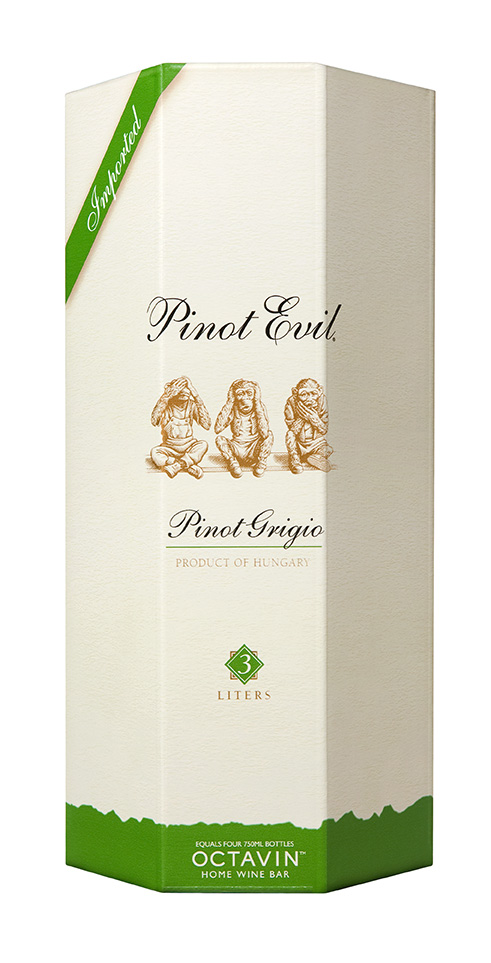
Once upstairs attendees were greeted warmly and invited to meet an Australian winemaker, Adam. We were then introduced to the Octavin –which we were not to call a box. They company was firm in that these were not boxed wines; they were casks.

The rented venue was more like a beautifully-furnished apartment than a party space and the guests found ourselves crowded around the kitchen table talking, eating and tasting, the way wine and food and supported to be enjoyed. The living room was comfortably furnished, but saw little of the action.

In the middle of all of this, a small subset of the Wine Media Guild began to arrive, which prompted a mini-scholarship meeting despite the absence of the committee chair. In truth, we were simply marveling at how much work Jonathan had already put together to bring to the group for discussion the next day. His thoroughness prompted some to wonder what else was left to do, but that question would be solved the next day in the proper channels.

Returning to the event at hand, participants tasted through the various white and red wines, while also having the opportunity to speak with Adam about his viticulture and vinification techniques and methods. It was very enlightening, especially in learning more about the unique, alternative packaging.

The Octavin  is a stylish wine storage and service device that is much more elegant than the shape associated with the rectangular box. This isn’t your parents’ wine-in-a-box; they should have been so lucky.  There are multiple wines produced under the Octavin line, but they have different names and hail from a variety of wine regions. It fits easily in the refrigerator and has its own open/close spout, which keeps the wine fresh for weeks. The cardboard construction significantly reduces that heft, thereby reducing the carbon footprint in both production and shipping — one cask is the equivalent of 4 bottles. We very impressed with the wines and enjoyed tasting them.

Reaching for a final appetizer toward the end of the tasting, I placed my glass of Cabernet Sauvignon on the edge of the kitchen counter while I reached over to grasp the onion bread. However, no sooner had I begun to reach for the food than the wine glass became unsteady and suddenly went down. It’s not clear if the glass itself was broken, but red wine flowed all over the hard-wood floors, down my arm and hand, and more embarrassingly, all over my husband’s blue, French-cuff shirt.

The cute gold paw print links were no match for the large ruby stains, which immediately began to soak in. A well-intentioned server brought him Wine Away, but with the volume of wine spilled, we decided that it was a job better suited for our valiant dry cleaners. In my own embarrassment, I grabbed at paper towels and, head bent, began to wipe the floor in an effort to prevent anyone from slipping on the wine. Fortunately, I had caught my husband in a good mood that he kindly excused my clumsiness and once dry (thanks to a towel provided by Adam), agreed to stay a little longer. Thus, with an eye toward the door, we re-tasted one or two of the red wines to finalize our impressions of them and then headed out into the night. Note to self: wear black next time.

Investing in Art, Wine or Stocks

In today’s troubled times, investors aren’t sure where to put their money and, to add to the confusion, there are many more options for them to consider. In light of these issues, the recent Art, Wine or Stocks event discussed the risks and rewards of investing in these varied asset classes. Each discussion was ably addressed with a respective expert who further elucidated the nuances in investing and trading in these traditional and non-traditional commodities.

For stocks, Kathy Boyle, CFP™, President of Chapin Hill Advisors, shared her firm’s strategy for protecting clients during long term secular bear markets which CHA feels we are in the midst of a cycle and may have another 6-10 years to go. Backed up by historical graphs, Kathy explained that the bear cycle from 2000-2002 followed an 18 year secular bull market where investors and advisors were trained to buy and hold. Using the market model from the period prior to this boom, along with her own sharp instincts, Kathy and her team carefully plot an investment course for clients, which seek to minimize loss amidst the tumultuous market. Kathy feels that protecting client’s wealth is the key in today’s stock market as compared to earning significant gains, which was more easily accomplished under the old set of parameters. For her, it is all about holding portfolio value steady at this point in time. 

Admittedly, art is an expensive investment, but Jennifer Krieger, Founder of Hawthorne Fine Art, believes that it can be a good one if investors choose wisely. She recommends finding a mentor to help one identify and find the pieces of art they wish to purchase and further suggested that non-contemporary American art has an excellent track record of maintaining good quality and value over time. This is especially true when compared with more modern pieces that have peaks and valleys in their marketability. Jennifer also notes that art purchases should be made with an eye on the long term as their investment value will take time to grow. At her gallery, Jennifer’s current exhibit features Clark Greenberg Voorhees, an American impressionist painter she has admired from her early days venturing into art. Today’s exhibit is a culmination of her years of work and effort in tracking down dozens of Mr. Voorhees’ works, most of which were in the homes of private collectors, rather than on display in museums. Many of Voorhees pieces cost upwards of $20,000, but a few smaller canvases are priced below that figure.

As John Kapon, President and Auction Director of Acker, Merrall & Condit, unwittingly noted, wine is a liquid asset. However, compared to stocks, it, like art, is illiquid. Despite its illiquidity, John noted that wine has the advantage in that it can always be drunk and enjoyed even if the investment doesn’t pan out. Throughout his conversation, John discussed the need to make big investments in wine in order to make money doing so. Additionally, he pointed out that the other aspect to successful wine investment is time – with time bottles become more scarce, and, with scarcity, they become rarer and thus more valuable to the collectors who are anxious to obtain those wines. John advised that China, especially Hong Kong, was very alive in the market and that most, if not all, of the wine market’s decline had been recouped. While he didn’t offer a detailed list of investment quality wines, John suggested that French wines continue to deliver as the big winners, with only a handful of wines from elsewhere doing well in the auction market. An audience member asked about the Futures market in wine to which John strongly advised the need to buy from a reputable firm, alluding to some of the recent scandals surrounding the Futures trade. Of course, dishonesty in wine isn’t limited to the Futures market. Thus, it is important to do one’s homework in all areas of investing, whether one chooses to invest in art, wine or stocks.

Long Island wines hold their own against world-class counterparts

Usually thought of as being of good quality, but too expensive, Long Island wines have often been dismissed. However, a blind tasting in Fall 2009 called that assumption into question. Presented by the Long Island Wine Council, the event featured five flights of wine, each showcasing an individual grape variety. Chardonnay made a double appearance in both oaked and unoaked styles. Each flight included two Long Island wines and two others, from throughout the world.

While some regional characteristics showed through, especially to experienced blind tasters, none of the wines stuck out as being extremely different or of lesser quality. In this regard, the Long Island wines showed quite well and clearly demonstrated their ability to compete on an international stage. More importantly, they were generally less expensive than their international counterparts.

For example, the two Long Island oaked Chardonnays from Pelligrini Estate Vineyards and Castello di Borghese were priced at $14.99 and $25.00, respectively, compared to the Flowers Chardonnay from Sonoma Coast at $47.99 and a Langoureau Puligny-Montrachet 1er Cru ‘La Grerenne’ at $57.00.

If you have overlooked Long Island wines, now is a great time to visit the wineries. Through March 21, 2010, the Long Island wineries will celebrate Jazz on the Vine, with free jazz concerts featuring the hottest jazz headliners. This special series provides visitors with an opportunity to taste wonderful wines while listening to great music. Several wineries will welcome the Steinway Series, with musicians playing on donated Steinway baby grands. The full calendar is available online.